Food security, safety, and nutrition are the main concerns of the global agenda, which are directly connected to the Sustainable Development Goals (SDGs). Improved nutritional outcomes directly contribute to healthy living conditions and play an essential role in quality education, gender equality, and poverty eradication, thus, stimulating economic growth and inclusivity. There is a hunt for rational sources of high-value foods as natural resources deplete, climate changes, and population increases. Hence, drastic efforts are needed to meet the global targets for enhancing food security and nutrition globally and in Africa for the period up to 2030.
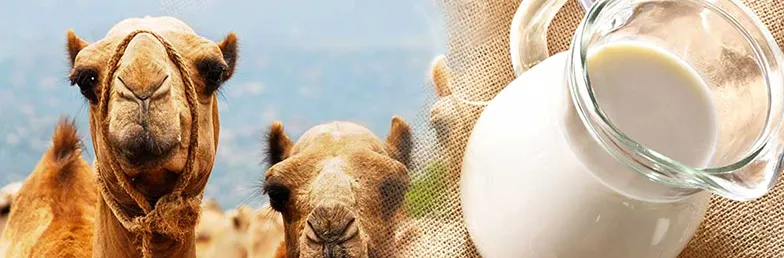
With vast regions of Sub-Saharan Africa continuing to endure more protracted and extreme episodes of drought, camel milk is emerging as a climate-friendly alternative food source. According to Kenya's National Drought Management Authority (NDMA), communities residing in 23 counties considered Arid and Semi-Arid confront decreased food supplies due to drought and require food relief within the next few months. Distinct from sheep, cows, and goats, camels can survive 100 miles without water while retaining cool temperatures of up to 120 degrees Fahrenheit and still producing milk.
80% of the world's camels are from the African continent, with roughly 60% in East Africa. According to the Kenya Camel Association, approximately more than five million camels are in Kenya's pastoral regions, a quadruple since 1999. Even though a longtime everyday staple for some communities in the region, the market supply and logistics infrastructure are inadequate. Rather, Camel milk is most common in informal markets around the country. Notwithstanding, the Kenya Camel Association establishes that the sector contributes Kes 13 billion ($90-108 million) yearly to the country's GDP even without a formalized supply chain. It is apparent that the sector has great potential and that Africa can address most of its challenges, including food security and safety. Innovation and technology would be major drivers.