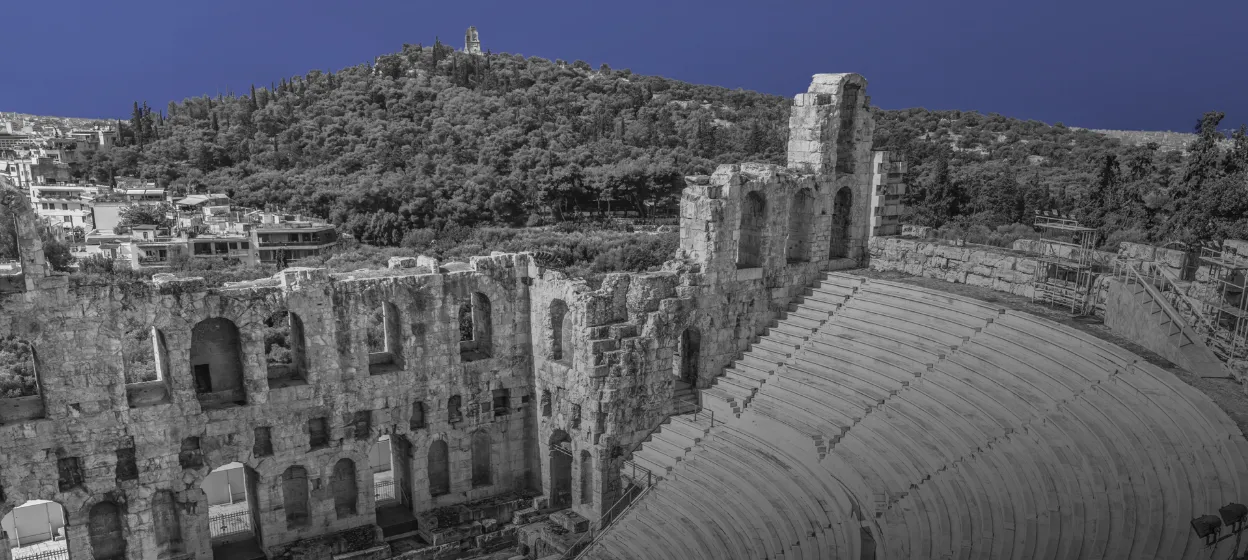
Athletic competition stood at the heart of public life in the ancient Greek world. From the great Panhellenic festivals to local contests and public spectacles, sport served as a powerful arena where ideas of excellence, identity, and community were performed and celebrated. As a home to important athletic traditions and historic competition sites, Athens provides an exceptional setting for exploring this cultural history.
Through this summer global core program, students examine classical athletics through the lenses of literature, geography, and material culture. By engaging with both primary and secondary sources, such as literary texts, vases, and inscriptions, students can trace the development of ancient athletic culture and its continuing influence on the modern Olympic and Paralympic movements.
Students in the program will:
- Study the history of athletics
Engage with literary, historical, and material evidence while visiting museums and important sites connected to ancient athletic competitions.
- Explore the legacy of the Olympic tradition
Investigate how ancient athletic festivals shaped political identity, cultural values, and public spectacle, and how these traditions resonate in the modern Olympic and Paralympic Games.
- Develop interdisciplinary perspectives
Insights from classical studies, history, archaeology, and cultural analysis will strengthen critical thinking skills and intercultural awareness.
Through this interdisciplinary and diachronic approach, the program highlights how athletic competition has long served as a stage for cultural expression, political meaning, and social inclusion from antiquity to the global sporting culture of today.
This program, funded by the Center for Undergraduate Global Engagement and the Athens Center, will pay for students’ travel costs and housing.
Learn More