The Road to Neema
Tracing one migrant's journey from a Bihar village to a Bengaluru factory floor this reflection piece is written by Benjamin Miyakawa, MPA-DP’27 who participated in fieldwork in India as part of the ‘Displaced Livelihoods’ project supported by Columbia Global's PGIF
The regular sway of the train rocks me as I slowly drift off to sleep. Outside the window of our cabin, the Indian plains scroll past, slow and endless. I'm traveling with Sachin and Mrinal, two Indian researchers who are accompanying me through this second leg of my journey. We're heading from Lucknow to Bodhgaya. From there, we'll go on to the village of Neema to interview Rohan's family.
Rohan is a migrant who, nine years ago, left his village for the city of Bangalore to look for work and set aside enough money to help his parents build a proper house back home. To make this dream real, Rohan has done every kind of job: from stitching shoes in a slipper line to construction. He now works in a factory assembling engines.
I met Rohan because we're working with the Columbia Climate School on a project called 'Displaced Livelihoods: Climate Change, Agrarian Distress, and Labor Migration in India,' trying to measure how climate change is reshaping migration across the country. I wanted to be part of this research because India will, without question, play one of the most decisive roles in shaping the history of the next few decades. It's the world's most populous country and one of its fastest-growing economies, but it's also among the places hit hardest by climate change. Migration in India is already undergoing shifts that will ripple far beyond its borders. In many ways, I see India as a preview of what the rest of the world may be heading toward.
Thanks to this research, we've been welcomed into the homes of countless migrants in Bangalore who wanted to share their stories with us and tell us about the many hardships they're living through. Together with the rest of the research team, we decided to retrace their journey in reverse and go from the city to rural villages of Northern India. That’s why tonight I’m falling asleep on the train that is taking me to the state of Bihar.
As part of this journey, I spent the last two weeks filming and interviewing farmers in Uttar Pradesh working with Dr. Robin Jan Van Duijne of the University of Amsterdam. I met him thanks to Columbia and NIAS, the National Institute of Advanced Studies in Bangalore. Together with Dr. Jan Van Duijne, we produced a video on his research about the extreme working conditions faced by agricultural laborers in the Indo-Gangetic plain. His hypothesis is that this landscape is turning into an unworkable geography because of climate change. Spending a few weeks with the farmers in the fields and feeling those conditions firsthand was extremely physically demanding. Yet, wading into the rice paddies alongside Indian farmers and working with them to bring their story to the attention of the scientific community was a very unique and rewarding experience.
I wake up as our train is slowly entering the urban outskirts of Gaya. We grab our things quickly and step down into the kind of chaos you only find at Indian railway stations. An enormous mass of travelers of every kind waiting patiently for their train under the burning sun of the Indian monsoon season. The air smells of diesel and frying oil, and a loudspeaker somewhere keeps calling out platform numbers. We push through the crowd, grab a tuk-tuk, and go looking for a place to sleep.
Even though this is my third time in India, I'm still stunned by the sheer mass and the endless stream of people who populate this country. As our rickshaw slaloms through traffic, slipping through spaces that don't even seem to exist, we chat with our driver exactly about this: he reminds us, rightly and proudly, that India is the largest democracy in the world. I smile, thinking about how much trouble we have organizing elections in Italy, where we're not even 60 million people, a number that, set against India, barely amounts to a single one of its megacities. And Gaya itself, a city of close to half a million, is enough on its own to leave me stunned again: all those faces, all those lives passing by me, so radically different from the people I cross paths with in my everyday life. While we are walking through this human mass so full of history, we finally find a hotel where we can put down our things and rest.
The next day we wake at dawn, because Neema, the village where Rohan's family lives, is a two-hour drive from Gaya. We cross the Indian plains again, where farmers are already out working on the fields to beat the coming heat. I watch the sunrise over the farmland and I’m hit by the feeling that I'm seeing everything for the first time. It's something I've also felt while exploring the teeming streets of Bangalore, or getting lost in the dusty alleys of Old Delhi. Maybe it's the culture, so vast and so different from my own; maybe it's India's marvelous and utterly singular aesthetic sensibility; maybe it's the smells of the streets, the colors, the crowds… whatever it is, in India I often feel like a child, as if I'd just discovered how to see, with everything still left to learn. It's a feeling that Pier Paolo Pasolini, the Italian filmmaker, writer, and intellectual, described perfectly in a dispatch from his 1961 trip to India:
"Inside, in the half-light of the archway, you can hear singing: two, three voices singing together, strong, sustained, impassioned. The tone, the meaning, the simplicity are those of any song young people might sing in Italy or Europe, but these are Indians, the melody is Indian. It's as if this were the first time anyone in the world had ever sung. For me: I feel the life of another continent as another life altogether, with no connection to the one I know, almost self-contained, with its own internal laws, virgin[1]."
The more time I spend in India and the more experience I have firsthand, the less I feel Iunderstand it. Making sense of India's full complexity is hard enough for someone born into it, who's had a lifetime to absorb its contradictions from the inside. From the outside, it can feel close to impossible. All I can really do is show up with humility, listen closely, and try my best to share the stories I come across, offering, if not a sense of understanding, at least a point of view.
Our car turns off the main road onto dirt paths, making its way to Rohan's house. There, waiting for us, is his entire family, brothers, uncles, cousins, nephews, and nieces included. Rohan's parents live up to the world-famous Indian hospitality: they serve us food, make us chai, and tell us their story, their journeys, and all the hardships they went through to build the beautiful family they have today.
The family isn't working right now. Normally, this is the time of year they'd be in the thick of the harvest, but this year the rains won't come, and their land is still too dry to plant rice, their main crop. Making things worse is the humid, suffocating heat we'd already experienced, and studied, on the plains of Uttar Pradesh.
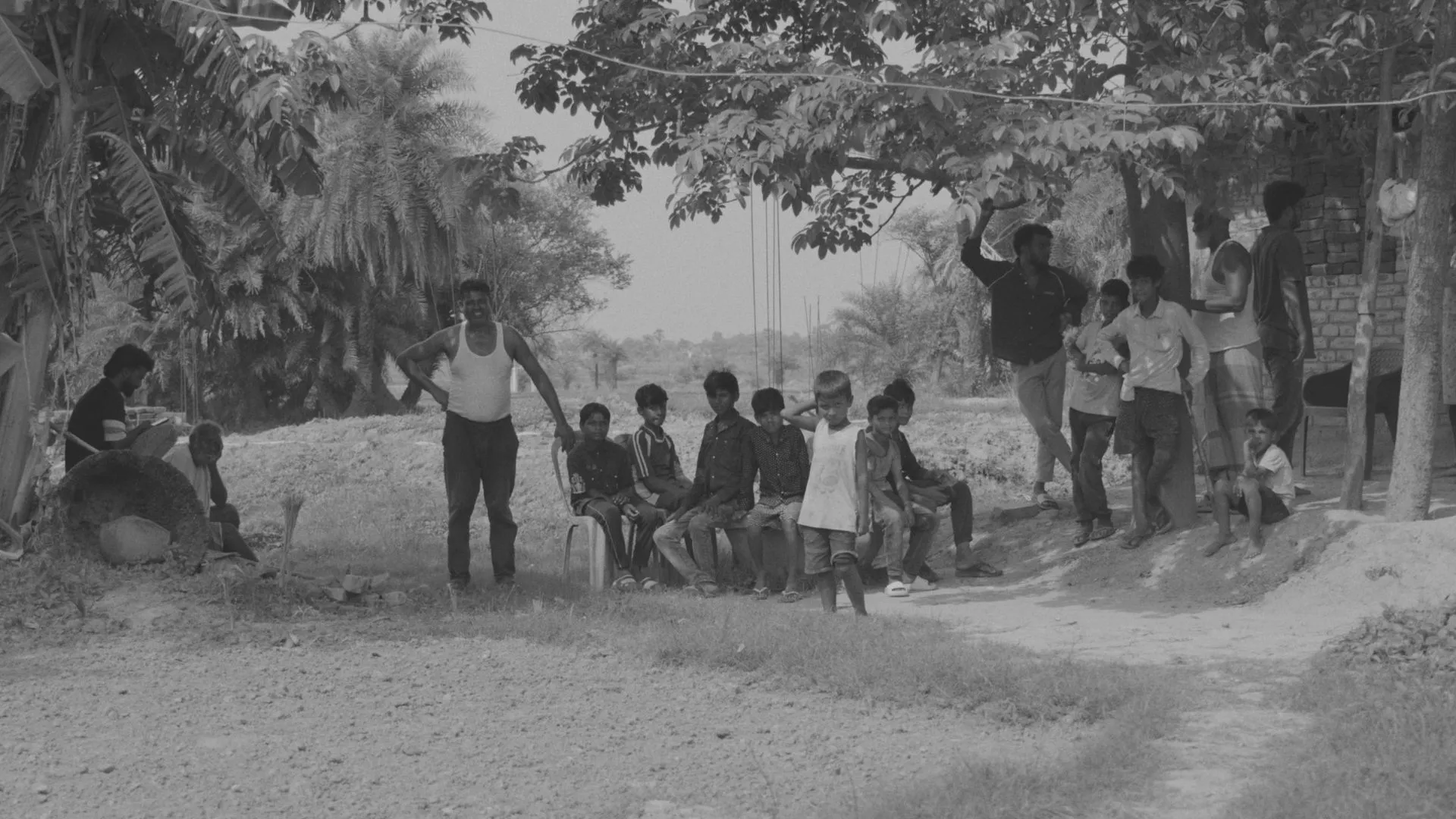
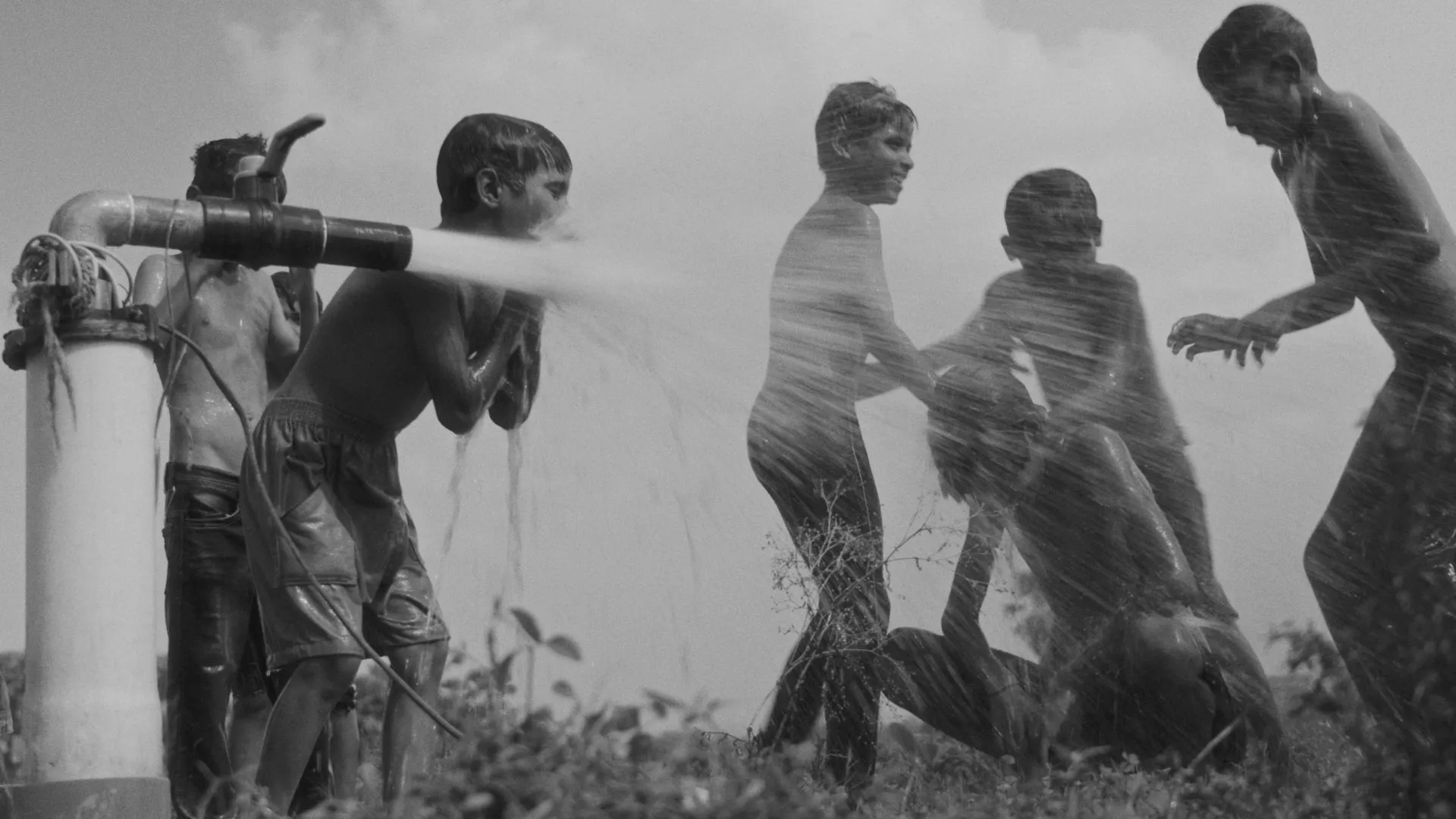
After experiencing the overwhelming chaos of India's cities, so full of people and sound that the senses are constantly overstimulated, it's almost strange walking through this quiet countryside. Here, life moves slowly. People are waiting for the rain to finally bring some work. The men gather at the village's one shop to talk and drink chai; the women cook and tend the animals. To escape the suffocating heat and pass the time, the children gather around a water pump to play.One family, close by, is resting on a cloth in the shade of a tree. The mother braids her daughter's hair while the father looks after a newborn, tucked under a mosquito net.
In the Bihari countryside, spotting a tractor is a rarity; agricultural mechanization here is still decades behind. The division of land tells its own story: instead of the broad, continuous stretches of cultivated land I'm used to seeing in Europe, often worked by just a handful of people, Indian land is broken up into tiny plots, each run by a different family. As far as the eye can see, there's constant discontinuity: a small cultivated patch, followed by four others left fallow, followed by two more under cultivation, and so on. This fragmentation keeps India locked in subsistence farming, where fields end up functioning as little more than a family's personal vegetable patch, nowhere near enough to generate any income or live off the land.
After our walk through the village, we head back to Rohan's house, where we spend the rest of the day with his family. The father tells us that Rohan was sent to work in the city when he was only nine. The fields, due to increasingly rare rains and rising heat, yielded less each year. Farming stopped being an option for Rohan’s future, as it does for so many other young people in similar situations. When Rohan was sent off to find work, his father wasn't even home; he too was working in a different city, and his mother, seeing no other way to sustain the family, decided to send their son to live with an uncle in Bangalore. At this point, Rohan's father's eyes well up. He tells us he asked his wifeto bring the boy home, that he was too young to start working and leave school.
[1] Pier Paolo Pasolini, L'odore dell'India (Milan: Longanesi, 1962). Translation by the author .
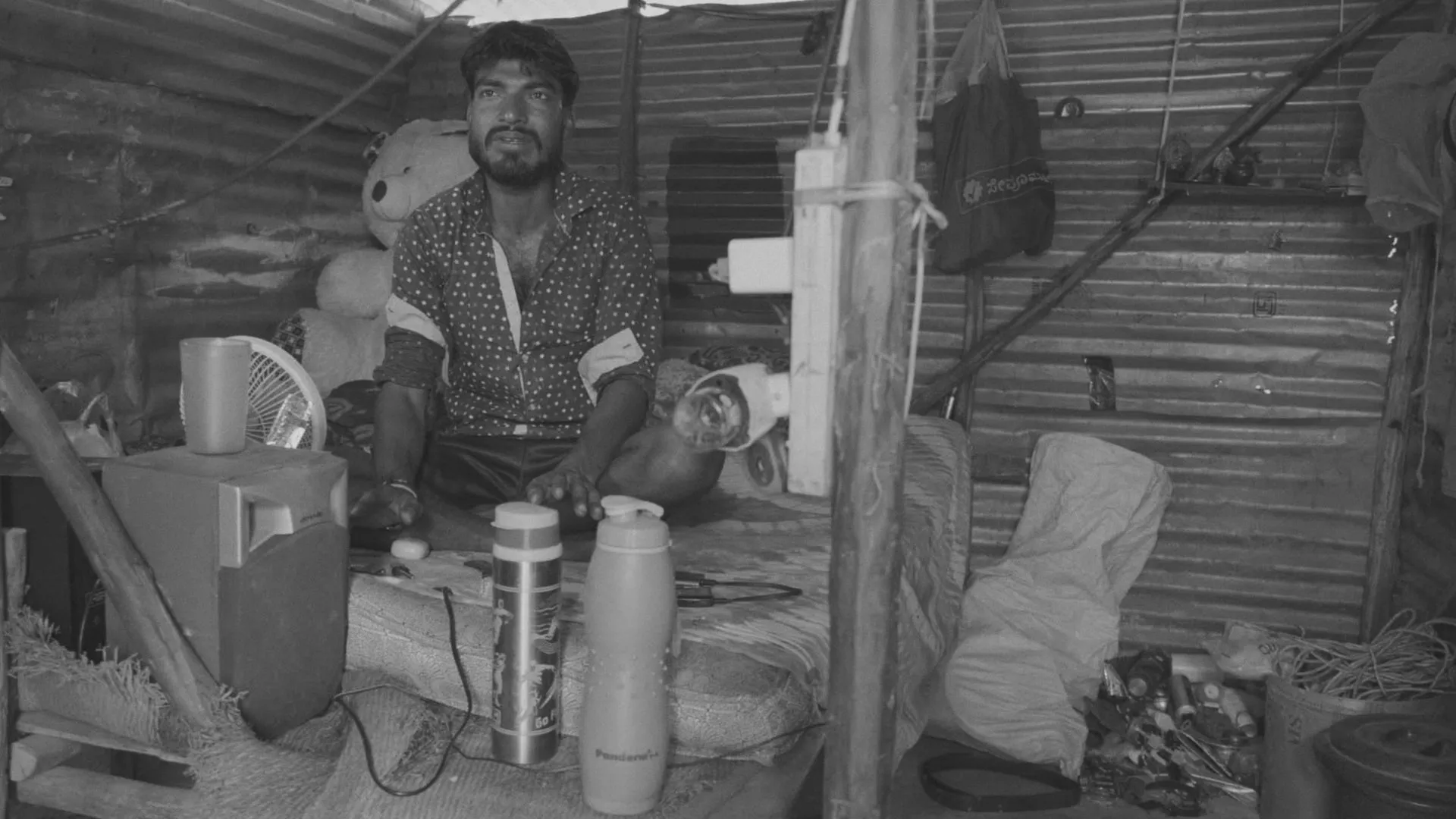
When Rohan, in Bangalore, told us his point of view about that same journey, he described the anxiety and fear of leaving. He was just a child, and yet he already sensed the family's struggles. He felt like he knew it was necessary. As he waited alone for the train that would carry him to his new life out of the village, he only had one thought in mind: save enough money to build a proper house for his family, which back then lived in a hut made of mud and wood.
Rohan’s story is just one among the many we came across during our research. Our hypothesis is that as climate change makes it increasingly difficult to work the land, the younger generations are leaving farm work to try their luck in the cities. The data we've collected so far points to a correlation between the two phenomena. Many of the migrants we interviewed told us about impossible heat and increasingly unpredictable weather patterns that make it harder and harder to plan planting properly, raising the risk of losing the harvest. Talking to them, though, it becomes clear that climate change is just aggravating preexisting problems. The plots are too fragmented. Mechanization is way too slow. The infrastructure is inadequate and it’s extremely difficult to reach markets to sell the little surplus farmers manage to grow.
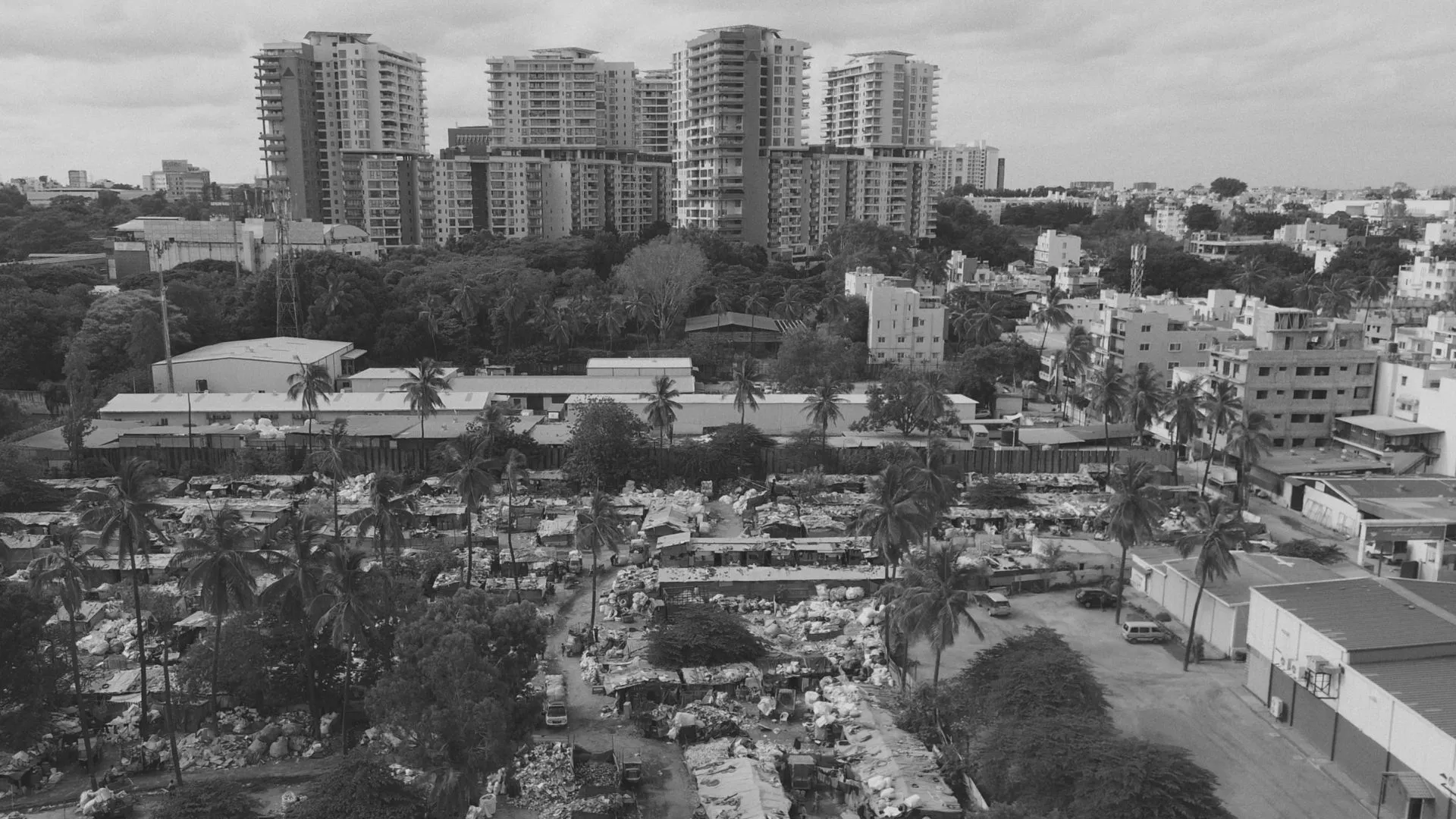
It's a glaring contradiction. The world's most populous country ought to place enormous importance on agriculture. The food security of billions depends on it, and yet policy seems inadequate and insufficient. Farmers are left to themselves, and are effectively forced off the land and into cities to do work that's just as grueling and just as underpaid. And so the new generations are losing their agricultural knowledge to become construction workers, tuk-tuk drivers, textile workers, and the like. Access to education in rural India often remains difficult, and a huge share of people neglected by policy pours into the cities, doing whatever they can to build a future. That's how certain areas of the cities end up filled with self-built, semi-formal settlements, creating surreal environments where brand-new luxury towers rise directly over the slums. Slums full of people like Rohan, who told us: "When you get to the city, all you do is think about work, thirty days a month. Even when your legs and hands ache from everything you've already done, all you can think about is work. You know that tomorrow you have to get up and go. That's the kind of effort it takes.”
Now, on the small plot of land that belongs to Rohan's family, stands a brick house. As we leave Neema and look back at it, we can't help but think of all the kids who left home hoping for a better life against all odds.