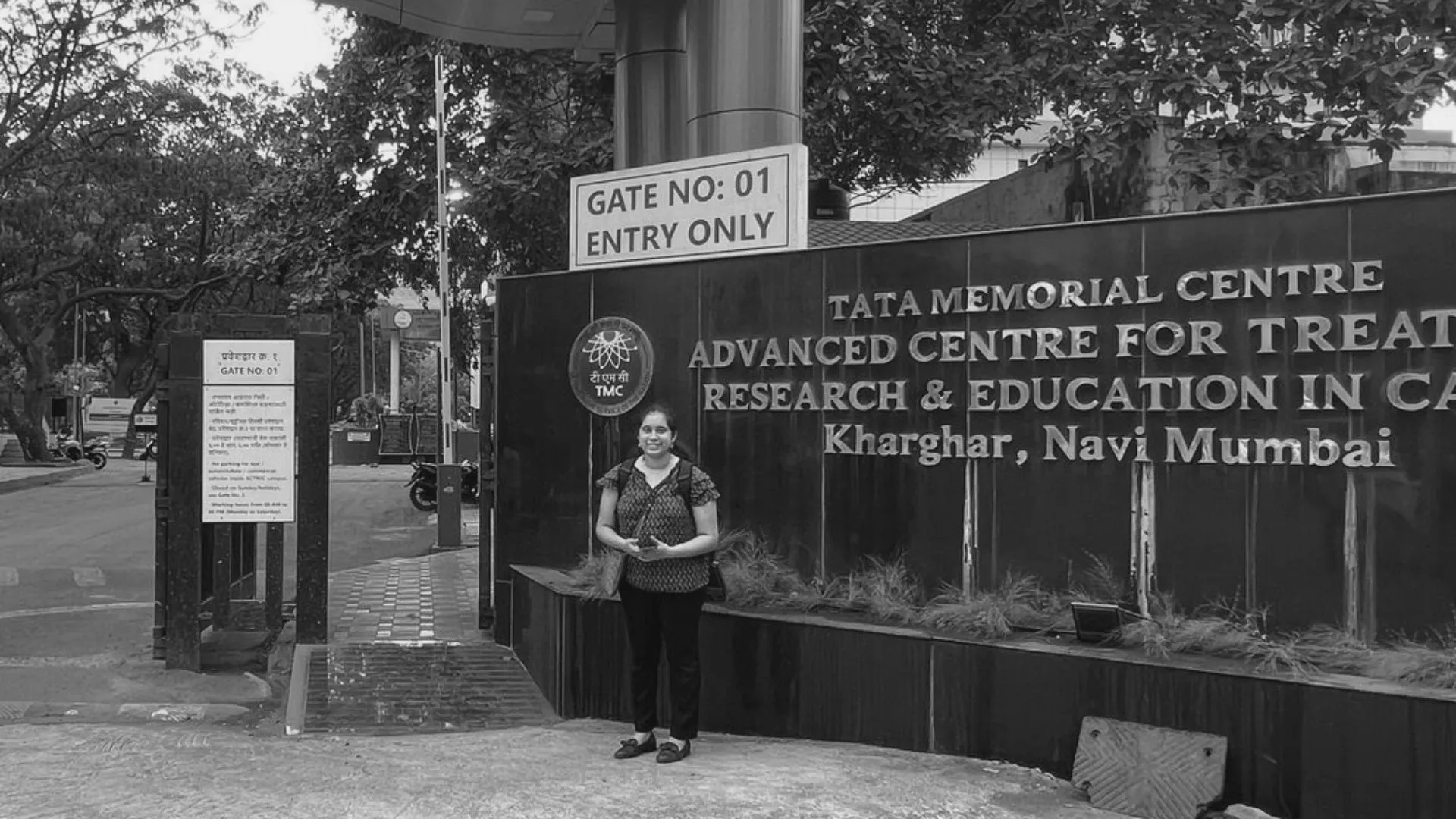
This past summer, I completed my APEx (Applied Practice Experience) as part of the Master of Public Health program at Columbia’s Mailman School of Public Health in Navi Mumbai, India. I was lucky enough to have the opportunity to work at the Advanced Centre for Treatment, Research and Education in Cancer (ACTREC), a division of the Tata Memorial Centre, which runs the largest cancer hospital in Asia. I chose to pursue my APEx here for two reasons. In choosing my APEx site, I had two priorities. First, it had to be related to my field of study, epidemiology. Second, as part of the global health program, it had to be in a “low- or middle-income country”.
I was extremely excited about the opportunity to live in another country for three months and experience global health work in action. I originally hadn’t, however, planned to come to India. While it was always an option I considered, I didn’t feel it would be a “new” enough experience for me as I grew up spending many of my summers in India, Mumbai in particular. But the opportunity to work at ACTREC was so amazing and research-focused that I knew I had to pursue this opportunity. So, while I was happy about the opportunity itself, I wasn’t sure how much global health experience I would gain. How could I learn about global health in a country I’ve been to so often?
But I soon realized that I had a lot to learn. Living independently presented many challenges, particularly the language barrier. I do not speak Hindi or Marathi, nor do I understand very much of it, but in my past visits this had rarely been a problem for me as I often had a family member with me who did speak the language. This reality made me adjust very quickly to interacting with others in different languages. I certainly made the most out of my sparse Hindi vocabulary, and have learned at least a little bit along the way.
Working at ACTREC's campus has shown me the difficulties faced in low- and middle-income nations that I had not truly understood. Particularly, overcrowding and limited resources were issues I saw firsthand. As someone who has always been very proud of their background, I was always reluctant to reduce India to simply a “low- or middle-income country,” but this experience has allowed me to understand the unique complexities of health systems in other countries, particularly those in the “Global South”.
Overall, I am grateful for this experience and the opportunity to spend three months in India. I gained so much knowledge, both technical and interpersonal, which will guide me throughout my career.