From Engineering to the Kitchen: Rahul Akerkar on Following Your Curiosity
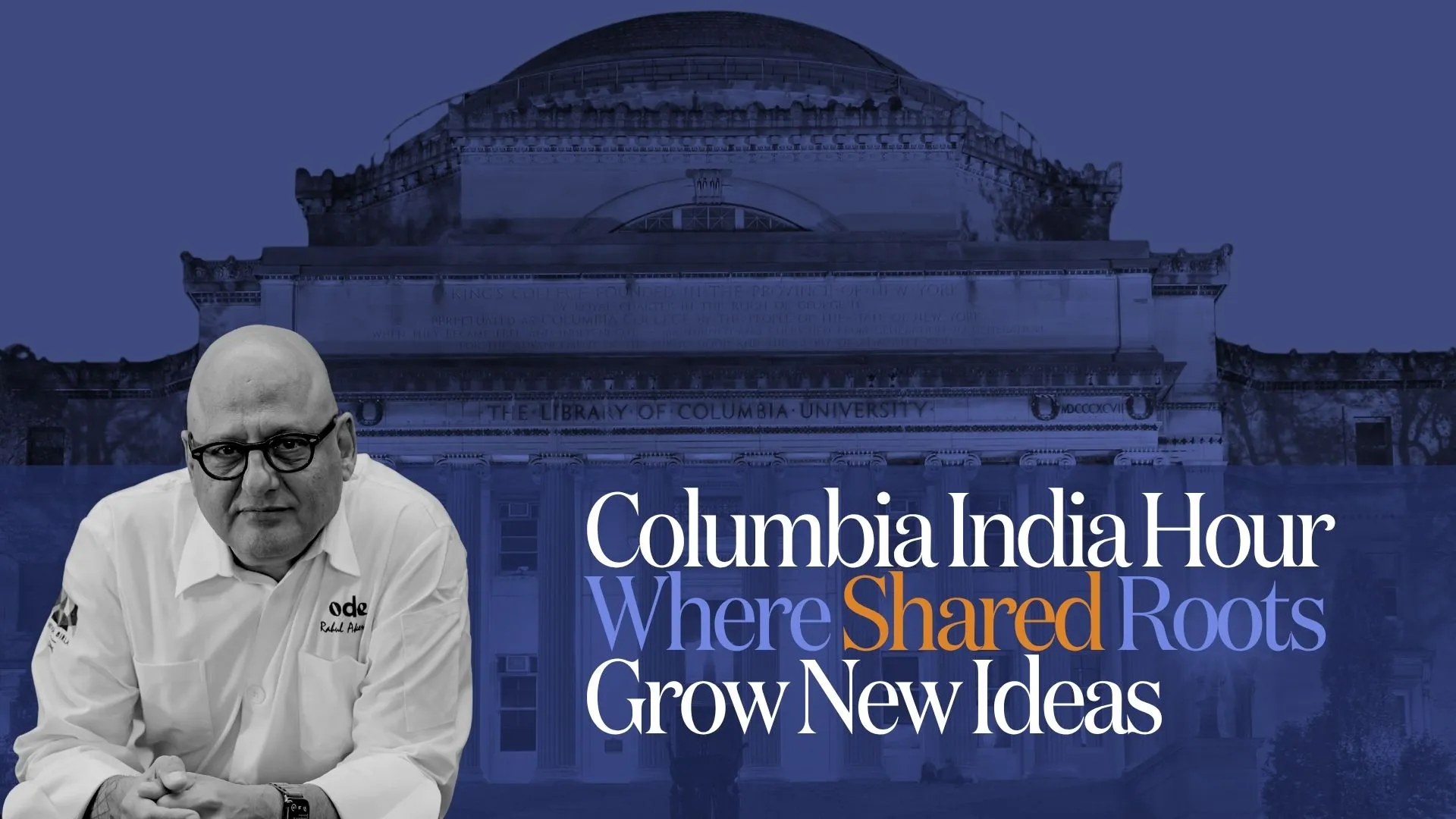
What happens when a biochemical engineer leaves a PhD to work in restaurant kitchens and eventually becomes one of the pioneers of modern dining in India? For Rahul Akerkar, Creative & Culinary Director at Aditya Birla New Age Hospitality, the answer is a career shaped less by a fixed plan than by curiosity, experimentation, and the willingness to follow what continued to hold his interest.
In the second session of Columbia India Hour, Akerkar opened up candidly about his unconventional journey—from studying chemical and biochemical engineering at Columbia to working in New York kitchens, returning to India, and building a career in food and hospitality. A two-time Columbia alumnus, Akerkar spoke about the unexpected turns, setbacks, and difficult decisions that shaped his path.
His connection to Columbia itself began almost by chance. After studying at Franklin & Marshall College, Akerkar discovered Columbia's 3-2 engineering program almost after completing his undergraduate degree. At the time, he was working in a restaurant in Lancaster, Pennsylvania and, as he put it, "had no idea what I was doing with my life." On a whim, he applied, was accepted, and moved to New York. He continued working in restaurants while studying at Columbia, commuting at one point from Washington Heights on a moped.
That combination of engineering and restaurant work would eventually point him toward a very different career.
Learning how to think
For students wondering whether an education in one field can remain valuable when their careers take them somewhere completely different, Akerkar offered a compelling perspective. He believes his engineering education continues to influence how he approaches his work—not by driving his creativity, but by giving him a disciplined way of solving problems.
"An engineering education is a very disciplined sort of analytical one. And you learn how to approach problems. You learn how to distil problems and find solutions to them."
He recalled using spreadsheets to analyse restaurant sales and food consumption, applying the systematic and analytical habits he developed through engineering to his creative work in hospitality.
For Akerkar, the broader value of college goes beyond the curriculum. Asked what college is really for, he offered advice that resonated strongly with students:
"I think it should really serve as a place to teach you how to think and not what to think."
College, he said, is also about building lifelong connections, learning responsibility and collaboration, and—perhaps most importantly—giving yourself the freedom to explore. During his own undergraduate years, he studied subjects ranging from psychology, anthropology and sociology to modern dance alongside the sciences.
When the path stops making sense
Akerkar's transition away from research was not the result of a carefully designed career plan. During his biochemical engineering research, he encountered unexpected results in his experiments and pursued them independently. When his advisor dismissed the findings, a visiting expert from Imperial College responded enthusiastically, telling him the work was interesting and encouraging him to continue.
Akerkar said something about that contrast affected him deeply. Two weeks later, he quit.
He had also begun to realise that spending weeks isolated in a laboratory did not suit him. He enjoyed being around people, and the energy of restaurant life offered something that research did not. His decision to move into food was ultimately consistent with a principle he has followed throughout his life: do what holds your interest, and when that interest wanes, move on.
That philosophy also meant being willing to start again. When he returned to India in 1989, he had to learn the fundamentals of running a business from scratch. While seeking financing for a restaurant, he recalls sitting with a bank manager who taught him how to prepare a balance sheet and project report.
His advice to students considering an unconventional career was simple: keep your dream alive, keep your goal in mind, and do what it takes to learn the craft.
The setbacks behind the success
Akerkar was equally candid about the difficult chapters of his career. He spoke about being pushed out of a business he had helped build and the financial and emotional toll of nearly losing everything. The experience changed his approach to partnerships. Once deeply trusting, he became more cautious, learning to consider not only financial due diligence but also whether potential partners share the same values, ethics and vision.
His advice extends well beyond the restaurant industry—to entrepreneurs, artists, writers and anyone building something with others. Spend time with potential partners, he suggested, and understand their ethos, the lines they will not cross, and how they envision the future.
Yet his story is not simply one of overcoming setbacks. It is also about remaining open to people and experiences that change you. A college roommate at Franklin & Marshall, very different from the self-conscious student Akerkar describes himself as having been, encouraged him to "open my eyes and open up my heart" and have fun. A memorable meal in Florence with that friend helped shape another principle that Akerkar carries into his professional life: taking your work seriously does not mean taking yourself too seriously.
Keep at it
Perhaps the most important message from the conversation was that careers rarely unfold in a straight line. Akerkar did not begin college intending to become a chef, did not attend culinary school, and did not have a conventional apprenticeship before entering the restaurant world. He followed his interests, learned what he needed to learn, and kept moving.
When asked what advice he would give graduates looking to move into a completely different field, he returned to the importance of persistence:
"You have to keep your dream alive and you have to keep your goal in mind. And you do what it takes to learn that."
For today's students, Akerkar's journey offers a reminder that an education does not have to determine a career. It can instead provide the tools to navigate one—teaching you how to analyse problems, learn new skills, work with others, and, perhaps most importantly, think for yourself.
As Akerkar's own story demonstrates, the next chapter may be impossible to predict. But staying curious, following what holds your interest, and being willing to learn along the way can create possibilities that no career plan could have anticipated.
"College is about building lifelong connections, learning responsibility and collaboration, and—perhaps most importantly—giving yourself the freedom to explore. I think it should really serve as a place to teach you how to think and not what to think."
- Rahul Akerkar, SEAS'86, Creative & Culinary Director at Aditya Birla New Age Hospitality