Aspiring to help communities flourish:
What we did, what we learned, what's ahead
As 2023 draws to a close, Columbia Global reflects on a year with much turmoil — from political conflict and economic instability to natural disasters. At the same time, we celebrate the many efforts we have made to enable communities around the globe to flourish. Below are some examples.
Which program or event below resonated with you the most?
Supporting access to a vibrant, accurate, accessible and principled press
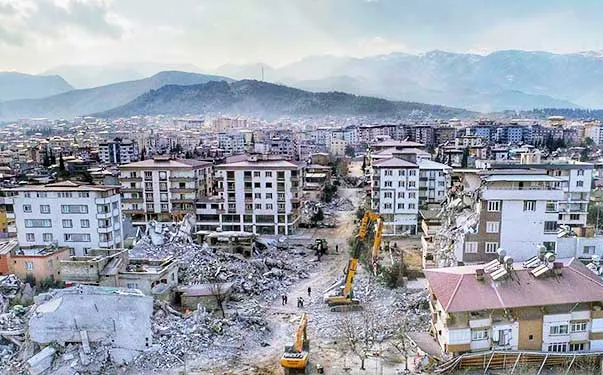
When investigating the harrowing aftermath of the Turkey-Syria earthquakes for The New York Times, freelance journalist and Columbia Journalism School alumna Elif Ince saw firsthand the complexities of reporting during a crisis. She gave a personal account at Columbia Global Centers | Istanbul, as part of a spirited conversation about Turkey’s international media coverage. The program for regional journalists raised the question about the challenges faced by journalists as they pursue coverage of major catastrophes.

Supporting news production
To address this issue, Columbia World Projects co-organized a conference with the Technology, Media, and Communications team at the Columbia School of International and Public Affairs. This gathering included media policy researchers from around the globe, who explored untapped avenues for supporting news production worldwide.
Boosting media literacy in SE Asia
Columbia University Obama Foundation Scholar Gabriel Billones Jr., from the Philippines, is promoting equity and truth in journalism through Break the Fake Movement, an independent alliance of more than 500 young professionals that he established to combat fake news and support media literacy in Southeast Asia.

Amplifying reporters' voices
Months before, in anticipation of the last national elections, the Istanbul Global Center hosted a webinar that highlighted the need for journalists to remain impartial and data-focused. To help amplify reporters’ voices globally, the Center concluded a month-long skills-building workshop for regional reporters on pitching stories to international media outlets.
Promoting harmony, equity and sustainability
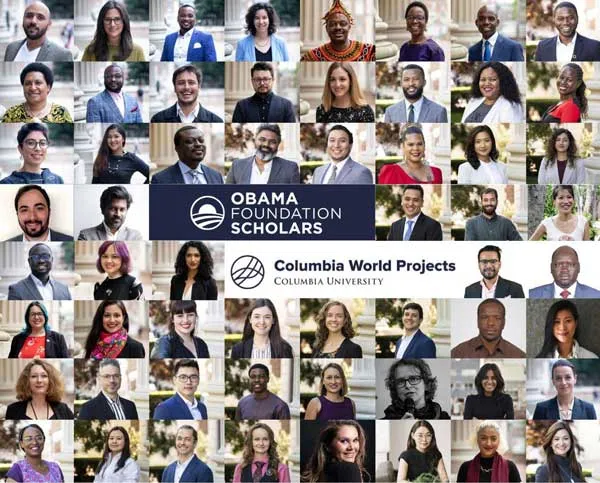
Several other Obama Foundation Scholars are working to stamp out inequity around the world. They include Ronelle King whose organization Life in Leggings addresses gender-based violence and Huong Dang whose work with HopeBox addresses the same issue. Elizabeth Kite is founder of a youth-led organization in Tonga that empowers aspiring leaders, and Amanda Morrall is a former executive director of the Coretz Family Foundation, a private organization in Tulsa that champions racial justice and equity.
Columbia undergraduate students gathered online for a three-part Collaboratory series on flourishing African cities organized by the Columbia Global Centers | Nairobi, which culminated in students working with NGOs in Kenya on issues including urban development, food systems, and clean energy.
At Global Centers | Paris, Barnard professor Séverine Autesserre shared insights on peacebuilding techniques as outlined in her recent book, The Frontlines of Peace. The Paris Center also launched “Cities and Climate Solutions,” a webinar series with City Diplomacy Lab dedicated to highlighting the climate initiatives of city governments around the world.
Columbia World Projects joined students and professors at the University’s Climate School to host a series of events on environmental inequality. The first, led by Black, Indigenous, People of Color climate justice leaders, invited participants to brainstorm strategies for assisting underserved and overtaxed communities impacted by climate change. Visiting Professor Sheila Foster moderated a roundtable discussion on carbon markets, while a panel led by Skyller Walkes—Associate Dean of Diversity, Equity, Inclusion, and Anti-Bias—engaged in an insightful discussion on environmental sustainability and social injustice in the Caribbean region and its diaspora.
In an effort to help combat environmental and health challenges, the Combating Household Air Pollution with Clean Energy project in Ghana was supported by Columbia World Projects and led by faculty from the Mailman School of Public Health, University of California, Santa Barbara, and the Kintampo Health Research Centre. The project aims to increase the adoption of innovative clean cooking technologies that reduce household air pollution. Another project, Using Energy to Catalyze Energy Investments , supported by Columbia World Projects and led by faculty from the Fu School of Engineering and the Government of Uganda, uses data to inform investments in energy in targeted areas in Uganda.
Examining the climate crisis through a political and socioeconomic lens, Committee on Global Thought member Professor Bernard Harcourt proposed a different solution in his new book, Cooperation: A Political, Economic, and Social Theory. His idea is to form a cooperative democracy driven by participation, unity, and respect for the Earth, centered on people working together for the common good.
Columbia World Projects also supported Measuring the Impact of Youth Justice Initiatives, led by Columbia’s Center for Justice. The project demonstrated the social, community, and policy impact the Justice Ambassadors project has had on the lives of young criminal justice system-involved New Yorkers, increasing enrollment in higher education, job attainment, and reducing incarceration.
Enabling responsible governance and leadership
At the Tunis Global Center, Professor Lisa Anderson — a member of its Faculty Advisory Committee and former president of the American University at Cairo, led a conversation about the evolving purpose of the state in the Arab world, which pointed to the rising influence of the business enterprise as a political authority.
And faculty from Turkey’s Kadir Has University joined the Istanbul Center to explore how elections in Turkey and Greece could reshape alliances.
We’re also focused on empowering future leaders. The Global Centers in Tunis and Istanbul came together for a youth-led advocacy initiative backed by the President’s Global Innovation Fund, meant to promote global citizenship, responsibility, and cooperation among undergraduate students. The two-day workshop aimed to empower the youth to become agents of change in hopes of cultivating more leaders like Obama Foundation scholar Luis Villaherrera, who is developing innovative technologies to combat corruption and foster democracy in El Salvador.
Members of the Committee on Global Thought hosted a panel on the intersection of artificial intelligence and labor rights. And practitioners, policymakers, and academics rallied at a Columbia World Projects event — which ultimately turned into a program that is sponsored by the Knight Foundation — that addressed the social, ethical, economic and technological risks posed by AI and digital platforms, and called on the experts to craft governance solutions to protect and promote democracy.
Supporting research and innovation
In a variety of collaborative projects, Columbia World Projects strives to address critical societal challenges through research and innovation, Piloting Ubumwe: Exploring Arts Education and Psychosocial Support with Refugee Children and Youth, developed within the Kyangwali Settlement in Northern Uganda, leverages the power of arts education to provide psychosocial support to refugee children and youth. This initiative, led by Columbia’s Mailman School of Public Health and Teachers College as well as Ugandan and NY-based partners, demonstrates our commitment to fostering resilience in vulnerable communities.
In parallel, Room to Grow Model: Closing the Opportunity Gap for Children in Low Income Communities is making strides in education. Aimed at preschoolers, it demonstrates the transformative power of combining parenting support, material goods, and community connections.
Through the Committee on Global Thought, data has helped us understand well-being in certain communities. Dr. Qin Gao, professor and director of the China Center for Social Policy at Columbia, organized a seminar to discuss the findings of a recent survey conducted by Columbia’s School of Social Work, which revealed nearly 75% of Chinese Americans have experienced racial discrimination in the past 12 months. The eye-opening research detailed the health, economic, and sociopolitical conditions of today’s Chinese-American population.
Our latest programming in support of flourishing societies
As we look ahead, we will continue to pursue this stream of work. For example, we launched the Columbia Global Resilience Fund, dedicated to enabling Columbia faculty and researchers to develop effective and scalable solutions to global crises. The first cycle of awards will focus on supporting the recovery from the devastating earthquakes in Turkey earlier this year.
In addition, we recently launched Columbia World Projects 2024 Impact Awards with the theme of Enabling Thriving Communities. These awards will support Columbia faculty and researchers to address pressing societal challenges that stand in the way of establishing flourishing communities. The goal is to support proposals that are distinguished by their creativity, interdisciplinarity and their emphasis on engaging students and building partnerships.