An Academic Summer: From the Panathenaic Stadium to Venetian Greece
Four academic programs brought Columbia students to Greece over the summer months, connecting them directly with the country's cultural and historical landscape.
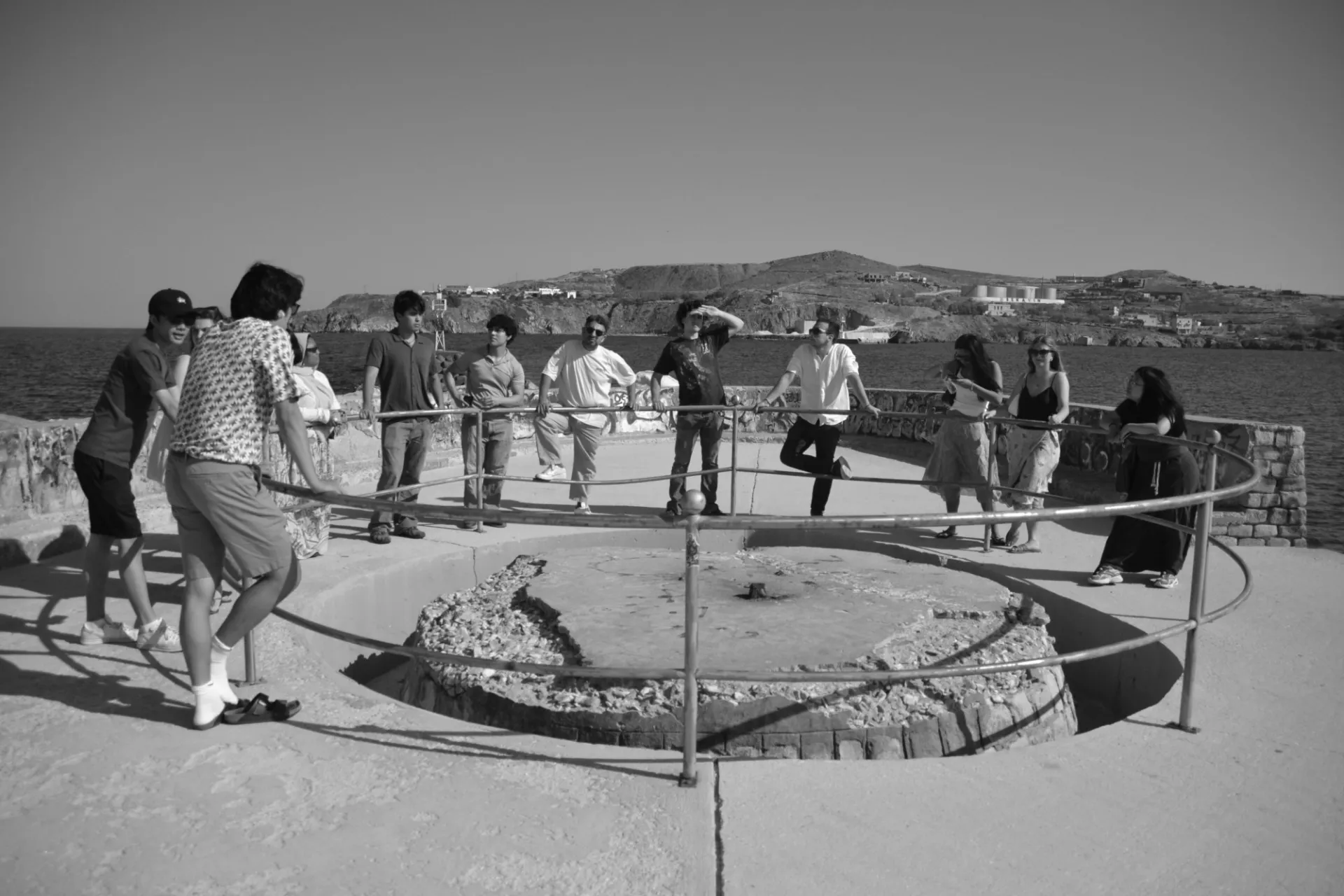
How is Columbia Global Center Athens committing its resources to educational exchange and knowledge sharing? This summer, four academic programs brought Columbia students to Greece — connecting them with the country's culture and history in seminar rooms and museum galleries, at Panhellenic sanctuaries and along the sea routes that once linked Venice to the Greek East.
Curating the City
Athens is a city shaped by centuries of exchange, conflict, and creativity — a living laboratory for questions of democracy and public space, migration and belonging, climate pressure, and the making of modern nations. The Curatorial Project led by Dimitris Antoniou, took that premise seriously.
This immersive program moved students beyond traditional coursework and into direct engagement with place, people, and practice, culminating in a collaborative curatorial project. Over three weeks, 13 students combined seminars, field visits, and meetings with local experts to explore Athens through research and hands-on curatorial practice. The program culminated in a collaborative online exhibition of a unique private collection, while fostering critical thinking, intercultural understanding, and practical skills in research, curation, and public presentation.
Where the Games Began
A new course led by Professor Paraskevi Martzavou and Lien Van Geel, Global Core Course — Ancient and Modern Olympics, offered Columbia undergraduates an interdisciplinary exploration of ancient sport and its cultural resonance. Over three weeks, 15 students combined classroom lectures with museum-based instruction and site visits to key Panhellenic and Athenian archaeological locations, investigating the politics, aesthetics, and social structures that shaped athletic competition in antiquity.
Venice Looks East
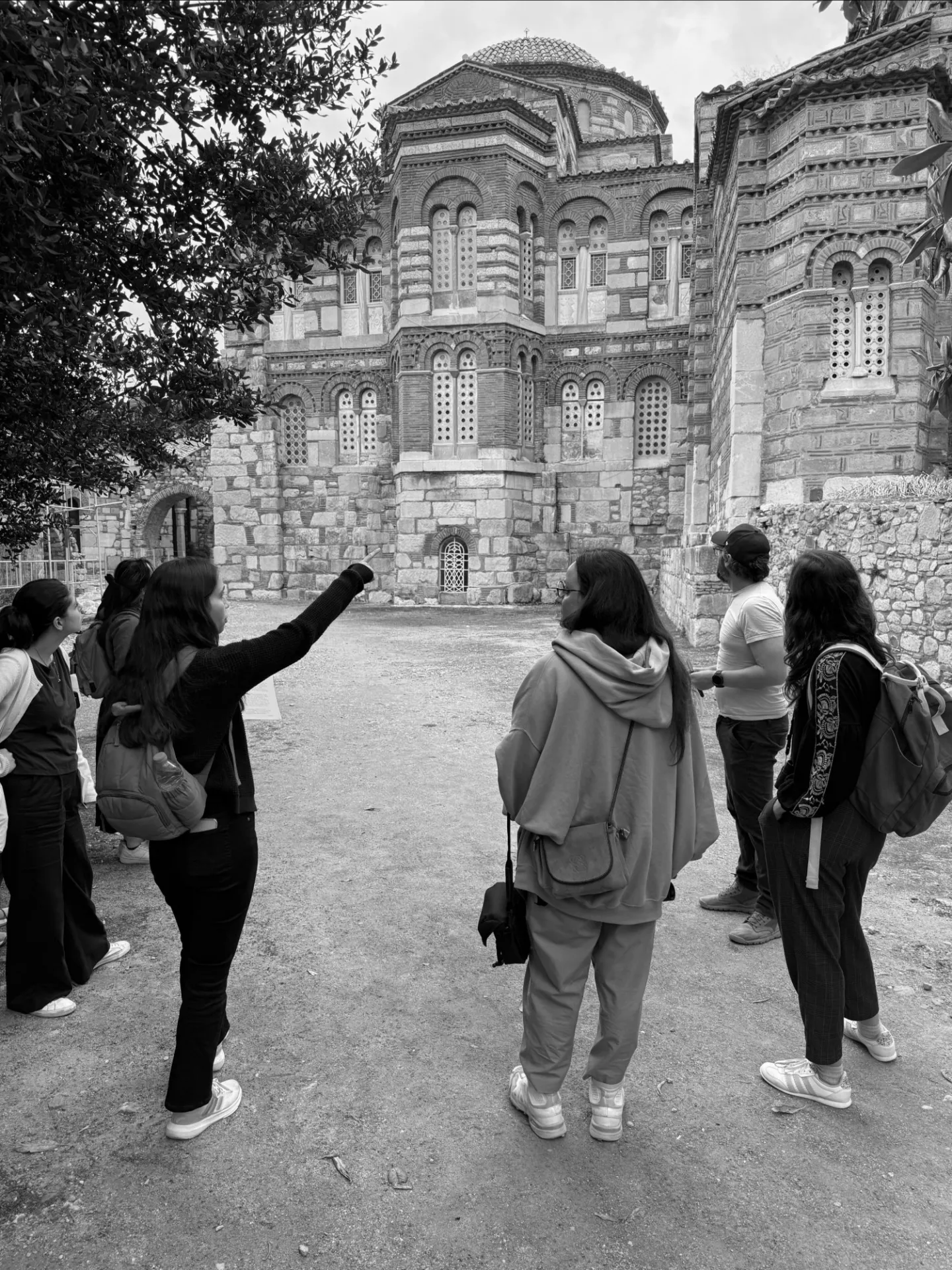
Led by Professor Holger Klein, Graduate Seminar on Venice and the East: Art, Architecture, and Devotion in the Medival Mediterranean, brought eight students to Venice, Athens, and the Peloponnese to examine the cultural and artistic exchange between Venice and the Eastern Mediterranean. At San Marco they traced Venice's contacts with the Byzantine and Islamic worlds in mosaics, furnishings, and spolia, with special access to the crypt and the chapel of St. Isidore; in Greece, visits to Daphni, Hosios Loukas, Mistras, and the Byzantine and Christian and Benaki Museums brought the Byzantine imprint on Venetian art into sharper focus.
A Week in the Field
Led by Professor Holger Klein and Professor Paraskevi Martzavou, the Center for the Ancient Mediterranean's Annual Graduate Tour brought seven doctoral students from Art History and Archaeology, History, and Classics to Thessaloniki and Northern Greece to study a region layered with ancient Greek, Roman, Byzantine, and Ottoman histories. Guided by the students' own dissertation research, the itinerary ranged from churches and museums in Thessaloniki to archaeological sites in the countryside and the ancient marble quarries of Thasos.