Bridges & Breakthroughs: Interdisciplinary Student Conference on Migration & Displacement
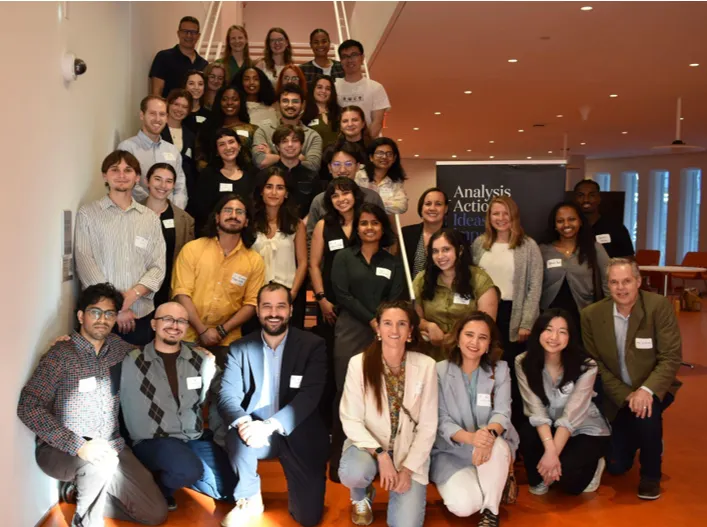
Migration touches nearly every field of study at Columbia. A public health student tracks how trauma follows families across borders. A law student maps the paperwork that decides who gets to stay. A poet puts a journey into language a policy brief can't hold. They are working on the same problem, often a few buildings apart, and rarely in the same room.
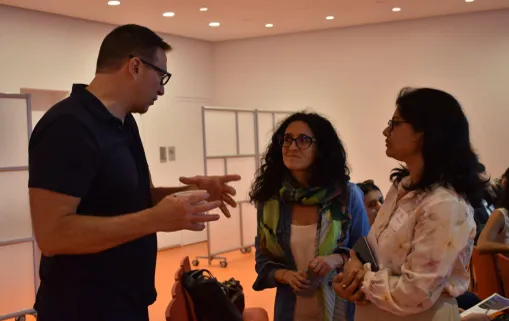
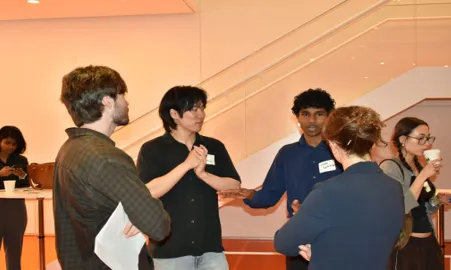
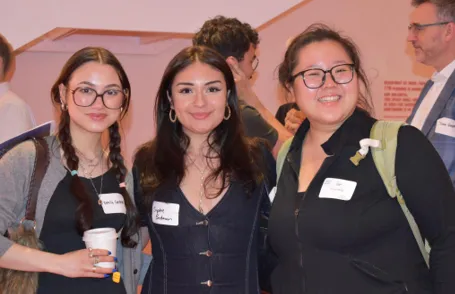
On April 17, 2026, students, researchers, advocates, and practitioners from across Columbia University gathered for Bridges & Breakthroughs, an interdisciplinary student conference on migration and displacement organized through Columbia Global's Committee on Forced Migration. The conference brought together participants from Columbia's diverse schools to share research, creative work, and practical experiences related to migration, displacement, humanitarian response, and refugee participation.
The conference was structured around three interconnected pillars: a series of flash presentations highlighting student research and creative projects, a conversation among leaders of migration-related organizations at Columbia, and a networking session designed to foster connections across disciplines and schools. Together, these elements reflected the conference's broader goal of building bridges between academic inquiry, advocacy, and community engagement.
Image Carousel with 3 slides
A carousel is a rotating set of images. Use the previous and next buttons to change the displayed slide
-
Slide 1: Students, researchers, advocates, and practitioners from across Columbia University gathered for Bridges & Breakthroughs
-
Slide 2: Students, researchers, advocates, and practitioners from across Columbia University gathered for Bridges & Breakthroughs
-
Slide 3: Students, researchers, advocates, and practitioners from across Columbia University gathered for Bridges & Breakthroughs
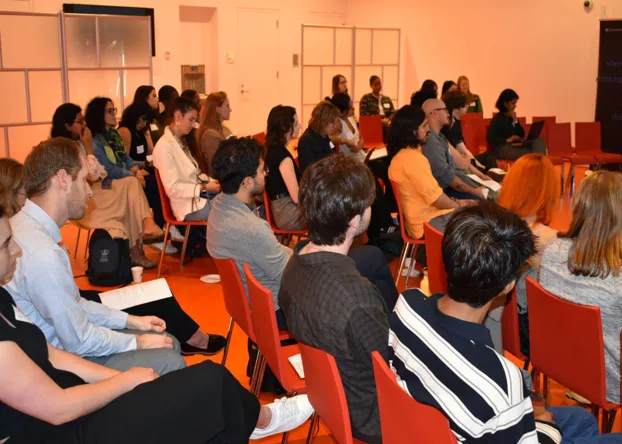
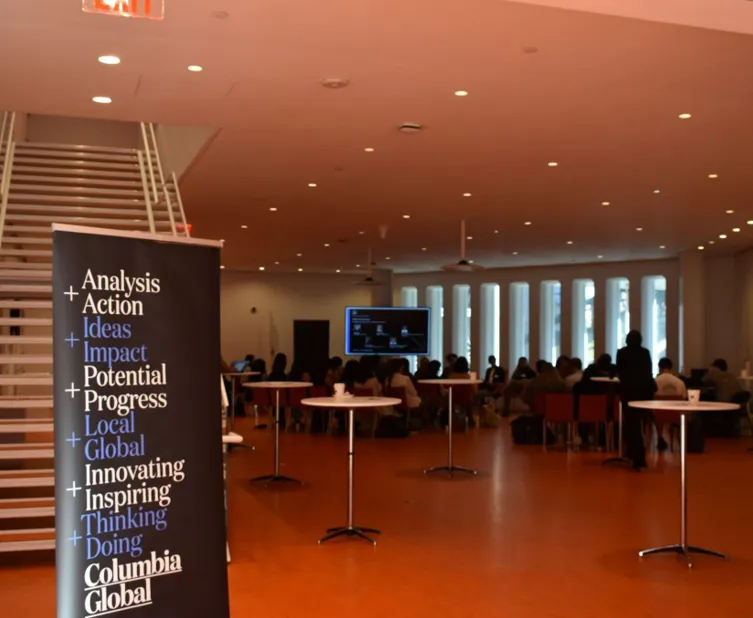
A Digital Showcase Visualized Migration Experiences from Around the World
The afternoon began with a welcome reception and showcase of digital presentations featuring artwork, photography, and research posters that visualized migration experiences from around the world. The exhibits explored themes including displacement, resilience, identity, public health, education, belonging, and social inclusion.
Diverse Student Scholarship Highlighted Questions about Belonging, Access, and Rights
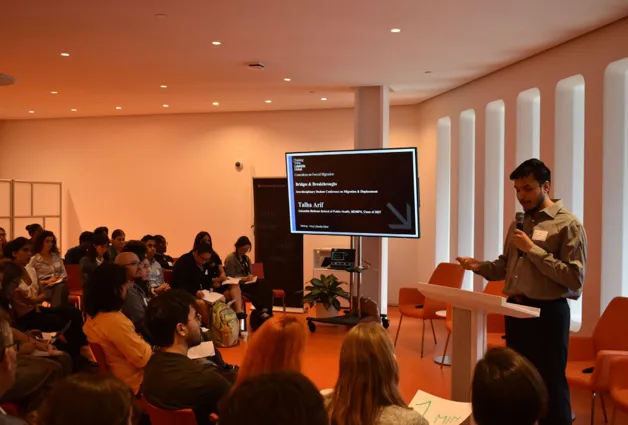
Following opening remarks by Teachers College Professor Mary Mendenhall, the conference's Collaborative Futures session featured a series of rapid-fire presentations that showcased the breadth and depth of student scholarship on migration and displacement. Drawing from disciplines including public health, education, urban studies, law, anthropology, and humanitarian studies, presenters explored the systems, policies, and lived experiences that shape migration journeys around the world.
Across presentations, several common themes emerged. Students examined how institutions, public policies, and humanitarian interventions can either facilitate or hinder inclusion, participation, and access to services. Researchers addressed challenges related to education, healthcare, workforce integration, legal protections, and social support systems, highlighting both opportunities and barriers encountered by displaced populations.
Other projects explored migration governance at local, national, and international levels, examining how immigration policies, administrative processes, and service infrastructures influence migrants' everyday experiences. Presenters discussed the effects of procedural barriers, access to resources, and broader policy trends on the lives of migrants and refugees, illustrating the interconnected nature of migration systems across different regions and scales.
Language, identity, and belonging also emerged as recurring topics. Several projects presented at the event explored how language can shape access to education, services, and community participation while highlighting the social and political dynamics that influence whose voices and experiences are recognized within institutions and societies.
Health and wellbeing were another major focus throughout the session. Presenters shared their research examining mental health, trauma, healthcare access, educational pathways, and the experiences of displaced professionals and students navigating uncertainty, conflict, and displacement. These discussions highlighted both the vulnerabilities associated with forced migration and the resilience demonstrated by affected communities.
The session also examined migration and displacement beyond international borders, including internal migration, labor mobility, and the social effects of large-scale economic, political, and environmental changes. By exploring diverse contexts and populations, presenters demonstrated the many ways migration shapes communities around the world.
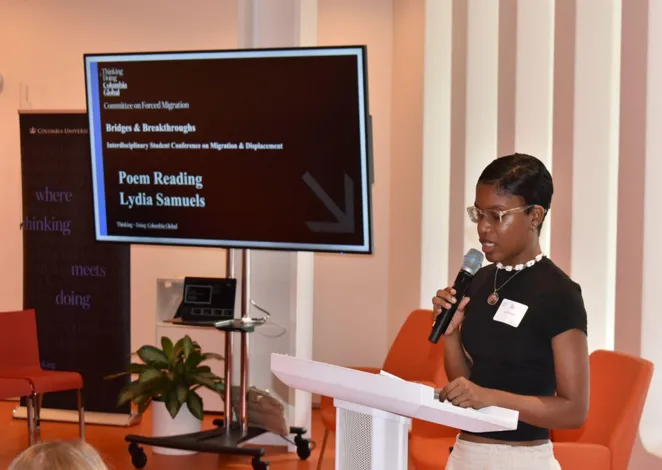
Creative work formed an important part of the conference as well. Poetry, visual art, photography, and digital storytelling were presented alongside academic research, reinforcing the conference's commitment to understanding migration through both scholarly analysis and lived experience.
Image Carousel with 2 slides
A carousel is a rotating set of images. Use the previous and next buttons to change the displayed slide
-
Slide 1: Students present research and creative projects during the Collaborative Futures session.
-
Slide 2: Students present research and creative projects during the Collaborative Futures session.
Student Leaders Share Experiences on Advocacy and Community-Building
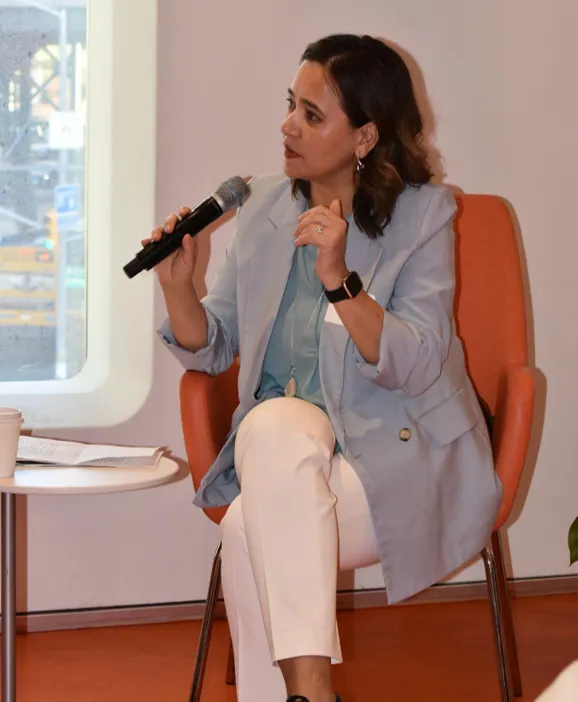
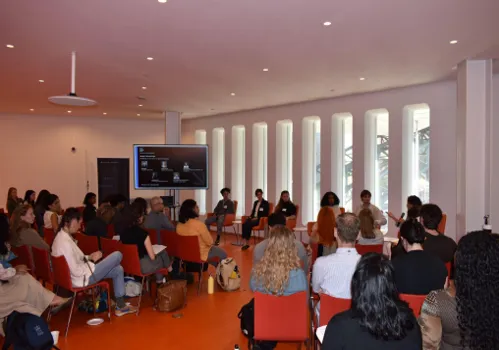
The leadership panel shifted the conversation from research findings to practical engagement. Moderated by Columbia School of Social Work Professor Mashura Akilova, the panel featured representatives from several student-led migration-related organizations across Columbia University.
Panelists reflected on their pathways into migration-related work, discussed strategies for building communities of practice, and shared lessons learned from organizing advocacy initiatives, research projects, and service-based programs. They emphasized the importance of collaboration across schools, disciplines, and sectors while offering practical insights for students interested in engaging with migration issues beyond the classroom.
The discussion highlighted how student organizations can serve as important spaces for leadership development, community-building, and collective action, connecting academic learning with real-world challenges and opportunities.
Image Carousel with 3 slides
A carousel is a rotating set of images. Use the previous and next buttons to change the displayed slide
-
Slide 1: Professor Mashura Akilova moderates the leadership panel discussion.
-
Slide 2: Professor Mashura Akilova moderates the leadership panel discussion.
-
Slide 3: Professor Mashura Akilova moderates the leadership panel discussion.
Community-Building Leads to New Ideas, Expanded Networks, and Shared Commitment
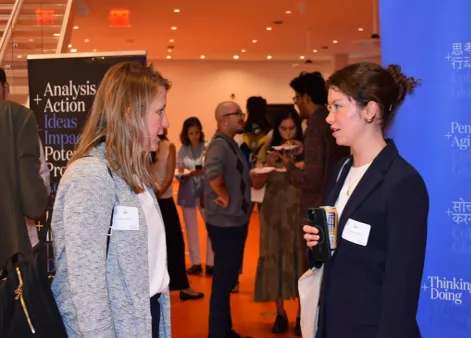
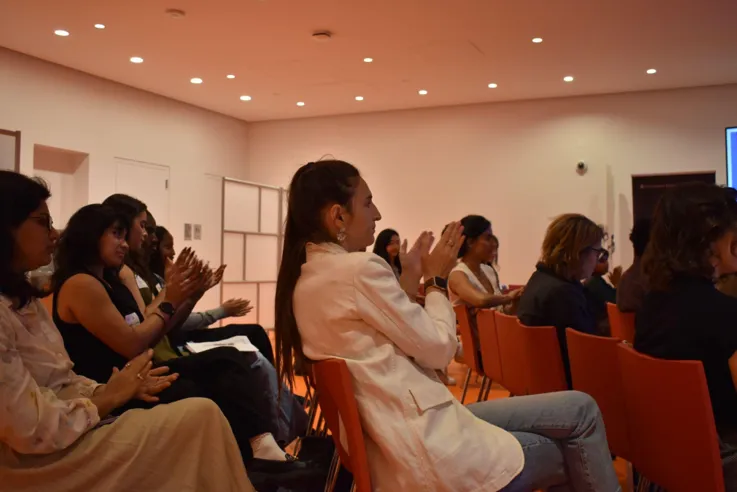
The evening concluded with a reception and networking session during which attendees continued conversations sparked by the day's presentations. Faculty, students, practitioners, and community members gathered around thematic discussion areas, exchanging ideas, exploring areas of common interest, and identifying opportunities for future collaboration.
More than a conference, Bridges & Breakthroughs demonstrated the strength and diversity of Columbia's migration community. By bringing together students from across disciplines to share research, creative work, and practical experiences, the event highlighted the value of interdisciplinary approaches to some of the most pressing challenges facing displaced populations today.
The conference reinforced a powerful message echoed throughout the afternoon: meaningful responses to migration and displacement require not only rigorous scholarship but also collaboration, creativity, and a willingness to build connections across boundaries. As participants departed, they left with new ideas, expanded networks, and a shared commitment to advancing knowledge and action in support of migrants, refugees, and displaced communities worldwide.
This fall, conversations on migration and displacement will continue with the Committee on Forced Migration and Columbia Global. Displacement in a Changing World, a series of public events and student programs on migration and displacement, runs throughout the semester. Explore the series and see upcoming events.
Image Carousel with 4 slides
A carousel is a rotating set of images. Use the previous and next buttons to change the displayed slide
-
Slide 1: Attendees connect during the closing networking reception.
-
Slide 2: Attendees connect during the closing networking reception.
-
Slide 3: Attendees connect during the closing networking reception.
-
Slide 4: Attendees connect during the closing networking reception.