Meet Our Scholars-in-Residence 2026 : Mumbai
From building a river-based climate learning model and examining the impact of extreme heat on the garment industry to strengthening India’s response to emerging infections, our three Scholars-in- Residence this year will lay the foundations for new work in climate resilience and public health.
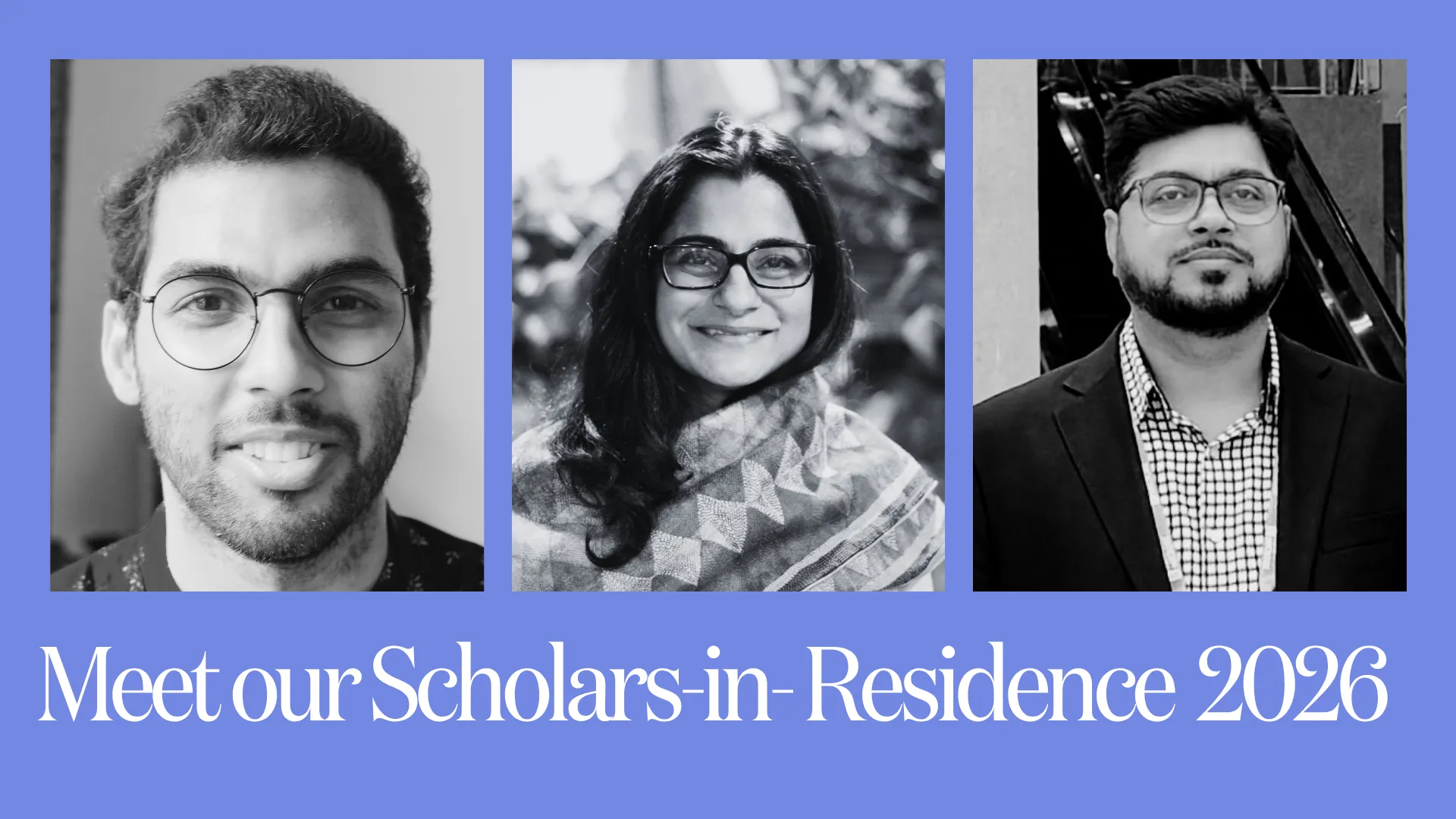
This year, Columbia Global Center Mumbai welcomes three Columbia scholars whose work will explore how education, climate resilience, and public health can respond to some of India's most pressing challenges.
A climate educator exploring how young people can become more engaged with the environmental challenges around them. A disaster resilience researcher examining what extreme heat means for workers and global supply chains. An epidemiologist looking at how India can strengthen its response to emerging infections. These are three questions that our Scholars-in- Residence will explore this year.
Each scholar will spend up to two months at the Center, using the residency to advance their research and teaching while connecting with India's academic, professional, and community landscape. The residency is designed to be more than a visiting appointment. It is an opportunity for Columbia scholars to spend meaningful time in India and build relationships, encounter perspectives that can reshape their research questions, and begin laying the foundations for collaborations that can continue long after they return to New York.
Read more about the scholars and their work below:
For Radhika Iyengar, Associate Research Scholar and Director of Education at the Columbia Climate School's Center for Sustainable Development, climate education begins with a question: How do we cultivate a deep connection to nature among young people and empower them to become lifelong stewards and guardians of the natural world?
During her residency, Iyengar will work on the design of an interdisciplinary, semester-long Climate Studio, being developed jointly by Columbia’s Climate School and the Graduate School of Architecture, Planning and Preservation (GSAPP). The residency will serve as a critical design phase for a course that aims to bridge global climate theory with local urban practice. "I became interested in applying for the Scholar in Residence opportunity to open more avenues for interdisciplinary research. Sustainable Development cannot be done in isolation and I feel that the Mumbai Global Center is the right place to build synergies," said Iyengar
The studio will build on Columbia World Projects’ “Circular Economy Approaches to Reviving Bengaluru’s Water Systems” initiative and use urban water challenges as a living laboratory. Students will explore how cities respond to problems ranging from flooding to chronic water scarcity, while learning to bring together climate science, urban design, community knowledge, and questions of social equity.
During her residency, Iyengar will explore partnerships with Indian universities, grassroots organizations, and local governments, with potential collaborators including Chanakya University, Zakhir Hussain College, Azim Premji University, INREM Foundation, Arghyam Foundation, and Pratham India Education Initiative. "I am eager to learn from and engage with grassroots organizations in India and develop a network of climate educators working on diverse sustainability issues. Thank you to the Mumbai Global Center for their incredible support as a connector facilitating my research work," she added.
Through his project, “Threading Resilience: Industry-Wide Action-Response to Heat Stress in Garment Supply Chains,” Nitin Magima, who is part of the Financial Instruments Sector Team at Columbia Climate School, will examine the implications of heat stress for India's garment sector and explore approaches to strengthening resilience across supply chains.
“Extreme heat in India's garment industry is no longer episodic weather, with India logging 554 heatwave days in 2024 alone. It is a structural operating condition. More than 12 million formal garment workers, the majority Dalit and migrant women, work eight-hour shifts in factories where indoor temperatures reach 45 to 50°C in some units and machinery runs at 125 to 130°C. Eighty-seven percent report heat-related symptoms. The risk is already there, and the people carrying it have had no institutional levers to act on it before harm occurs,” said Magima.
Threading Resilience, brings together a first-of-its-kind consortium to work on this challenge: The Tamil Nadu Textile and Common Labour Union (TTCU), a Dalit women-led union that negotiated Asia's first enforceable gender and caste-based violence agreement in apparel; HeatWatch India, which maps heat exposure inside factories; Good Business Lab, which holds the productivity evidence base; the Family Planning Association of India, which brings reproductive and menstrual health expertise; the National Center for Disaster Preparedness at Columbia University; and Blue Marble, co-designer of the first extreme-heat income insurance for women workers in India, with the UN Foundation anchoring the consortium. This consortium brings together perspectives from climate risk, disaster preparedness, finance, and industry, looking beyond individual interventions toward broader approaches that could help an entire sector respond to heat-related risks.
The focus is significant in a country where extreme heat can affect workers' health and productivity while also creating risks for businesses and supply chains. “We are building the evidence base that has to exist before heat can be written into supply chain disclosure standards and policy. Brand codes of conduct reference worker safety but say little that is technically specific about heat, and factories still tend to react only after a worker falls ill. For the first time in a formal industrial supply chain, we are pairing two tools: anticipatory action, where forecasts trigger agreed protective measures before heat peaks, and parametric insurance, which pays out automatically once a measured threshold is crossed. Women workers will be the policyholders. Payouts will go to their own accounts. It is co-designed from the ground up: the same unions and workers whose floors we are measuring are the ones shaping the thresholds that decide when action happens,” said Magima. This opportunity supports that work directly, across factory sites in Delhi and Tamil Nadu.
Climate and environmental change are reshaping the conditions in which infectious diseases emerge and spread.
Nischay Mishra, Associate Professor of Epidemiology at Columbia University, will bring his expertise in infectious disease research to India through a project focused on Advanced Diagnostics and One Health Partnerships for Emerging Infections and Undiagnosed Syndromes in India.
The project will explore opportunities to strengthen approaches to identifying and understanding emerging infections and undiagnosed syndromes, while building partnerships around a One Health framework. One Health recognizes that human health cannot be considered in isolation from animal health and the environment. This perspective is particularly relevant to emerging infectious diseases, where environmental changes and interactions between humans, animals, and ecosystems can influence disease risks.
“India faces a unique convergence of emerging infectious diseases, antimicrobial resistance, and complex illnesses; especially in children, that often remain undiagnosed, making robust diagnostic and surveillance capabilities essential. My goal is to bring advanced pathogen discovery, high-throughput serology, cutting-edge diagnostic tools, and One Health approaches to these challenges, ranging from unexplained encephalitis and pediatric tuberculosis to emerging threats such as Nipah virus and even currently unknown pathogens or ‘Disease X.’ By working closely with Indian partners, we hope to detect infections earlier, better understand their causes, and strengthen public health and preparedness for future outbreaks,” said Mishra.
Mishra's residency will provide an opportunity to deepen connections with Indian researchers and institutions and explore how Columbia's expertise can intersect with local knowledge and public health priorities. “I was born and raised in India and completed my higher education and research training at the National Institute of Virology in Pune. I have seen and worked on major public health challenges firsthand, from water-borne viral hepatitis and unexplained acute encephalitis to emerging zoonotic viruses. This residency gives me an opportunity to bring my experience and expertise back to India, build stronger collaborations, and advance better diagnostics and surveillance for emerging infectious diseases.”