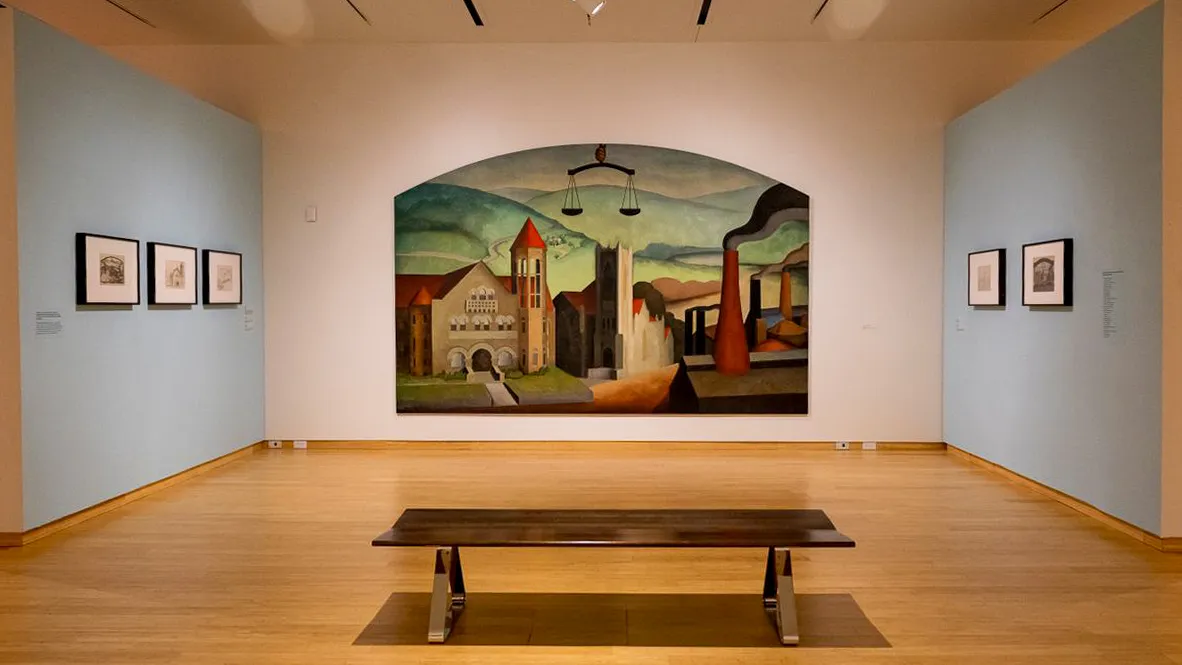
Reid Hall Goes to Morgantown
Reid Hall and Columbia Global Paris Center Director Brunhilde Biebuyck visits West Virginia University’s School of Art to deliver a lecture on Blanche Lazzell
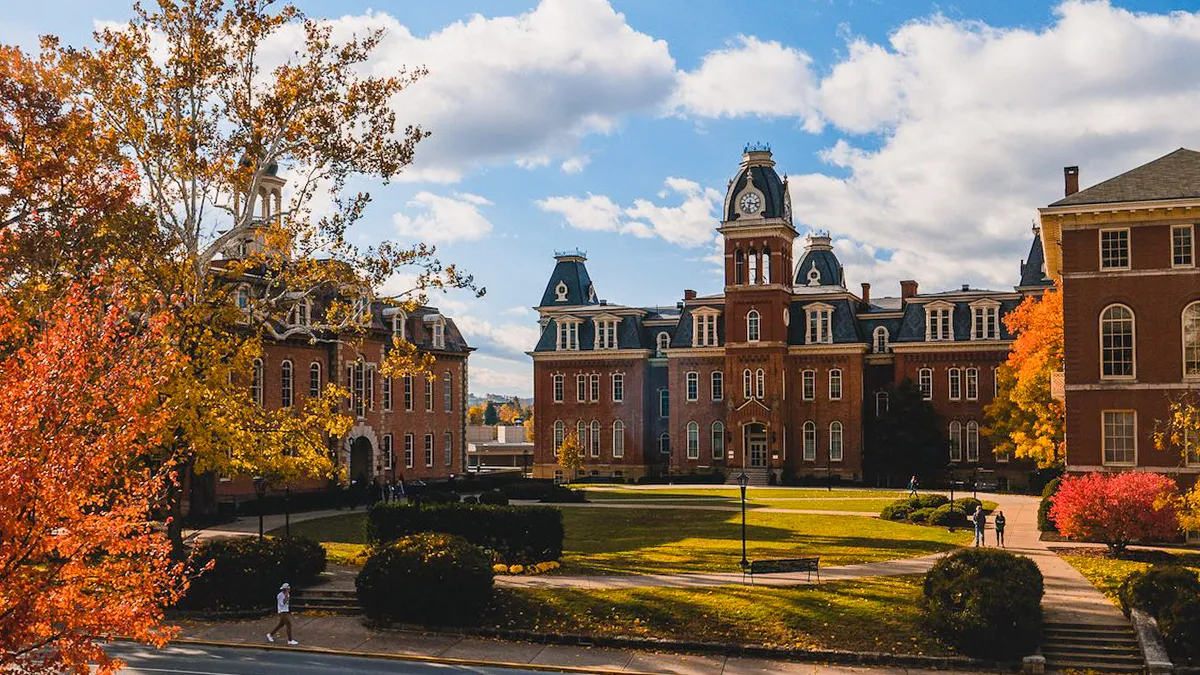
In 1912, artist Blanche Lazzell left her native West Virginia and settled in Paris. There, she joined a cohort of other women artists, many of whom were part of the American Girls Art Club, housed in what is now Reid Hall.
Lazzell later returned to the U.S., and in 1915 she joined the Provincetown Printers in Massachusetts, one of the most celebrated printmaking collectives of the era that developed the white-line printing technique. She then went back to Paris in 1923, where she developed her signature Cubist printmaking style and exhibited at the Salon d’Automne and other Parisian venues.
This story was one of many explored during the Drawn Together symposium held at Reid Hall last month. Among the participants were Bernie Schultz, dean emeritus of the College of Creative Arts and professor emeritus of art history at West Virginia University, and Robert Bridges, curator of the Art Museum of WVU. You can listen to conversations with Schultz and Bridges in our new Atelier special series.
Last week, Reid Hall and Columbia Global Paris Center Director Brunhilde Biebuyck accepted an invitation in return, traveling to WVU to deliver the J. Bernard Schultz Endowed Lecture in Art History, part of a series of lectures celebrating the landmark exhibit “Blanche Lazzell: Becoming an American Modernist,” on display at the Art Museum of WVU until Dec.13.
For her presentation, Biebuyck discussed three Parisian institutions that supported American women artists, including Lazzell, while they lived, studied and created art in France. Read more about her talk on WVU’s website.