Rethinking Climate, Migration, and Rural India
A Columbia–NIAS dialogue examined how climate stress is reshaping agriculture, livelihoods, and patterns of labor migration in India.
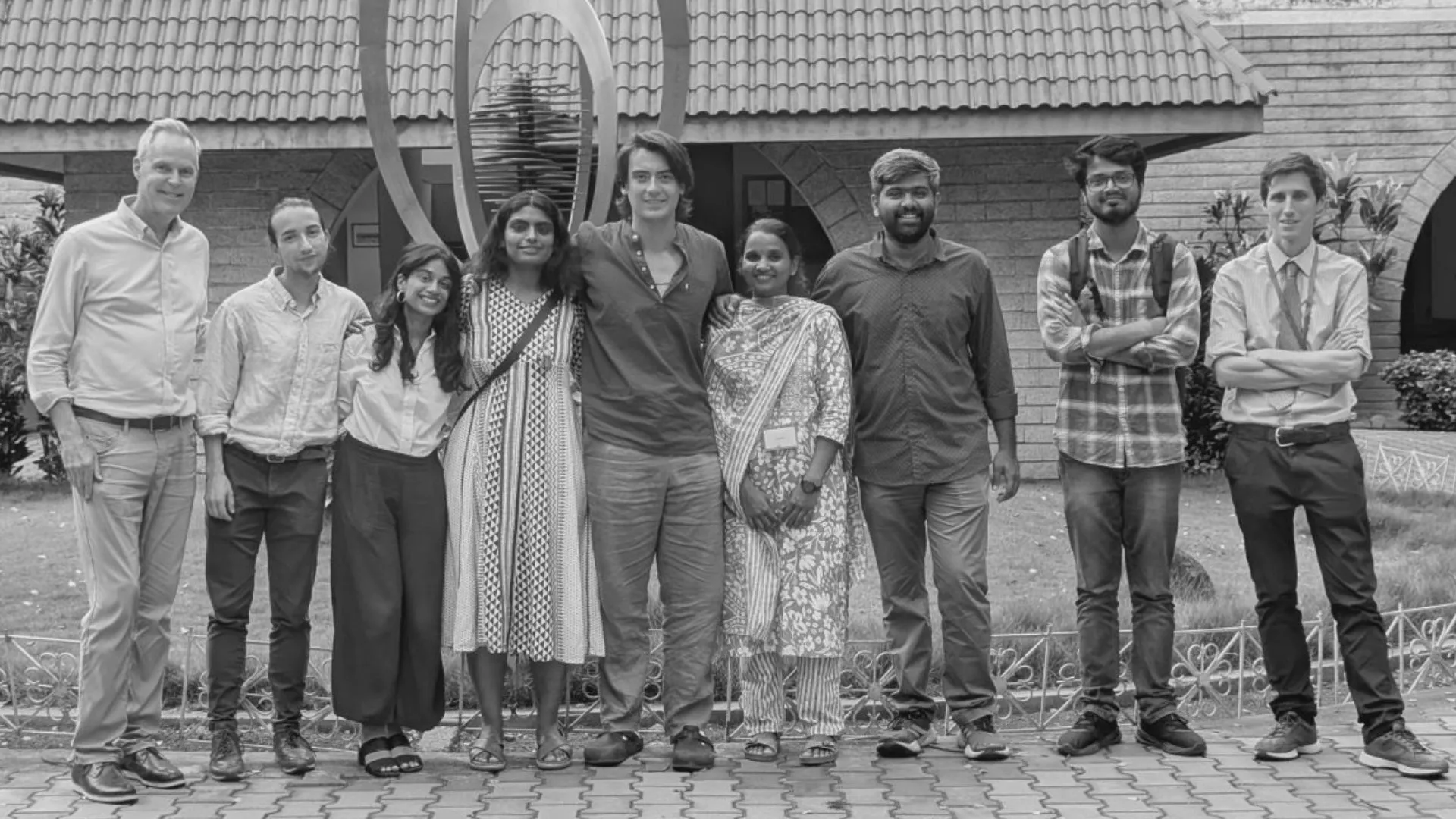
On June 23, Columbia Global Center Mumbai in partnership with the Center for Integrated Earth System Information (CIESIN) at Columbia University and National Institute of Advanced Studies (NIAS), Bengaluru, convened an Expert Dialogue on Climate Change, Agrarian Livelihoods, and Labor Migration in India. This day-long gathering brought researchers, practitioners, and policy voices working at the intersection of environmental change and human mobility.
The discussion centered around the concept of “displaced livelihoods.” Rather than asking only where people go, the term asks what happens to the agricultural livelihoods they leave behind, as climate stress, market pressures, and social change combine to erode farming as a viable path — pushing young people and working-age household members toward circular labor migration in search of alternatives.
Much of the global conversation on climate and migration treats movement as a one-way, permanent event — people leaving a place for good because the land can no longer sustain them. The Bangalore dialogue set out to challenge that framing. It highlighted that migration research in the Global South needs to reckon more seriously with temporary, circular, and seasonal mobility that has long characterized agrarian labor in India.
Set inside NIAS's lush green campus in the heart of the city, the workshop was attended by researchers and practitioners from the International Institute for Population Sciences, BITS Pilani (Hyderabad Campus), IIT Indore and IIT Guwahati, the National Institute of Urban Affairs, the Indian Institute for Human Settlements, and nonprofits such as Dasra.
Inaugurating the dialog, Shailesh Nayak, director of NIAS and geologist and former government advisor reminded participants that understanding today's environment-migration nexus requires a firm grounding in history. That set the tone for the day-long gathering.
From environmental mobility and destination economies to gender and mobility, the dialogue explored the many dimensions of rural-to-urban migration. Scholars shared insights from diverse contexts, examining circular labor migration amid ecological distress in rural Jharkhand and the shifting deltaic landscapes of Bengal, as well as immobility among fisherfolk in coastal Tamil Nadu and southern Odisha.
A policy roundtable on evidence to action brought together voices from civil society and academia to confront the policy blind spots in India's current approach to climate-linked labor mobility, including the often-overlooked question of who stays behind, and what support "stayers" need to adapt in place.
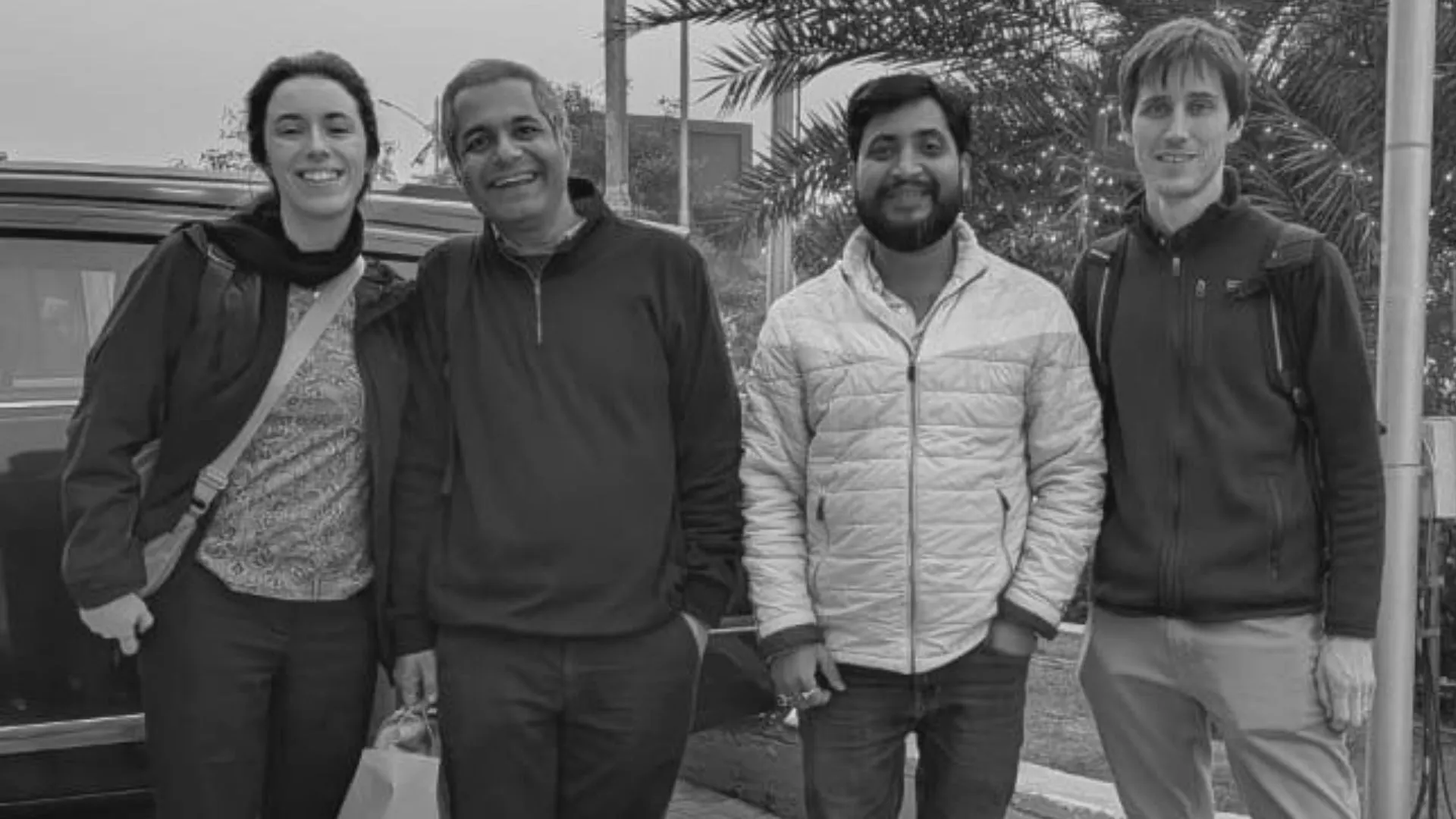
Field-work in Uttar Pradesh, Bihar, Madhya Pradesh and Bengaluru
The dialogue built on fieldwork in Uttar Pradesh, Bihar, Madhya Pradesh, and Bengaluru where a joint Columbia–NIAS team interviewed rural-to-urban migrants directly about their experiences with agriculture, climate stress, and life in the city. The team was led by Alex de Sherbinin (CIESIN), Chetan Choithani (NIAS), Fabien Cottier (University of Geneva), and Robbin Jan van Duijne (University of Amsterdam). The faculty was assisted by Columbia graduate students Siddhi Vora (MS in Climate), Emilio Leguízamo (PhD in Sust Dev), and Manini Menon and Benjamin Miyakawa (MA in Development Practice), as well as NIAS Ph.D students Sachin Kumar, Manjusha A., Arslan Khan, Shashank S. R., and Sreeganga Manoj, from Azim Premji University. Marinde Molenaar, a student at the University of Amsterdam, also accompanied the team for the January fieldwork .
The survey found that the vast majority of migrants interviewed had experienced climate stress affecting their crop yields, and that many anticipate more young people leaving agriculture altogether in the years ahead. These findings carry particular urgency this year, with India facing the risk of a severely disrupted monsoon linked to a record-setting El Niño, which serves as a reminder that the pressures pushing households toward migration are not abstract or distant, but immediate and intensifying.
The 'Displaced Livelihoods' project is funded by Columbia Global's President's Global Innovation Fund (PGIF) and supported by Columbia Global Center Mumbai.