What Connects an Island to the World Around It?
Is an island ever truly isolated? Or is it always part of a larger story—of trade, ritual, migration, and power?
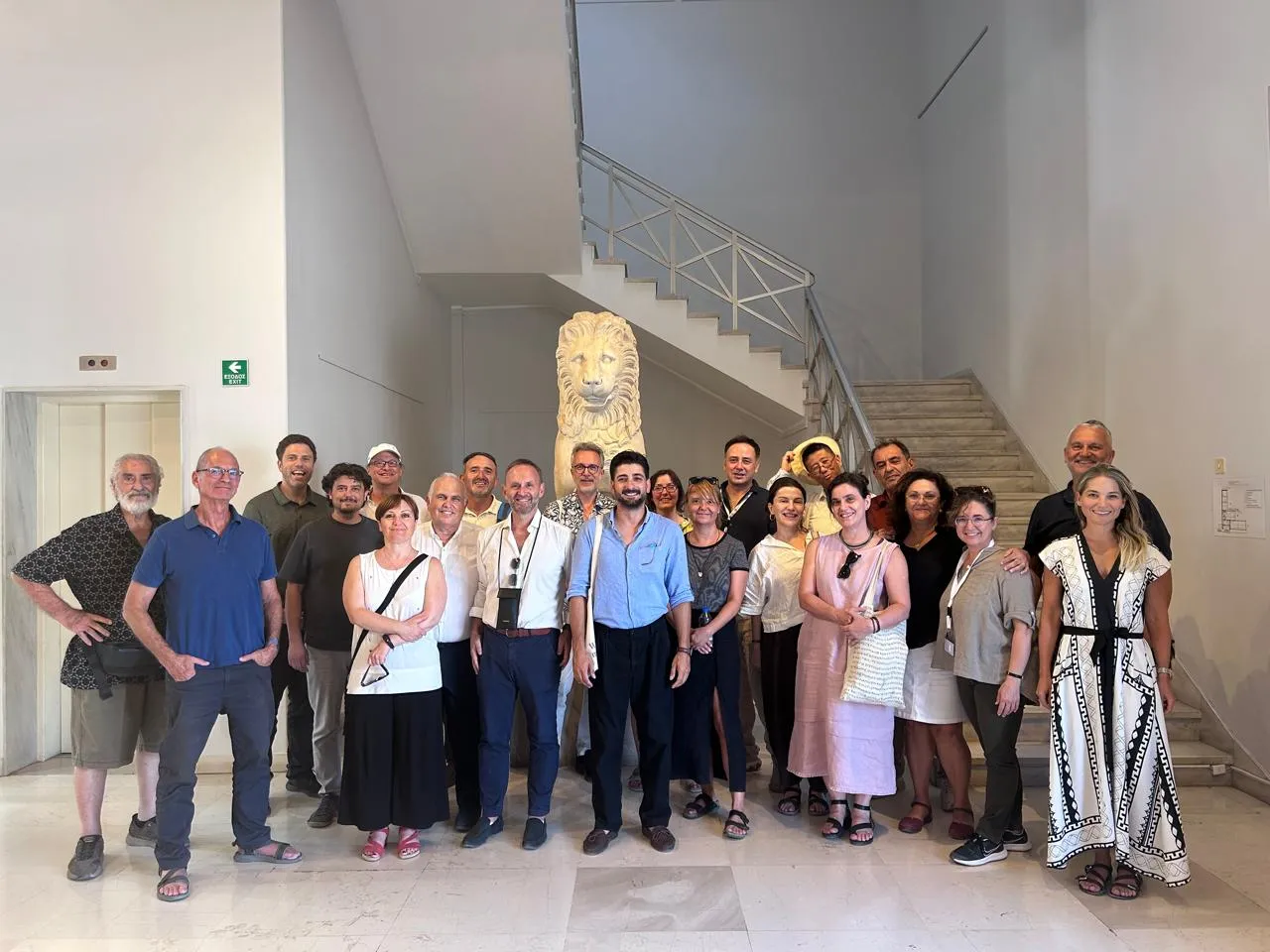
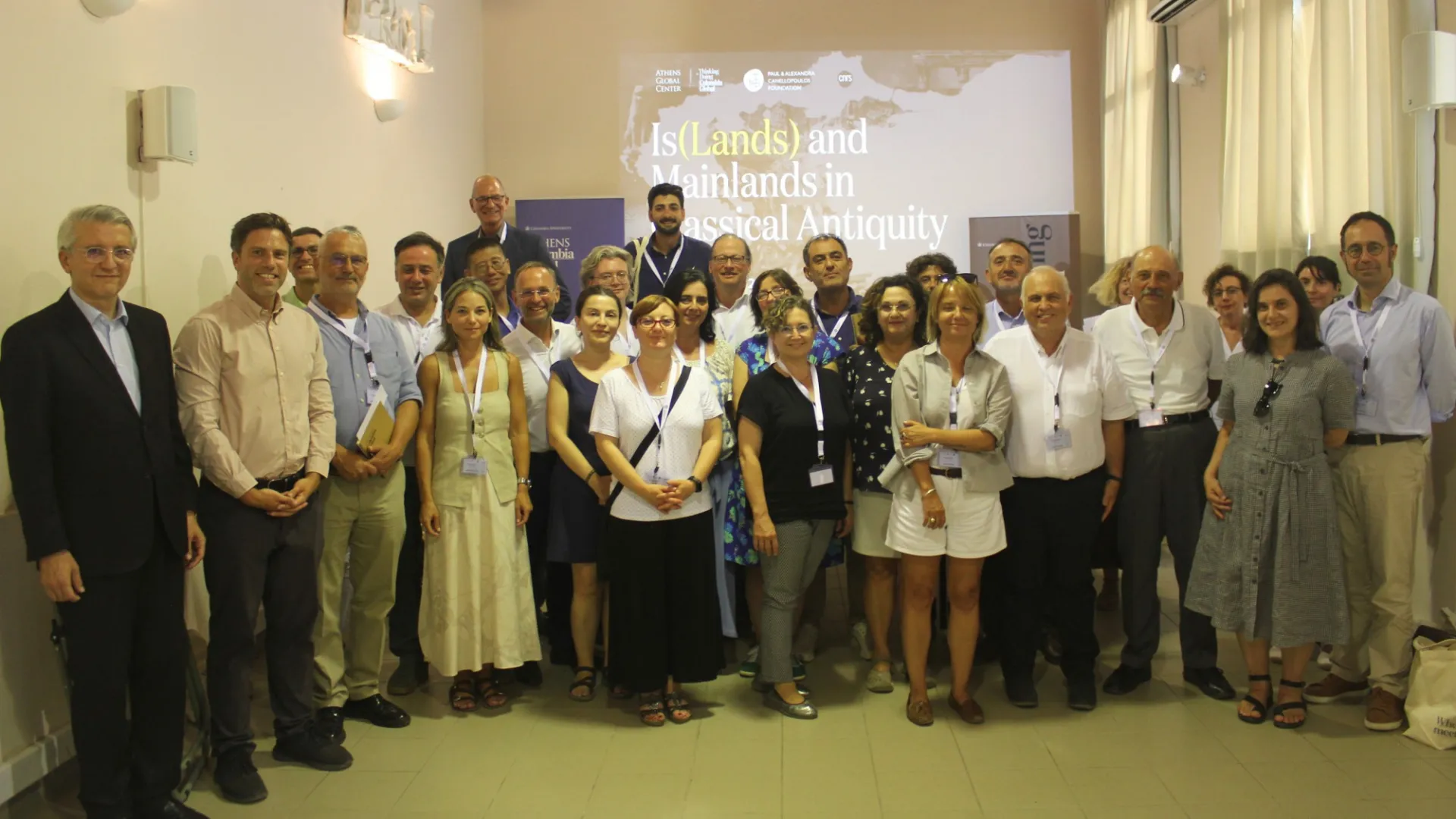
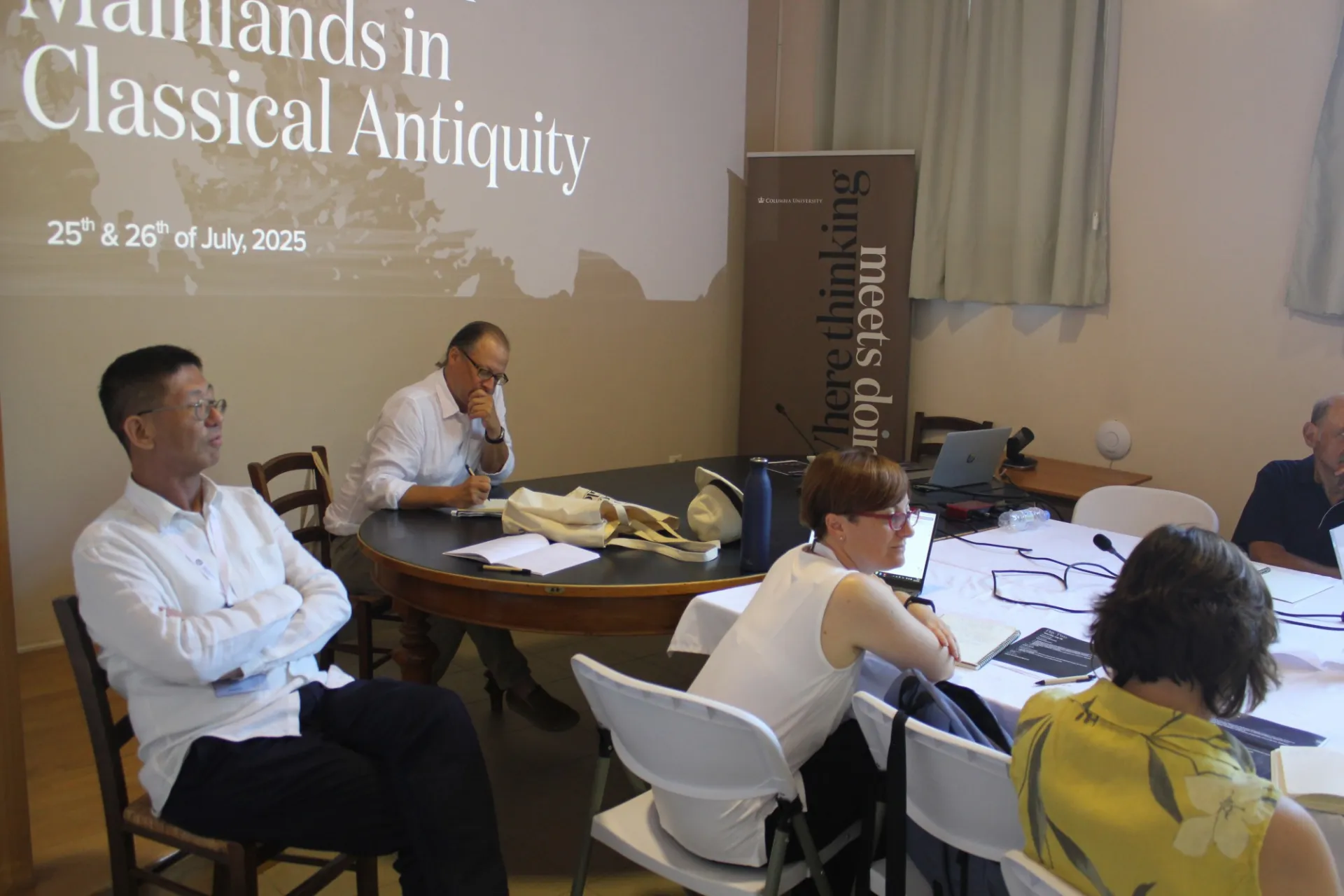
These were the questions animating the Is(Lands) and Mainlands in Classical Antiquity symposium, held July 25–26, 2025, at the French School of Athens. The event gathered more than 30 scholars from around the world to reimagine the Aegean as a dynamic network of connections rather than a static map of land and sea.
Supported by the Paul & Alexandra Canellopoulos Foundation, the symposium was organized by Columbia Global Centers Athens and Columbia University’s Department of Classics, in collaboration with the French National Centre for Scientific Research (CNRS). The presence of the Turkish Ambassador, Çağatay Erciyes, underscored the rare and significant cross‑border nature of the dialogue between Greek and Turkish scholars.
A New Model of Dialogue
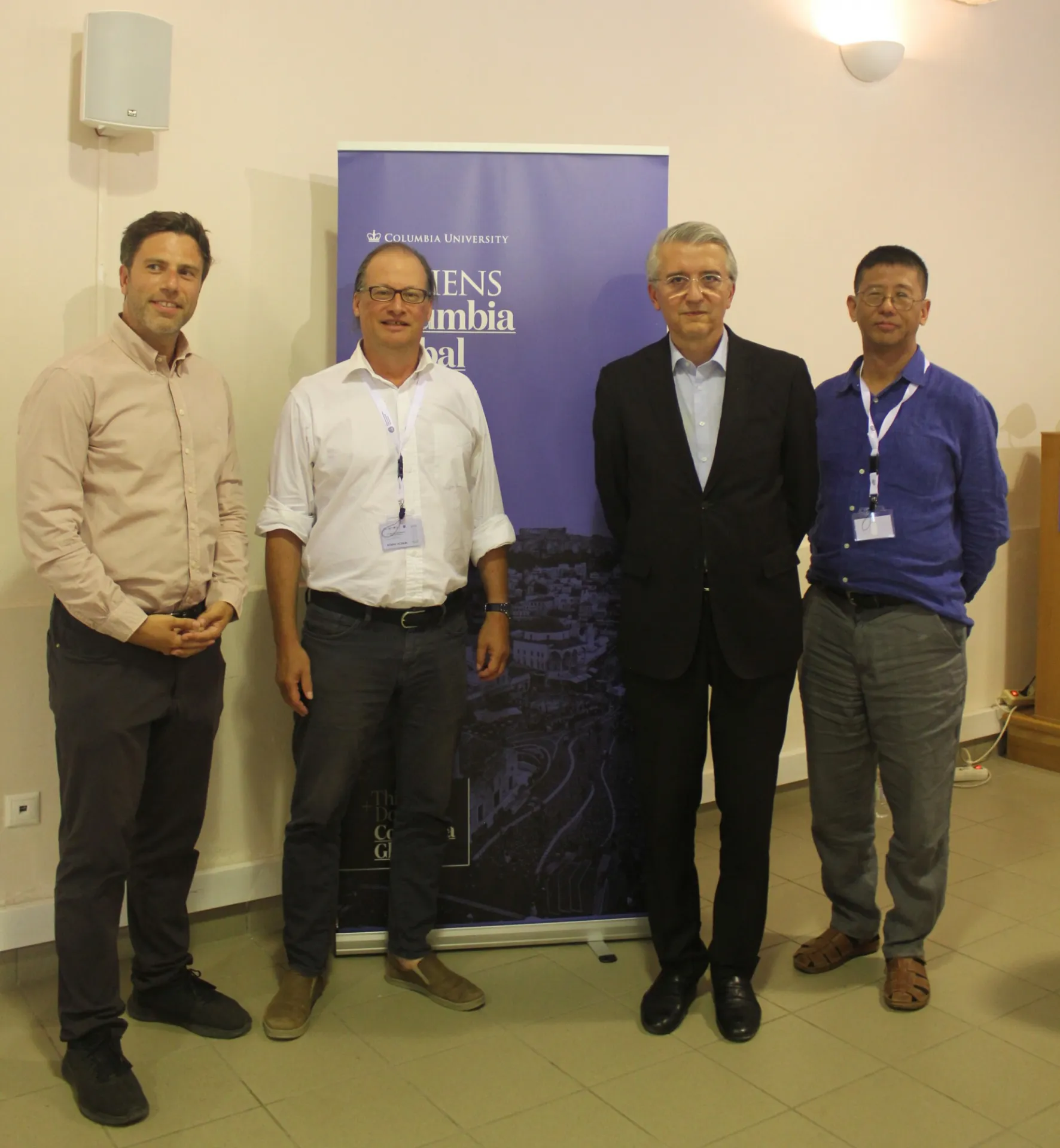
The symposium, chaired by Dr. John Ma (Columbia University) and Dr. Koray Konuk (CNRS), brought together archaeologists, historians, and epigraphists to examine how the cultural and ecological interplay between islands and mainlands shaped the Classical world.
Insights That Shift the Lens
Several unique insights emerged that challenge conventional narratives of the ancient Mediterranean:
- Islands as Connectors, Not Isolates: Archaeological evidence shows that islands were active players in regional networks, leveraging nearby mainland territories (chora and perea) for resources and influence.
- Sanctuaries as Microregional Hubs: Epigraphic studies revealed that even small sanctuaries served as nodes linking local and regional identities, their inscriptions often traveling across the sea.
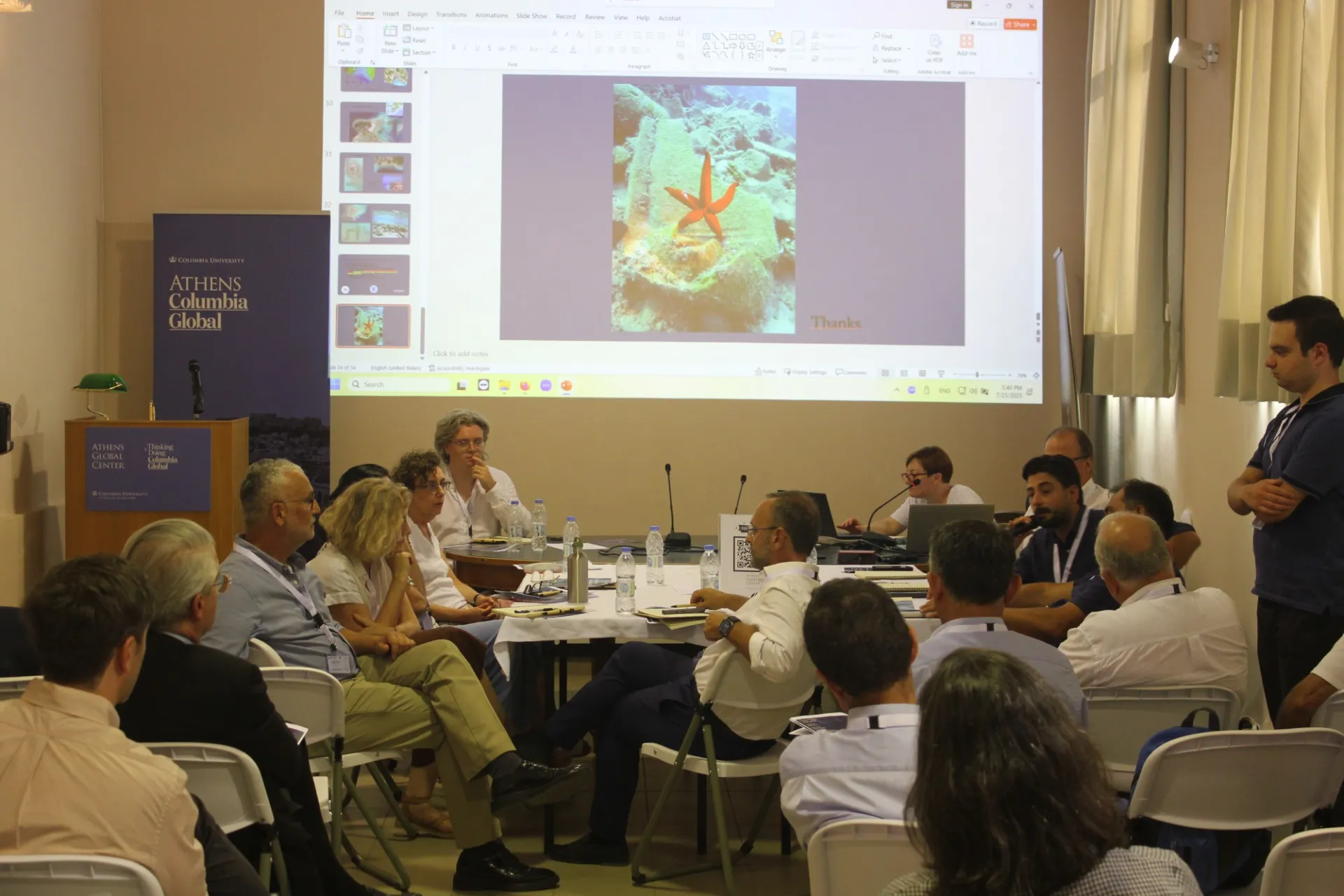
- Maritime and Underwater Archaeology: Excavations along the Anatolian coast and in submerged sites suggest trade and ritual activity occurred earlier and more extensively than traditional Athenocentric narratives imply.
One presentation featured newly documented inscribed amphora handles discovered by the Phoenix Archaeological Project, indicating direct trade between Anatolian ports and island markets—material evidence that could revise our understanding of Hellenistic economic integration.
The symposium also highlighted the significance of cross-border scholarship. For many participants, this was a rare opportunity for Greek and Turkish researchers to discuss overlapping histories in the same room.
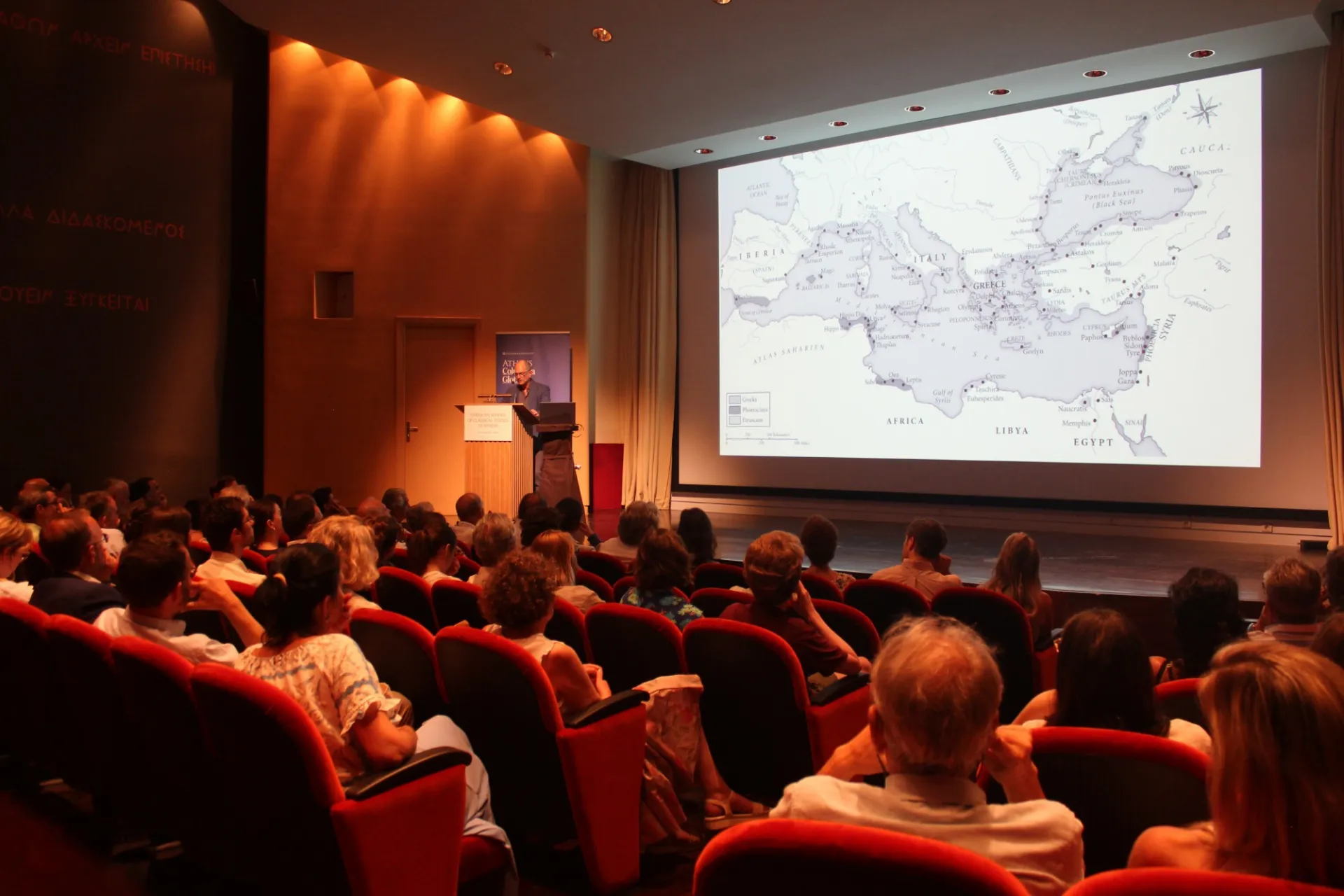
A highlight of the first day was the keynote address delivered by Professor Irad Malkin at the American School of Classical Studies at Athens. Titled “Sea, Island, and Mainland: Maritime Colonization and Hinterland Populations,” the keynote re-examined ancient Greek settlement patterns on islands and coastal promontories.
Why It Matters—Then and Now
By rethinking “islands” and “mainlands” as relational categories rather than fixed geographies, the symposium advanced a more nuanced understanding of how culture, trade, and identity flowed through the Aegean. This approach resonates today, offering a model for cross-border collaboration in regions where history is shared, but modern politics often draw hard lines.
For Columbia Global, the event exemplified its mission to bring scholars together across boundaries, uniting local knowledge with global perspectives to generate new insight and impact.
Symposium at a Glance
Title: Is(Lands) and Mainlands in Classical Antiquity
Dates: July 25–26, 2025 | French School of Athens
Organizers: Columbia Global Center Athens & Columbia University Department of Classics
Partners: CNRS
Sponsor: Paul & Alexandra Canellopoulos Foundation
Special Note: Attended by the Turkish Ambassador, emphasizing international scholarly collaboration