Projects
Displaced Livelihoods: Climate Change, Agrarian Distress, and Labor Migration in India
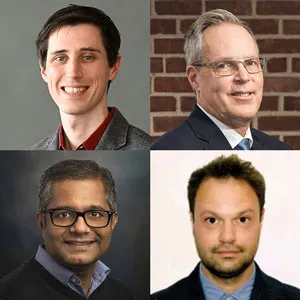
Principal Investigator: Fabien Cottier, associate research scientist, Center for International Earth Science Information Network, Columbia Climate School
Co-investigators:
- Alex de Sherbinin, senior research scientist and interim director, Center for International Earth Science Information Network, Columbia Climate School
- Chetan Choithani, assistant professor, Inequality and Human Development Programme, National Institute of Advanced Studies in Bengaluru, India
- Robbin van Duijne, postdoctoral research scientist, Center for International Earth Science Information Network, Columbia Climate School
The impact of climate change on migration is a subject of ongoing scientific disagreement. The lack of consistency in the results of prior research exposes a substantial knowledge gap in our understanding of the climate-migration link. This project aims to deepen scientific understanding of the contextual factors that give rise to environmental migration by bringing together Columbia University climate experts, the Columbia Global Center in Mumbai, and the National Institute for Advanced Studies in Bengaluru, India to conduct a pilot study of the impact of drought on rural out-migration in India. The team will combine new technological approaches with fieldwork to pioneer a much-needed alternative direction in climate migration research. The project includes conducting a country-wide analysis of the impact of drought on migration, with the aim of identifying to what degree land fragmentation, government policies, and wealth amplify or dampen this association, and a field survey to validate findings and build new theory insights explaining rural male out migration during drought.
About the Project Leads:
Fabien Cottier is an Associate Research Scientist at the Center for International Earth Science Information Network (CIESIN) at the Columbia Climate School. Dr. Cottier’s research focuses on the causes and consequences of migration and displacement, including how environmental change affects migration patterns and under what conditions in-migration results in intergroup conflict. Dr. Cottier holds a Ph.D. in Political Science from the University of Geneva (2018) and a Master in Comparative and International Studies from the ETH Zürich (2012). His research has appeared in World Development, Global Environmental Change, Journal of Conflict Resolution, Civil Wars and Nature Food.
Alex de Sherbinin is a geographer, Senior Research Scientist, and the interim Director of the Center for International Earth Science Information Network (CIESIN) at the Columbia Climate School. Dr. de Sherbinin’s research interests focus on the human aspects of global environmental change and geospatial data applications, integration, and dissemination. In addition, his research and teaching address climate-related mobility, climate vulnerability mapping, urban climate vulnerability, population dynamics and the environment, and composite environmental sustainability indicators. He has published 70 peer reviewed articles, 25 chapters in edited volumes, and authored or co-authored several books and major reports. He has managed projects under contract with NASA, USAID, The World Bank, UN Environment, UNDP’s Global Environmental facility, and multiple foundations.
Chetan Choithani is an Assistant Professor in the Inequality and Human Development Programme of the School of Social Sciences, National Institute of Advanced Studies (NIAS) in Bengaluru, India. Dr. Choithani’s research and teaching interests include migration and urbanization, food and nutrition, livelihoods, gender, and social policy and how they relate to development, particularly in the Indian context. He has done extensive fieldwork in remote parts of India and his research uses primary, field-based insights to engage with and inform larger issues of development. Dr. Choithani holds a Ph.D. in Development Geography from the University of Sydney (2016). His work has featured in the journals World Development, Gender, Place and Culture, Geographical Research, the Journal of Peasant Studies, and India’s foremost policy journal the Economic and Political Weekly (EPW).
Robbin van Duijne is a Postdoctoral Research Scientist at the Center for International Earth Science Information Network (CIESIN) at the Columbia Climate School. Dr. Van Duijne is a human-environment geographer who studies the relationship between human populations and climate change. His work leverages custom-made geo-datasets that integrate both natural and social science data, enhancing the understanding of human-environment interactions. Thematically, his research focuses on agrarian distress, livelihoods, labor migration, and climate change. He has regional expertise and fieldwork experience in rural India and Kenya.
Childhood Forced Migration Journalism Project
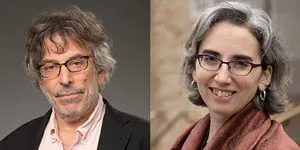
Principal Investigator: Bruce Shapiro, executive director of the Dart Center for Journalism and Trauma, Columbia Journalism School
Co-investigator: Monette Zard, Allan Rosenfield Associate Professor of Forced Migration and Health; director of the Forced Migration and Health Program, Columbia University Irving Medical Center
Children are at the forefront of a historic global refugee crisis, displaced by the millions in active conflict zones and countries decimated by violence, persecution and poverty. Journalism plays a critical role in shaping public perceptions and policy responses to children impacted by forced migration and, consequently, their life outcomes. However, the unique needs of children are typically overlooked, over-simplified or sensationalized by the news media.
With the goal of increasing the volume and quality of science-informed, ethical and innovative reporting on children in regions acutely affected by forced migration, the Dart Center for Journalism and Trauma will partner with the Columbia Global Centers in Amman and Paris, as well as the Mailman School of Public Health’s Program on Forced Migration and Health and the Care and Protection of Children (CPC) Learning Network to build the capacity of professional journalists across MENA and Europe through in-person regional reporting institutes in Amman and Paris. Each three-day institute will bring together local, national and regional reporters, editors, producers, visual journalists and Columbia Journalism School students for expert briefings, skills-training and journalist-to-journalist discussions on craft, ethics and practice.
About the project leads:
Bruce Shapiro is executive director of the Dart Center for Journalism and Trauma, a project of Columbia University Graduate School of Journalism encouraging innovative reporting on violence, conflict and tragedy worldwide. An award-winning reporter on human rights, criminal justice and politics, Shapiro is a contributing editor at The Nation and U.S. correspondent for Late Night Live on the Australian Broadcasting Corporation’s Radio National. He is Adjunct Professor and Senior Advisor for Academic Affairs at Columbia, where he teaches journalism ethics. His books include Shaking the Foundations: 200 Years of Investigative Journalism in America and Legal Lynching: The Death Penalty and America's Future. Shapiro is recipient of the International Society for Traumatic Stress Studies Public Advocacy Award for "outstanding and fundamental contributions to the social understanding of trauma." He is a founding board member of the Global Investigative Journalism Network.
Monette Zard is the Allan Rosenfield Associate Professor of Forced Migration and Health and the Director of the Forced Migration and Health Program in the Heilbrunn Department of Population and Family Health. She is an expert on forced migration and human rights, and her career has spanned the fields of policy, advocacy and philanthropy. She has served as the Global Human Rights Program Officer at the Ford Foundation in New York and as Research Director at the International Council on Human Rights Policy in Geneva, Switzerland, a think tank focused on applied human rights research. Her work there explored issues of political violence and the human rights obligations of armed groups, economic and social rights and human smuggling. From 2000-2003, she was a Policy Analyst at the Migration Policy Institute in Washington D.C. and held a visiting research fellowship in law at the Refugee Studies Centre, Oxford University. Prior to that, she directed the international refugee work of the Lawyers Committee for Human Rights, during which time her work focused on the use of legal strategies to strengthen refugee protection in Africa as well as the particular issue of how international law should deal with refugees and asylum-seekers accused of committing serious international crimes. She has consulted on international human rights and forced migration issues for a number of organizations including Amnesty International, the Brookings Institute, Human Rights Watch and the United Nations High Commissioner for Refugees.
Advancing the Nursing Workforce in Armenia and Greece as Advocates for Care for the Displaced Populations
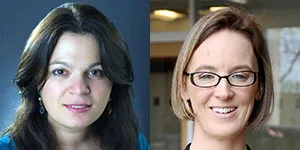
Principal Investigator: Lusine Poghosyan, Stone Foundation and Elise D. Fish Professor of Nursing Columbia University School of Nursing; professor of health policy and management, Mailman School of Public Health
Co-investigator: Monica O'Reilly-Jacob, assistant professor of nursing, Center for Healthcare Delivery Research & Innovations, Columbia University School of Nursing
Armenia and Greece have received an unprecedented influx of forcibly displaced persons in recent years, many of whom have unmet healthcare needs. As health systems struggle to meet the needs of displaced persons, there is an opportunity for nurses to play an enhanced role in providing care for this population. This project brings together the Center for Healthcare Delivery Research & Innovations (HDRI) at Columbia University School of Nursing, the American University of Armenia (AUA), and the Columbia Global Center in Athens to facilitate a dialog and foster a global community of multidisciplinary experts dedicated to advancing the nursing profession and workforce in caring for displaced populations in Armenia and Greece. The project will hold several convenings that bring together policymakers, researchers, students, clinicians, and legal experts to discuss the challenges hindering care delivery for displaced populations and how the nursing workforce can help eliminate barriers to care. The convenings will result in specific policy recommendations on how to support the nursing workforce in Armenia and Greece to care for the displaced and will form the foundation for ongoing collaboration among HDRI, AUA, and the Global Center in Greece to design research projects that produce evidence on the nursing workforce and care of displaced populations.
About the project leads:
Lusine Poghosyan, PhD, MPH, RN, FAAN, is an internationally recognized health services researcher with expertise in studying primary care organizations, health care workforce, teamwork, and quality of patient care, especially for chronic diseases. Poghosyan’s research produces evidence regarding ways to optimally utilize nurse practitioners as primary care providers and build primary care teams to assure patients—particularly racial and ethnic minorities and those living in underserved areas—have access to timely, safe, and high-quality primary care. Dr. Poghosyan also serves as Executive Director of the Center for Healthcare Delivery Research and Innovation (HDRI), which is a leader in cutting-edge healthcare systems and health services research.
Monica K O'Reilly-Jacob, PhD, APRN, FNP-BC, FAAN, is a family nurse practitioner (NP) and nationally recognized nursing health services researcher, with a focus on the primary care nurse practitioner workforce, value-based payment models and (re)emerging delivery system innovations such as NP-owned practices and NP home-based primary care. She applies clinical acumen, claims expertise and a range of rigorous methods (e.g., national Medicare claims analyses and state-wide surveys) to her work. With funding from the American Nurses Foundation, O'Reilly-Jacob is leading a multidisciplinary team to examine the readiness of NP-owned practices to engage in value-based payment.
Humanitarian Energy for Livelihoods and Life Opportunities
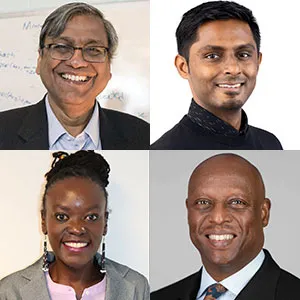
Principal Investigator: Vijay Modi, professor of Mechanical Engineering
Co-investigators:
- Vivek Shastry, senior research associate, Center on Global Energy Policy at the School of International and Public Affairs
- Juliana Bol, assistant professor, Program on Forced Migration and Health, Mailman School of Public Health
- Andrew Kamau, managing director of International Programs, Energy Opportunity Lab, Center on Global Energy Policy at the School of International and Public Affairs
In 2023, more than 108 million people were forcibly displaced from their homes, including 35 million refugees and 62.5 million internally displaced people. While access to reliable and affordable electricity is essential in humanitarian contexts, over 94 percent of displaced people in camps do not have access to electricity. In the absence of grid-based electricity, appliances powered by decentralized renewable energy can transform local livelihoods and healthcare delivery; however, the lack of reliable data on energy and productive use opportunities in humanitarian settings is a barrier to large-scale programming and systemic reform in this sector.
The long-term goal of this project is to address this gap by developing an interactive, global portal for tracking data on productive uses of energy in humanitarian settings. A multidisciplinary team of Columbia researchers will collaborate with the Columbia Global Center in Nairobi, the United Nations Development Program (UNDP), and the Turkana County Governor’s office in Kenya to document the institutional ecosystem for productive uses of energy in the Kakuma refugee camp; produce a joint report and proof of concept to track relevant data within the camp; and establish a global coalition to scale this effort to other humanitarian settings.
About the project leads:
Vijay Modi is a professor in the Department of Mechanical Engineering at Columbia University. His areas of expertise are energy resources/access, energy planning for access and renewable integration, demand estimation and role of novel payment systems in breaking barriers to upfront costs. His laboratory, the Quadracci Sustainable Engineering Lab, has been responsible for innovations such as a low-cost lead-acid charge/discharge circuit for solar lanterns (2005), fully digital pay-as-you-go minigrids that have been continuously operating as pilots since 2011, battery-less PAYG smallholder irrigation systems (2013-15) and widely used tools such as “Network Planner” for making technology choices under demographic, demand and geographic variations. His recent work has been on energy infrastructure design and planning; solar energy; energy efficiency in agriculture, and data analytics spanning from urban settings to remote rural settings. He is currently working to understand how energy services can be more accessible, more efficient and cleaner and examining minigrids in the context of energy efficiency.
Vivek Shastry is a senior research associate at the Center on Global Energy Policy (CGEP) at the Columbia School of International and Public Affairs. His work focuses on issues of energy access, opportunity, and justice across India, Africa, and the U.S., supporting CGEP’s Energy Opportunity Lab and the India Program. He has published several peer-reviewed articles in diverse journals, contributing to the literature on global energy poverty, U.S. energy transition, and energy use in the built environment. In addition to interdisciplinary research, he brings many years of strategic planning, partnership building, and program implementation experience through his prior work with SELCO Foundation.
Juliana Bol is an assistant professor in the Program on Forced Migration and Health at the Columbia Mailman School of Public Health. She is interested in evaluating the effectiveness, efficiency and impact of health system strengthening approaches in conflict-affected and fragile settings. She is particularly keen on extending the methodological toolkit used in the health systems research space to estimate program and policy effectiveness and/or impact using observational data, and in the applications of contract theory to improve accountability and service delivery. Her focus is on understanding humanitarian and developmental aid programs in complex settings where both are concurrent. She has experience working in monitoring and evaluation, and quality improvement of maternal and child health programs, primarily in South Sudan.
Andrew Kamau serves as co-director for the Energy Opportunity Lab at the Center on Global Energy Policy at the Columbia School of International and Public Affairs. He leads the lab’s projects outside of the United States, leveraging his more than 30 years of experience in the energy sector. Previously, he served as Kenya’s Principal Secretary for Petroleum and Mining, where he spearheaded several impactful initiatives, including championing the rapid uptake of Liquid Petroleum Gas as a primary cooking fuel and moving the per capita consumption from 3kg to 7.5kg in eight years. This initiative contributed to reduction of households reliant on charcoal and firewood as a cooking fuel and reduced serious indoor pollution incidence among vulnerable women and children.
Developing a Research and Rights Agenda to Address the Needs and Foster the Capabilities of Displaced Older Adults
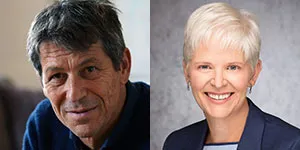
Principal Investigator: John Beard, Irene Diamond Professor of Productive Aging; director International Longevity Center - USA
Co-Investigator: Maureen Henry, deputy director, International Longevity Center and assistant professor in health policy and management, Mailman School of Public Health
In 2022, more than 1.5 million people aged 60 and older were displaced, including over 35,000 in Jordan alone. This number will likely increase as populations around the world age, armed conflict increases, and climate change accelerates. While forced migration and displacement are particularly challenging for older persons, there has been minimal research on the needs and capabilities of displaced older persons and systematic attempts to meet older persons’ needs are rare.
With a goal of better addressing the needs and fostering the capabilities of displaced older adults, this project will bring together Columbia University researchers, multidisciplinary experts from around the world, and civil society organizations serving displaced older persons in Jordan to develop a rights-based research agenda and international report on older persons experiencing forced migration. The project marks the beginning of an ongoing collaboration between the Columbia Global Center in Amman, the International Longevity Center-USA, and key international partners to conduct research focused on displaced older persons.
About the project leads:
John Beard, MBBS PhD, is Irene Diamond Professor of Productive Aging and director of the International Longevity Center-USA at Columbia University. He was previously Director of Ageing and Life Course with the World Health Organization in Geneva, where he led a number of major global initiatives, including as editor and writer for the World report on ageing and health, which forms the basis for the UN Decade of Healthy Ageing. In 2012, he established the WHO Global Network of Age-friendly Cities and Communities, which now comprises over 1,500 member municipalities responsible for more than 300 million people. Other projects developed by his team included the Integrated Care for Older People (ICOPE) program and a global campaign to combat ageism. He has worked extensively with the World Economic Forum and was a commissioner on the recent US National Academy of Medicine Commission to define a Global Roadmap for Healthy Longevity.
Maureen Henry, JD, PhD, is an assistant professor in the Columbia Aging Center and the Department of Health Policy and Management, and deputy director of the school's International Longevity Center-USA. She was the study director and lead writer of the National Academy of Medicine’s Global Roadmap for Healthy Longevity Report. As a research scientist for the National Committee for Quality Assurance (NCQA), she was responsible for developing measures of the quality of care for older adults, including Healthcare Effectiveness Data and Information Set (HEDIS) measures for Medicare Advantage plans and novel measures to evaluate care quality based on patient goals. She was also a Health and Aging Policy Fellow in the office of U.S. Senator Mark Warner of Virginia, where she developed legislation on serious illness care planning. While serving as the Executive Director of the Utah Governor’s Commission on Aging and Director of the Utah Aging and Disability Resource Center, she drafted and negotiated the state’s advance care planning law and led additional policy initiatives and programs to eliminate barriers and enable older people to thrive.