Projects
Community Resilience in the Urban Margins: Collaborative and Comparative Frameworks for Political Engagement

Principal Investigator: Eduardo Moncada, Claire Tow Associate Professor, Barnard College
Co-Investigators:
- Luna Borges, Associate Research Scholar / Supervising Attorney in the Faculty of Law; Lecturer in Law, Human Rights Institute and Clinic, Columbia Law School
- Nicholas Barnes, Visiting Scholar, Institute of Latin American Studies
This interdisciplinary project explores how urban communities in Nairobi and Rio de Janeiro respond to armed violence and socio-economic marginalization by organizing for public goods, dignity, and public accountability. Moving beyond top-down views centered on state and criminal actors, it foregrounds the agency and resilience of residents navigating insecurity and inequality.
Through collaboration between scholars of political science, urban studies, and law, and local civil society leaders, the project examines and compares community strategies of collective political and legal action. Two participatory workshops -- one in each city -- will bring together researchers, practitioners, and community leaders to co-design frameworks for civic engagement grounded in lived experience. Each workshop will feature sessions led by residents on community cohesion, resistance, and diminished citizenship.
Project outcomes include multilingual workshop summaries, a comparative final report, two academic articles (on resilience strategies and participatory methodology), and a policy brief targeting local and international policymakers. By combining rigorous research with grounded collaboration, this initiative aims to promote inclusive, context-sensitive policymaking and strengthen civil society through accessible advocacy tools and student engagement.
About the Project Leads:
Eduardo Moncada is the Claire Tow Associate Professor of Political Science at Barnard College of Columbia University. He is also the Director of the Institute of Latin American Studies at Columbia University. His research focuses on the politics of crime and violence in Latin America, urban politics, and subnational analysis. He is the author of Cities, Business, and the Politics of Urban Violence in Latin America (Stanford University Press, 2016) and Resisting Extortion: Victims, Criminals, and States in Latin America (Cambridge University Press, 2022). The latter received several awards, including from the American Political Science Association, the Latin American Studies Association, and the American Society of Criminology. Moncada’s research has received support from the National Science Foundation, the Fulbright Program, the Ford Foundation, and the Harry Frank Guggenheim Foundation, among others.
Dr. Luna Borges is a Supervising Attorney and Lecturer in Law at the Smith Family Human Rights Clinic, Columbia Law School, where she collaborates with students and civil society in transformational advocacy and critical pedagogy. She has recently completed a PhD in Constitutional Law at the University of Brasilia, Brazil, focused on legal and social mobilization for reproductive, gender and racial justice, based on critical epistemologies to unearth and transform inequalities within the law. As a PhD candidate, she was awarded a scholarship for her paper Zika Virus, Feminist Activism, and Inequality in Brazil: Constitutional Interpretation through a Reproductive Justice Framework. Dr Borges received her LLM from Harvard Law School where she was a Lemann Foundation fellow and, upon graduation, a Kaufman fellow. She has also conducted research on gender-based violence in Brazil’s public policies and on regional mechanisms to combat State-led violence. Her present and future scholarship is focused on applying critical legal thinking and praxis to develop decolonial analysis of self-care interventions and policies in historically targeted territories.
Dr. Nicholas Barnes is a visiting scholar at Columbia University's Institute of Latin American Studies (ILAS) and a Lecturer in the School of International Relations at the University of St. Andrews. He is the current recipient of several awards and research grants, including a Harry Frank Guggenheim Fellowship, a Leverhulme Trust Research Fellowship, and a Royal Society of Edinburgh Personal Research Fellowship. Dr Barnes received his PhD in Political Science at the University of Wisconsin–Madison and was previously a Postdoctoral Fellow at Brown University’s Watson Institute for International and Public Affairs. His recently published book, Inside Criminalized Governance: How and Why Gangs Rule the Streets of Rio de Janeiro (Cambridge University Press), is based on three years of ethnographic fieldwork in Rio de Janeiro’s favelas. His research has also been published in Comparative Political Studies, Perspectives on Politics, Current Sociology, Latin American Research Review, Civil Wars, and the Oxford Research Encyclopedia of Criminology and Criminal Justice.
Platform Economy and China’s Digital Working Class
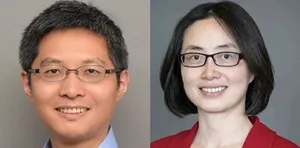
Principal Investigator: Junyan Jiang, Assistant Professor, Department of Political Science, Arts and Sciences
Co-Investigator: Yao Lu, Professor, Department of Sociology, Arts and Sciences
In just over a decade, digital platforms have transformed labor systems worldwide, giving rise to a growing class of gig workers whose employment conditions differ significantly from those in traditional workplaces. Often operating in isolation and under algorithmic control, these workers face new challenges related to identity, rights, and collective action. This project focuses on platform labor in China - home to some of the world’s largest tech platforms - to examine how workers experience and respond to this shifting landscape.
Supported by PGIF and the Columbia Global Center in Beijing, the project will establish a foundation for long-term collaborative research. Key activities include conducting interviews and focus groups with platform workers in Beijing and other cities, exploring their work routines, conflict resolution strategies, and perceptions of their roles. Interviews will also be conducted with platform managers, academic experts, and government officials to understand the broader institutional context. A pilot survey on gig workers is planned in partnership with local academic institutions and research arms of major platforms. To engage a wider audience, the project will organize workshops, public lectures, and roundtables. The overall goal is to generate knowledge and partnerships that advance understanding of labor, regulation, and justice in China’s digital economy.
About the Project Leads:
Junyan Jiang is an assistant professor in the Department of Political Science at Columbia University. He studies comparative politics and political economy, with a focus on the politics of organizations, ideas, and technology. His current projects examine the attitudes and ideological orientations of various social and political groups in China, as well as the impact of digital technologies on individual political participation and group identity. He is the recipient of the 2020 Gregory Luebbert Article Award for the best article in comparative politics from the American Political Science Association and the 2022 Evan Ringquist Award for the best paper on political institutions from the Midwest Political Science Association.
Yao Lu is Professor of Sociology at Columbia University. Her research is at the intersection of inequality, demography, and political sociology, with a strong interdisciplinary and global focus. Her current work investigates inequalities in the college-to-work transition across global contexts, with particular attention to youth unemployment and underemployment. A central strand of this research examines the rise of the college-educated working class and its sociopolitical implications, especially in China and the United States. She also co-directs a new research initiative dedicated to studying this growing segment of the working class. She uses a variety of methods in her work and engages in original data collection through surveys, experiments, and in-depth interviews. Her work has been published in journals across sociology, demography, economics, and political science.
Evaluating the Contributions of Nature-Based Solutions to Protecting Biodiversity and Building Resilient Communities in Rural China

Principal Investigator: Deren Eaton, Associate Professor, Department of Ecology, Evolution and Environmental Biology, Arts and Sciences
Co-Investigators:
- Yushu Xia, Assistant Research Professor, Lamont
- Viorel Popescu, Associate Research Scientist, Department of Ecology, Evolution and Environmental Biology, Arts and Sciences
Rural landscapes function as complex social-ecological systems, balancing human demands on biodiversity and ecosystem services with the capacity of land and water to sustain food production and basic needs. Biodiversity supports billions by providing essential resources, yet human interactions also pose risks such as pandemics. Effective policy requires detailed knowledge of biodiversity, but incomplete data on species diversity often hinders conservation efforts. Rapid, high-resolution, and scalable biodiversity assessments are needed to evaluate the impact of nature-based solutions (NBS) on ecosystems.
This project will review proven NBS in agricultural landscapes to identify cost-effective, feasible approaches suitable for Western China, supporting targets under the Kunming-Montreal Global Biodiversity Framework. In collaboration with the Chinese Academy of Sciences, the project will analyze open-access environmental DNA (eDNA) data to quantify vertebrate biodiversity across rural, agricultural, and forested areas. This method offers a rapid, cost-efficient alternative to traditional surveys.
A two-week trip to Beijing and Yunnan will facilitate workshops for Columbia University and Chinese students and faculty: one on participatory identification of suitable NBS for Western China, and another focused on statistical methods for eDNA analysis. These workshops aim to foster collaboration, knowledge exchange, and informed decision-making for biodiversity conservation and agricultural resilience in the region.
About the Project Leads:
Deren Eaton is an Associate Professor in the Department of Ecology, Evolution, and Environmental Biology (E3B), and is a recipient of an NSF CAREER award. His research combines methods from computational genomics, evolutionary theory, and organismal biology to examine and understand the distribution of plant biodiversity. He has nearly two decades of experience working in the Hengduan Mountains Region of China, and in developing and teaching computational genomic methods. Dr. Eaton aims to improve our understanding of the spatial distribution of biodiversity and endemism to promote Nature-Based Solutions in conservation.
Dr. Yushu Xia is a Lamont Assistant Research Professor at the Lamont-Doherty Earth Observatory. Her research focuses on using multi-source datasets (e.g., field, lab, literature, survey, remote sensing) and both empirical and process-based models to evaluate soil health and related ecosystem services such as carbon sequestration, water dynamics, and productivity in agricultural lands. During her postdoc, she led the development of a Rangeland Carbon Tracking and Monitoring system that combined remote sensing with process-based models. She earned her Ph.D. from the University of Illinois at Urbana-Champaign, where she studied soil carbon and nitrous oxide dynamics across spatial scales. Dr. Xia collaborates closely with organizations such as USDA, FFAR, NFWF, and AgMIP to improve soil modeling for agricultural management and policy.
Viorel Popescu is a Lecturer in Biodiversity Data Analytics with the School of Professional Studies and the Department of Ecology, Evolution and Environmental Biology. He obtained a PhD in Wildlife Ecology from the University of Maine (2011) and was the recipient of a David H. Smith Conservation Research Fellowship (2012-14). His work focuses on understanding biodiversity responses to human actions with the goal of informing nature conservation strategies and nature-based solutions. Popescu has published 75+ scientific papers, co-authored a Conservation Biology textbook and established a long-term collaboration in China around assessing biodiversity to measure impacts of conservation actions. He teaches several graduate courses in quantitative ecology and conservation at Columbia and he is a life-member of the Society for Conservation Biology and a member of the IUCN Bear Specialist Group.
Thriving Economies Amidst Armed Violence

Principal Investigator: Claudio Lomnitz, Campbell Family Professor of Anthropology; Director, Social Study of Disappearance Lab, Arts and Sciences
This project investigates the paradox of economic prosperity coexisting with persistent armed violence. While earlier research has examined conflict-related economies—such as looting, extortion, and private security—broader patterns of accumulation in violent contexts remain understudied. Macroeconomic analyses often overlook how formal and informal economies are entangled with the lived realities of violence. Using ethnographic methods, the project focuses on how profitable sectors - in industries such as mining, pharmaceuticals, energy, fishing, or logging - flourish amid militarization and organized crime.
Led by Columbia’s Social Study of Disappearance Lab and in collaboration with EHESS, Sciences Po, and CNRS, the project will establish a transatlantic network for interdisciplinary research on political economy and violence. A central working group will bring together scholars from partnering institutions for regular virtual exchanges focused on the intersection of economic life and armed conflict. The project will culminate in a workshop held in Paris, convening researchers, students, and practitioners to examine themes such as the articulation of legal and illegal economies and the role of communication in high-violence, high-growth contexts.
About the Project Lead:
Claudio Lomnitz is Campbell Family Professor of Anthropology and the founding director of the Social Studies of Disappearance Lab at Columbia University. A specialist in politics and culture in Latin America, he is author of Death and the Idea of Mexico (2005), Sovereignty and Extortion: A New State Form in Mexico (2024), and A Political Theology of Negative Sovereignty (expected 2026), among other books.
A member of Mexico's El Colegio Nacional, Lomnitz writes regularly for the press, and is committed to communicating his research to broad audiences. He is an award-winning dramaturgist, and has curated a research-based photographic exhibition on the extermination of youth gangs in Mexico.
The Water Crisis of Santiago - Establishing a Trans-Disciplinary Science & Education Program at the GC Santiago (SEP-GCSan)

Principal Investigator: Joerg Schaefer, Lamont Professor, Department of Earth and Environment Sciences, Lamont-Climate School
Co-Investigators:
- Rebecca Gustine, Climate School Postdoctoral Fellow & Lamont Postdoctoral Fellow, Lamont / Climate School
- Alex de Sherbinin, Director of CIESIN, Columbia Climate School
Mountain regions provide the majority of the world’s freshwater, yet they are warming rapidly, threatening future water supplies at a time when demand is growing. Santiago, Chile, is one of several mountain mega-cities facing a severe water crisis. The SEP-GCSan project aims to respond to this urgent challenge by leveraging Columbia University’s expertise and the Columbia Global Center in Santiago as a hub for interdisciplinary research, education, and community collaboration.
Over the course of 18 months, the project will investigate the causes and consequences of Santiago’s water crisis, develop a sustainable educational program, and elevate community and student voices in shaping just, forward-looking solutions. A core component will be a “water-crisis academy” that brings Columbia students to Santiago to work alongside faculty, local partners, and students from Pontificia Universidad Católica de Chile. Together, they will co-create lectures, public events, and art-science initiatives to engage broader audiences.
Field excursions to nearby glaciers—critical to Santiago’s water supply—will provide hands-on learning about the accelerating impacts of climate change. This program is designed to serve as a foundation for a long-term effort, with future phases supported by new grants, partnerships, and donor engagement, all aimed at advancing climate justice and water resilience in the region.
About the Project Leads:
Joerg Schaefer is a Lamont Research Professor, founding Director of Lamont-Doherty Earth Observatory’s Cosmogenic Nuclide Group, faculty member of the Department of Earth and Environmental Sciences (DEES), and the Director of Undergraduate Studies for DEES as well as the Columbia Climate School. His key interests include how glaciers and ice-sheets respond to past and modern warming, how changing ice impacts environment and society and how science can assist in developing solution strategies for these climate-related challenges.
Rebecca (Becca) Gustine recently completed her PhD at Washington State University in Water Resources Engineering. Her research focuses on the connections between climate change, snow, and food and water security using physically based models and remote sensing. Becca frequently works with water and natural resources managers to improve climate adaptation of watersheds and food and water systems. As a postdoctoral fellow at The Climate School and Lamont Doherty Earth Observatory, Becca is working with Dr. Alex de Sherbinin and Dr. Joerg Schaefer on the connections between changes in the cryosphere, water resources, food and water security, and human migration.
Alex de Sherbinin is a geographer, Senior Research Scientist, and the interim Director of the Center for International Earth Science Information Network (CIESIN) at the Columbia Climate School. Dr. de Sherbinin’s research interests focus on the human aspects of global environmental change and geospatial data applications, integration, and dissemination. In addition, his research and teaching address climate-related mobility, climate vulnerability mapping, urban climate vulnerability, population dynamics and the environment, and composite environmental sustainability indicators. He has published 70 peer reviewed articles, 25 chapters in edited volumes, and authored or co-authored several books and major reports. He has managed projects under contract with NASA, USAID, The World Bank, UN Environment, UNDP’s Global Environmental facility, and multiple foundations.