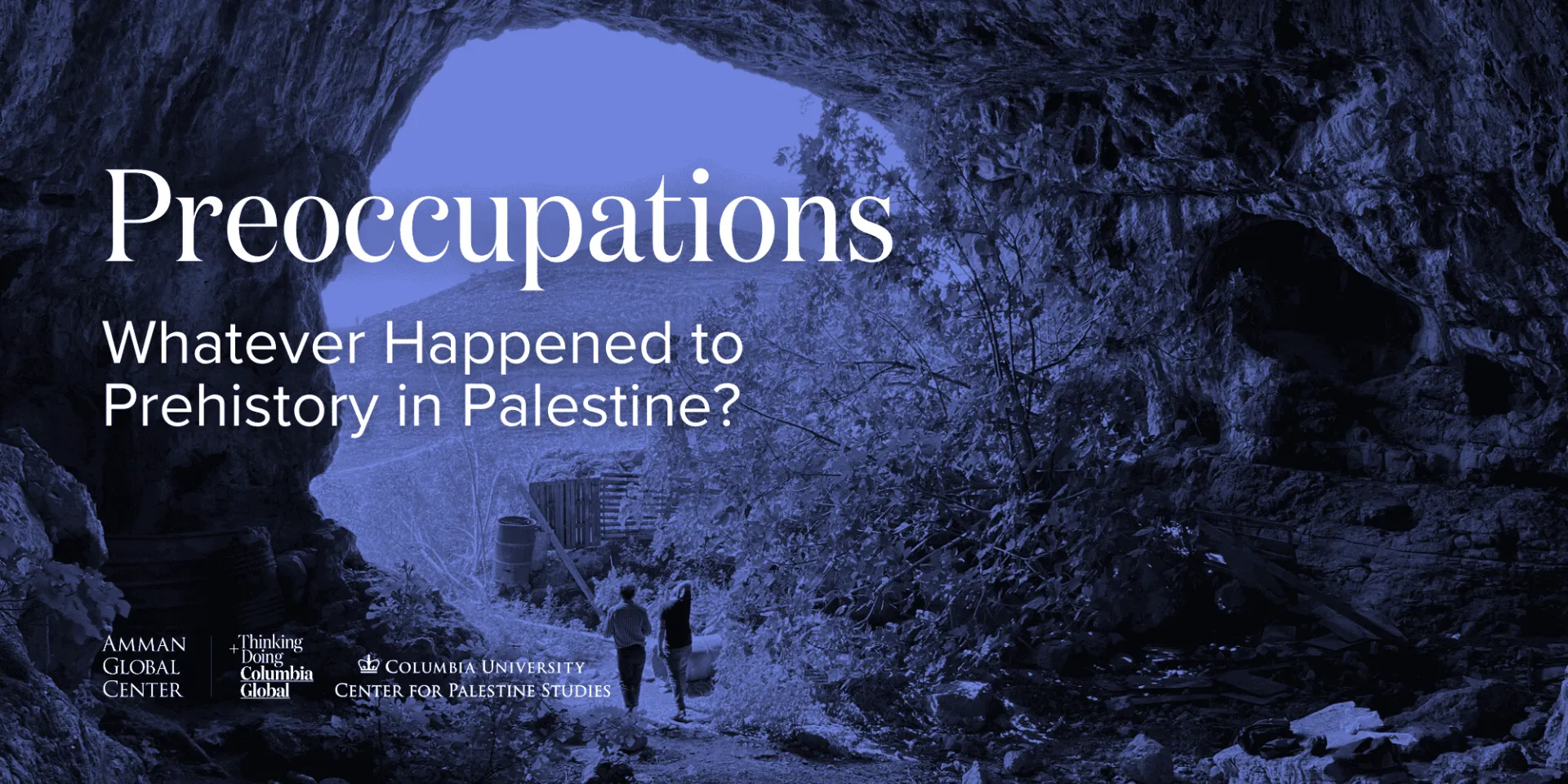
Join us for an evening with Dr. Brian Boyd, Co-Director of the Center for Palestine Studies at Columbia University, as he examines the near-total absence of prehistoric research in contemporary archaeology of Palestine.
This talk explores how “prehistory” was introduced during the British Mandate, embedding frameworks that continue to shape archaeological narratives, public perceptions, and higher education today. Archaeologists (primarily British and French) during the Mandate classified prehistoric material remains by cultural and ethnic groups, an approach fundamental to early Western archaeology but still pervasive in 21st-century studies of the area. The imposed framework of “Palaeolithic-Mesolithic-Neolithic,” developed for Europe’s past, remains dominant, shaping interpretations of social and ethnic development. While much has been written on archaeology’s influence on historical narratives, the lasting impact of European prehistory, introduced in the 1920s, remains under-examined. Revisiting these frameworks reveals archaeology’s role in shaping our understanding of history and consider its obligations in the present.