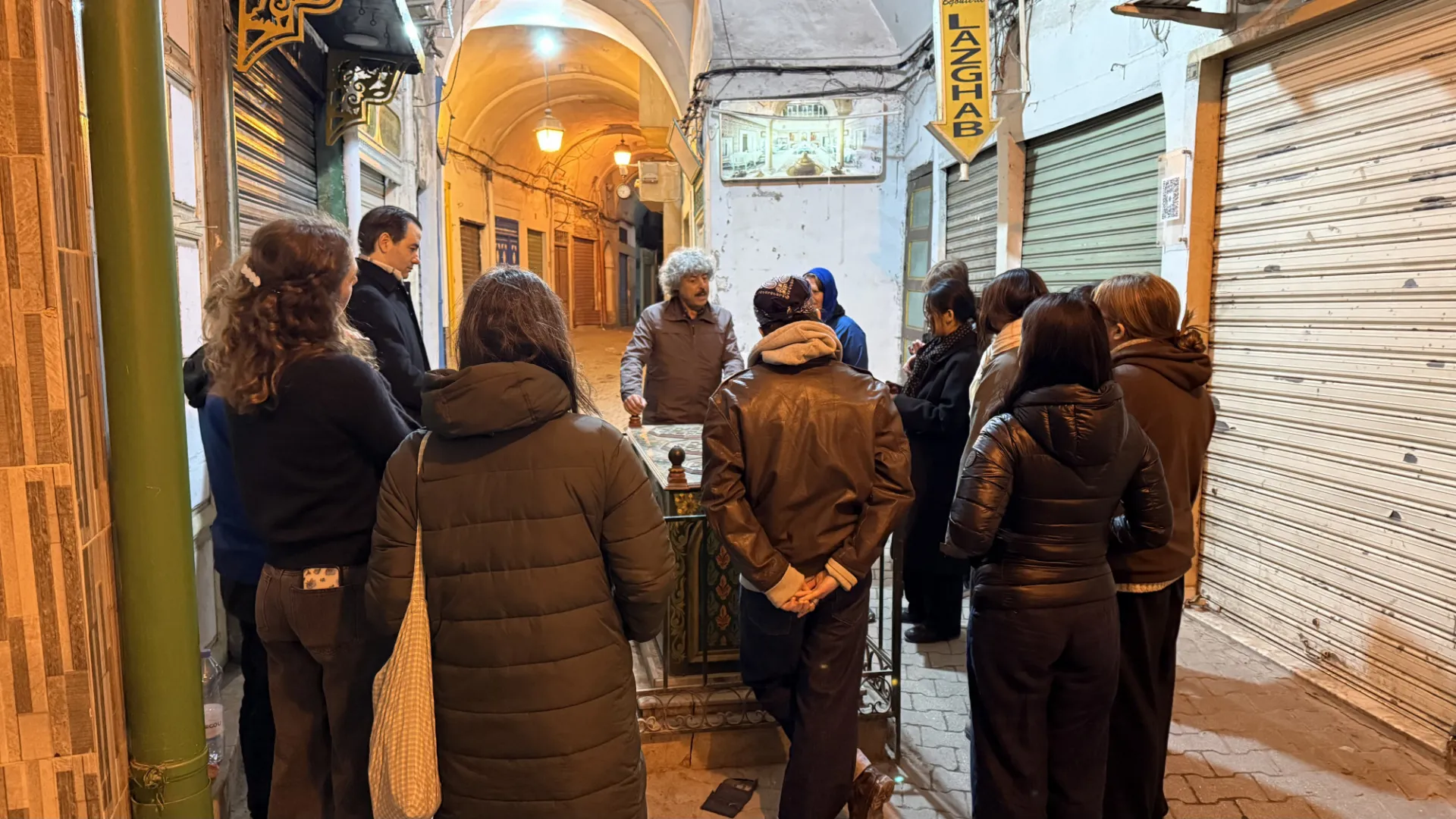
Barnard in the Medina: A Walking Itinerary Through Tunis’s Layers of History
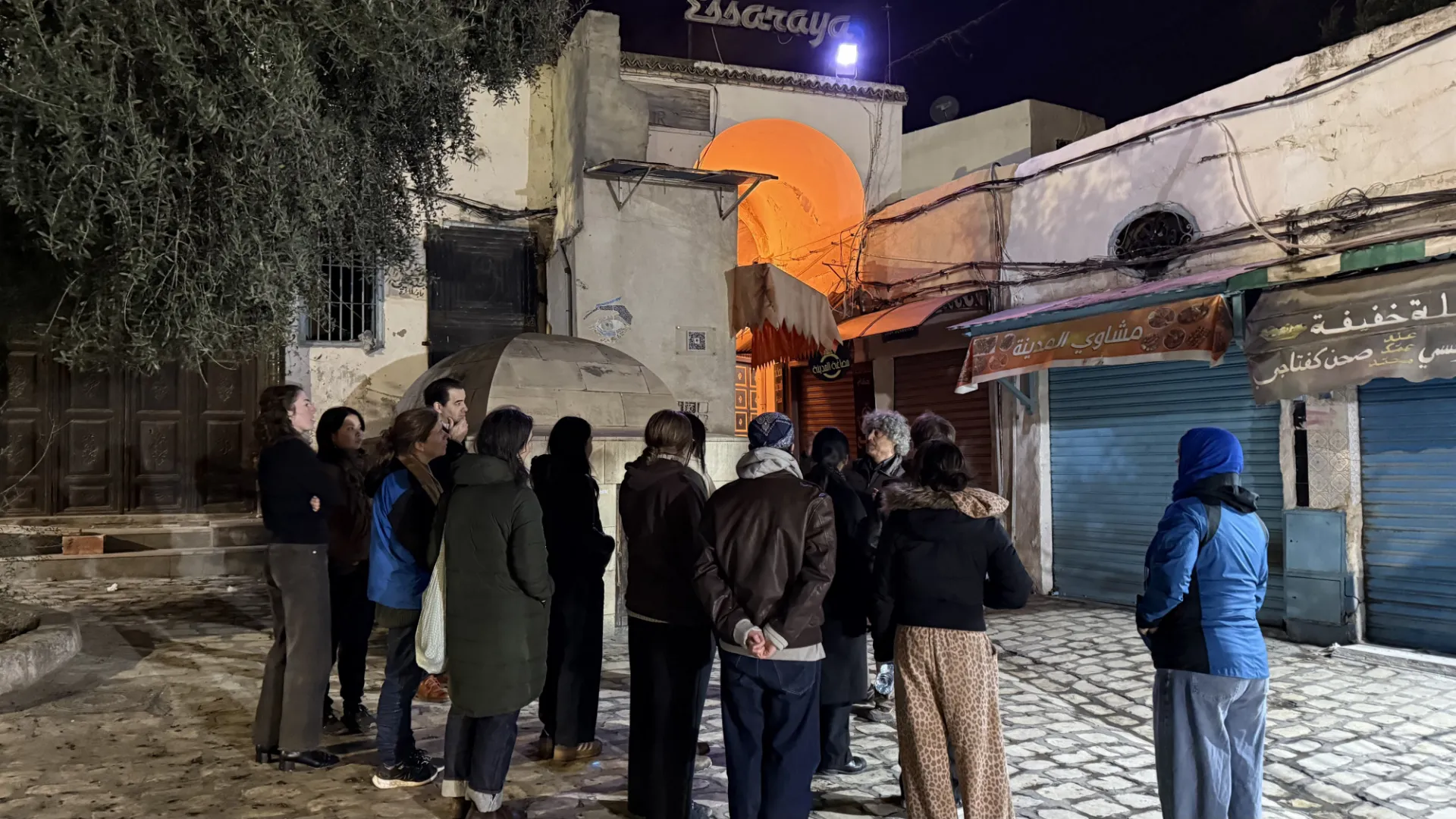
On January 10, 2026, we took a group of Barnard students where Tunis is at its most Tunis: the Medina—a living city of courtyards, workshops, minarets, and narrow streets that still carry the rhythms of centuries.
Warm thanks to Dowit for arranging the tour, and to journalist and public intellectual Hatem Bouriel, who served as our guide—bringing the Medina to life through stories and context.
The visit unfolded as a walking itinerary—part orientation, part immersion—moving from the political heart of historic Tunis to its educational institutions, philanthropic landmarks, Ottoman-era mosques, Hammams, and the craft economy of the souks, before ending inside one of the Medina’s grand palaces.
Kasbah: Power at the Edge of the Old City
We started at the Kasbah, the Medina’s political threshold—historically associated with governance and authority, and still today the symbolic center of state power in Tunis. It’s an ideal “first stop” for visitors: from here, the city’s layers begin to make sense—Hafsid, Ottoman, colonial, and modern—compressed into a few steps.
Sadiki School: Tunisia’s Modern Education Story
A short walk away stands Sadiki College (Sadiki School), an institution closely tied to Tunisia’s modern intellectual and political history. Founded in the late 19th century as part of the country’s reformist moment, Sadiki became a landmark of bilingual, modern education and helped shape generations of Tunisian public figures, thinkers, and administrators.
Aziza Othmana: A Woman, a Legacy, a Social Vision
From there, the walk turned toward a figure whose memory still circulates widely in Tunis: Princess Aziza Othmana and the hospital that still carries her name. Known as a woman philanthropist in Ottoman-era Tunisia, she is remembered for directing her wealth toward social good through charitable endowments—supporting the poor, financing public welfare, and sustaining religious and civic life. In a region where many historic narratives foreground men, Aziza Othmana’s story stands out: a woman whose name remains attached to a tradition of care and public service—an enduring local model of social responsibility.
The Mosques of the Route: Kasbah, Hammouda Pacha, Zitouna
The itinerary then moved through three mosques that each tell a different chapter of Tunis’s Islamic and urban history:
Kasbah Mosque
Near the seat of power, the Kasbah Mosque evokes the Medina’s courtly dimension—religious architecture shaped by the proximity of rulers, administration, and the ceremonial life of the city, and one of the clearest example of a local Maghrebi mosque.
Hammouda Pacha Mosque
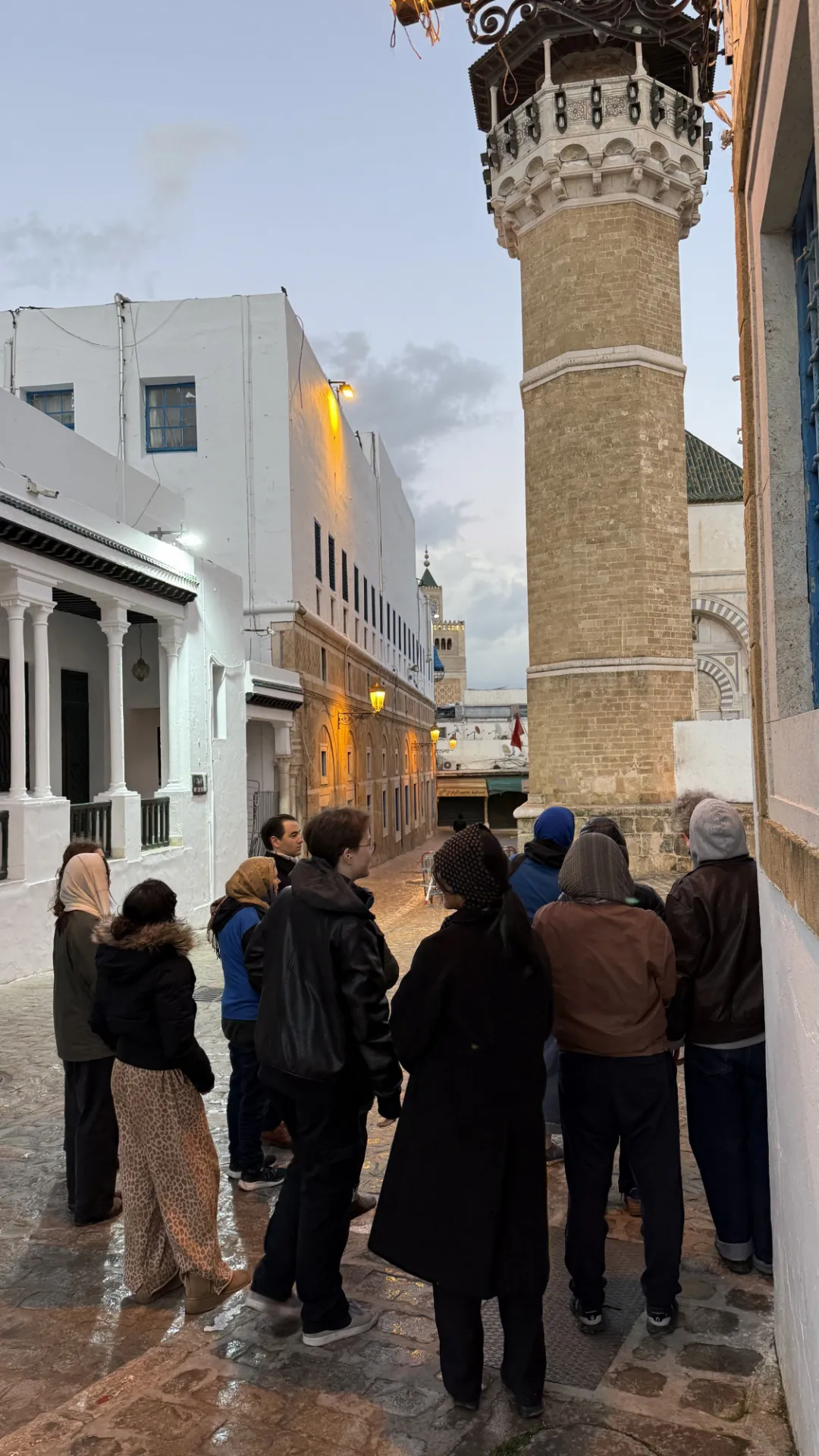
The Hammouda Pacha Mosque reflects an Ottoman imprint on Tunis, with architectural cues that distinguish it within the Medina’s landscape. It’s a reminder that Tunis was never isolated: it absorbed and reinterpreted influences and political currents across the Mediterranean.
Zitouna Mosque
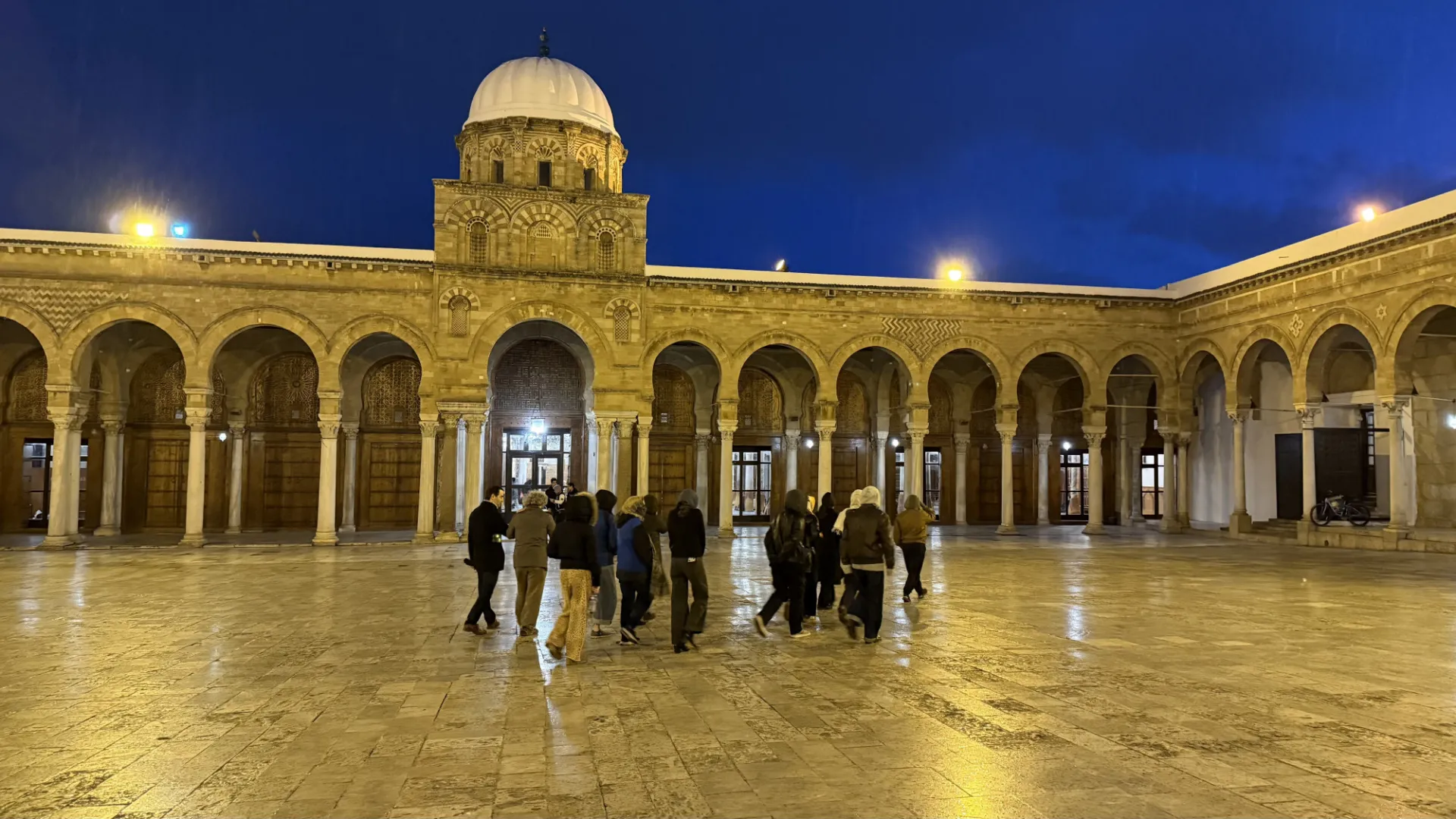
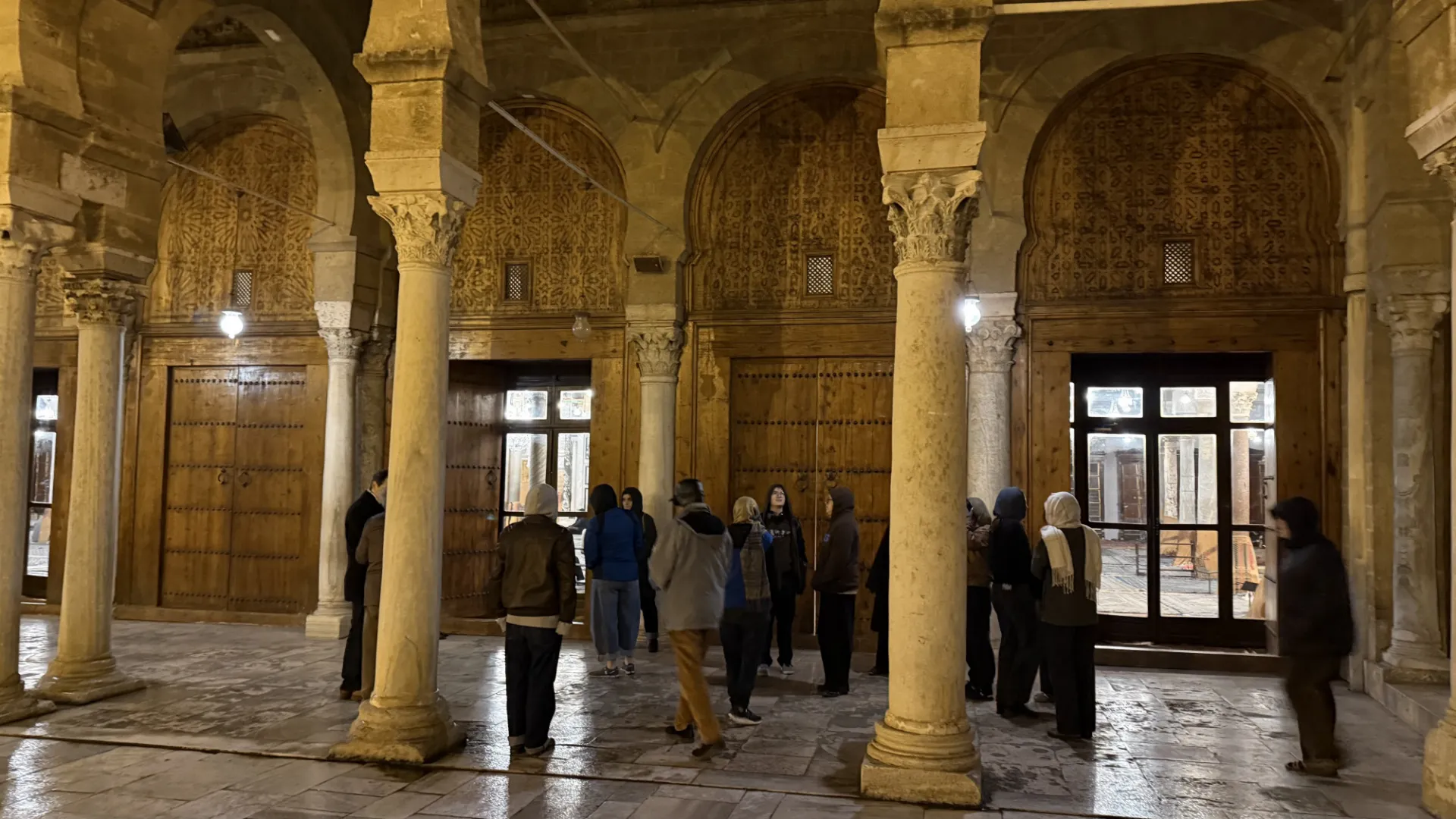
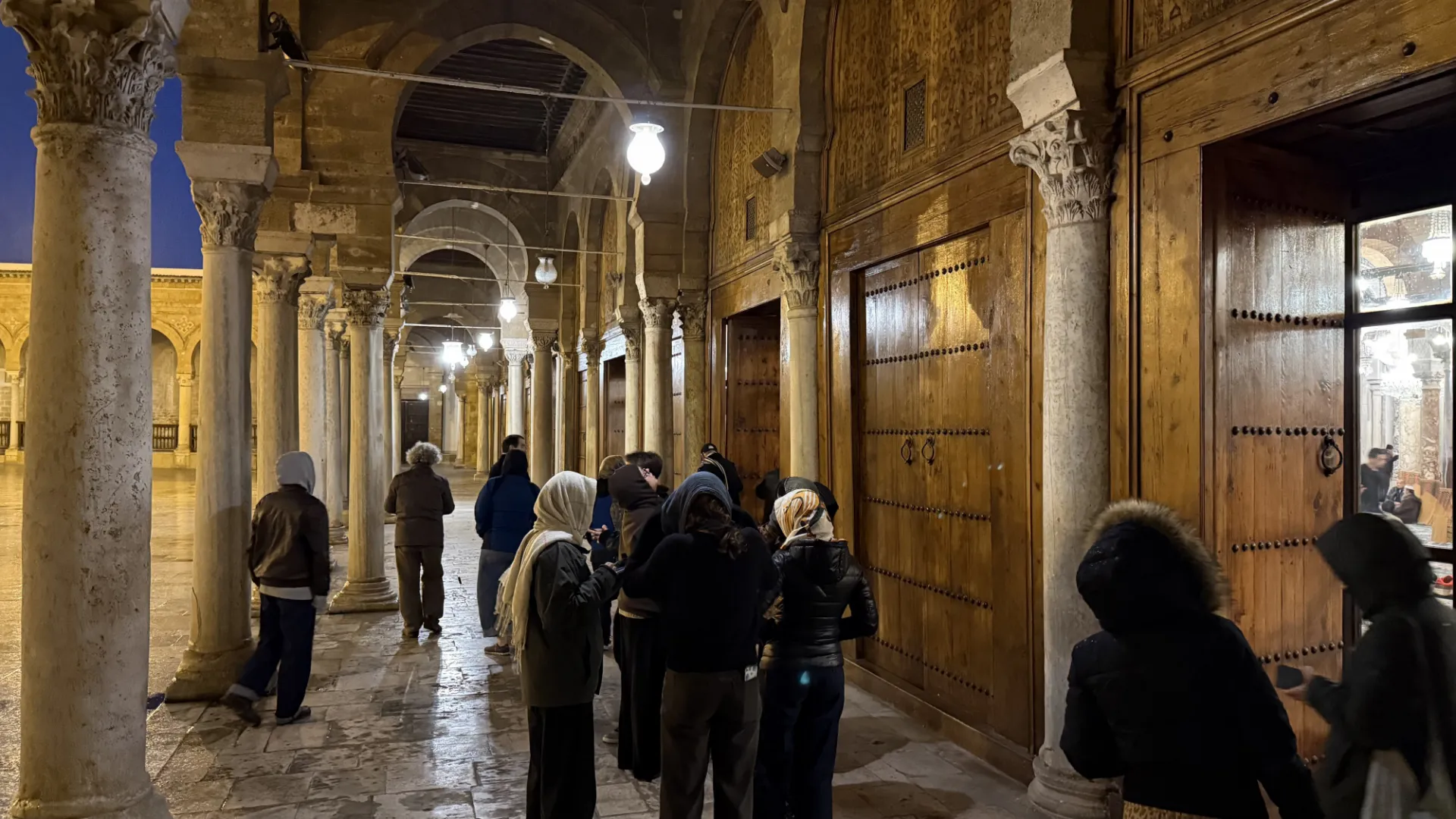
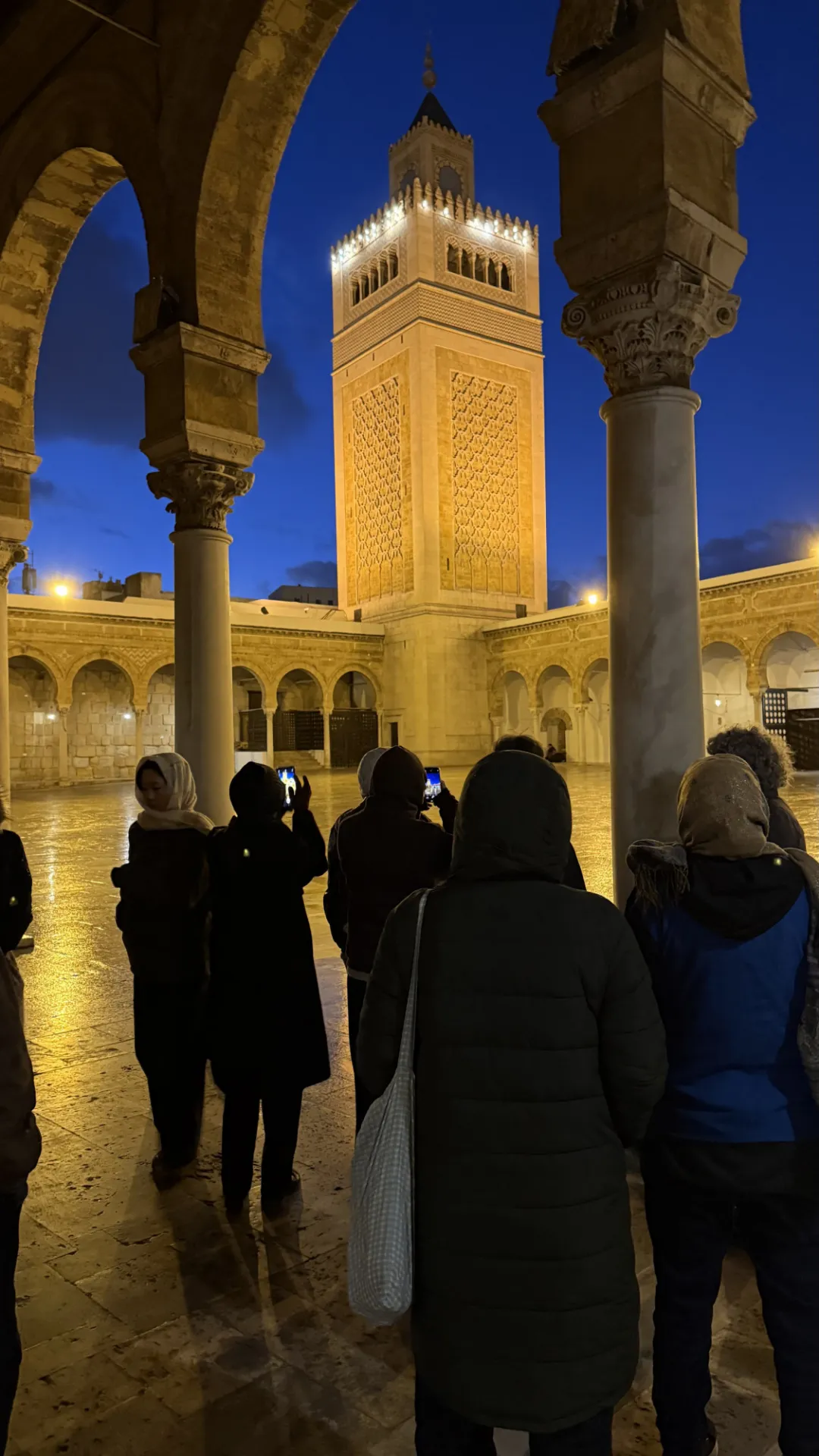
We reached the heart of the Medina at Zitouna, the city’s great anchor—at once a mosque, a landmark, and for centuries a center of learning for the Maghreb and West Africa. Historically associated with scholarship and teaching, Zitouna helps explain why the Medina is not merely a “historic quarter,” but a place where religious and civic life long intersected.
Souks and Workshops, Hammams: The Medina as an Economy and a Social Network
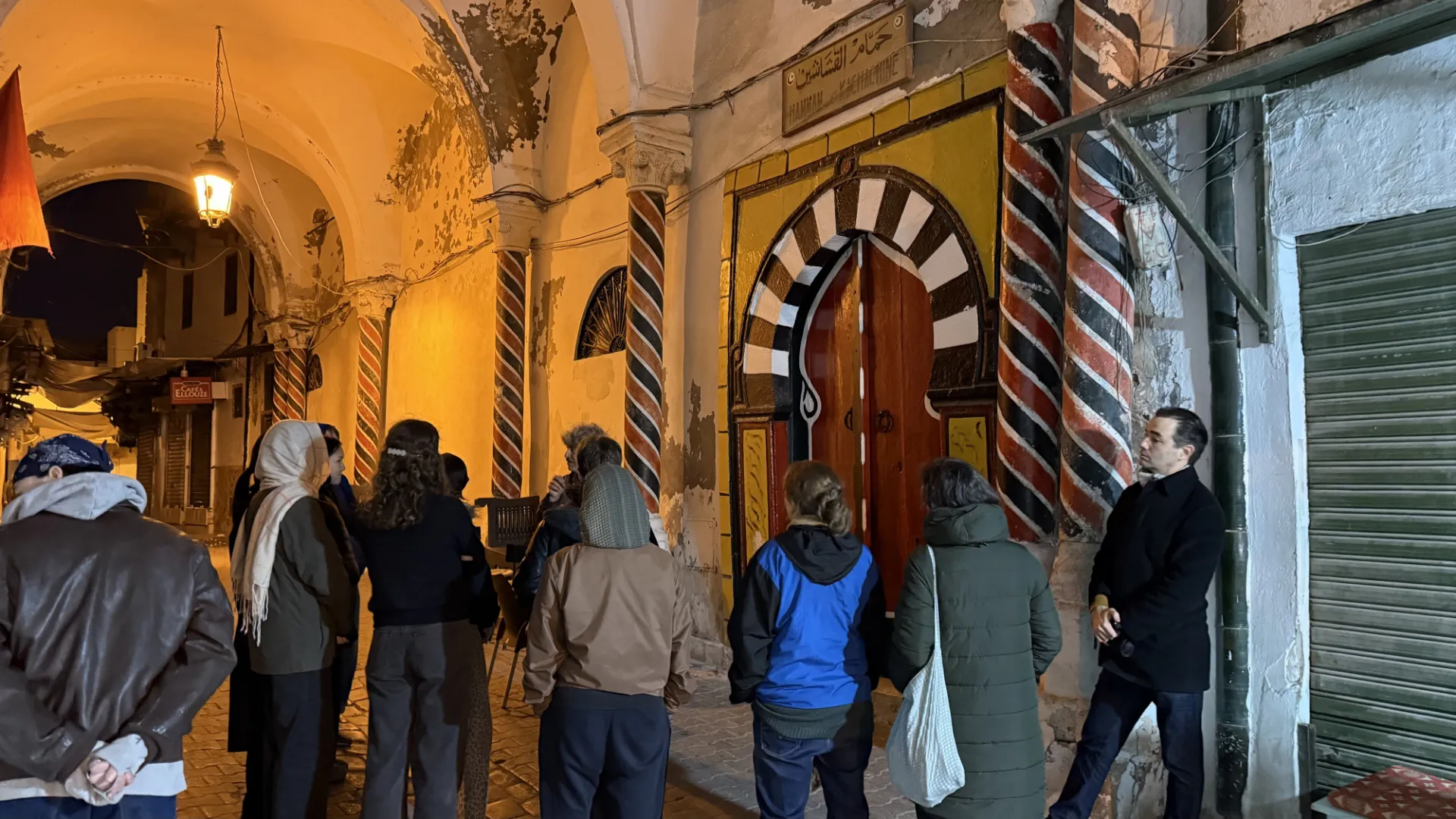
From the monumental to the everyday, we walked through the souks, where the Medina feels most alive: a choreography of craft and conversation. Along the way, students observed local manufacturing and artisanal work—materials being cut, shaped, stitched, polished—skills passed down through practice rather than textbooks. The souks, and the Hammams inside, make visible the Medina as a place of daily life.
Old Houses and Courtyards: Quiet Architecture Behind Busy Streets
We also visited a few historic houses that dates back to the Middle Ages, offering a contrast to the bustle outside. Behind plain doors, the Medina often opens into courtyards, tiled surfaces, carved plaster, and layered domestic spaces—architecture designed for climate and family life, and a powerful example of how beauty here is often kept inward.
Return via the Narrow Streets to the Palace of General Hassine
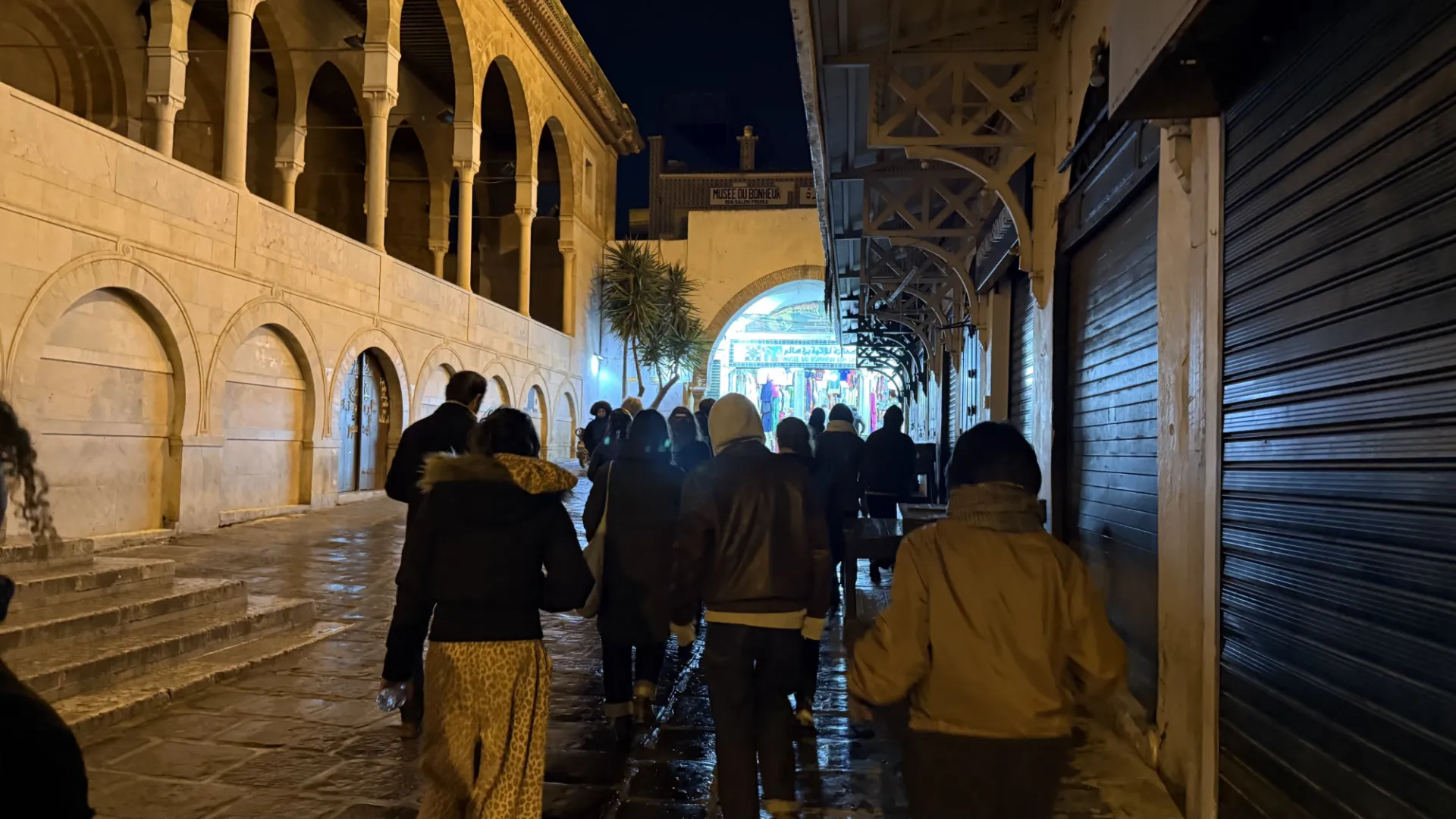
The walk concluded along the Medina’s narrow streets until we reached the Palace of General Hassine (Dar Hussein), the current Institut National du Patrimoine (Directorate General for Antiquities). The palace offers a final synthesis: an architectural statement shaped by elite life and later institutional uses. Ending here brought the itinerary full circle—from the city’s public power (Kasbah), to its learning and philanthropy, to its sacred spaces and craft economy, and finally into the refined interior world of the Medina’s great houses.
Image Carousel with 9 slides
A carousel is a rotating set of images. Use the previous and next buttons to change the displayed slide
-
Slide 1: Zitouna
-
Slide 2: HP Mosque
-
Slide 3: Zitouna Zoom
-
Slide 4: Zitouna shan
-
Slide 5: Zitouna minaret
-
Slide 6: Hammam
-
Slide 7: Mausoleum
-
Slide 8: Zitouna front
-
Slide 9: Tomb