Event Recap: What Will the EU’s New Migration Pact Mean for Greece?
The Athens Center continues its events with an engaging panel discussion on migration policy.
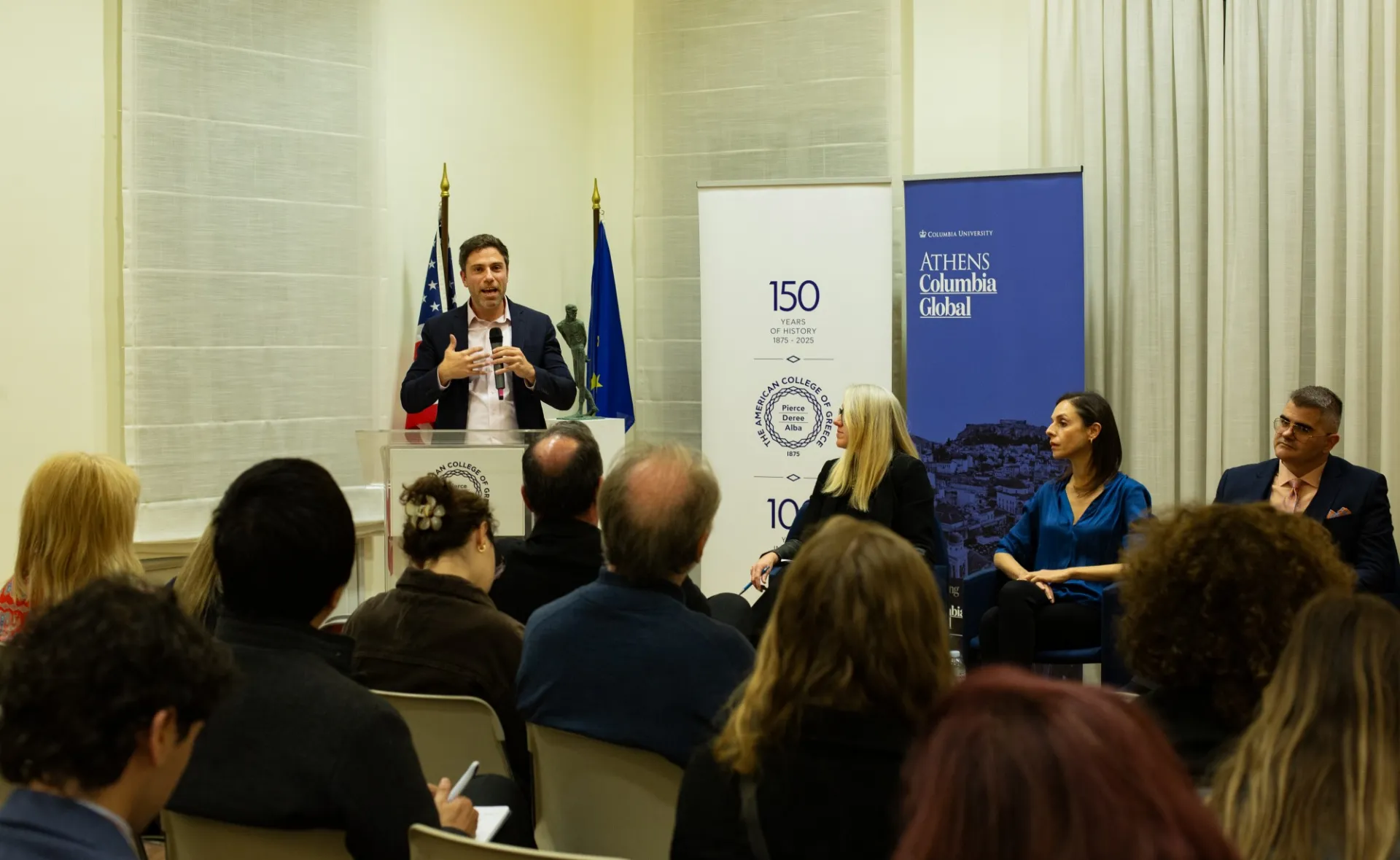
On December 3rd, the Columbia Global Center Athens hosted a panel discussion, What Will the EU’s New Migration Pact Mean for Greece? In collaboration with The Demos Center of the American College of Greece. The event brought together policymakers, academics, NGO representatives, and students to examine the complexities of the EU Migration Pact and its impact on Greece. The discussion focused on burden-sharing among EU member states, the challenges faced by host countries, and strategies for protecting vulnerable populations, such as unaccompanied minors.
Stefanos Gandolfo, Director of the Athens Global Center and Panos Vlachopoulos, Vice President of Academic Affairs offered welcome remarks. Paige Arthur, Director of Global Programming at Columbia Global, moderated the panel, which featured Dr. Kristin Fabbe, Professor at the European University Institute; Nikolaos Lampas, Assistant Professor at The American College of Greece; and Sofia Kouvelaki, CEO of The HOME Project. The panelists provided an in-depth analysis of the EU Migration Pact’s objectives and its implications for migration governance.
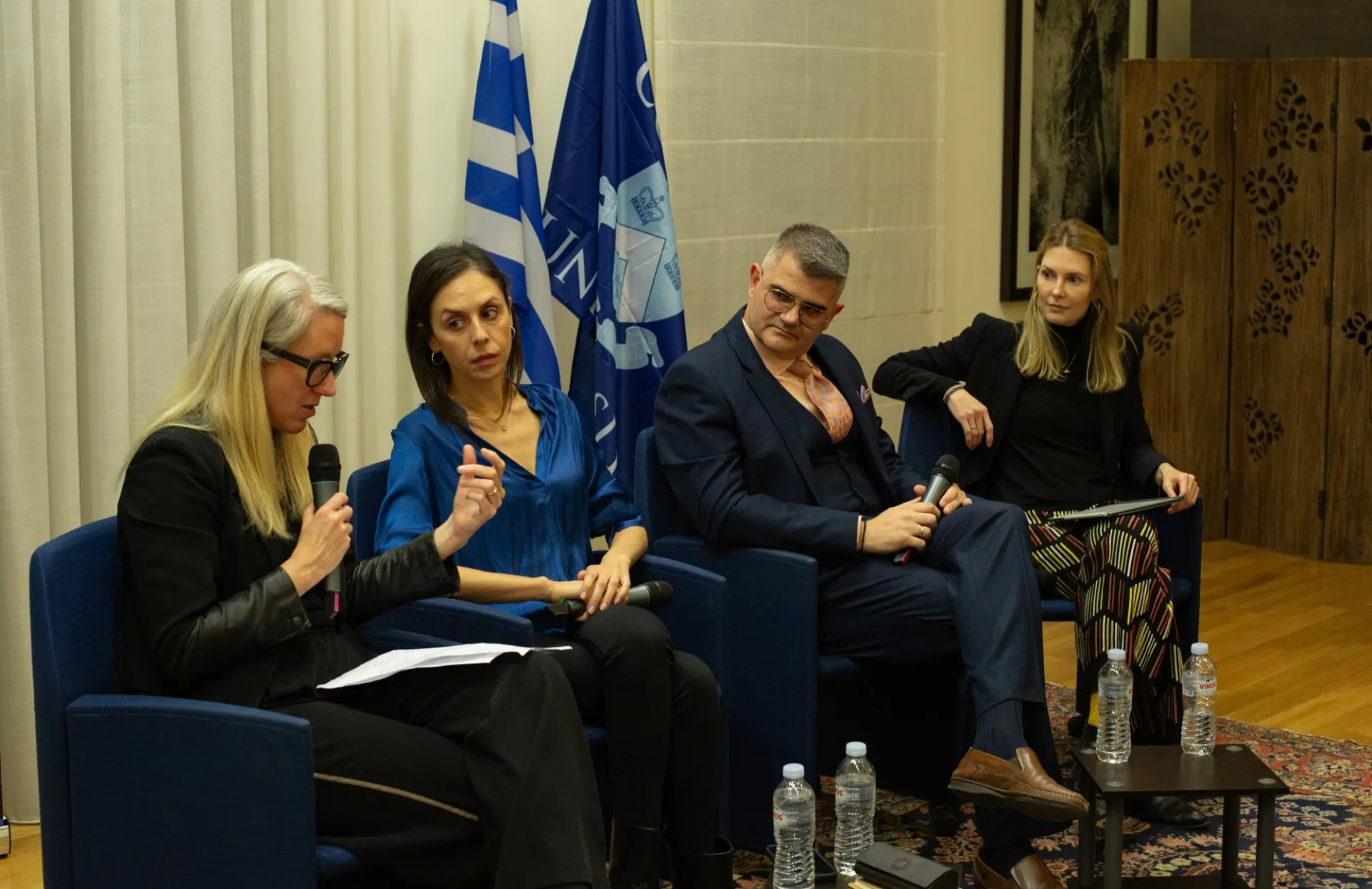
Key topics included balancing security and humanitarian concerns, addressing the political challenges of managing migration amidst increasing restrictive policies and disinformation, and exploring Greece’s role as a frontline country. The panel discussed systemic challenges in managing migration flows and integrating refugees and migrants, as well as the pressing need to protect vulnerable populations, particularly unaccompanied minors, from risks such as trafficking and inadequate access to care.
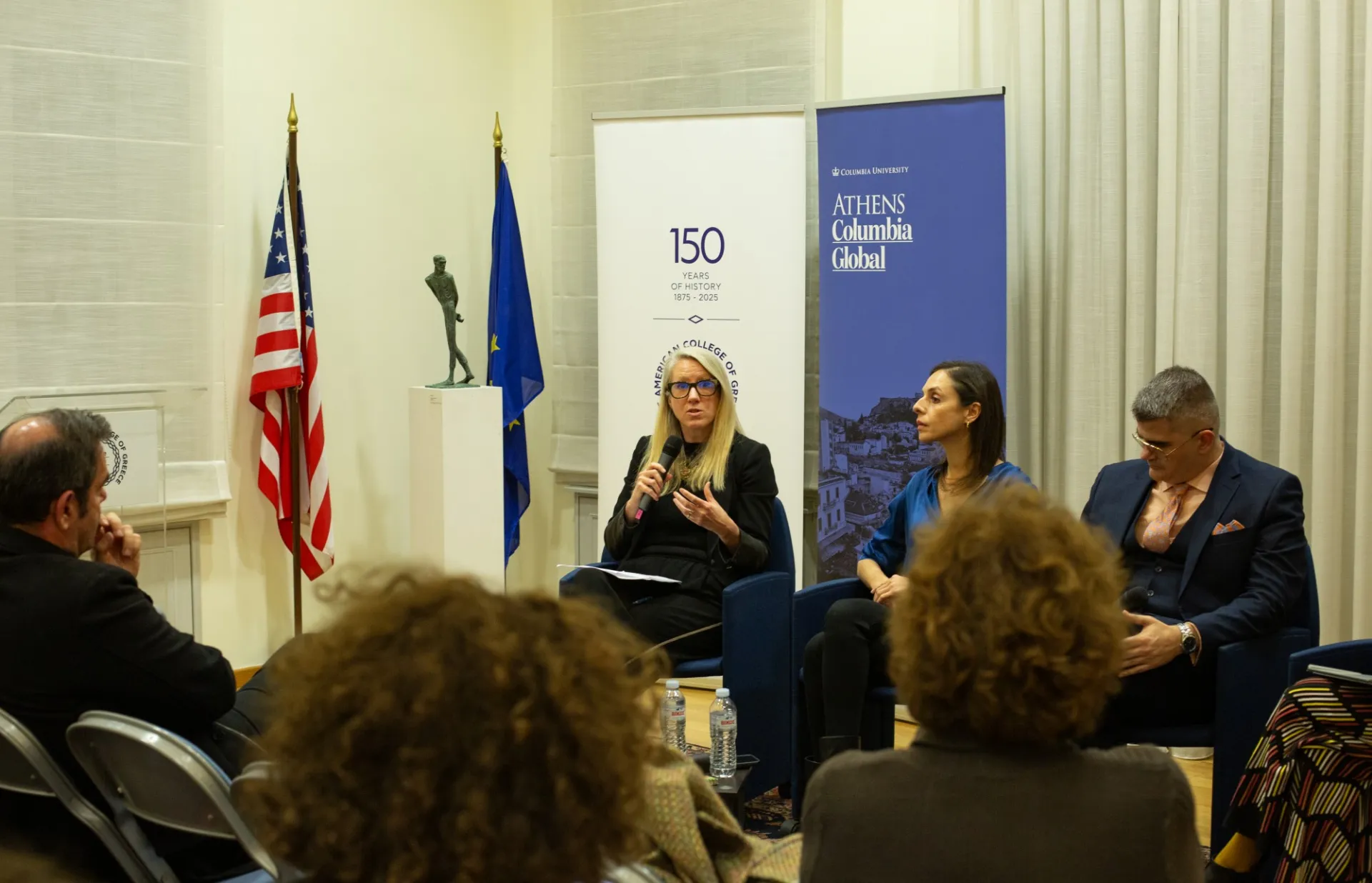
The discussion also delved into the persistent north-south divide in the EU’s burden-sharing approach, emphasizing the need for sustained solidarity mechanisms and actionable strategies to overcome delays in funding and support.
“The majority of people who left Libya and Syria, are still in the neighboring countries and they are not in Europe. Europe hosts about 1.5 million, Jordan 1.2 million and Turkey close to 5 million. So, there is no massive refugee movement that would alter the balance of the European population, or at least we haven't seen it yet.” – Nikolaos Lampas, Assistant Professor at The American College of Greece
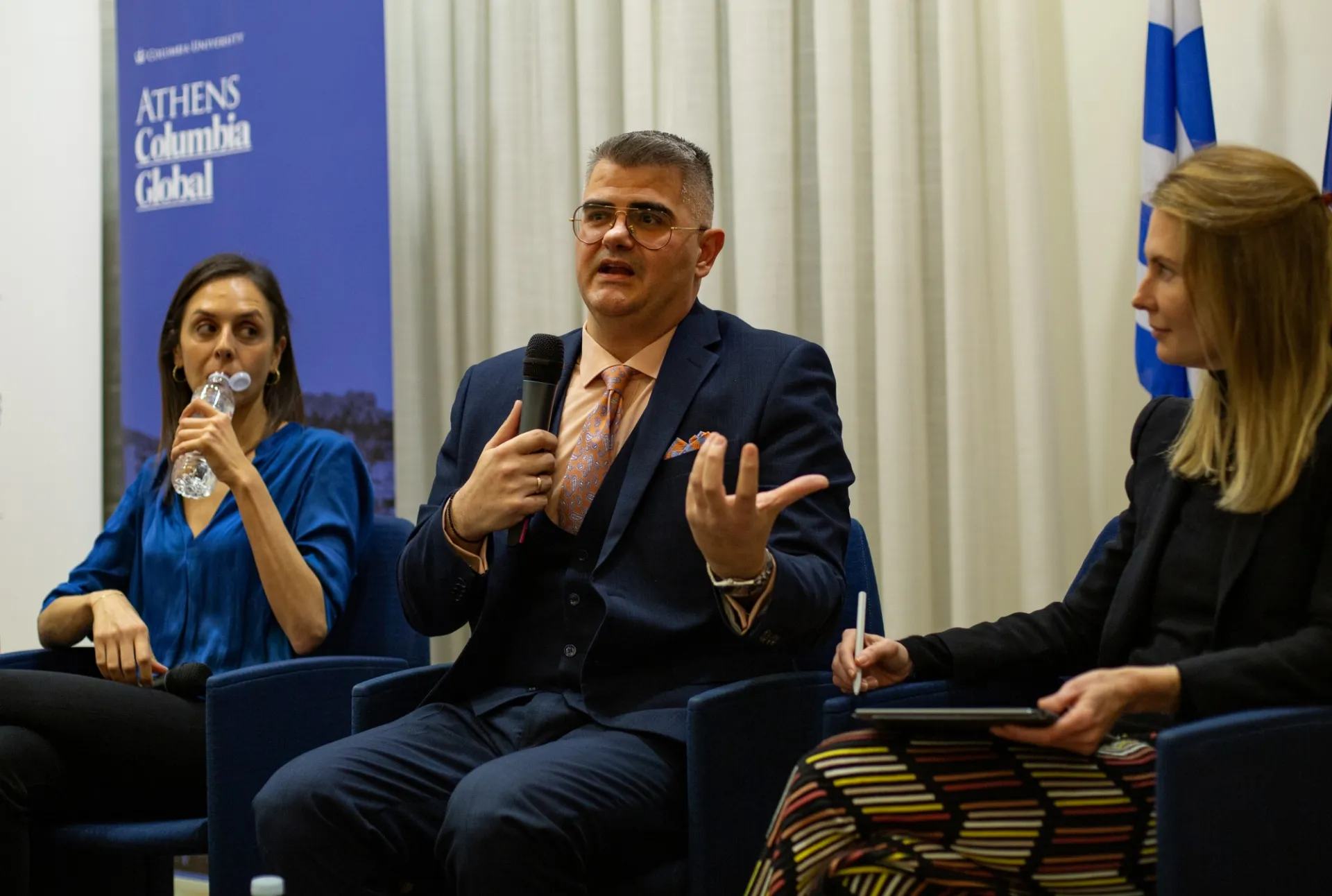
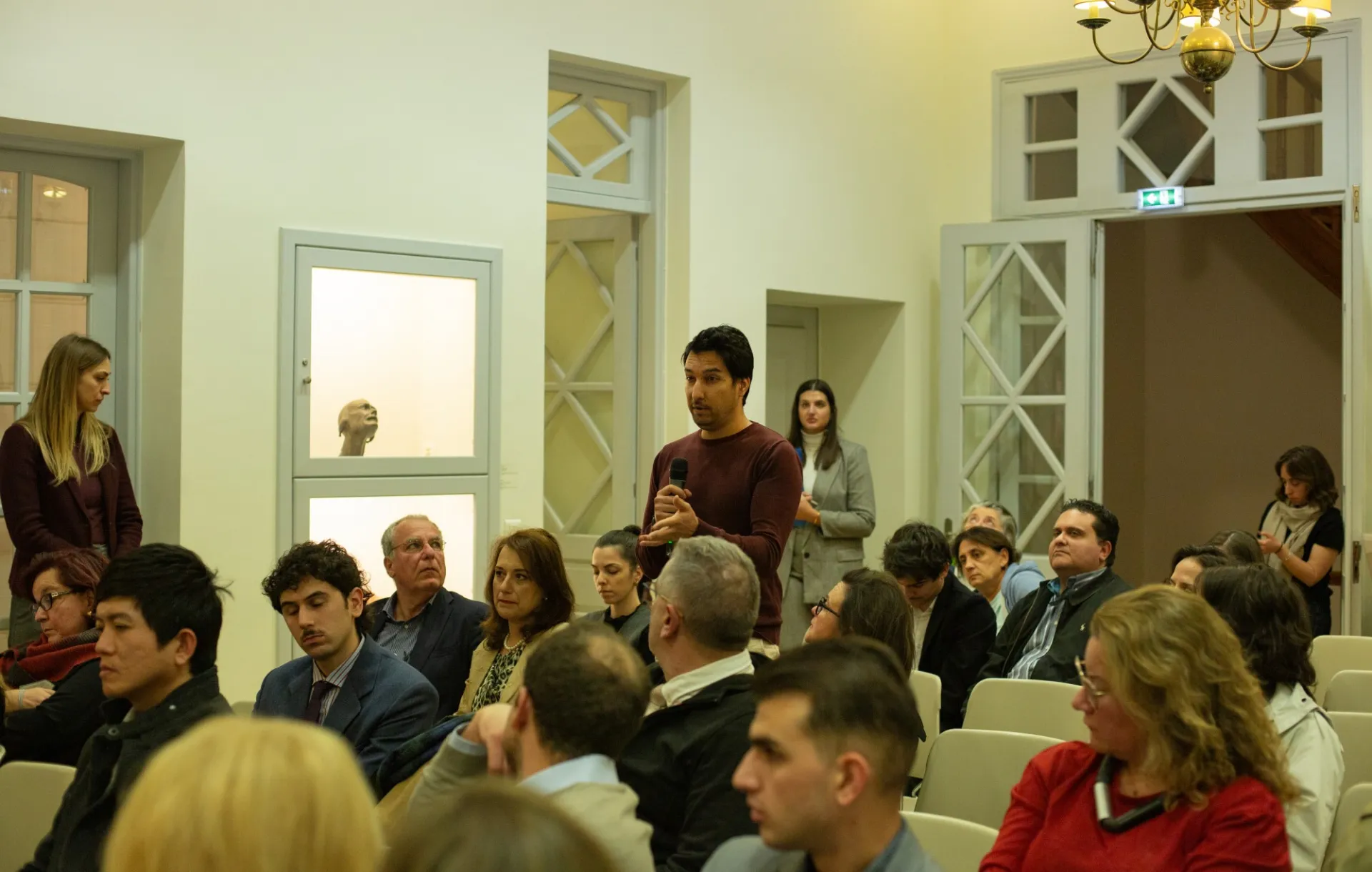
The evening concluded with a lively Q&A session, offering the audience a chance to engage directly with the speakers. The event underscored the importance of informed, solution-driven dialogue in tackling one of Europe’s most pressing challenges. It also highlighted Greece’s pivotal role in shaping the future of migration governance, offering valuable lessons in resilience and innovation for other EU member states.
Future programming at the Columbia Global Center Athens will continue to address issues related to migration, public health, business and innovation, and the arts.