What’s Next for Africa? Lessons from Africa’s Elder Statesman
How can Africa put its house in order and forge a mighty stride toward genuine freedom?
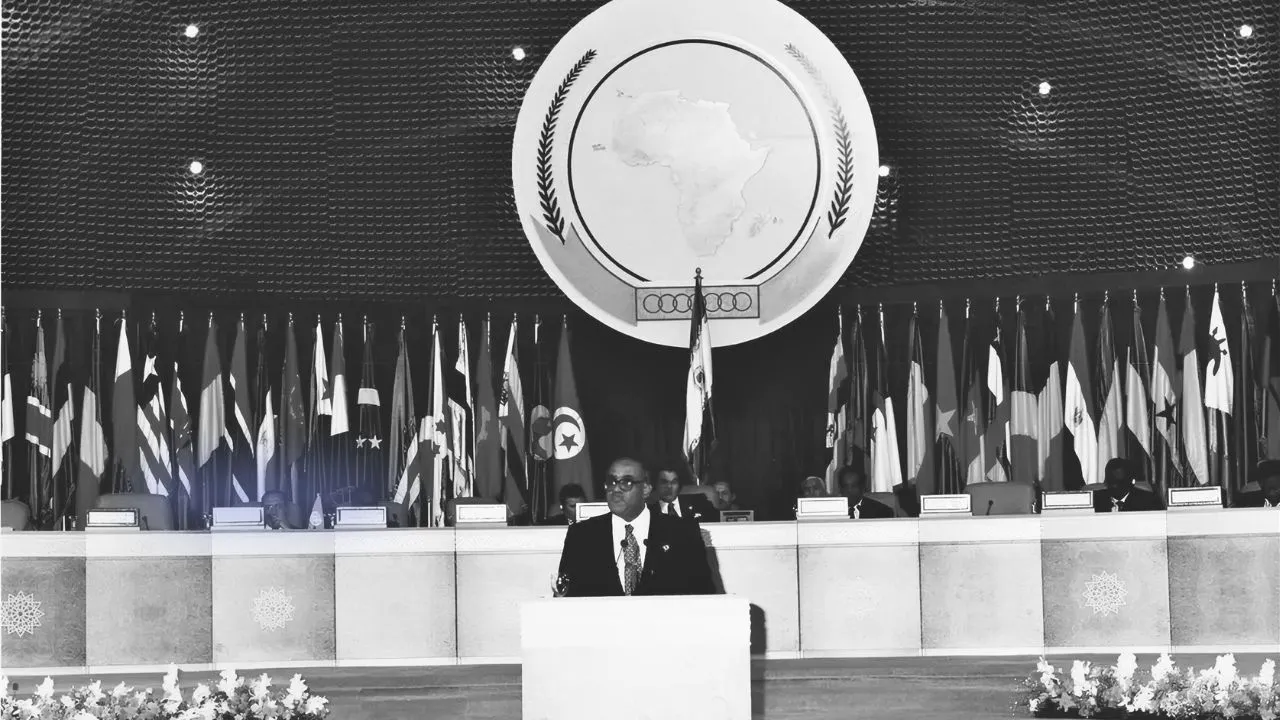
“There is a growing recognition among the African peoples and their leaders that we are our own liberators and that the development of the African continent is first and foremost the primary responsibility of the African people. But we need to put our own house in order to forge a mighty stride toward genuine freedom from political oppression and economic deprivation”- Dr. Salim Ahmed Salim, 1997
It has been almost 30 years since Dr. Salim uttered these sentiments at the International Conference on Africa, which marked nearly 40 years of self-rule in many African countries. However, the African people, especially the youths of today, aged 18-34, would wonder if this agenda has changed.
Dr. Salim, a Columbia SIPA alum and passionate advocate for women and youth, witnessed the evolution of Africa towards liberation and played a significant role as the chair of the Special Committee on Decolonization, where he confronted and exposed the complicity of those who, driven by narrow self-interest, supported colonial and racist regimes while endorsing the provision of aid to the national liberation movements in colonial territories and to the peoples in the liberated areas. A pan-Africanist in his own right, Dr. Salim, then advocated for African nations to transition from a focus on liberation struggles associated with the Organization of African Unity (now African Union) in the late 90s to a framework that emphasizes enhanced cooperation and regional integration to foster Africa’s growth and economic development. This contributed to his unwavering stance in the belief that Africa could drive its own development, driven by its people, which could represent a dynamic force on the global stage.
It’s been more than 60 years since many African countries gained independence. In many states, youth unemployment remains pervasive, the disease burden and underfunded systems threaten mortality rates, penetration of ICT services is low, there is increasing and unsustainable debt, and most of these countries are not prepared to deal with 21st-century challenges such as climate change. Besides these challenges, numerous nations must contend with fragile governance and ineffective institutions that have nearly institutionalized corruption, substandard public service delivery, and a deficiency in commitment to the rule of law. The escalation of geopolitical tensions, coupled with major global economies opting to close their borders, poses a significant risk of exacerbating Africa’s already fragile, aid-dependent economy, which has been adversely affected by other global problems such as the pandemic.
The continent truly stands at a crossroads. Despite warnings from elder statesmen such as Dr. Salim, who advocated for good governance and the amalgamation of African nations to solve our issues, as well as against foreign dependence, saying, ‘he who pays the piper calls the tune.’ So, what’s next for Africa? How can we put our own house in order and forge a mighty stride toward genuine freedom from political oppression and economic deprivation?
For a start, we may look inward. Numerous socio-economic and political policies drawn at the birth of the continent have not been exhausted. The Nairobi Global Center partnered with the Salim Ahmed Salim Digital Archive to exclusively explore the inexhaustible contributions of Dr. Salim, who, in addition to being a polymath, curated forward-looking policies alongside Africa’s founding fathers, such as Julius Nyerere, of whom he was a protégé. The Digital Archive, launched in September 2023 by H.E. Dr. Samia Suluhu Hassan, President of the United Republic of Tanzania, showcases nearly six decades of Dr. Salim's extensive contributions to Africa in areas such as peacekeeping, diplomacy, and development. This archive includes a rich collection of archival materials, such as speeches, academic papers, newspaper clippings, notes, correspondences, and interviews. We delineated Dr. Salim's ideologies on governance, leadership, information technology, and foreign aid through virtual seminars, including:
- Enhancing Good Governance Practices for Sustainable Development: This episode examined how effective governance promotes economic development and community, principles that Dr. Salim championed during his public service. It highlighted transparency, anti-corruption efforts, and citizen engagement as fundamental elements of inclusive leadership.
- Exploring Effective Leadership in Complex Environments: Dr. Salim’s diplomatic experiences provide key leadership lessons on adaptability, integrity, and vision. In this episode, we see his approach to complex global issues that sets a standard for ethical leadership, reinforcing his reputation as a uniter and principled leader.
- Harnessing Digital Innovation for Progress: This session emphasizes the role of digital tools in enhancing service delivery and fostering development, reflecting Dr. Salim’s progressive ideals. It covers topics such as AI, data protection, and the potential of technology in building equitable societies.
- Navigating Aid Cuts, Self-Reliance, and Bridging the Digital Divide: Revisiting Dr. Salim’s vision, this episode encourages Africa to move beyond aid and strive for unity and self-reliance. His dream of a strong, independent continent still resonates today. It serves as a timely reflection on what it takes to realize that vision.