CWP Milestone: Community Climate Action Plan Approved in San José de Maipo
The milestone corresponds to the first stage of the project in Chile.
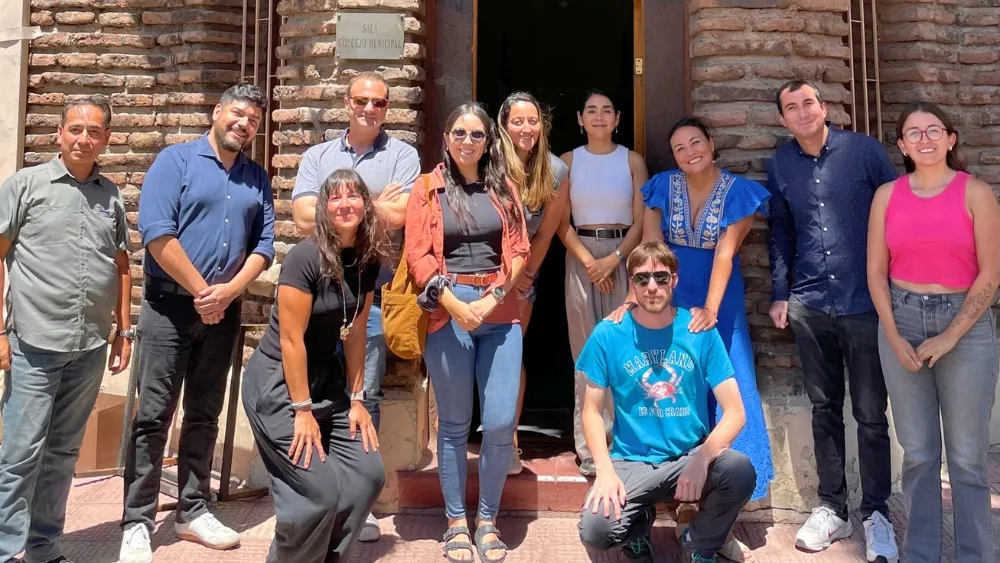
The Columbia World Projects (CWP) endeavor “Strengthening Capacities and Civic Participation for Climate-Resilient Communities in Chile” has reached a new milestone: one of the three benefitting Chilean municipalities, San José de Maipo, has passed its Local Climate Action Plan (PACCC in Spanish).
San José de Maipo’s PACCC - more than 200 pages long, containing 56 measures for adaptation and mitigation to climate change, which in turn contribute to disaster risk reduction – was unanimously approved by the municipal councilors at the beginning of June.
The project team – comprised of members from Columbia Climate School’s National Center for Disaster Preparedness (NCDP), the Columbia Global Center Santiago, the Institute for Disaster Resilience (Itrend), and the Center for Climate and Resilience Science (CR2) - collaborated in the preparation, review, and qualification of the measures identified by the municipality, placing special emphasis on the technical, political, and economic feasibility of each measure. The team also supported the identification of monitoring, reporting, and verification (MRV) indicators as well as the best sources of PACCC financing, along with the steps to be taken to access these funds.
Some 70% of San José de Maipo is considered rural, with a population of approximately 19,500, yet its total area accounts for one-third of the Metropolitan Region’s size. Located 48 kilometers from Santiago in the Andes Mountain Range, it plays a critical role in supplying water to the capital city. However, climate change poses an increasing threat, with risks including prolonged droughts, landslide hazards, extreme weather events, and heightened vulnerability to wildfires. The approved PACCC seeks to address these challenges through a collaborative, evidence-based approach.
While San José de Maipo will begin with the implementation of its PACCC, the two other municipalities with which the CWP team is working, Coquimbo and Alto del Carmen, continue with the process of preparing their plans, which must be approved during 2025.
In Coquimbo, the team has supported the prioritization of adaptation and mitigation measures through a methodological validation workshop to identify the process’s criteria and indicators in preparing the PACCC. This work was carried out together with key actors at the local level, including representatives of the Environment Ministry and the Port of Coquimbo, as well as private companies.
Also in Coquimbo, workshops were held during June to guide the development of the MRV framework – one of the requirements of the PACCC – and to identify sources of financing for the plan's measures. The results were also presented from the survey of citizen perceptions on climate change and disaster risk, as well as the analysis from interviews with key actors regarding their perceptions on climate change, carried out in March.
Meanwhile, in Alto del Carmen, the results from the public survey of perceptions of climate change, as well as from interviews with key actors, were presented at the local Pisco Fair held between June 6 and 8. Pisco - an alcoholic spirit distilled from fermented grape juice – is widely produced in and around Alto del Carmen.
The project team will continue in collaborative work during the next year with the three municipalities, with a focus on supporting the process of implementation and monitoring of the plans.