COP30 and Local Challenges: Chile's Lessons in Implementing Community Climate Action
Takeaways from participants' presentations in the Columbia World Project-sponsored program "Strengthening Capacities and Civic Participation for Resilient Communities in Chile" at COP30.
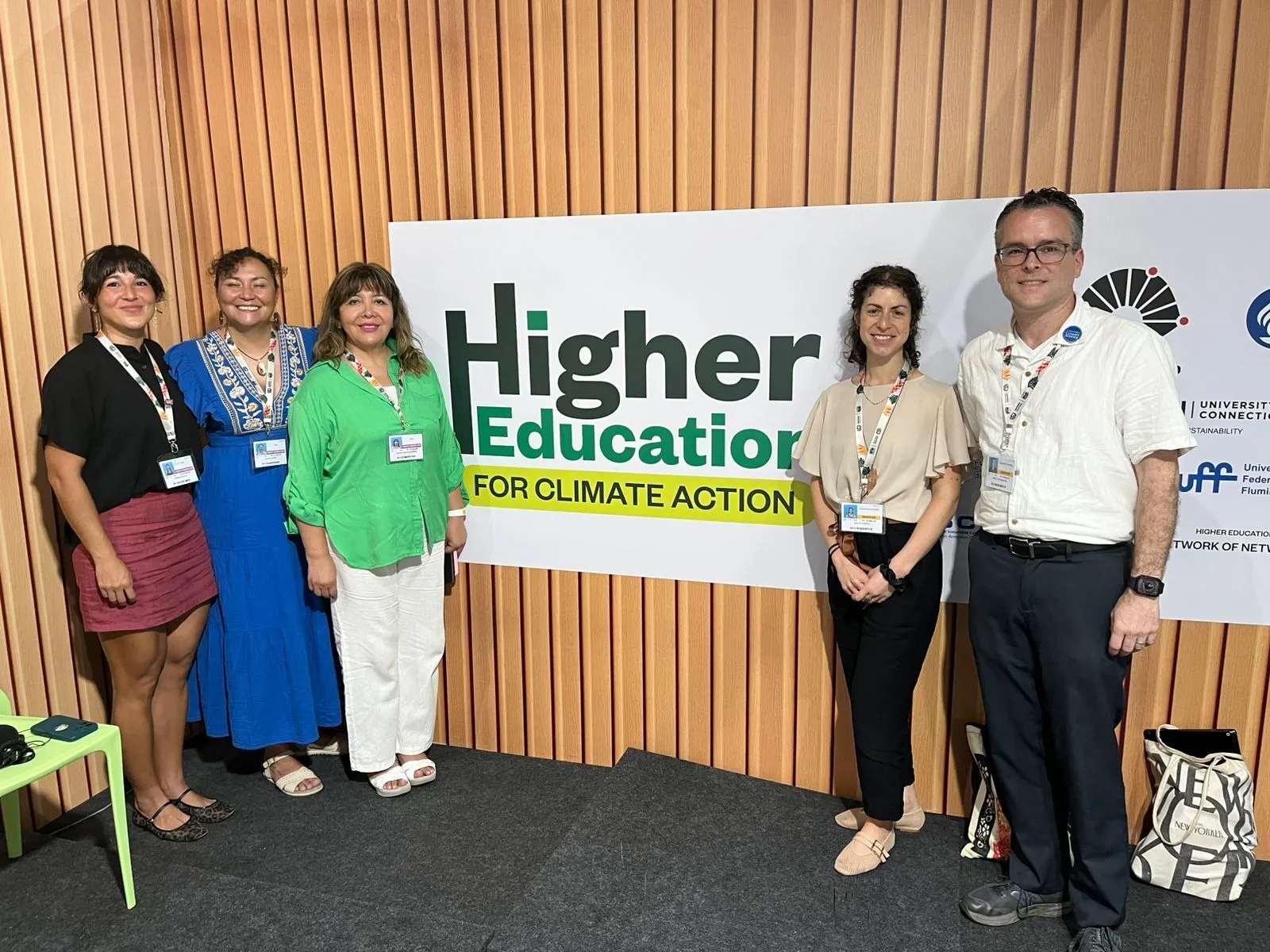
During the COP30 in Brazil, the climate discussion focus shifted from national pledges (NDCs) to concrete action in the territory. The great challenge is no longer just what to do, but how to implement at the local level, particularly in municipalities and communities directly facing the impacts of climate change.
Chile has become a relevant case study under this scenario. Following the enactment of its Framework Law on Climate Change in 2022, the country is moving forward with an ambitious plan to develop Community-based Climate Change Action Plans (PACCCs) in all its municipalities.
To bridge the gap between national policy and community resilience, a key partnership was formed between Columbia University and its Santiago Global Center, the Center for Climate Science and Resilience (CR2) at the University of Chile, and the Institute for Disaster Resilience (Itrend) to advance the Columbia World Project-sponsored program "Strengthening Capacities and Civic Participation for Resilient Communities in Chile." This program proposes to strengthen municipal capacities and integrate local communities in the preparation of the PACCCs in three boroughs: Alto del Carmen, Coquimbo and San José de Maipo.
Precisely to share these lessons, the progress of the program was presented at the Pavilion of the Intergovernmental Panel on Climate Change (IPCC) of COP30, calledScience for Climate Action. Antonia Samur, project lead and associate at Columbia University’s National Center for Disaster Preparedness (NCDP), presented at the pavilion together with Karina Cabello, Head of the Environment Unit at the Municipality of San José de Maipo; Sandra Anacona, Director of Environment and Sanitation at the Municipality of Alto del Carmen; Pilar Moraga, Director of CR2; and Andrés Pica, Head of the Climate Change Division at Chile’s Environment Ministry. They participated on two panels: "Strengthening Local Capacities for Climate Action: Chile's Experience," and "Higher Education on the Front Lines – Leading with Communities to Translate Research into Practice."
The latter activity also included the participation of Alexis Abramson, Dean of Columbia’s Climate School, and Jeff Schelegelmilch, Director of the National Center for Disaster Preparedness. The Chilean delegation offered recommendations on how national frameworks can empower local governments and generate transferable learnings for all of Latin America.
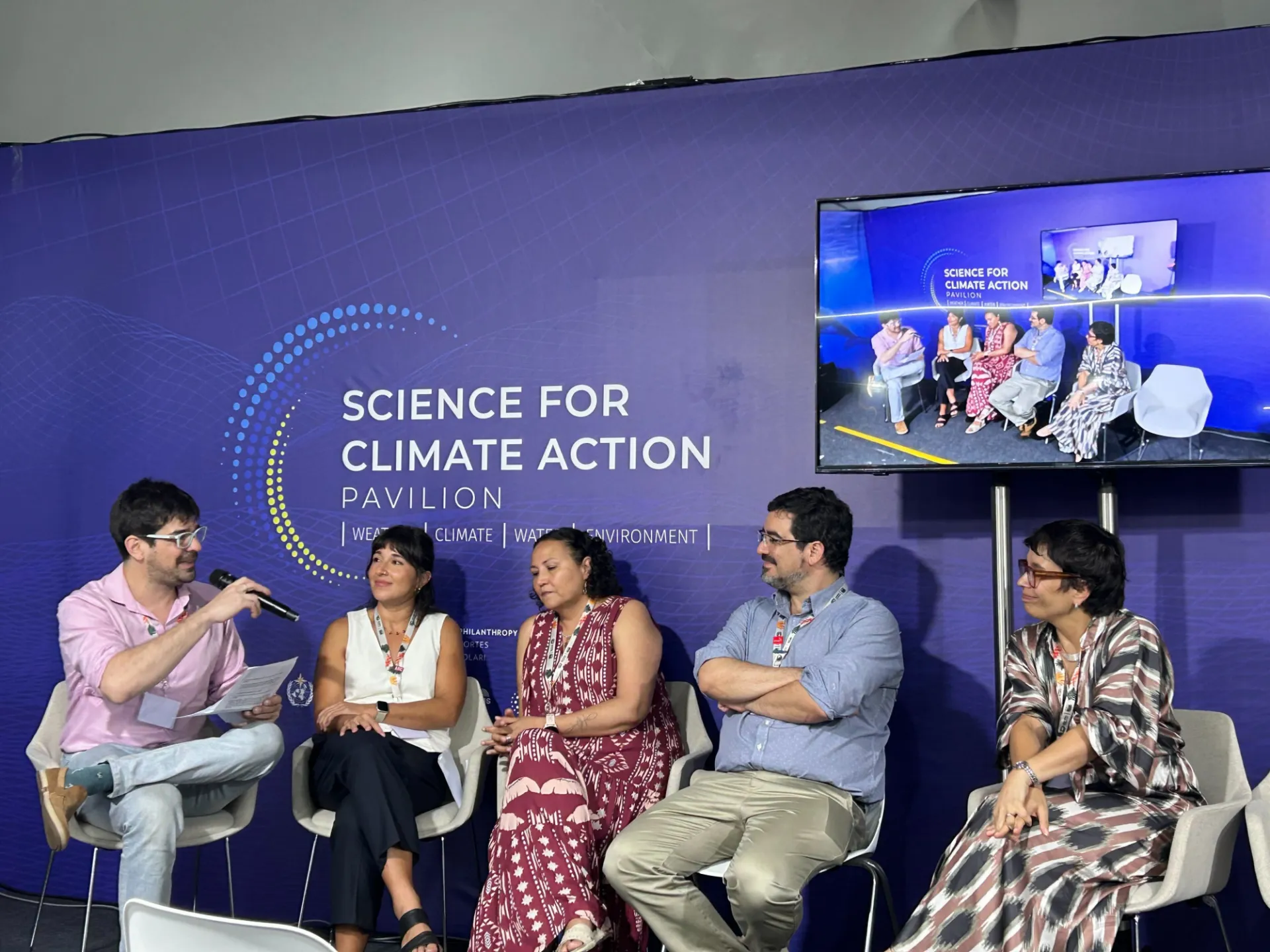
Voices from the territories
Two of the speakers leading the presentations - San José de Maipo’s Karina Cabello and Alto del Carmen’s Sandra Anacona – spoke about the lessons learned from this initiative and the contribution they seek to generate.
What was the key contribution of this partnership (Columbia, CR2, Itrend) in strengthening municipal capacities for the development and implementation of the PACCC?
Cabello: Participating in this project with Columbia, CR2 and Itrend has been extremely important for us. We are a small municipality with limited resources, and this partnership provided us with a roadmap to face the challenges of the PACCC - from design to monitoring and evaluation.
At COP30 we wanted to share the lessons learned from our territory, where diverse climate threats and risks converge. We hope that this experience will inspire other Latin American municipalities to promote alliances that strengthen local capacities.
During COP30, what is Alto del Carmen looking for during its participation in COP30?
Anacona: Alto del Carmen has suffered the ravages of nature through extreme natural phenomena that undoubtedly presents us with a challenge regarding adaptation to climate change. This space was ideal to take advantage of the opportunity not only to share our lessons on this adaptation, but also to learn about innovative experiences from other countries and realities, which contribute to a common goal: to strengthen our territorial capacities to adapt, reduce risk, and improve the quality of life of our communities.
We are grateful for the opportunity to be part of this partnership, and to be able to contribute to showcasing our work at COP30. We took advantage of this instance to strengthen collaboration and synergies between different territories of Latin America, all with a view to the future, focused on mitigating the effects of climate change.
Towards local, replicable climate action
The presentation of these communal experiences at COP30 highlights the main challenge of local climate action: transforming national policies into tangible results for vulnerable communities.
At the same time, it underlines a clear message: climate resilience is built from the local level, strengthening municipal capacities and fostering collaboration between academia, governments and civil society.
The voices of municipalities such as San José de Maipo and Alto del Carmen on a global stage reflect an essential truth: the success of climate adaptation in Latin America depends on empowering those who are directly affected by its impacts, and requires, among other things, the presence of academia at the local level.
The Chilean delegation brought to COP30 a powerful and replicable message: the climate action of the future must be practical, territorial and collaborative — a roadmap built from local knowledge to global impact.
Please visit the "Strengthening Capacities and Civic Participation for Resilient Communities in Chile" website (in Spanish) to learn more about the project.