The Study Tour: Carthage and Africa Proconsularis in the Field (2026)
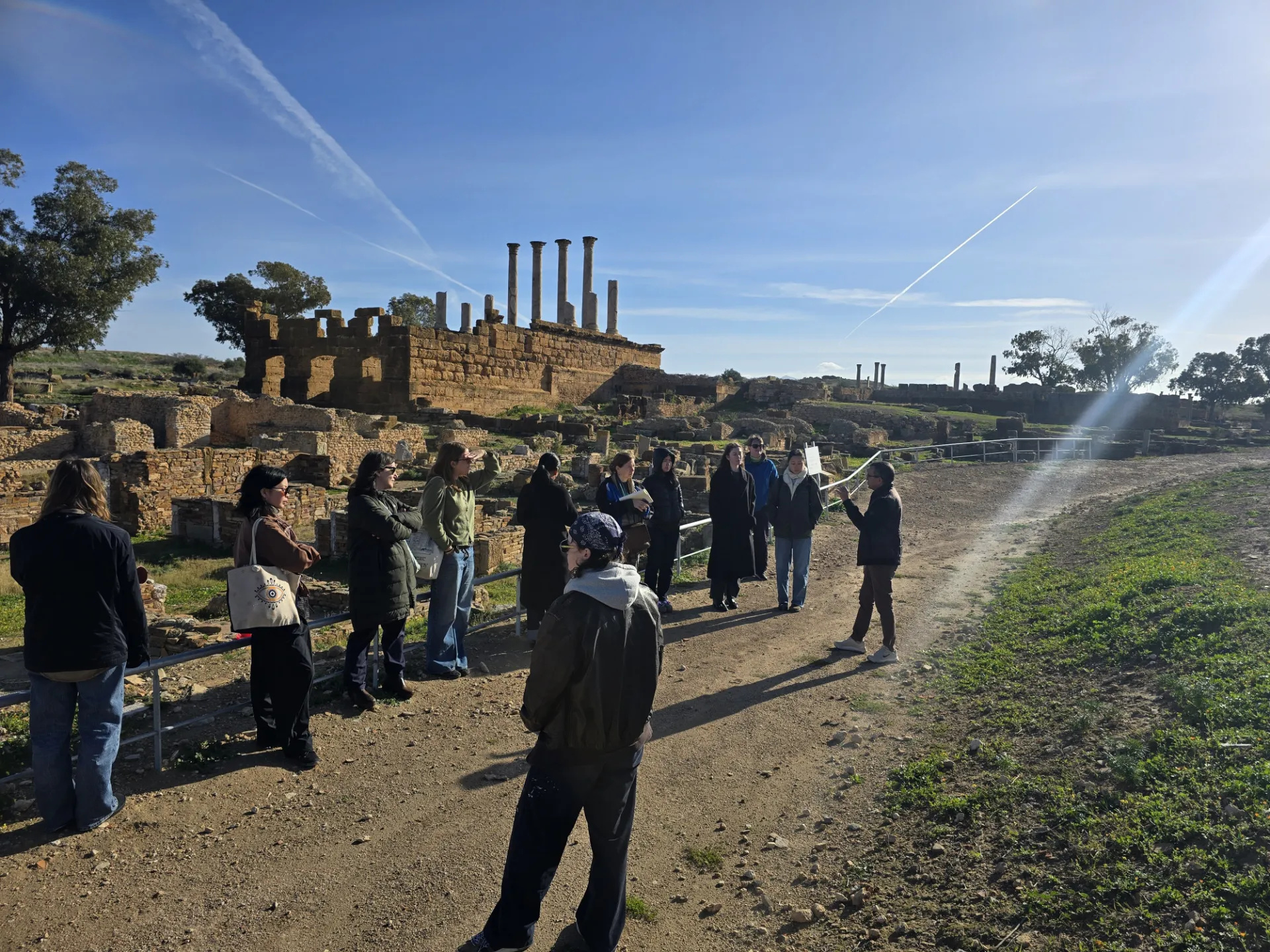
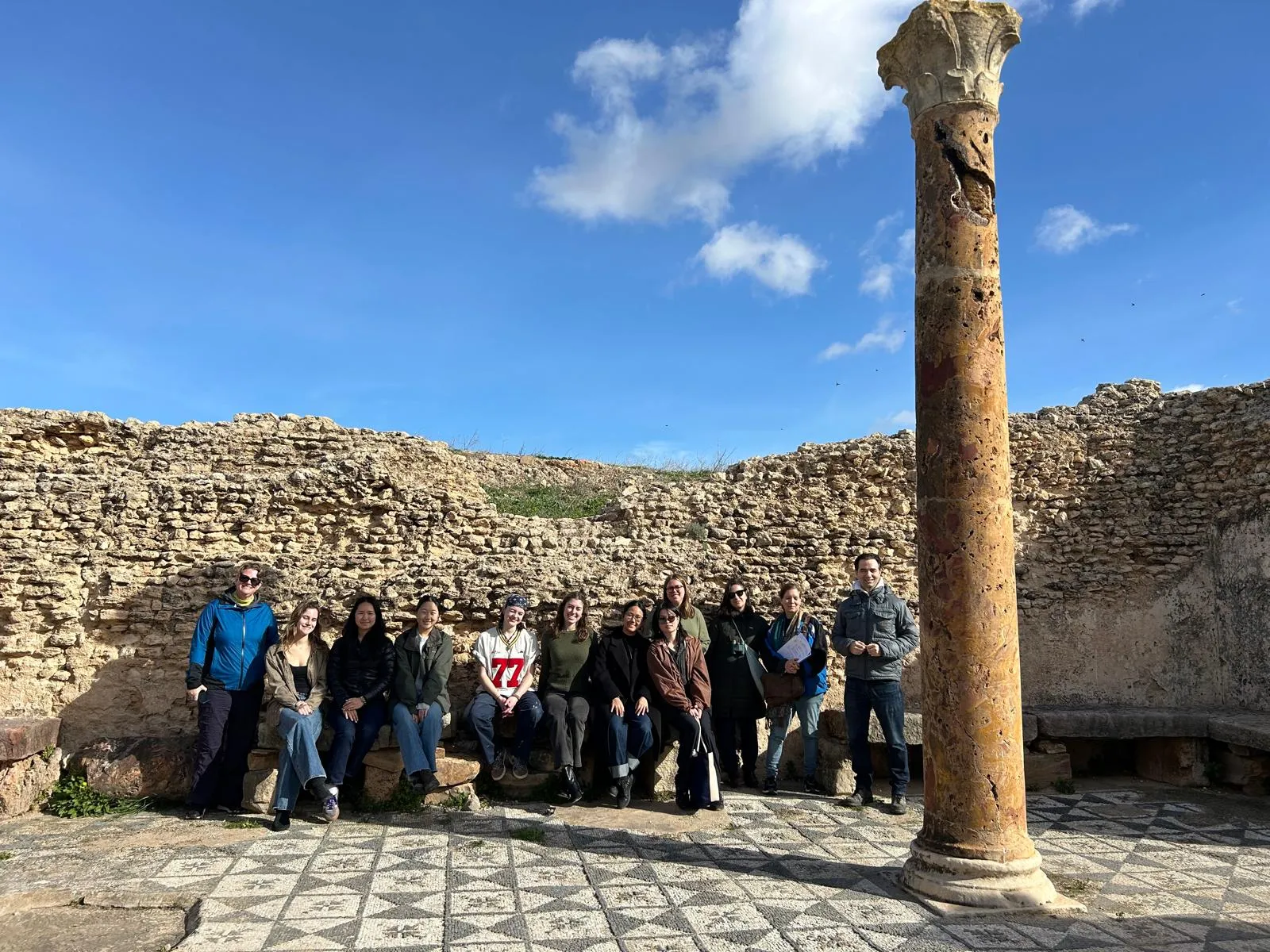
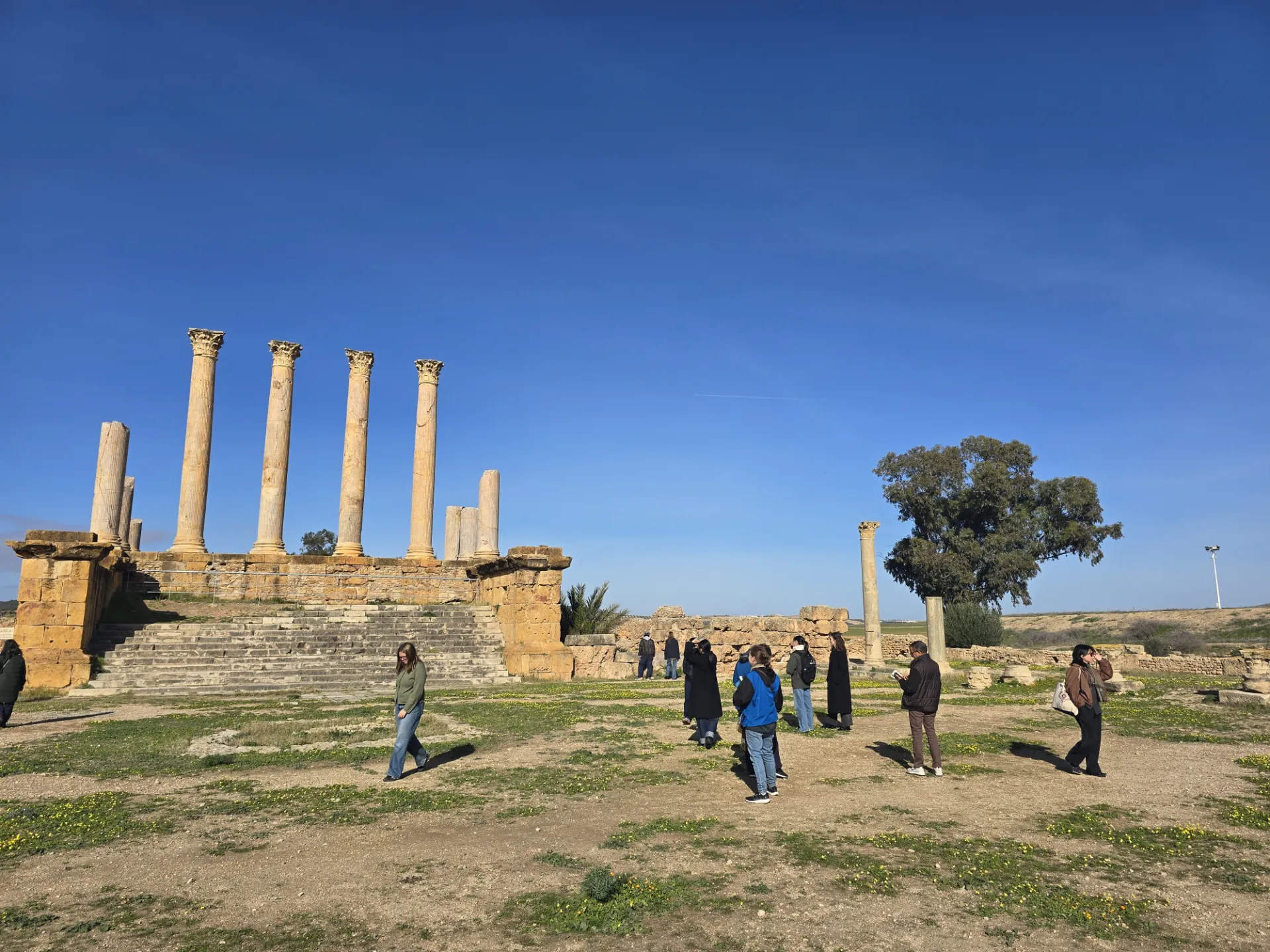
In January 2026, senior students and faculty from Barnard and Columbia—after taking the seminar Carthage and Africa Proconsularis in Fall 2025- came to Tunisia for an intensive, site-based study tour. The trip was designed as an extension of the course itself: students didn’t simply visit ruins; they returned to places they had already inhabited intellectually through texts, scholarship, and archaeological evidence.
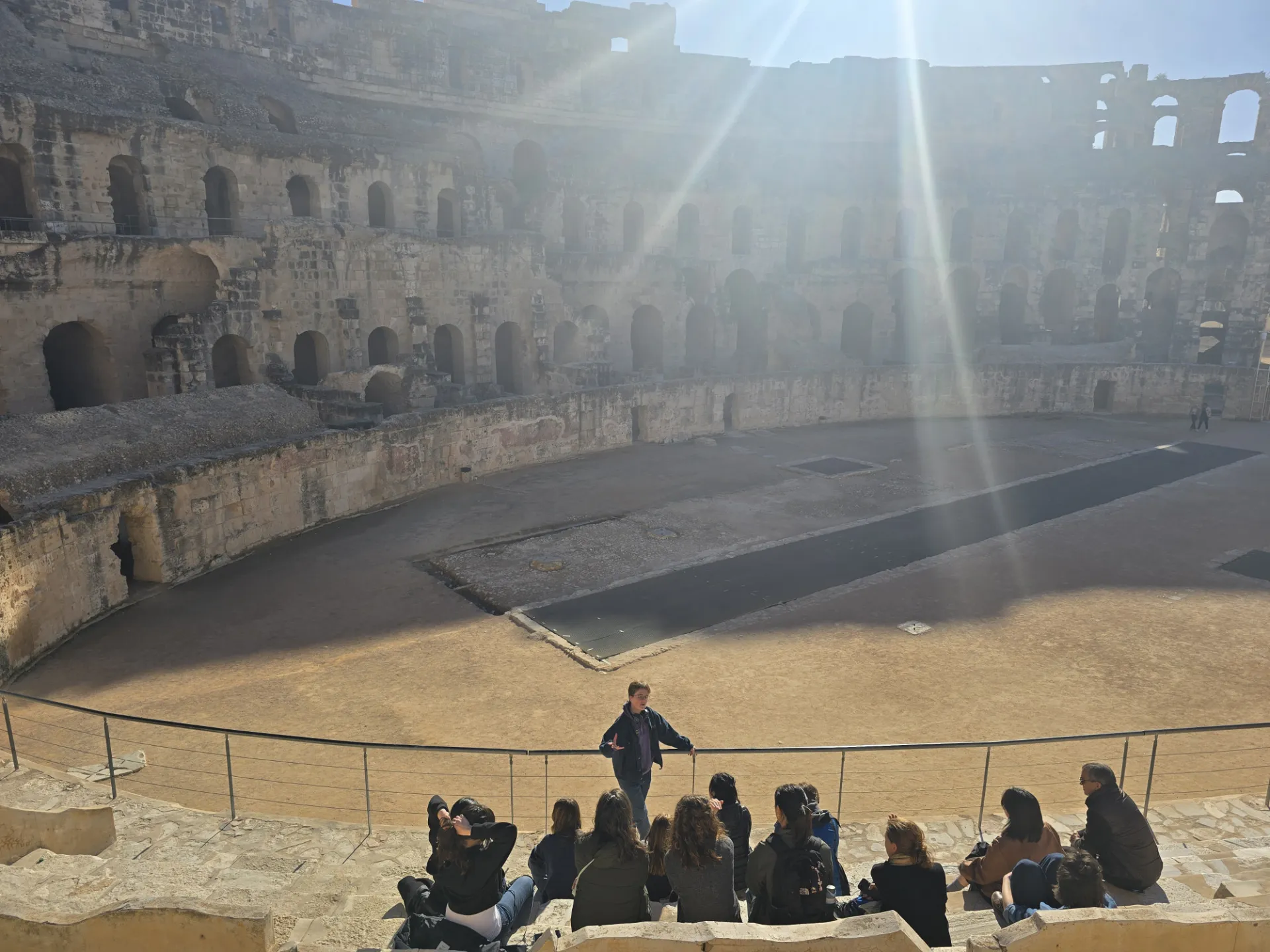
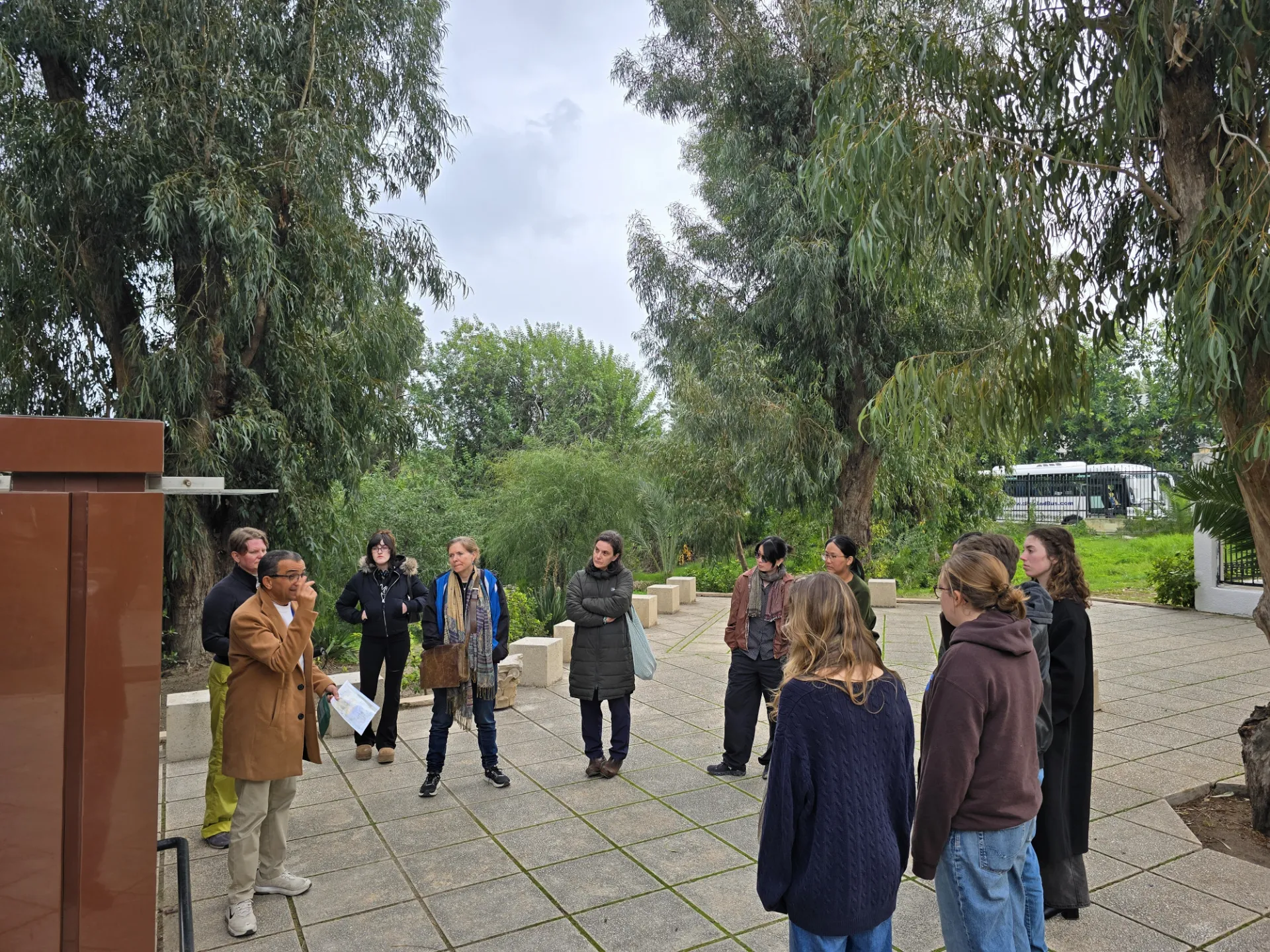
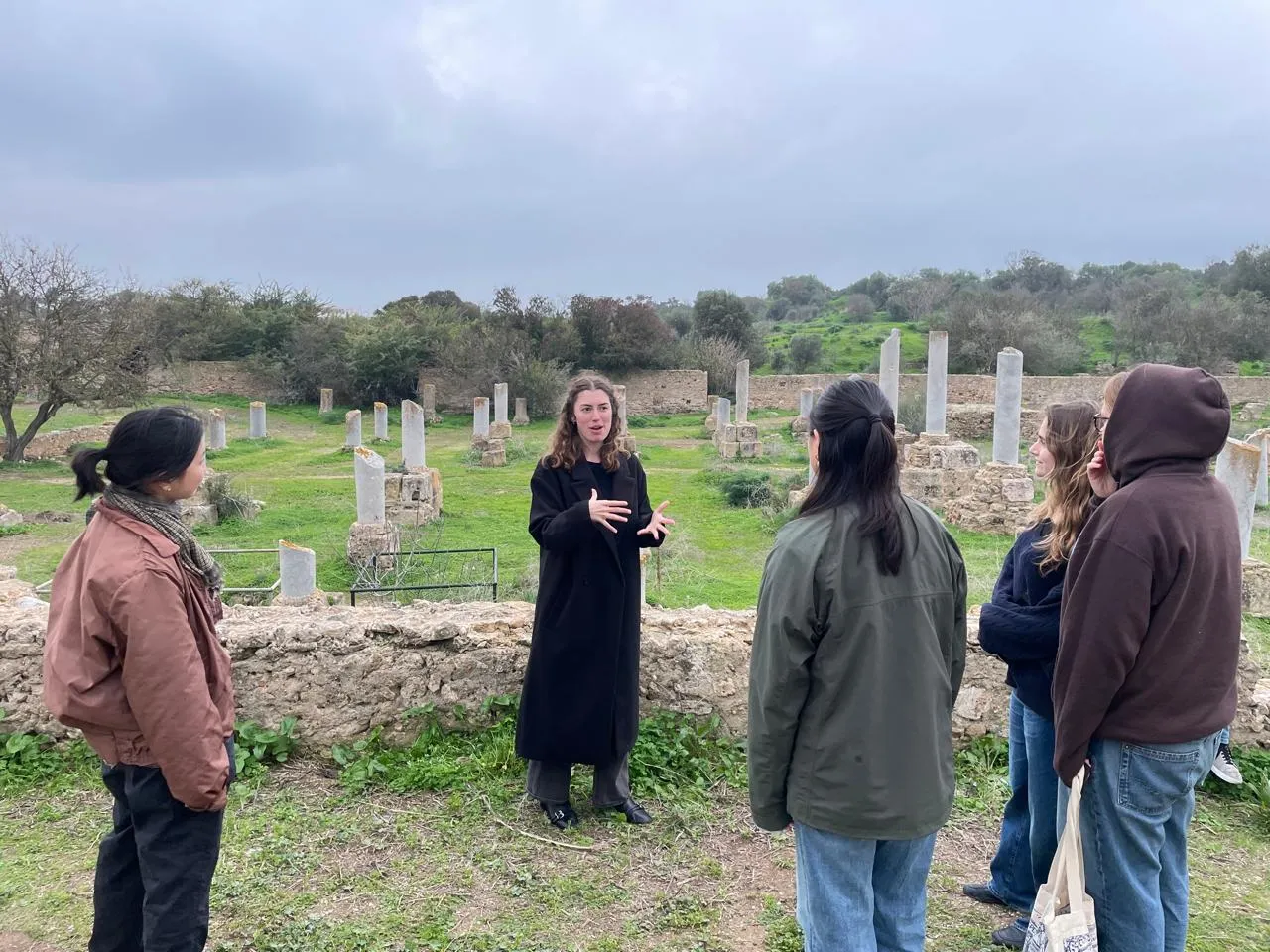
Throughout the journey, the group was accompanied by Tunisian historian Jamel Eddine Aouini, whose guidance helped connect classical material to Tunisia’s lived geography and historical memory. Along the way, students also presented on the research papers they were developing—often delivering short, on-site interventions at the very locations their arguments were built around, as envisioned in the course design.
What we mean by “Carthage and Africa Proconsularis”
In Roman terms, the trip explored the world of Africa Proconsularis—the province centered on Carthage, and broadly corresponding (in large part) to what is now modern Tunisia, and large chunks of North Africa. Students traced how this landscape carried—and still carries—multiple civilizational layers: Punic Carthage, Roman Carthage, and later Byzantine and Christian Carthage, before the arrival of Islam, alongside the region’s long afterlives in art, architecture, and memory.
A course brought to life
The seminar frames Tunisia not as a peripheral province, but as a central stage for Mediterranean history—through merchants and imperial governance, city life and elite display, spectacle culture (theaters and amphitheaters), and the emergence of Christian communities and martyr traditions. It also invites students to read North African voices—Carthage as lived experience, argued over, criticized, defended, and remembered—while thinking across archaeological, textual, and artistic evidence.
The Itinerary: Three Regions, One Ancient World
The group moved across Tunisia’s major historical regions—each offering a distinct lens on life in ancient North Africa:
- The coastal heartland around Carthage (the political and symbolic center of Roman Africa)
- The Sahel (around Sousse/Hadrumetum and El Jem, where urban life and spectacle culture remain powerfully visible)
- The central and western interior—a corridor of extraordinarily preserved Roman cities and landscapes often associated with Numidia’s wider orbit, where monumental architecture meets rural depth
What follows is a site-focused narrative drawn from the tour agenda.
Coastal Tunisia: Carthage and the Mediterranean Horizon
Carthage (Punic)
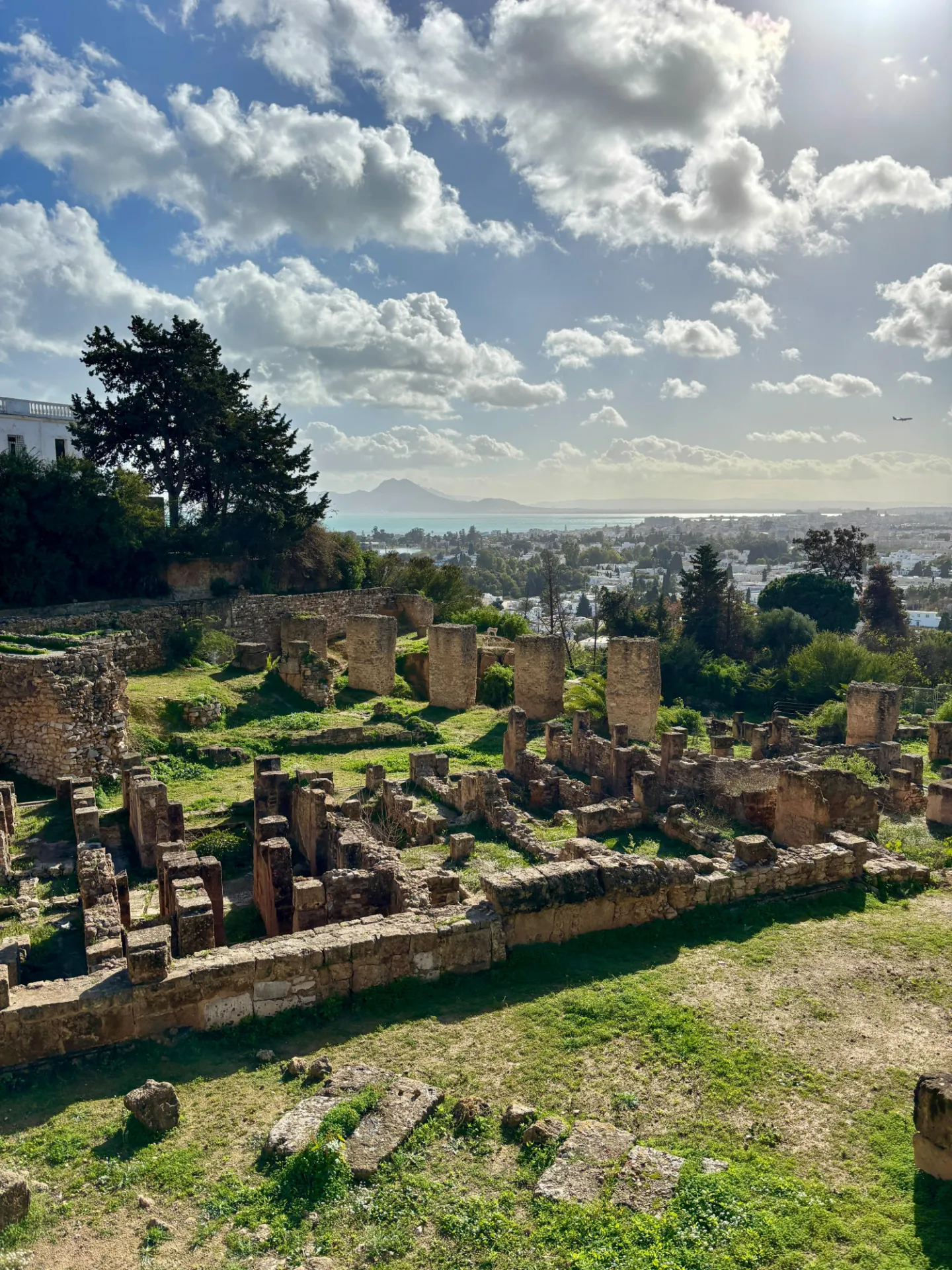
The trip opened with a walking tour of the archaeological site of Carthage—a deliberate first encounter, and an induction into Tunisia through its most famous palimpsest. Here, students confronted the city’s layered identities: the Carthage of empire and rivalry, the Punic Wars, the Roman refounding that reshaped the urban fabric, and the later Christian landscapes that emerged within—and sometimes against—imperial space. The focus was on the Punic sites; i.e., the Byrsa Hill, the Punic tombs, the Punic Ports, the Massive Sea Wall, and the Tophet.
Kerkouane
On the following day, the group visited Kerkouane, one of the most evocative windows into the Punic world—not Rome’s version of Carthaginian life, but a Punic city in its own right. For students who had spent the semester thinking about what Punic can mean, Kerkouane offered something rare: a place where scale and everyday material life are legible on the ground.
Utique
The tour also included Utique, a site whose significance predates Carthage’s dominance, supposedly the first city built by the Phoenicians in the north African coast.
Water, Cities, and the Roman Landscape Around Tunis
Zaghouan
A highlight for understanding the engineering logic of Roman Africa was Zaghouan—where students explored the Roman relationship to water, terrain, and long-distance supply. It’s one thing to read about aqueducts and imperial administration; it’s another to stand in the landscape that made large-scale urban life possible, including the monumental Water Temple and the longest water aqueduct in the Roman Empire, that transported water from the mountain of Zaghouan to the city of Carthage, over 120 kilometers.
Thuburbo Maius
At Thuburbo Maius, the focus turned to the Roman city as a social organism: public buildings, civic identity, religious monuments, and the built environment as a record of community ambition and elite display.
Oudhna / Uthina
Oudhna (Roman Uthina) displays infrastructure, public space, and the visible grammar of imperial planning. It is one of Tunisia's best excavated sites.
Inland Tunisia and Numidia: Monumental Cities and Deep Time
Bulla Regia
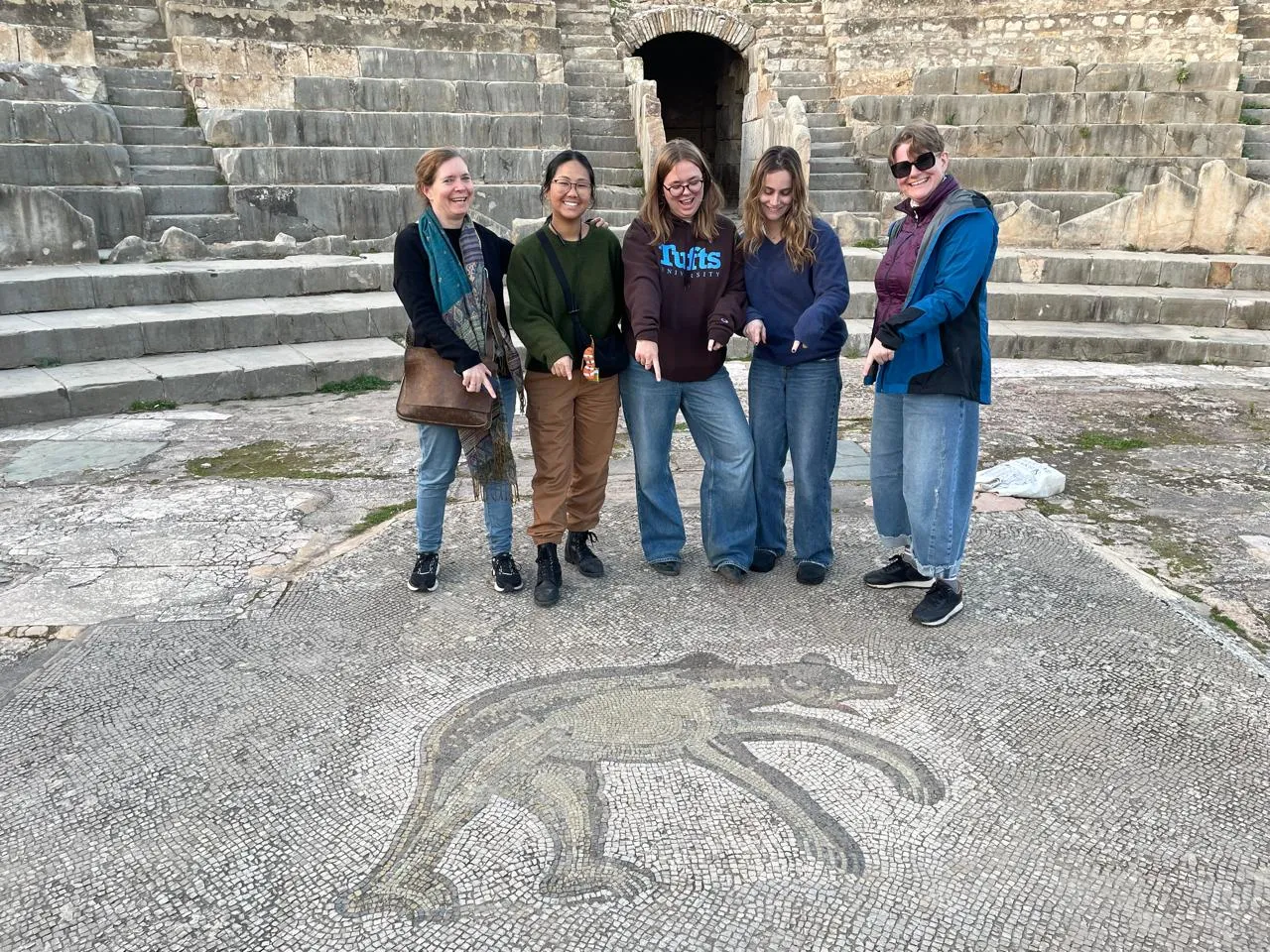
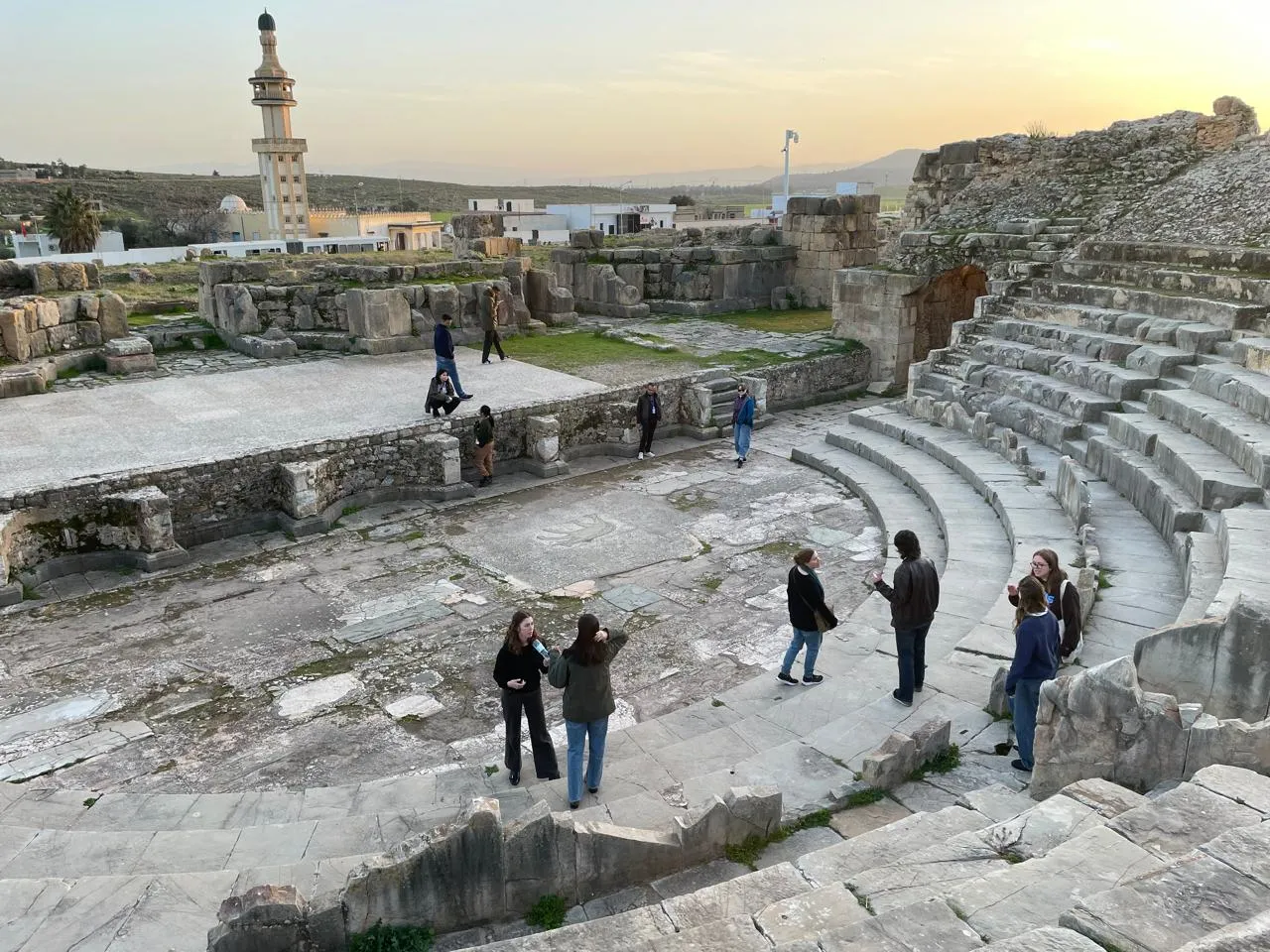
The itinerary then moved west to Bulla Regia, often remembered for how vividly it preserves domestic life and elite comfort. Its underground villas, with their mosaics, remain unique in the Roman Empire and show how Romans adapted to the local tradition and climatic duress.
Chemtou
At Chemtou, students encountered the economic and extractive side of antiquity: stone, labor, transport, and imperial demand. Chemtou is a site that sits next to a marble mountain and quarry. In a course that repeatedly asks what empire runs on—not just ideas, but materials—Chemtou makes the answer tangible. The Museum is also a gem for visitors.
Dougga (Thugga)
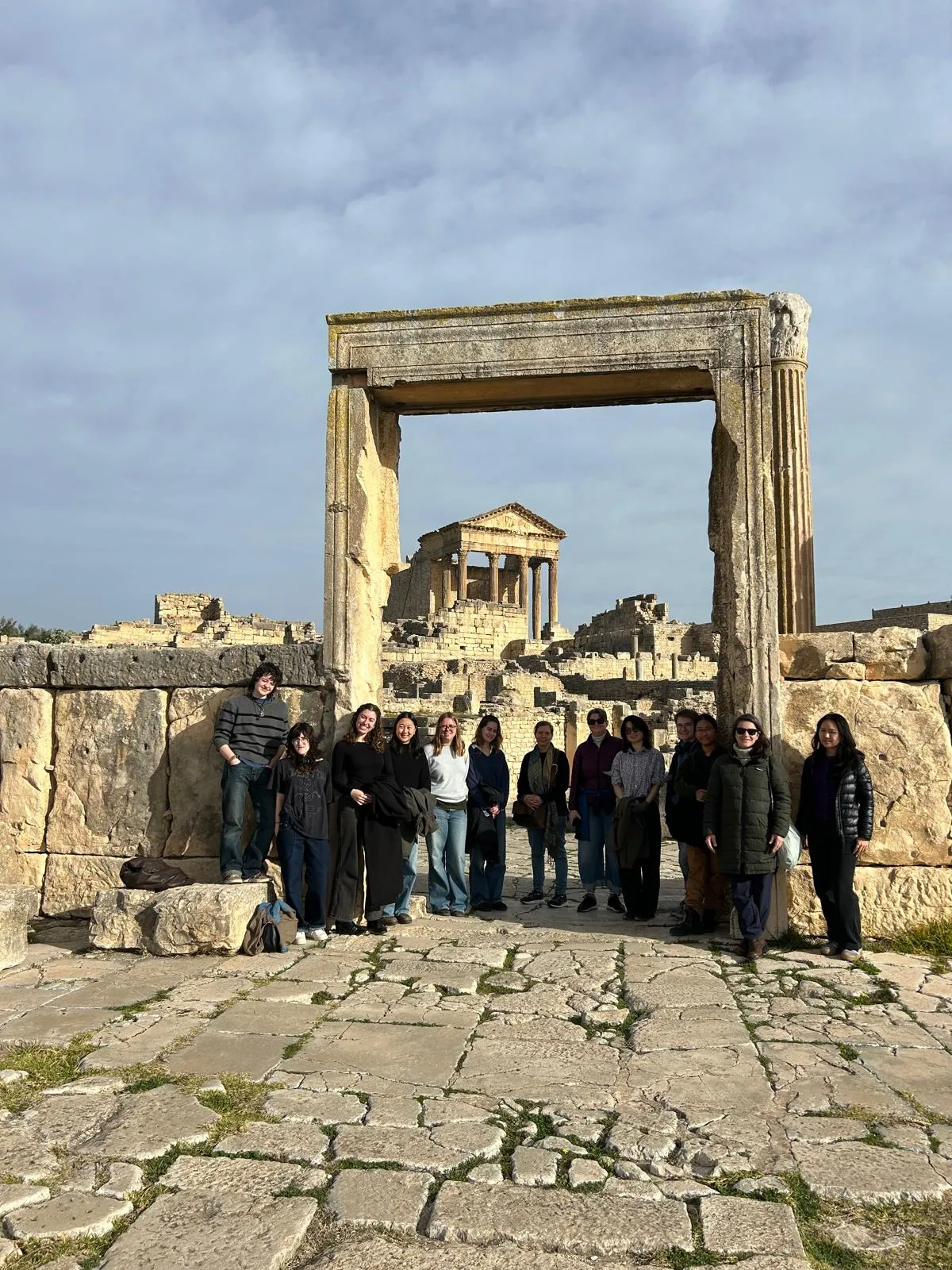
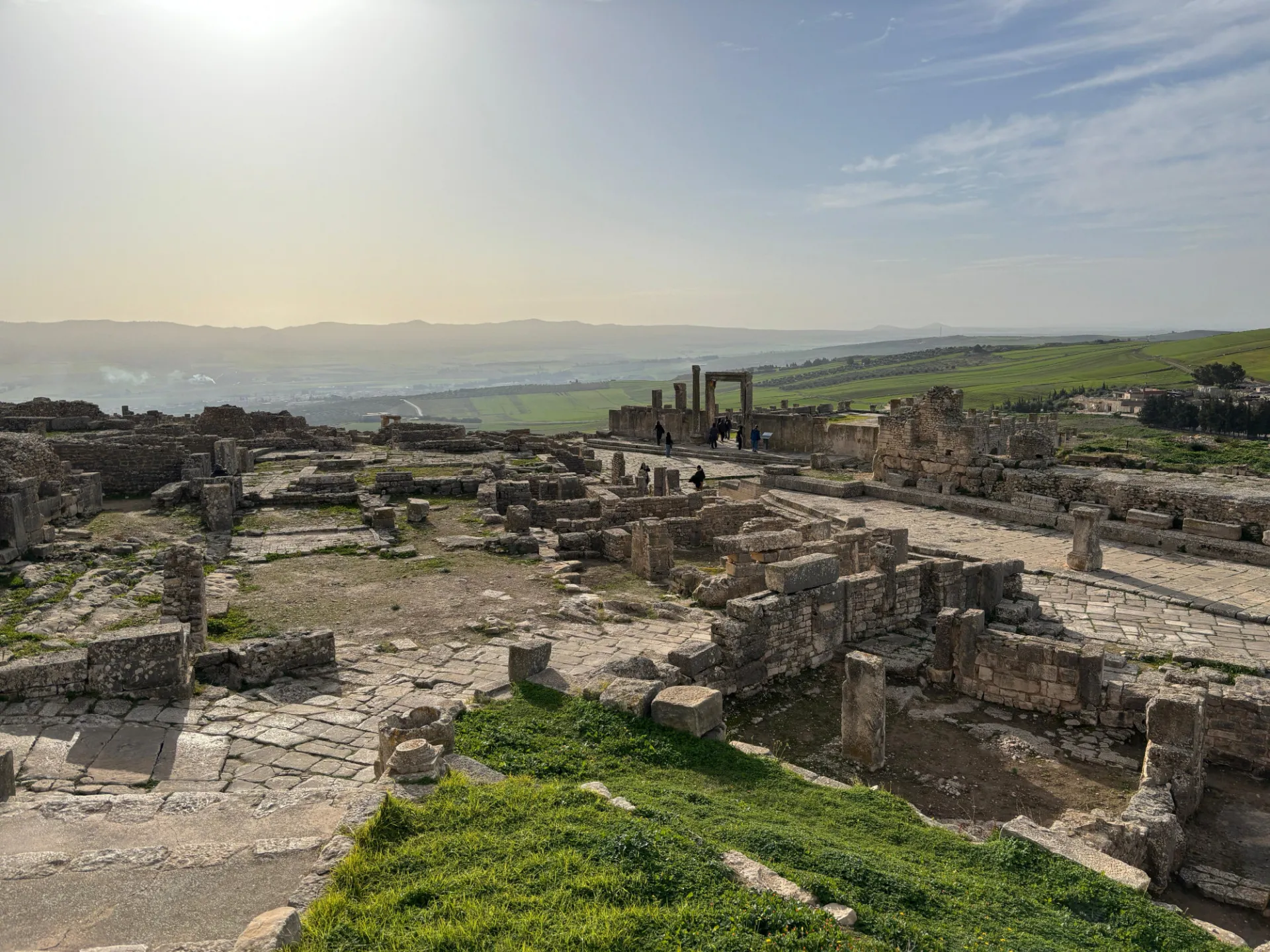
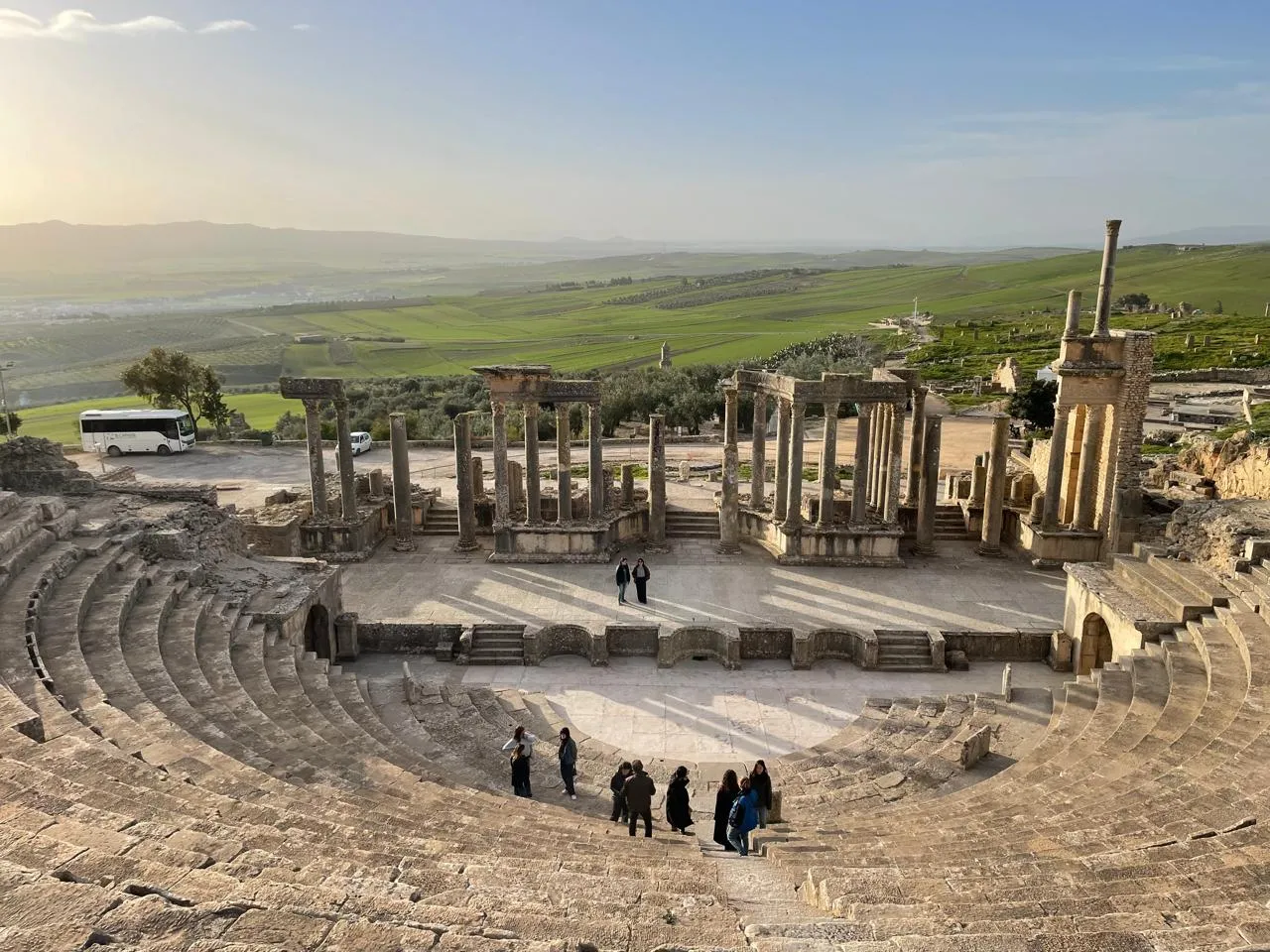
The overnight stay near Dougga allowed time in one of North Africa’s most extraordinary archaeological landscapes. Dougga, Roman Thugga, is a place that connects three civilizations: Numid, Punic, and Roman. It invites whole-city thinking: the relationship between multiple cultures, temples and streets, public life and local identity, and the sheer density of visible history. It is also the kind of site where students could most naturally deliver short, on-site presentations—connecting their research arguments to a place that almost seems designed for teaching.
Makthar (Mactaris)
The route continued through Makthar (Roman Mactaris), a site that help widen the mental map of Roman Africa beyond the coast. This inland city make clear how provincial life could be simultaneously local and imperial—shaped by regional histories while speaking the shared architectural language of Rome.
Sbeitla (Sufetula)
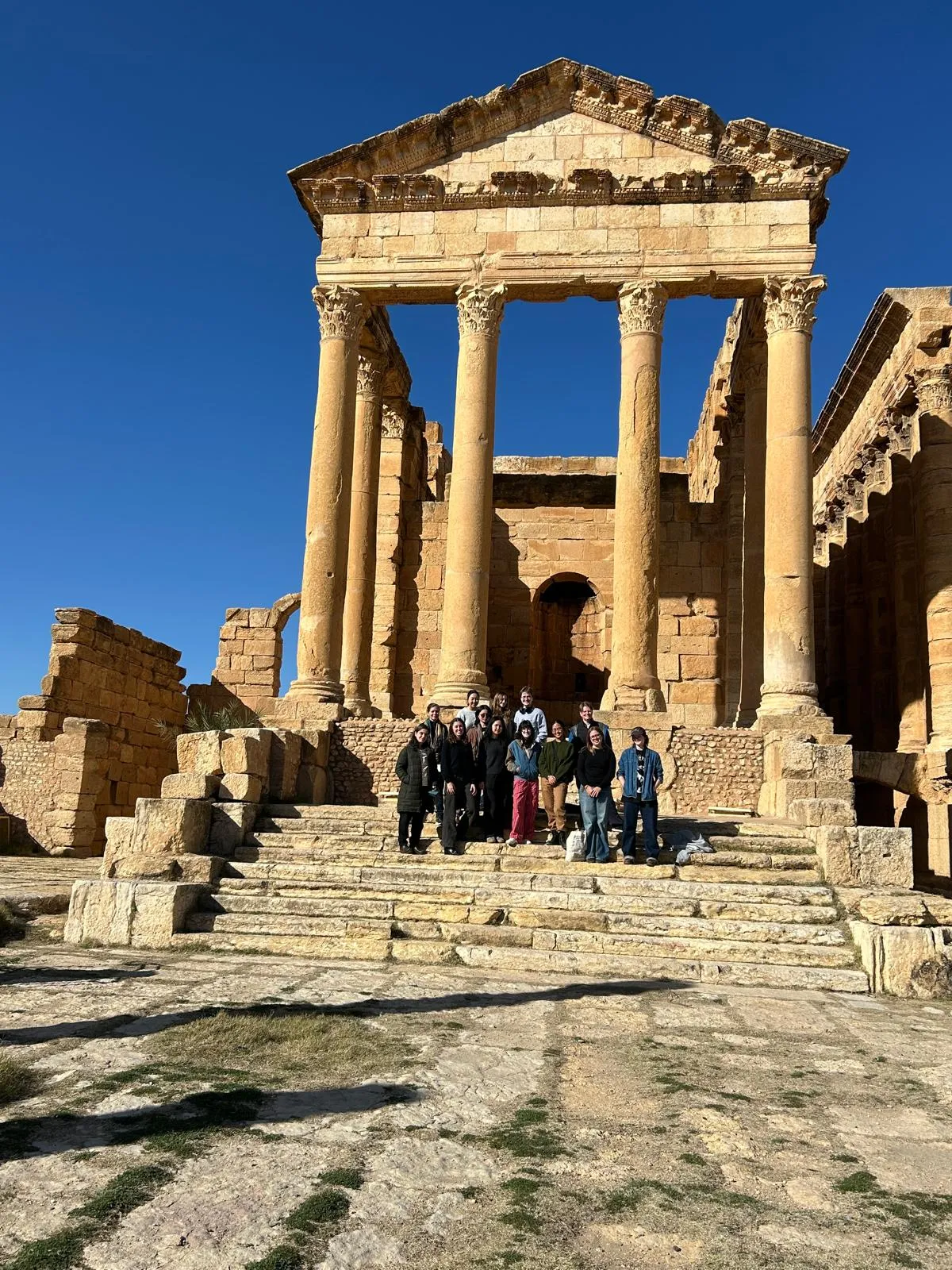
At Sbeitla, Roman Sufetula, the group spent extended time in an exceptionally preserved urban ensemble—ideal for thinking about how Roman cities organized civic space and how later periods (including Christian North Africa) left their own signatures in the same landscapes. The Byzantine fortresses and the marks of the Donatist Controversy make the city a perfect location to learn about the contrast of war and peace.
The Sahel: Opulence and Olive Oil
El Jem (Thysdrus) – amphitheater and museum
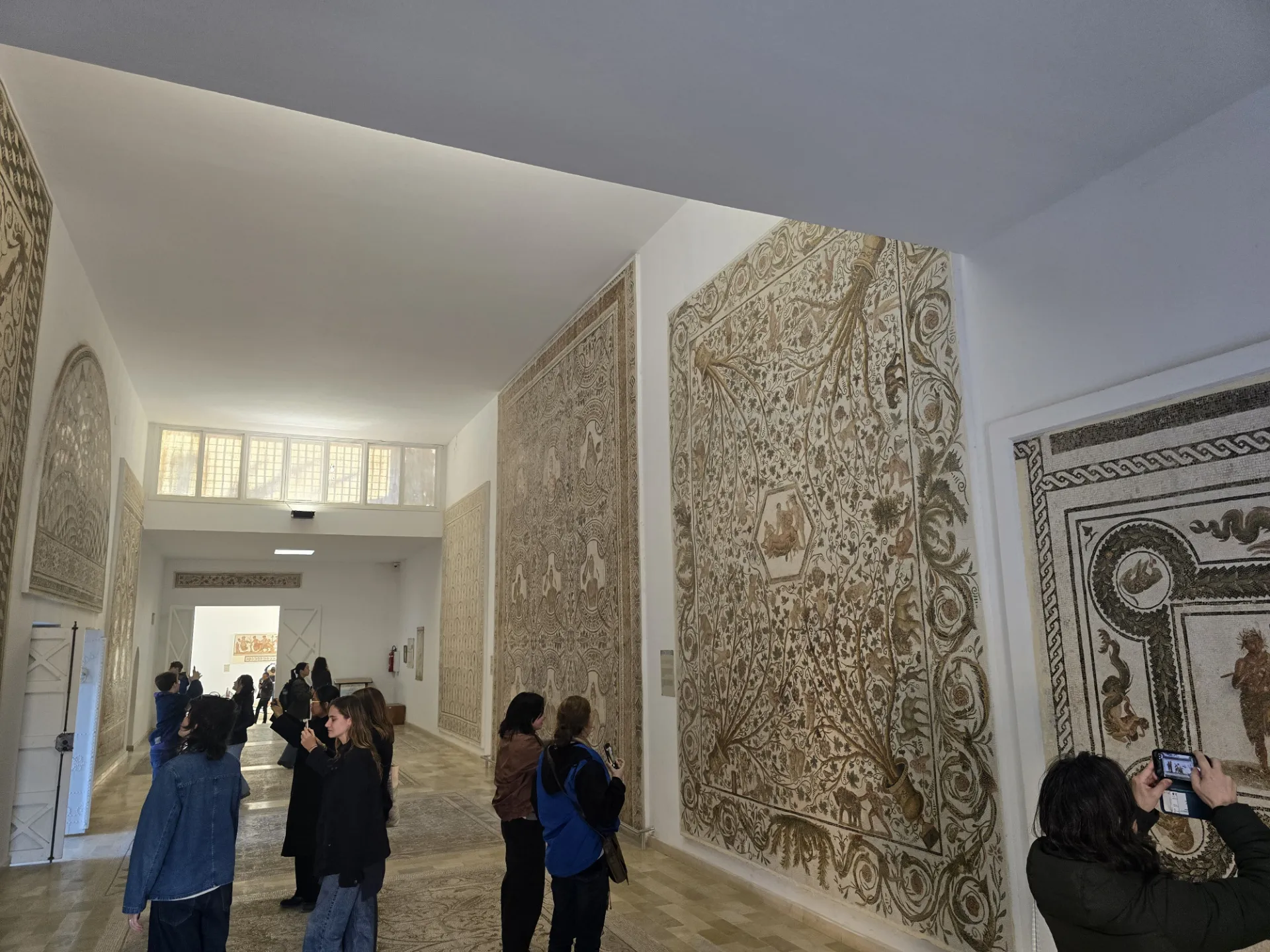
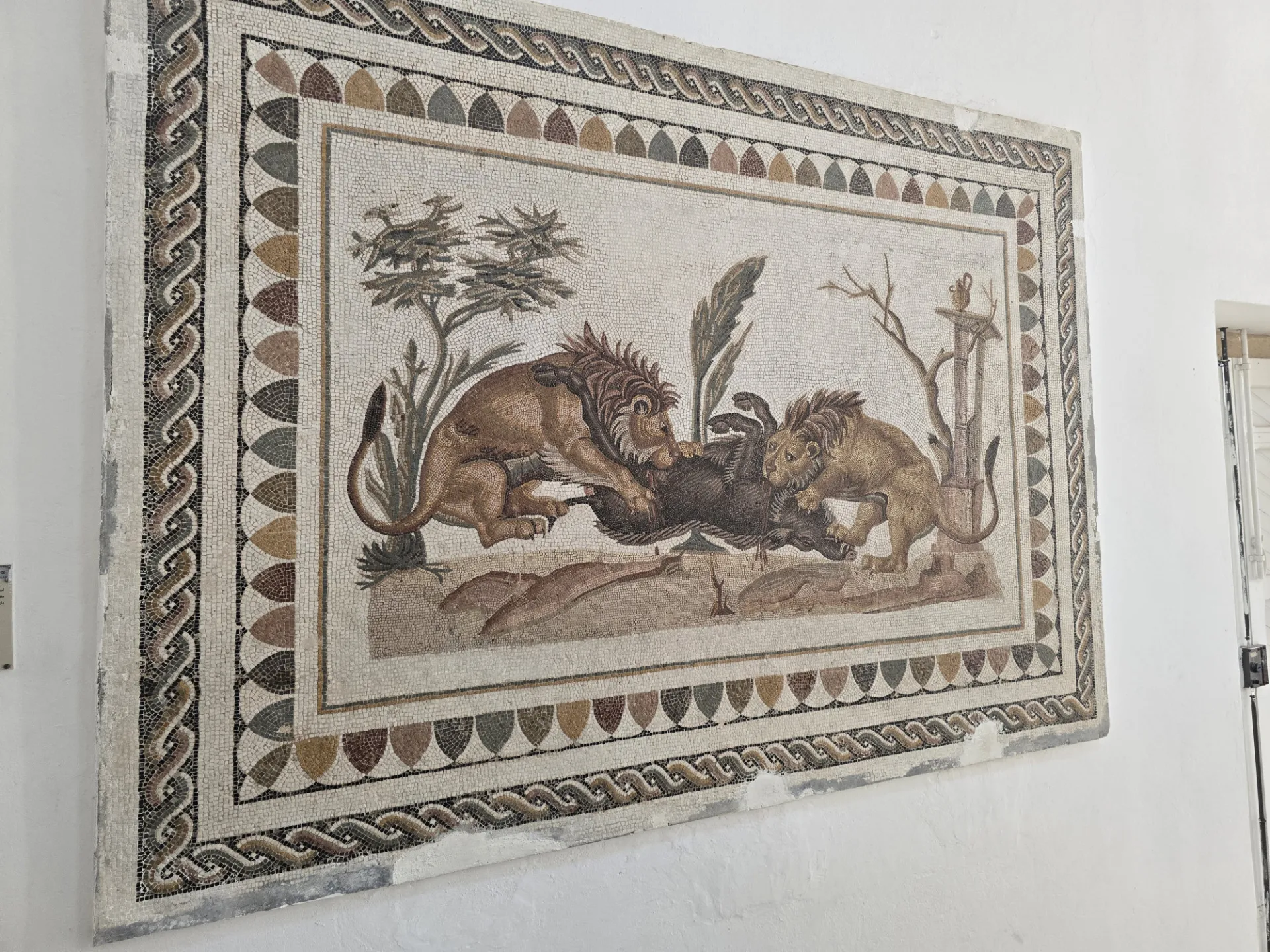
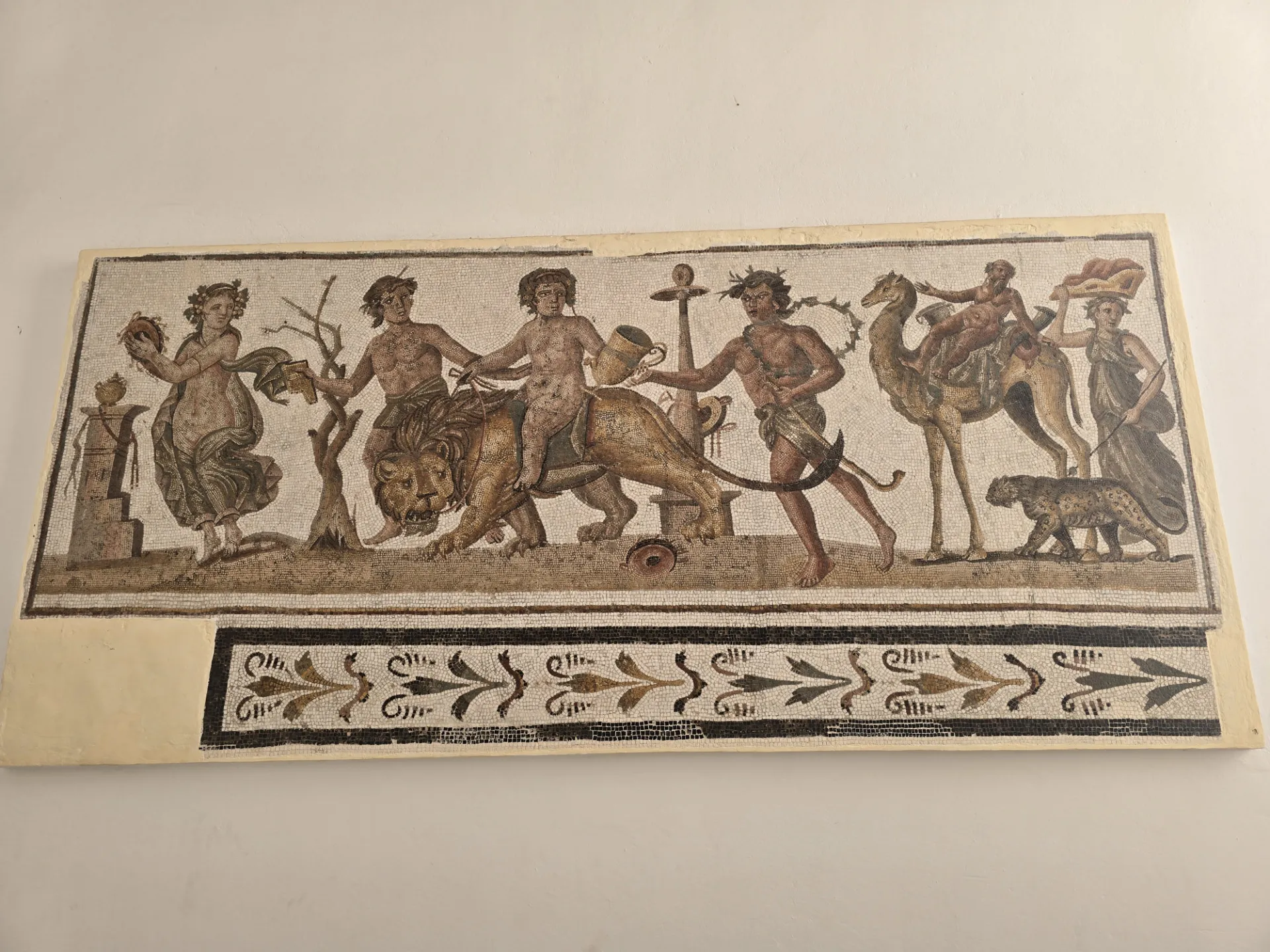
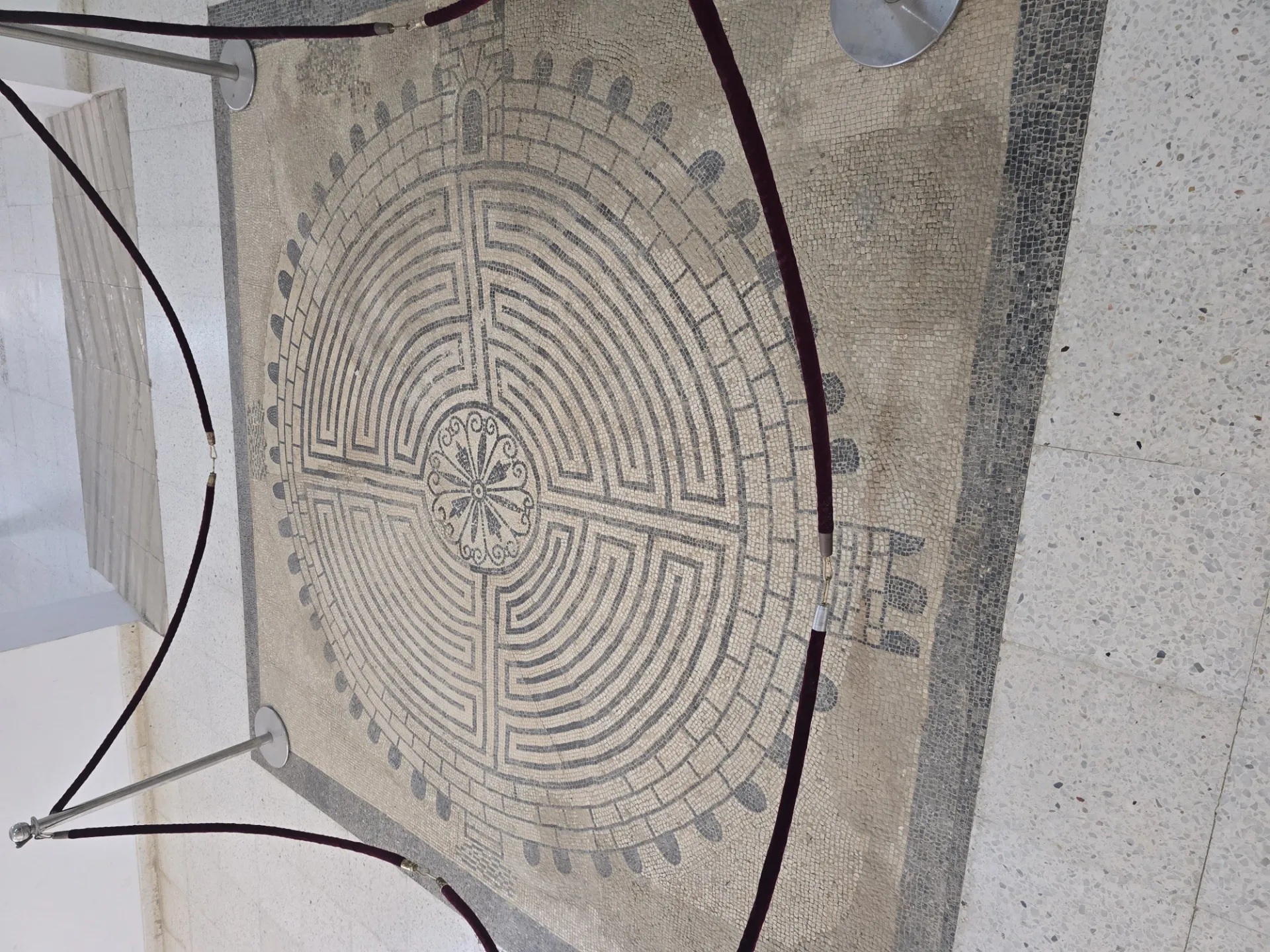
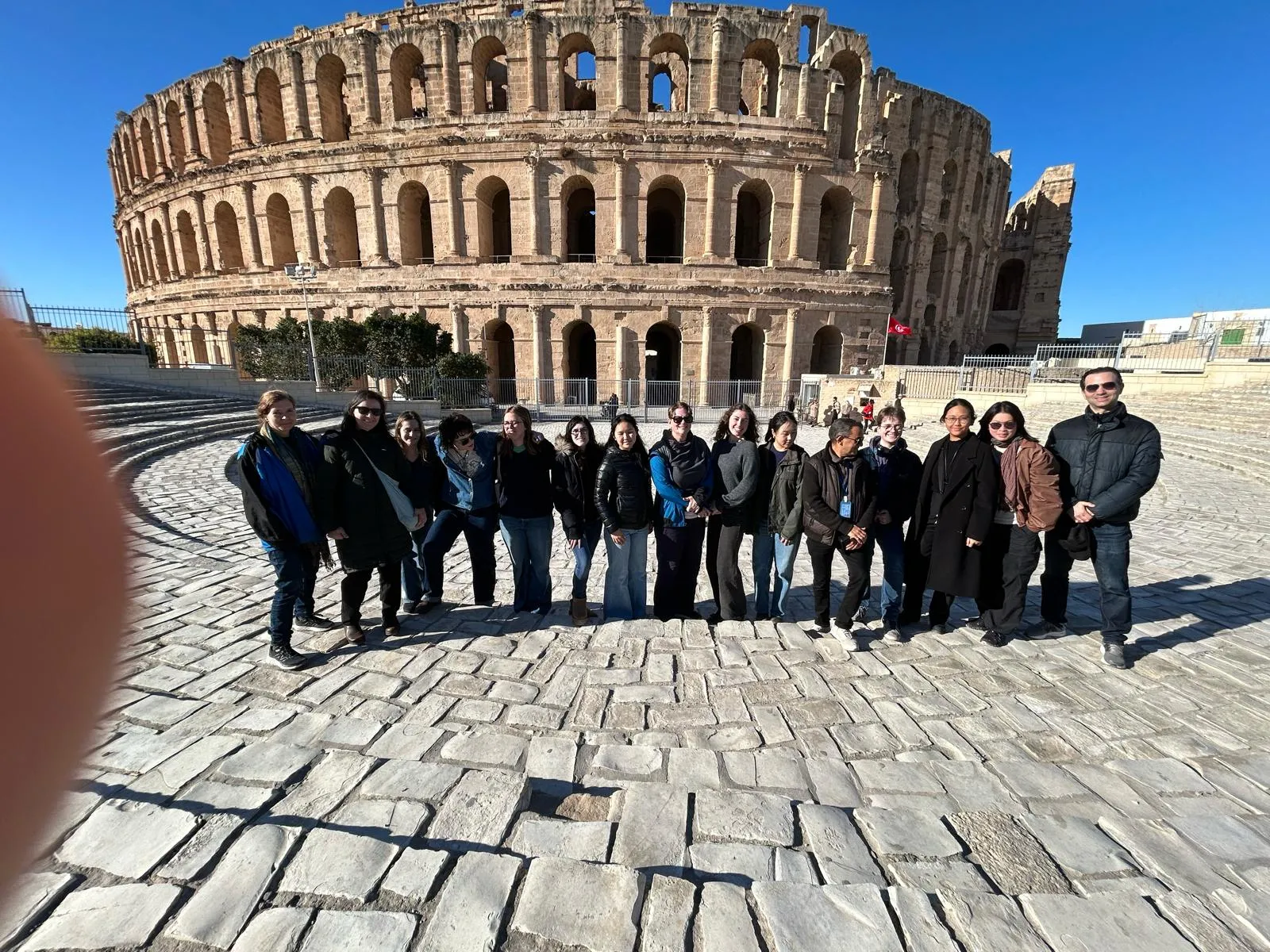
The visit to El Jem tied directly to seminar themes on amphitheaters, gladiators, and spectacle culture—not as side-notes to high politics, but as central social institutions that shaped community life, identity, and power in Roman North Africa. Thysdrus is the town of Gordian III, who was proclaimed emperor and ruled the Roman Empire for a few years during the 3rd century. On their way to the city, students observed what made it rich by then -and what continues to boost the Tunisian economy nowadays: millions of olive trees from which olive oil was -and is- made. Its museum has some of Tunisia's best mosaics.
Sousse (Hadrumetum)
In Sousse, ancient Hadrumetum, the itinerary blended city fabric and museum interpretation—another way of thinking about continuity: ancient urbanism under modern streets, and how a coastal city continues to negotiate heritage as part of everyday life. There, the students visited the museum and saw the Medina.
Back to Carthage and Bardo National Museum
Bardo National Museum
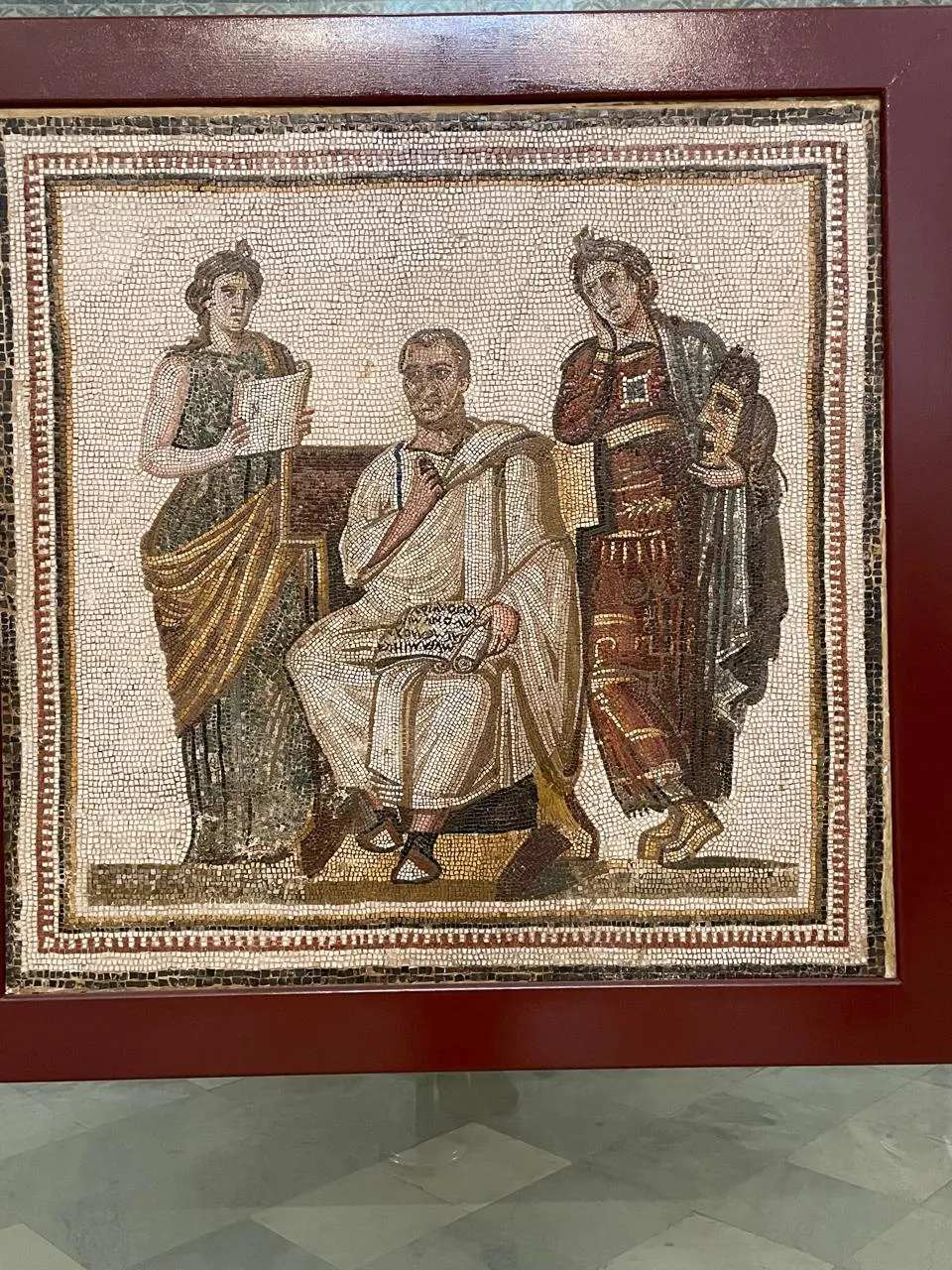
On their last day, the students finally visited the Bardo National Museum, where the semester’s discussions about artistic evidence—especially the famous North African mosaic tradition—could be read with fresh eyes after days in the field. Seeing objects in a museum after walking their landscapes is a kind of intellectual “second look”: it turns artifacts into arguments, and arguments into questions. The Museum houses the largest collection of Roman mosaics in the world, included two whose copies were offered to Columbia University by the Tunisian government: Virgil, and Diane the Huntress.
Carthage (Roman and Christian)
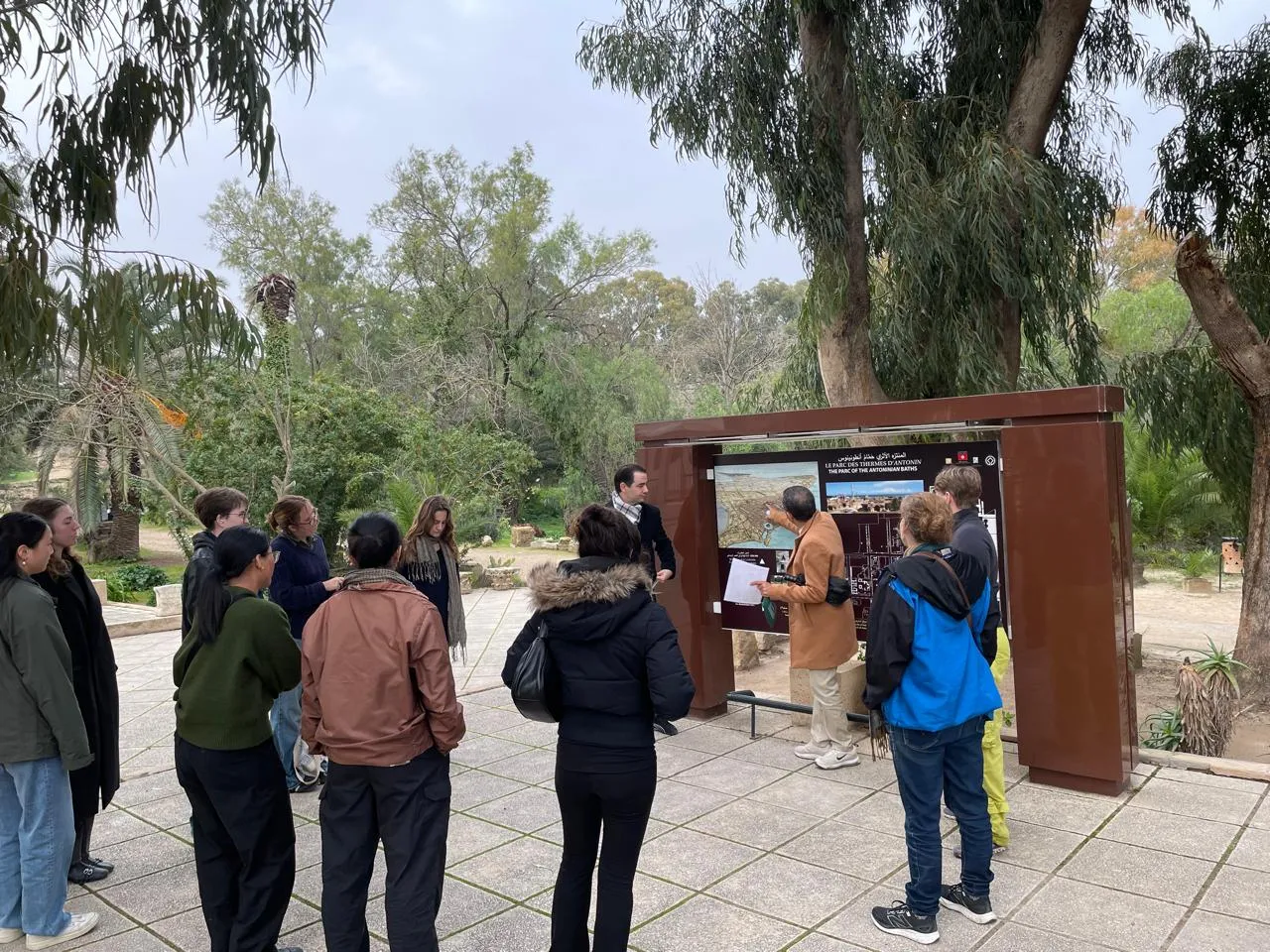
The trip concluded with the main Roman and Christian sites of Carthage: the Antonine Baths (on the sea, serving like a thalasso center, and one of the largest in the Roman Empire), the Cisterns of La Maalga, the Amphitheater of Carthage, and Damous el Karita (one of North Africa's oldest christian centers).
Image Carousel with 22 slides
A carousel is a rotating set of images. Use the previous and next buttons to change the displayed slide
-
Slide 1: TM
-
Slide 2: TM2
-
Slide 3: TM Tmpl
-
Slide 4: presentation
-
Slide 5: el jem museum
-
Slide 6: mosaic el jem
-
Slide 7: diony
-
Slide 8: labyr
-
Slide 9: Anton
-
Slide 10: amphit
-
Slide 11: doug
-
Slide 12: animal
-
Slide 13: doug 2
-
Slide 14: rainb
-
Slide 15: anton
-
Slide 16: caritas
-
Slide 17: virg
-
Slide 18: theat
-
Slide 19: cart
-
Slide 20: douggg
-
Slide 21: the
-
Slide 22: str