Columbia and Chile Partners Launch Guides for Community Climate Change Action Plans
The guides aim to aid municipalities with planning and citizen participation methodologies for the development of climate action plans.
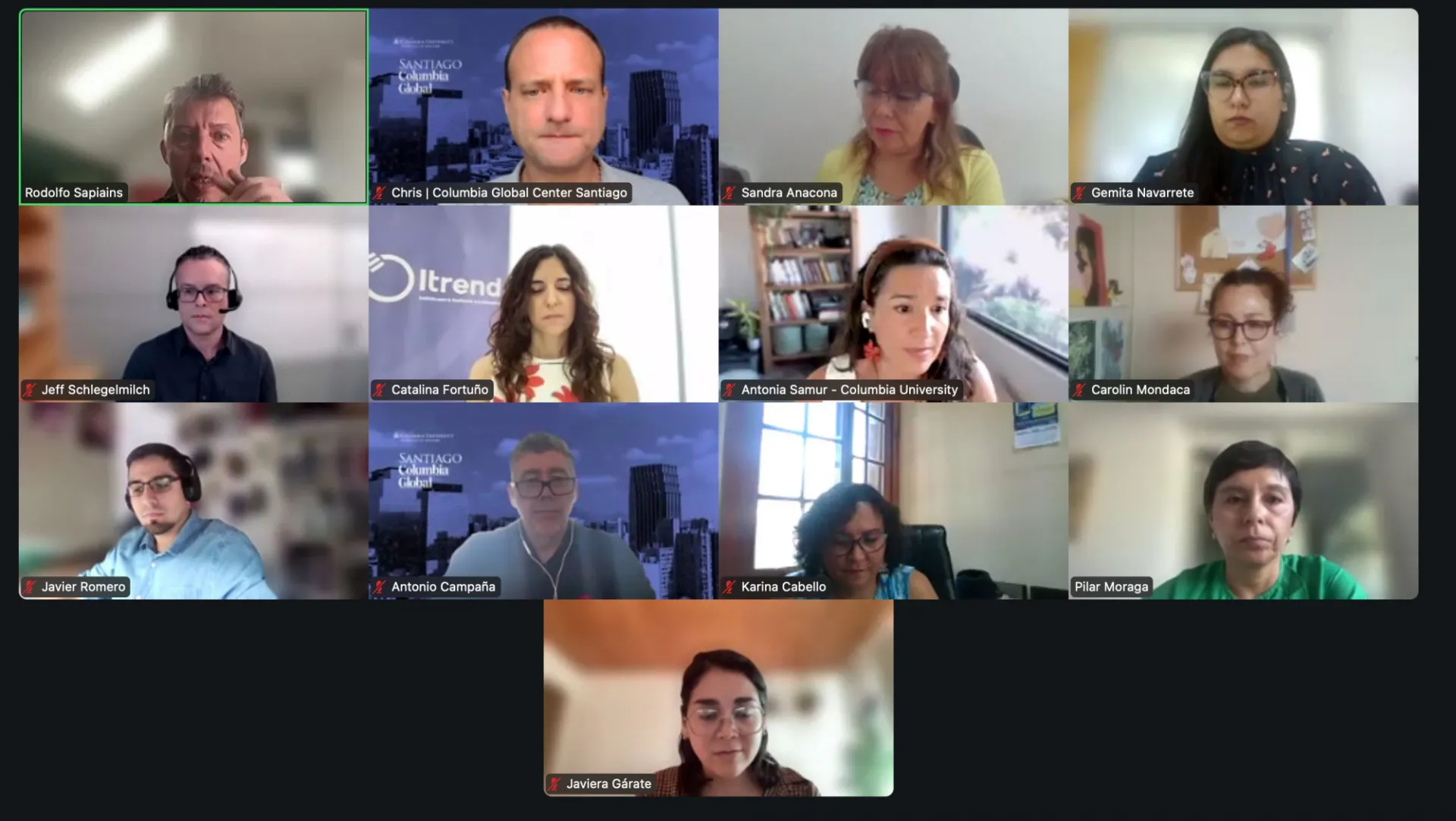
With the sponsorship of Columbia World Projects (CWP), Columbia affiliates and two Chilean partners have launched the "Community Participation and Planning Guides for Local Climate Action" – a project which has been over a year in the making, which included the participation of three municipalities and which responds to the need to strengthen capacities and provide tools to municipal governments to plan for, respond and adapt to climate change.
The project was jointly developed by Columbia’s National Center for Disaster Preparedness (NCDP) and the Columbia Global Center in Santiago, together with Chile’s Center for Climate Science and Resilience (CR2) and the Institute for Disaster Resilience (Itrend).
The methodologies were defined within the context of the Community Action Plans on Climate Change (PACCCs as per the acronym in Spanish) – the implementation of which is required of each municipality in Chile, as defined in the country’s Framework Law on Climate Change. These methodologies aim to support municipal teams in their planning processes for climate action with a focus on strengthening community participation and planning capacities.
In addition to reviewing how to employ the new methodological guides, the webinar held for the launch of the guides focused on the experiences of the representatives from Alto del Carmen, Coquimbo, and San José de Maipo – the three municipalities where the pilots of these methodologies were applied. All of the municipal participants highlighted the importance of active citizen participation in the implementation of the PACCCs.
For their part, the representatives of the organizations participating in the CWP project, dubbed "Strengthening Capacities and Civic Participation for Climate Resilient Communities in Chile," highlighted the value of establishing strategic alliances in order to positively impact the country's boroughs, focusing on the synergies between climate change and disaster risk management.
Jeff Schlegelmilch, director of NCDP, stressed that the project has had a real impact on achieving the goals set at the national level in terms of climate change preparedness. In the same vein, Pilar Moraga, director of CR2, stressed that the country needs this type of support, since "currently there are not many spaces where municipal capacities are strengthened" in this ambitious task.
Catalina Fortuño, executive director of Itrend, noted that the PACCCs are "an opportunity to integrate climate change strategies and disaster risk management," where both concepts are blended together with local knowledge.
NCDP project lead Antonia Samur highlighted: "These guides are a complement to those produced by the Ministry of Environment, the UNDP and CR2. They add value by providing practical methodologies with adaptable materials that facilitate their implementation. We hope that these will contribute to building a learning ecosystem around local climate action."
More than 160 attendees from Putre, in Chile’s northernmost Region of Arica, to Primavera, in the southernmost Region of Magallanes, participated in the webinar, in addition to representatives from various Latin American countries, including Argentina, Brazil, Puerto Rico, the Dominican Republic, and Venezuela, as well as the United States.
Contents of the guides
The guide contains eight planning and citizen participation methodologies for the development of climate action plans, with hyperlinks to download the complementary materials associated with each guide. They are aimed at municipal teams that develop or implement climate change action plans and territorial actors involved in these processes, such as community leaders, social organizations, environmental committees and representatives of productive sectors.
Each methodology offers specific objectives and steps; participatory activities and practical examples; ready-to-use materials (PPTs, surveys, templates, guides, assessments), as well as tips for integrating results into the Climate Action Plan. These guides were co-designed and tested together with the municipalities of Alto del Carmen, Coquimbo and San José de Maipo in Chile, and are intended to be adapted and replicated by any local government in Chile and throughout Latin America.
The guides can be found at this link: https://municipioscolumbia.cr2.cl/guias-practicas/ and the video of the event can be found at this link: https://www.youtube.com/watch?v=E44j38mKw5Q&t=51s