We are delighted to announce the recipients of Climate Hub Rio's 2024 grants to four faculty members and a postdoctoral research scientist at Columbia University, following a rigorous selection process. These awardees will embark on groundbreaking research projects in Brazil, thanks to the seed funding provided through this program, which offers a unique opportunity for faculty members to contribute to climate-related research in Brazil. With the support of the Columbia Global Center in Rio de Janeiro, our winners will be able to leverage the Center's decade-long experience and extensive partnerships in Rio and Brazil to facilitate and monitor their research.
More information on each winner and project is available below:
- Suzana Camargo, Marie Tharp Lamont Research Professor at Lamont-Doherty Earth Observatory
Project: Simulation of extreme weather events in Brazilian megacities - Alex de Sherbinin, Deputy Director and Senior Research Scientist at the Center for International Earth Science Information Network (CIESIN), Columbia Climate School
Project: Workshop: Understanding the impacts of climate change on vulnerable
populations and advancing climate resilience in Rio de Janeiro - Andrew Kruczkiewicz, Senior Staff Associate at International Research Institute for Climate and Society (IRI) / Columbia Climate School
Project: Enhancing disaster resilience in Rio de Janeiro: A collaborative effort with Columbia University and Brazilian scientists and decision makers to prioritize opportunities and outline challenges. - Nicolas Lippolis, Postdoctoral Research Scientist at Columbia Climate School
Project: National Oil Companies and the Political Economy of Energy Transition: The Case of Petrobras - Bernard Salanie, Sami Mnaymneh Professor of Economics at the Department of Economics, Graduate School of Arts and Sciences
Project: Municipal-level flood insurance
SUZANA CAMARGO
Marie Tharp Lamont Research Professor at Lamont-Doherty Earth Observatory
Project: Simulation of extreme weather events in Brazilian megacities
Suzana Camargo is originally from Brazil and has been working at Columbia University since 1999, when she started working in climate science. She is currently the Marie Tharp Lamont Research Professor at the Lamont-Doherty Earth Observatory.
"The opportunity to collaborate with Brazilian scientists and students on a project about extreme weather events affecting Brazilian megacities is extremely exciting. I am looking forward to the results of this collaboration and hope that this project will lead to other opportunities to engage with Brazilian scientists and stakeholders."
ALEX DE SHERBININ
Deputy Director and Senior Research Scientist at Center for International Earth Science Information Network (CIESIN), Columbia Climate School
Project: Workshop: Understanding the impacts of climate change on vulnerable populations and advancing climate resilience in Rio de Janeiro
Dr. de Sherbinin is a geographer whose research interests focus on the human aspects of global environmental change and geospatial data applications, integration, and dissemination. His research and teaching address climate-related mobility; climate vulnerability mapping; urban climate vulnerability; population dynamics and the environment; and environmental sustainability indicators. He has published more than 65 peer reviewed articles, and he has managed projects under contract with NASA, the US Agency for International Development, The World Bank, UN Environment, UNDP’s Global Environmental facility, and multiple foundations. His personal web site has a full list of books, reports, and peer reviewed articles.
"I began working on issues related to climate risk and vulnerability in Rio De Janeiro more than 20 years ago, including in a highly cited article “The Vulnerability of Global Cities to Climate Hazards” in Environment & Urbanization, as well as further collaboration with Dr. Daniel Hogan, a professor at UNICAMP. Climate risks have evolved a lot in 20 years. Our hope is to facilitate a conversation between scientists working on physical hazards and social scientists, possibly setting up the basis for a regular assessment cycle similar to that of the NY Panel on Climate Change, which produces reports on New York City every 4-5 years. We hope to also be able to contribute to the forthcoming IPCC special report on cities."
ANDREW KRUCZKIEWICZ
Senior Staff Associate at the International Research Institute for Climate and Society (IRI) / Columbia Climate School
Project: Enhancing disaster resilience in Rio de Janeiro: A collaborative effort with Columbia University and Brazilian scientists and decision makers to prioritize opportunities and outline challenges.
Andrew Kruczkiewicz has more than 10 years of experience working with the humanitarian, development and disaster management sectors, including Red Cross, World Food Programme and World Bank, designing early warning systems, impact-based forecasting standard operating procedures and contributing to the design of global climate policy. Andrew conducts research on extreme weather and climate events focusing on both individual hazards, such as cyclones, floods and other hydrometeorological hazards, as well as compound events. He is involved in the application of climate and weather data including forecasting, risk assessment and integration within policy and decision making. Andrew is Principal Investigator of NASA funded research project: Towards A Global Flood & Flash Flood Early Warning Early Action System Driven by NASA Earth Observations, which seeks to increase the ability to forecast various types of floods, including flash floods, and inform early warning and early action standard operating procedures.
He is faculty lecturer in the Columbia Climate School’s Climate and Society graduate program and is Co-Director of the Climate School Network: Sustainable and Resilient Living in an Era of Increasing Disasters.
"Having the opportunity to collaborate with scientists, policymakers and decision-makers in Brazil is such a privilege. There is so much to be learned from the ongoing work in Rio de Janeiro and this opportunity is uniquely positioned to allow for integration of the current knowledge in Brazil within new core and applied science programming. One overarching goal is to develop long-term, sustainable, collaborative efforts, in order to enhance support the enabling environments across science, policy, and practice, to better assess disaster risk and take action before disasters occur to reduce impact - with a focus on supporting the most underserved and socially vulnerable communities."
NICOLAS LIPPOLIS
Postdoctoral Research Scientist at Columbia Climate School
Project: National Oil Companies and the Political Economy of Energy Transition: The Case of Petrobras
Nicolas Lippolis is a Postdoctoral Researcher at Columbia Climate School. His current research examines how countries in Africa and Latin America navigate financial constraints, a decarbonizing world economy, and China’s global presence to chart strategies for energy transitions and green industrialization. Nicolas obtained his doctorate (DPhil) in Politics from the University of Oxford, with a thesis on the political drivers of industrial policy in Angola and Ethiopia.
Prior to the doctorate, Nicolas earned an MSc in Economics for Development and a BA in Philosophy, Politics and Economics, both from Oxford University. He has taught at Oxford, Sciences Po Paris, and the University of Paris 1 Panthéon-Sorbonne. He has also consulted with the World Bank, and previously worked in emerging markets macroeconomic research at Goldman Sachs in London. Nicolas is a native of Rio de Janeiro, Brazil.
"I am delighted to have received this award, which will enable me to carry out research on a crucial yet under-researched topic: what is the role of National Oil Companies in climate action? Petrobras illustrates the challenges, opportunities, and dilemmas faced by NOCs in particularly stark form, with important implications for energy and the environment in Brazil. The award will allow me to bring existing international knowledge to bear on understanding the case of Petrobras, but also use Petrobras' experience to inform a broader conversation on the role of NOCs in climate action."
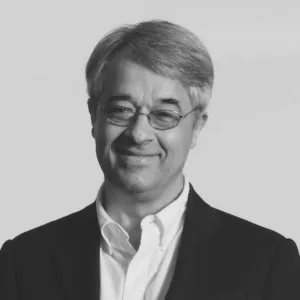
BERNARD SALANIE
Sami Mnaymneh Professor of Economics at the Department of Economics, Graduate School of Arts and Sciences
Project: Municipal-level flood insurance
Bernard Salanié is the Sami Mnaymneh Professor of Economics at Columbia University, where he has taught since 2005. He was elected a Fellow of the Econometric Society in 2001 and he served as its Executive Vice-President from 2014 to 2018. He also is an Associate Editor of the American Economic Journal: Microeconomics. Professor Salanié is the author of three graduate textbooks and more than 60 papers. His research interests range from microeconomic theory to econometric methods. His best-known contributions investigate asymmetric information, behavior under risk, and matching.
"This grant is a wonderful opportunity for me to apply my work on the economics of insurance to the Brazilian context. I very much look forward to collaborating with my co-investigators in Rio on proposing enhancements to the flood insurance system."