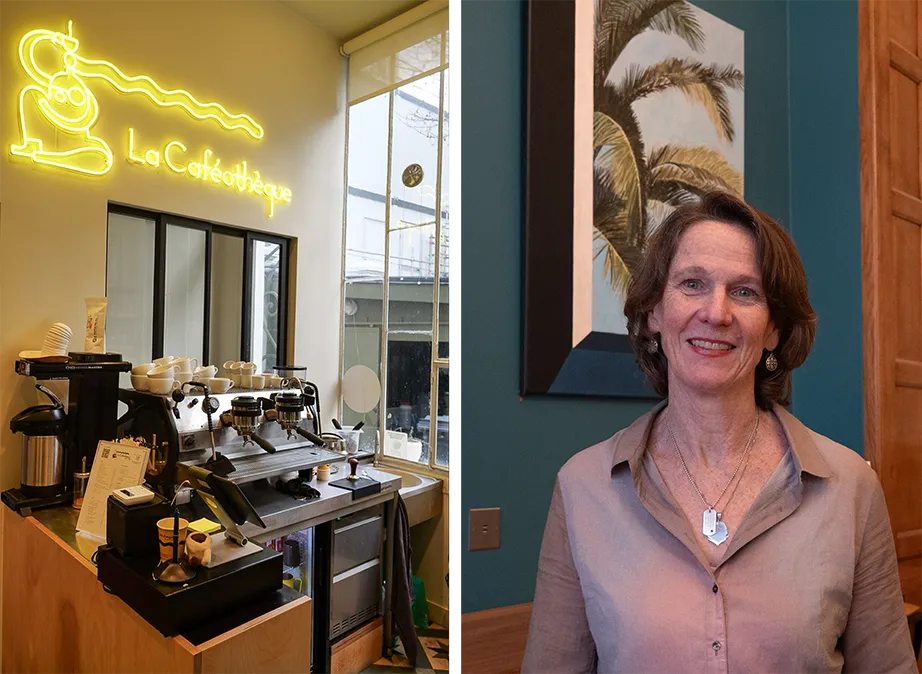
Alumna Celeste Shirvani on Building Community at Reid Hall—Then and Now
Nearly forty years after studying abroad at Reid Hall, alumna Celeste Shirvani reflects on the friendships, global career, and lifelong commitment to education that found roots in Paris.
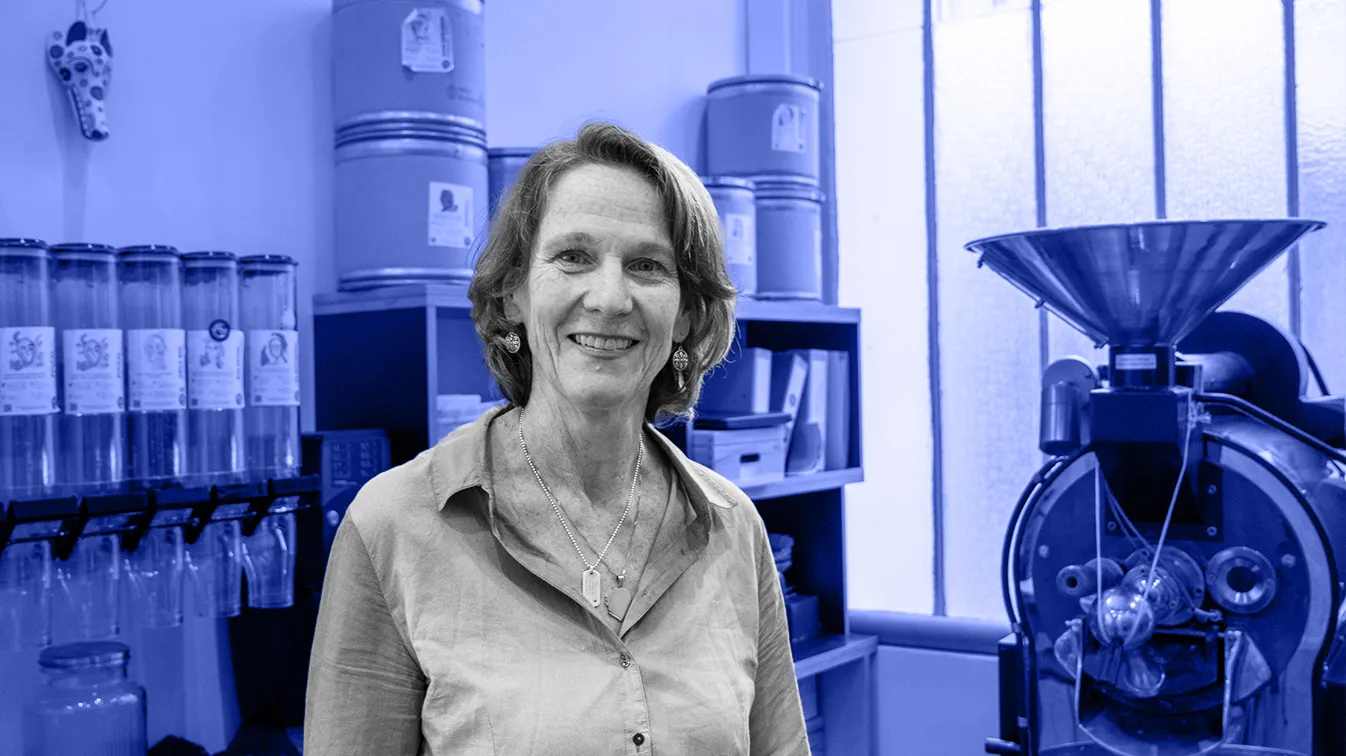
Celeste Shirvani first came to Reid Hall nearly forty years ago as a study abroad student from Boston College. What began as a year immersed in French language and literature became something far more enduring: lifelong friendships, a transatlantic life, a career rooted in international education, and even the meeting of her future husband. Today, Celeste divides her time between the UK and work across sub-Saharan Africa, focusing on education, capacity building, and locally-led development. Along with her husband, Eraj, she returned to Reid Hall in a new way—helping to fund the Caféothèque, a communal space designed to support student life and community at the Global Center.
Celeste studied abroad at Reid Hall for the full academic year of 1986–1987 through the undergraduate Columbia program. While current students in this program often study for just one semester or a summer, at the time, yearlong study abroad was the norm.
“I was a French and political science major at Boston College, so everything I took here had to count,” she explains. “Most of our classes were French literature, all taught in French. That was really the point—I wanted to learn to speak French fluently, and I’d been studying it since eighth grade.”
One class in particular stands out in her memory: a course on the American Constitution, taught—in French—to a largely French audience. “The professor was American, which made it even funnier,” she says. “But he explained why the U.S. Constitution works the way it does, and why that model doesn’t translate easily elsewhere. It was fascinating, especially from a French perspective. It would be an incredible class to take today.”
Beyond academics, Reid Hall itself left a lasting impression. “It wasn’t just a place to go to class,” she says. “It was a space where people gathered, talked, and built community. That mattered a lot, especially when you’re young and in a foreign country.”
Like many Reid Hall alumni, Celeste’s most enduring memories are tied to the people she met there—including her husband, Eraj.
Celeste lived in a tiny chambre de bonne near the Arc de Triomphe before moving later in the year to the 7th arrondissement. Eraj was living with other students, many of whom became part of a close-knit group that spent nearly all their time together. “You get thrown together in study abroad in a way that just doesn’t happen elsewhere,” she reflects. “You bond quickly, and often with people you might never have become friends with otherwise.”
Over shared meals, long walks, and everyday logistics of living abroad, Celeste and Eraj gradually grew close. Though Eraj returned to the U.S. after one semester, the connection lasted. After graduation, they both tried—unsuccessfully—to find jobs in Paris before beginning their careers in New York. Still, the desire to live internationally never left them.
After graduation, Celeste worked in corporate financial services at MetLife and later earned an MBA from NYU, while Eraj earned his MBA at Columbia. In 1999, they moved to London, expecting it to be temporary. Instead, it became home. “We always wanted to live abroad,” she says. “When the opportunity came up, we didn’t hesitate. We thought it would be a few years—it turned into decades.” London also allowed Celeste to keep using her French. “There are so many French people in London that it sometimes feels like one of the largest French cities,” she jokes. Once the couple had children, Celeste remarks, “I realized I spoke ‘playground French’ pretty fluently.”
Celeste’s work today has brought her back to her original interests in international education and development. Around 2012, she became involved with an education-focused organization in Kenya serving children affected by HIV. “I’d never been to Africa before,” she says. “But once I started working in education there, I realized this was what I wanted to do.”
To build formal expertise, Celeste returned to school once again, earning a master’s degree in Development Studies from the School of Oriental and African Studies (SOAS) during the COVID period. She focused her research on West Africa, drawn to the francophone region, though focusing on English-speaking Sierra Leone. After completing her degree, Celeste joined EducAid Sierra Leone as a data and monitoring specialist.
“When I started, the monitoring and evaluation team was just two people,” she explains. “Now it’s a fully local team, led by someone who has built his own group and is expanding across multiple districts.”
This capacity-building work is what Celeste is most proud of.
“The people on the ground know the problems better than anyone else,” she says. “Our job is to support them, help build systems, and then step back.”
Today, Celeste works as an education consultant, supporting projects in Sierra Leone, Kenya, and the UK. Her focus remains on locally-led educational initiatives, teacher training, and building sustainable systems rather than importing external solutions.
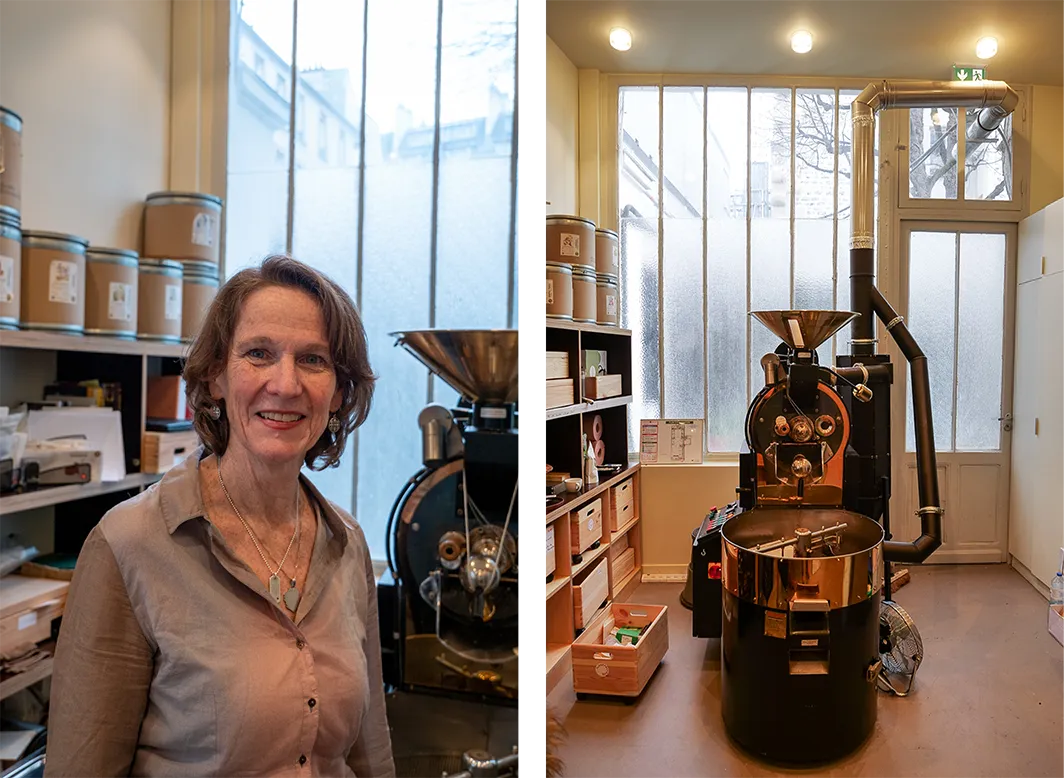
Back in Paris, where the couple has visited often since living in London, Celeste and Eraj’s decision to support the Caféothèque at Reid Hall was deeply personal. “This place changed our lives,” she says simply. “We met here,” she says. “We spent countless hours sitting around tables, talking, finding our footing in a foreign country.” When they began discussions with Reid Hall leadership about giving back, they didn’t arrive with a fixed idea.
“We asked: what do you need?” she recalls. “We wanted to support something that made sense for how students live and work here now.”
A café became that answer—a space for students, faculty, staff, and visitors to gather, eat, and rest—eventually run by La Caféothèque, whose main branch operates along the Seine in the 4th arrondissement.
“When you’re studying abroad, it’s exhilarating—but it’s also exhausting,” Celeste says. “You need a safe, welcoming place to come back to. That’s what this space provides.”
“This is a place you can come home to,” she reflects. “It continues to evolve, but it still welcomes people in. Being part of that—supporting what comes next—means everything to us.” For Celeste, Reid Hall remains one of the rare places you truly can return to.