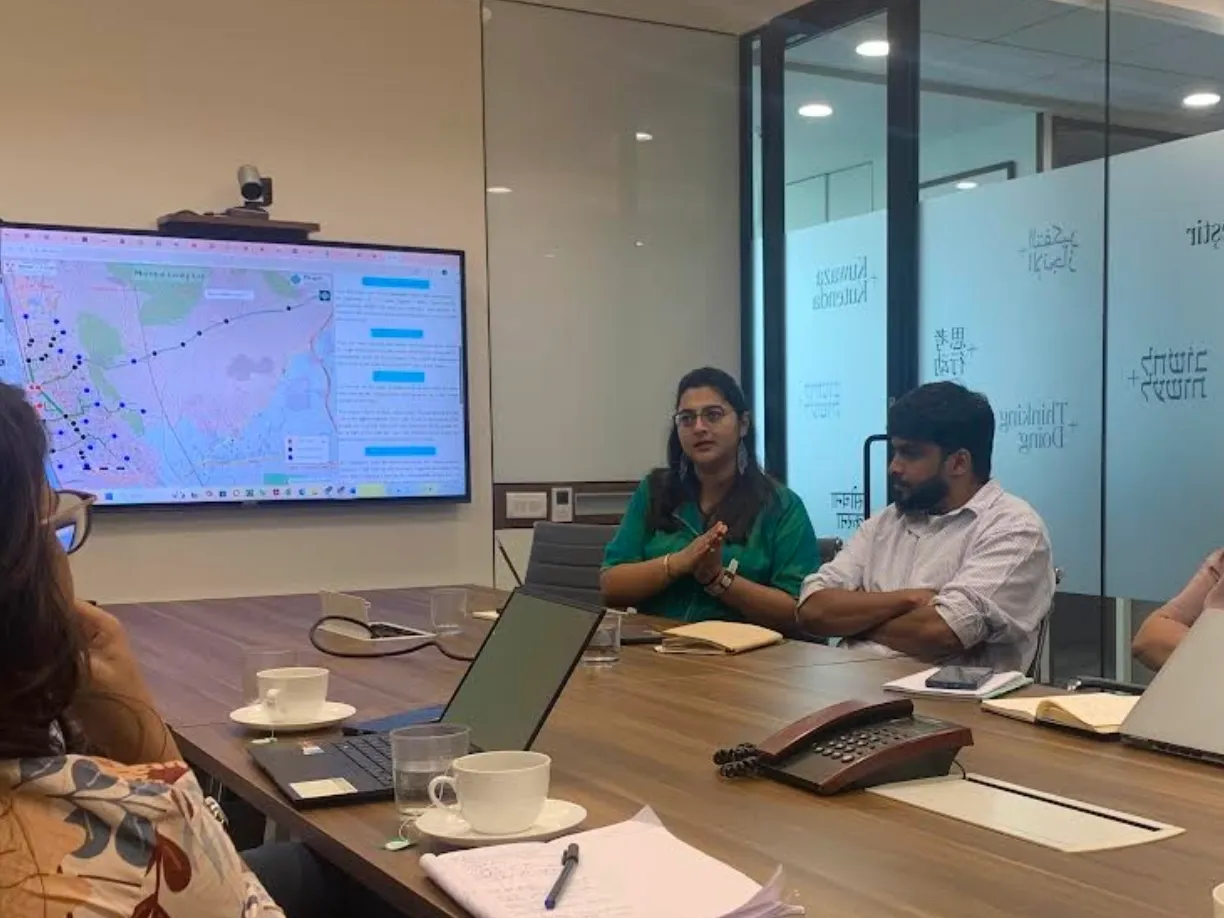
Can auto rickshaws be recognized and formalized as an essential part of urban transport rather than treated as an informal backup to formal transit networks? Dr. Jacqueline Klopp, Director of the Center for Sustainable Urban Development and Co-Director of PRISM (Partnership for Research on Informal and Shared Mobility), who received the Columbia World Project Impact Award, is leading a new phase of research on inclusive mobility. This work examines one of India’s most overlooked transport systems: the millions of auto rickshaws that keep cities moving.
In collaboration with Columbia Global and SPARC India, this study builds on Columbia World Projects’ initiative Popular Transport and Inclusive Cities, which examines mobility challenges faced by women, children and low income residents in peripheral neighborhoods of Ahmednagar and Mumbai, India. Earlier findings showed that many resettlement and affordable housing schemes are disconnected from reliable transport, leaving communities with long or unsafe journeys. In these areas, informal auto rickshaw networks often provide the only dependable link to schools, clinics and workplaces, yet their role is rarely reflected in transport policy or formal planning.
The project uses a community-led and data driven approach. Participatory mapping, commuter interviews and discussions with auto rickshaw drivers help identify where routes work well and where gaps persist. In Ahmednagar, the initiative tested simple but effective interventions such as safer waiting areas, driver sensitization and co-designed routes for women and school children. These lessons now guide the direction of the Mumbai research.
To deepen policy engagement around informal mobility systems, Dr Klopp and Paul shared this research at an expert talk, titled "Popular Transport and Smart Cities: A Case of Auto-Rickshaws", organized for urban planners and policymakers in partnership with the National Institute of Urban Affairs and the Mumbai Center. The talk underscored the potential of transitioning the current CNG-powered autorickshaws to electric fleets and cleaner fuels to curb emissions and improve public health, while highlighting that any mobility transition must safeguard the livelihoods of drivers who depend on these vehicles.
Extending the impact of the work, the Center is also planning a public exhibition in March 2026. The exhibition will feature mapped routes, lived experiences of auto drivers, and stories that illustrate how informal mobility shapes everyday life in the city.
Read more: https://worldprojects.columbia.edu/popular-transport-and-inclusive-cities-child-and-women-friendly-mobility-and-access-ahmednagar
Watch the NIUA Expert with Dr Jacqueline talk here: https://lnkd.in/gVUSQ4-Q