From Coffee to Collaboration: Rising Together After the Rubble
“I learned that resilience is as much about human connection as it is about policy.”
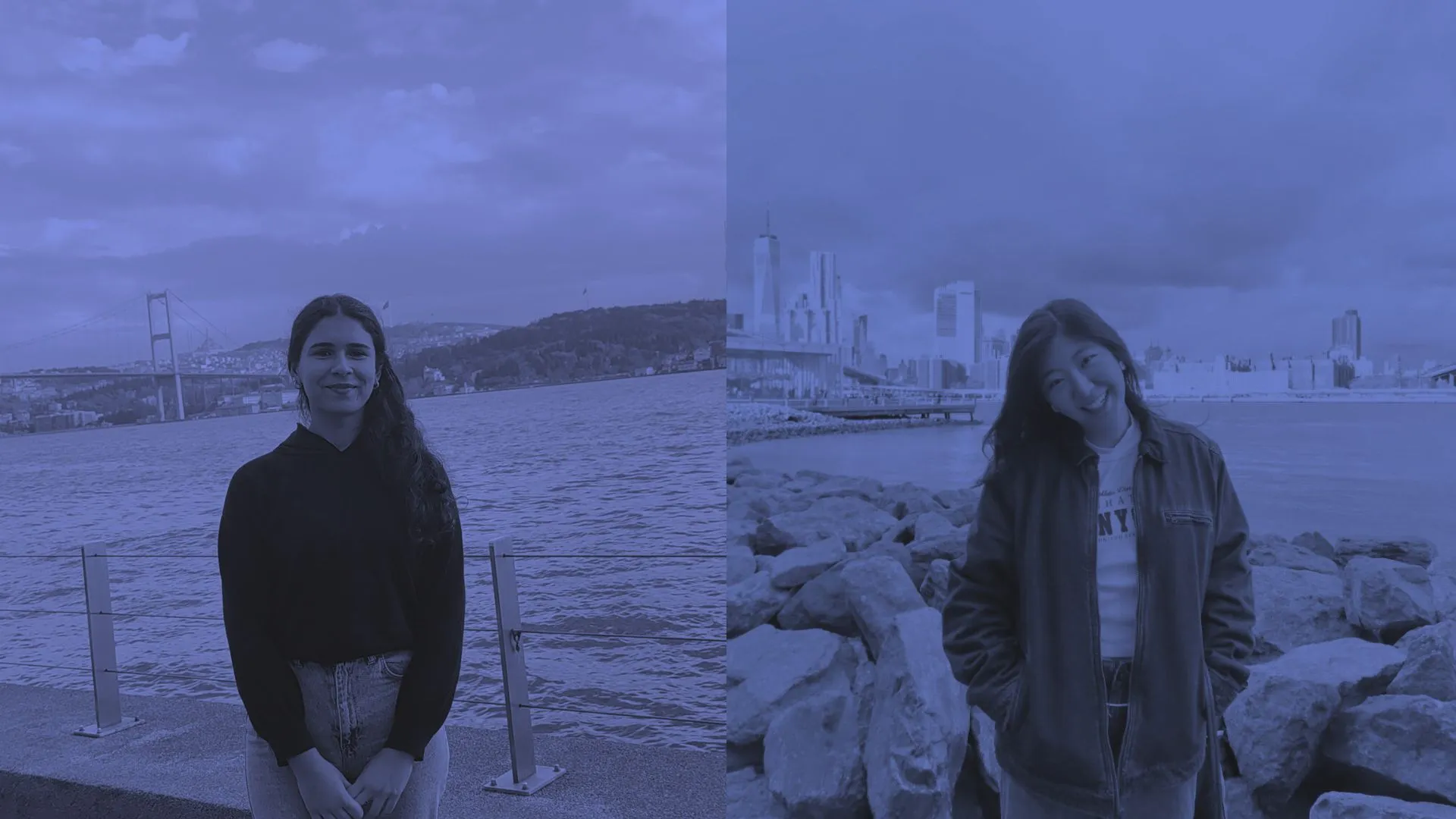
For Yunseo Kim, Columbia University, and Sinem Kavaş, Galatasaray University, the Global Columbia Collaboratory was more than just a not-for-credit, virtual global learning program. . It was an opportunity to step outside the familiar and into a space of learning, connection, and global citizenship.
“It was an opportunity to step outside the familiar boundaries of my comfort zone,” Yunseo reflects, “and immerse myself in an initiative that combined real-world challenges, academic applications, and a profound sense of global citizenship.”
For Sinem, the Collaboratory offered hope in a time when it was most needed. “I applied to this program with the emotions of the February 6 earthquakes still fresh in my mind,” she shares. “The thought of being among others who share the suffering and take part in coming up with solutions was truly exciting.”
Two students—one from Istanbul, a city anxiously preparing for a major earthquake in the coming decades, and one originally from the U.S. state of New Mexico, familiar with the devastation natural disasters can bring—found themselves working side by side. What started as a virtual meeting across continents soon transformed into a deep and meaningful collaboration.
Coffee, Connection, and Cultures
It all began with coffee. From their very first conversation, Yunseo and Sinem bonded over their shared love for it—a small detail that became the foundation for their team name, the “Coffee Lovers.”
“From our very first conversation about our love for coffee—leading to the birth of our team name, the Coffee Lovers—we instantly clicked,” Yunseo remembers fondly. “It was incredibly eye-opening and enriching to hear about Sinem’s life in Istanbul while sharing my own experiences from living in New Mexico and attending school in New York.”
For Sinem, this connection was equally surprising and rewarding. “Finding common ground even with people whose lifestyles you think are completely different is quite possible,” she says. “My friend Yun, with whom I was so happy to collaborate, and I discovered that we both love coffee—before realizing that we had much more in common.”
Their connection grew, extending into hours of collaboration that not only deepened their friendship but also built bridges across cultures.
Working with NGOs: Real-World Impact
The Collaboratory isn’t just about reflection; it’s about action. Both students had the opportunity to work with a Türkiye-based NGO, the Association for Social Development and Aid Mobilization (ASAM), which supports earthquake survivors and refugee families.
For Yunseo, learning from ASAM was an honor. “Witnessing the scope of their work—supporting earthquake survivors, refugee families, and other at-risk populations—was incredibly inspiring,” she says. “Their initiatives, ranging from education and healthcare programs to economic empowerment, offered a powerful example of resilience and service.”
Sinem shares how working with ASAM became one of her favorite parts of the program. “Having the chance to interact with and learn about them and listen to their work firsthand was an amazing opportunity,” she explains.
Together, the two students created a project that staff from ASAM had requested and that was tailored to their mission: a video titled For People, For the Planet.
“The video I created with Yun discusses our cities, Istanbul and New York, to highlight increasingly frequent natural disasters in our countries,” Sinem says.
For Yunseo, the project was equally meaningful. “The creative process was both challenging and rewarding. It was amazing to see how our work could be transformed into a product that can help amplify ASAM’s mission of raising awareness.”
Through this process, foundational to the Collaboratory model,Yunseo and Sinem turned their research and creativity into a tool for change—one that reflected their shared understanding of resilience in a world of interconnected challenges.
Lessons in Connection and Resilience
What Yunseo and Sinem gained through the Collaboratory extended far beyond skills or knowledge. It was about connection, perspective, and purpose.
“The Collaboratory offered more than knowledge; it provided perspective,” Yunseo reflects. “I learned that resilience is as much about human connection as it is about policy.”
Sinem echoes this sentiment, finding inspiration in what people can achieve together. “The fact that individuals from around the world with lives so distinct can come together to offer their intellectual capacities and time to aid one another makes me hold onto hope and believe in solidarity.”
For both, the most significant takeaway was the friendship they formed.
“The bonds I formed, particularly the one with Yun, were of utmost importance to me,” Sinem shares.
Yunseo agrees. “Through countless hours of collaboration, blending our diverse perspectives, I’m so thankful for the opportunity we had to learn from one another and grow into lifelong friends.”
A Shared Future
The Global Columbia Collaboratory reminded students like Yunseo and Sinem that resilience—whether in Türkiye, the United States, or anywhere else in the world—requires connection. It’s built when people come together, collaborate, learn from each other, and take action.
As Tolstoy once said, Sinem quotes, “If you feel pain, you are alive. If you feel other people’s pain, you are a human being.”
“It was not just a semester of learning,” Yunseo reflects. “It was a semester of meaningful connection, purpose, and hope.”
And from their bond—one that started with coffee and grew into a collaborative friendship—they’ve proven that even across continents, people can rise together.