Columbia Exposomics Expert Gary Miller Delivers Keynote at Toxicology Congress in Santiago
He also visited the Global Center to explore potential collaborations in climate and environmental health.
The XII Congress of Toxicology in Developing Countries took place for the first time in Chile, hosted by Universidad Católica between April 15-18, 2024. This scientific gathering, organized by Universidad de Valparaíso in collaboration with the Toxicology Society of Chile (Sotox) and the International Union of Toxicology (Iutox), aimed to foster dialogue among global toxicologists on pressing issues in the field. The focus was on the latest advancements in toxicology and their potential contribution to sustainable development in developing nations.
With 270 attendees representing 35 countries, the congress was inaugurated by former Minister of Health, Dr. Enrique Paris, who delivered a keynote address titled “Climate Change and Environmental Pediatric Health: Major Impacts on the Youngest.” Additionally, prominent international experts like Dr. Gary Miller, Vice Dean of Strategy and Innovation at Columbia University’s Mailman School of Public Health, participated in the event. Other notable speakers included Dr. Silvia Berlanga de Moraes Barros from the University of São Paulo in Brazil, and Dr. Ilona Jaspers from the University of North Carolina in the US.
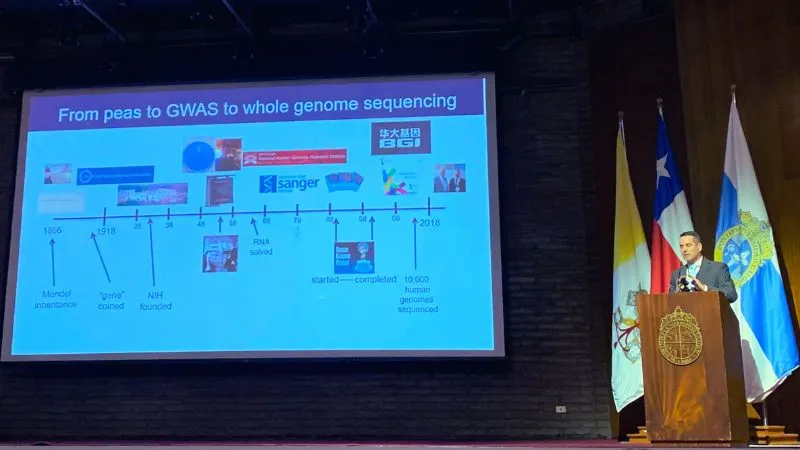
Dr. Miller, who also leads the Center for Innovative Exposomics and the Exposomics Laboratory at Mailman, presented a keynote lecture on April 17 titled “Using Exposomics to Advance Toxicology.” He is a leading voice for the concept of the exposome, defined as the integrated compilation of all physical, chemical, biological, and psychosocial influences that impact a person throughout their lifespan. In essence, it represents the environmental equivalent to the human genome. Dr. Miller founded the first exposome-based research center in the United States and authored the first book dedicated to the subject, “The Exposome: A Primer.”
Miller’s research explores how the cumulative exposures throughout a person’s life can influence their health, with a particular focus on environmental drivers of neurodegeneration, neurotoxicology and Parkinson’s disease. During his presentation, Dr. Miller emphasized how exposomics offers an analysis of our environment at a level similar to genomics, as well as a comprehensive and unbiased assessment of the external factors impacting health. He further argued that exposomics can prioritize toxicological studies and complement human biomonitoring efforts, suggesting that adding the exposome to precision prevention could be a significant advancement.
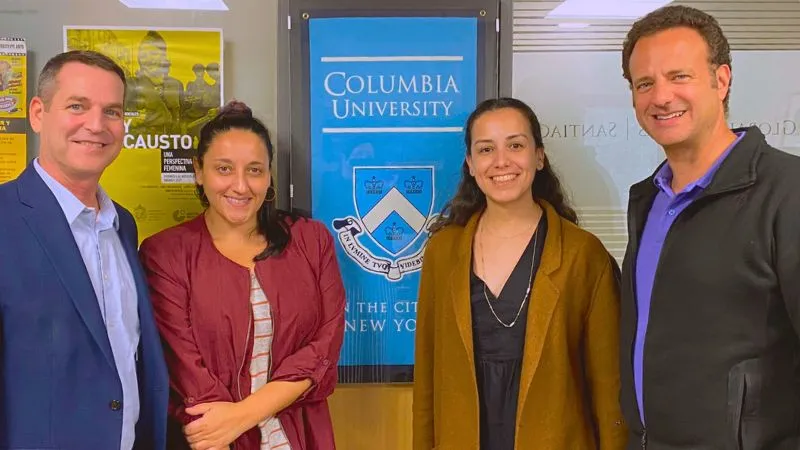
Beyond their participation in the congress, Dr. Miller and Dr. Carolina Duarte, Postdoctoral Research Scientist in the Department of Environmental Health Sciences at Mailman, visited the Santiago Center. Their visit aimed to engage with the Center's team, share updates on recent developments at Mailman, and explore potential areas for collaboration, particularly in areas related to climate and environmental health and the impacts of climate change on people’s health and quality of life.