Columbia Global's Emerging Scholar Amplifying Refugee Storytelling
Gerawork Gizaw presented his ongoing research on hospitality extended to refugees in Kenya at the University of Potsdam.
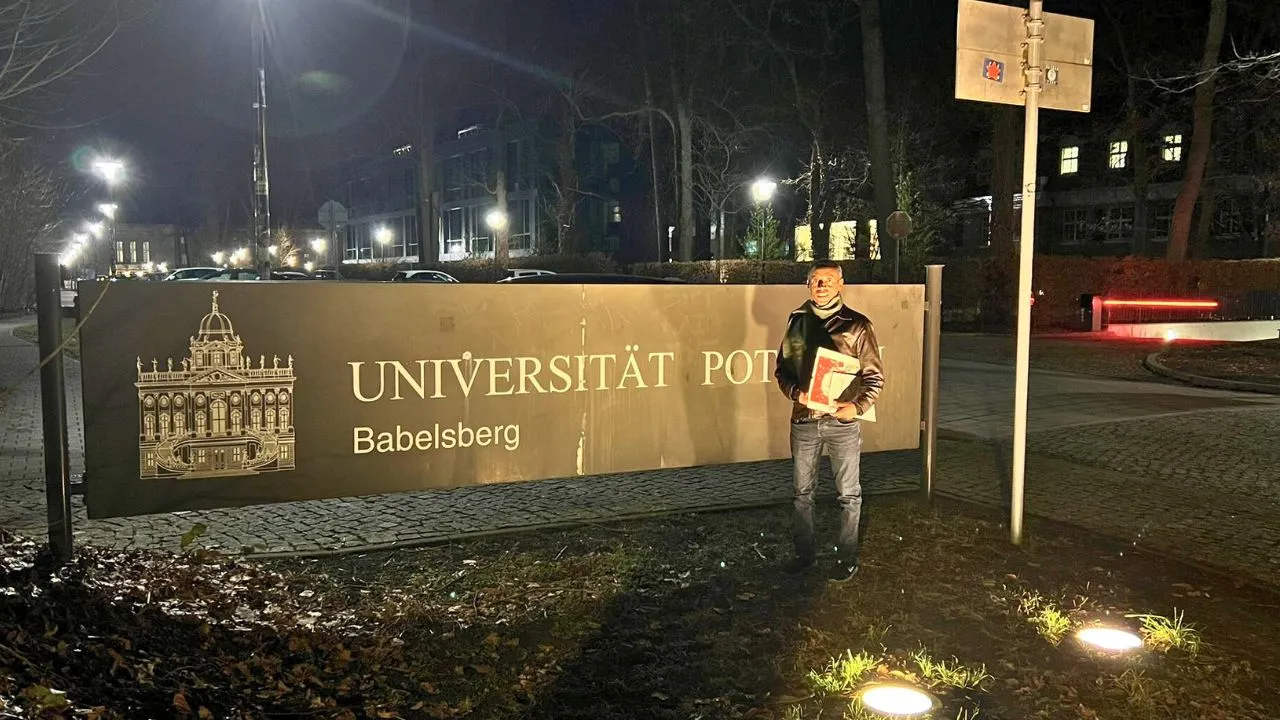
Gerawork Teferra Gizaw is originally from Ethiopia and resides in Kenya as a refugee at the country’s camp in Kakuma. He currently serves as a CGC Nairobi’s residential fellow in the Emerging Scholars Program, which is designed to assist displaced scholars. During his year-long fellowship, Gerawork is engaged in research studies focusing on the history of mobility and hospitality, particularly refugee hospitality in Kenya. The fellowship allowed him to present one of his ongoing research works at the University of Potsdam in Germany, and this is what he had to share about that experience:
Having trained in a History Dialogue Project, I have been involved in oral history research for the past few years. In 2024, with support from Imagining Futures, my colleagues and I conducted a storytelling archiving research project, gathering nearly 200 stories of lived experiences from refugees who had spent more than ten years in the Kakuma refugee camp. To share my research experience, I was invited to a workshop at the University of Potsdam titled “Exploring the Notion of Research as Theory, Practice, and Identity.”
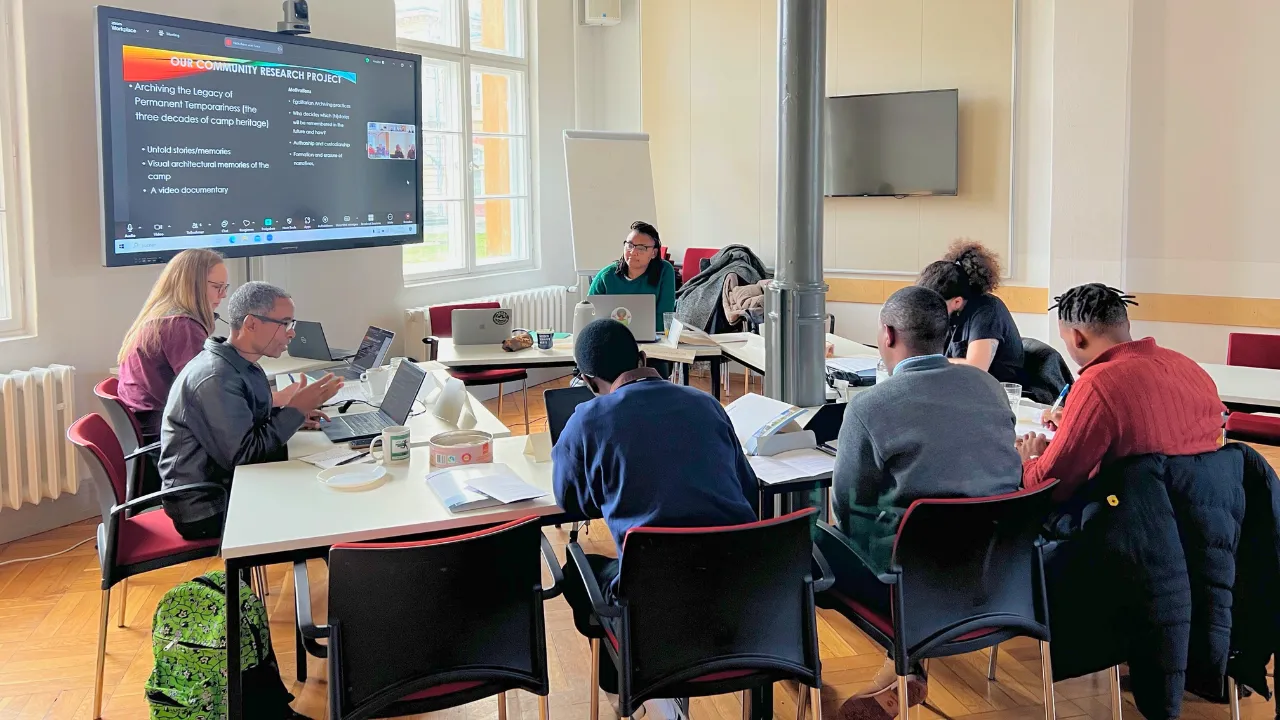
The 4-days workshop convened scholars engaged in research concerning African histories, with the aim of thoughtfully examining the nature of research and the role of the researcher. Throughout the workshop, various topics highlighted essential considerations, such as the importance of decolonizing research, fostering inclusive spaces for diverse perspectives, and recognizing the nuanced positions of historical researchers. Key topics included:
-
-
- Researching from the Global South, specifically in the context of Kenya
- The historical portrayal of Burundian youth
- The significance of colonial visuals
- Navigating narratives of masters and ‘slaves’
- The impact of silencing in Namibian popular music
- The interplay between the researcher and their work
- The rationale for regulating community archiving research
-
While in Germany, I joined a class of Masters students who were learning a course called Refugees and (Forced) Migrants in Global History and shared my lived experiences and observations with students. On the first day of the workshop, I joined the Keynote speech with colleagues and shared experiences related to The Right to Research and the Conditions of Production of History. On the second day, I shared my research experiences focusing on the landscape of community research in Kenya with the title - Building bridges or barricades: Why regulate community research and archiving practices?
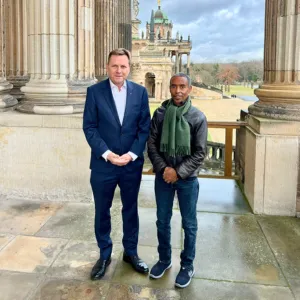
During my spare time, I visited three museums—two in Berlin: the Charli Checkpoint (the Berlin Wall) and the Holocaust Memorial and two in Potsdam, the Prussian Palaces and Gardens Foundation. Additionally, I had the privilege of attending the prestigious 2025 annual Voltaire Prize award session, where I engaged in stimulating conversations with the University’s president - Oliver Günther, about the impact of literature and philosophy on society. On the final day, in the evening dining session, I ate traditional German cuisine, creating a memorable culinary experience that beautifully capped off my time in Germany.
Though I drafted the paper while in the camp, this fellowship has given me more time to refine it. I also got input from my mentor to develop it further. As the crux of the paper is related to why regulating research, taking the RASCAL-IRB training helped me strengthen my argument. I also believe my affiliation with Columbia Global has made the visa process easier.