Columbia University at the Delphi Economic Forum X
The Columbia Global Center Athens participated as a programming partner at the 10th Delphi Economic Forum, held from April 9 to 12, 2025, in Delphi, Greece. The Forum brought together leaders from the public and private sectors to engage in discussions on some of the world’s most pressing issues.
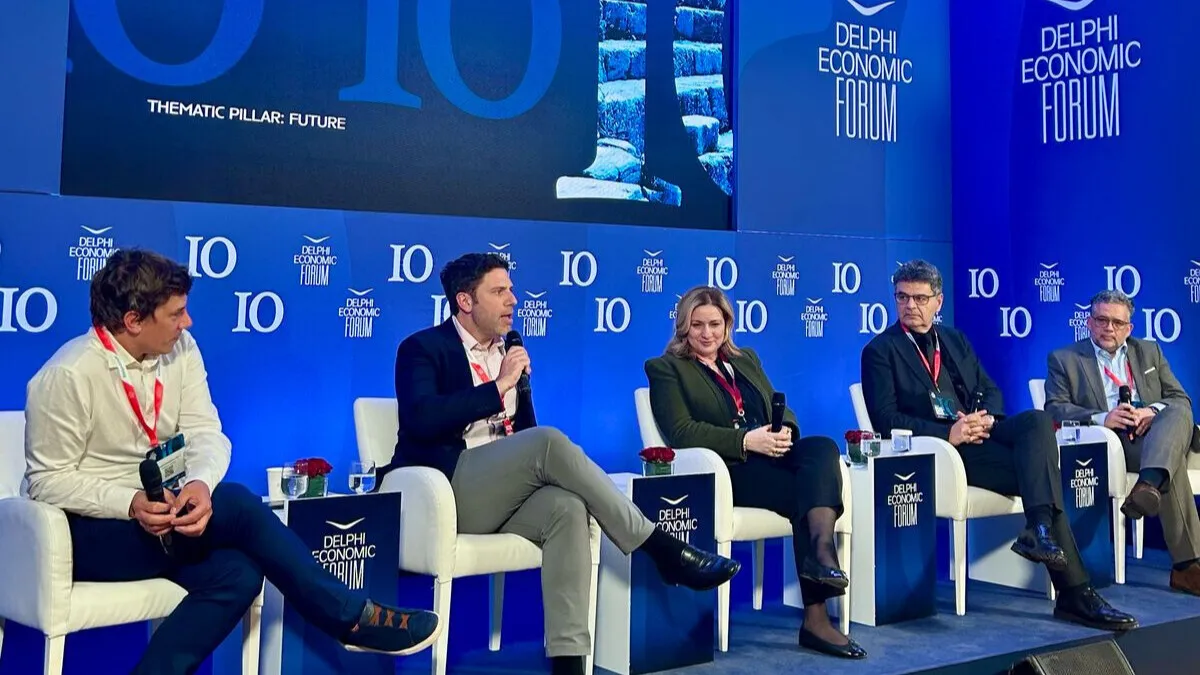
Throughout the four-day Delphi Forum, Columbia University faculty and the Columbia Global Center Athens contributed to high-level discussions on artificial intelligence, institutional resilience, and sustainability, while emphasizing the importance of leveraging the Greek diaspora to drive innovation and help shape Greece’s future. These conversations laid the groundwork for continued engagement and future initiatives aimed at harnessing global expertise and diaspora networks to support Greece’s innovation ecosystem.
As part of the Forum’s global convening, the Center spotlighted Columbia University’s faculty and expertise across a range of high-impact panels.
Highlights from Columbia’s Participation:
Food Systems, Sustainable Agriculture, Health, and Climate Action
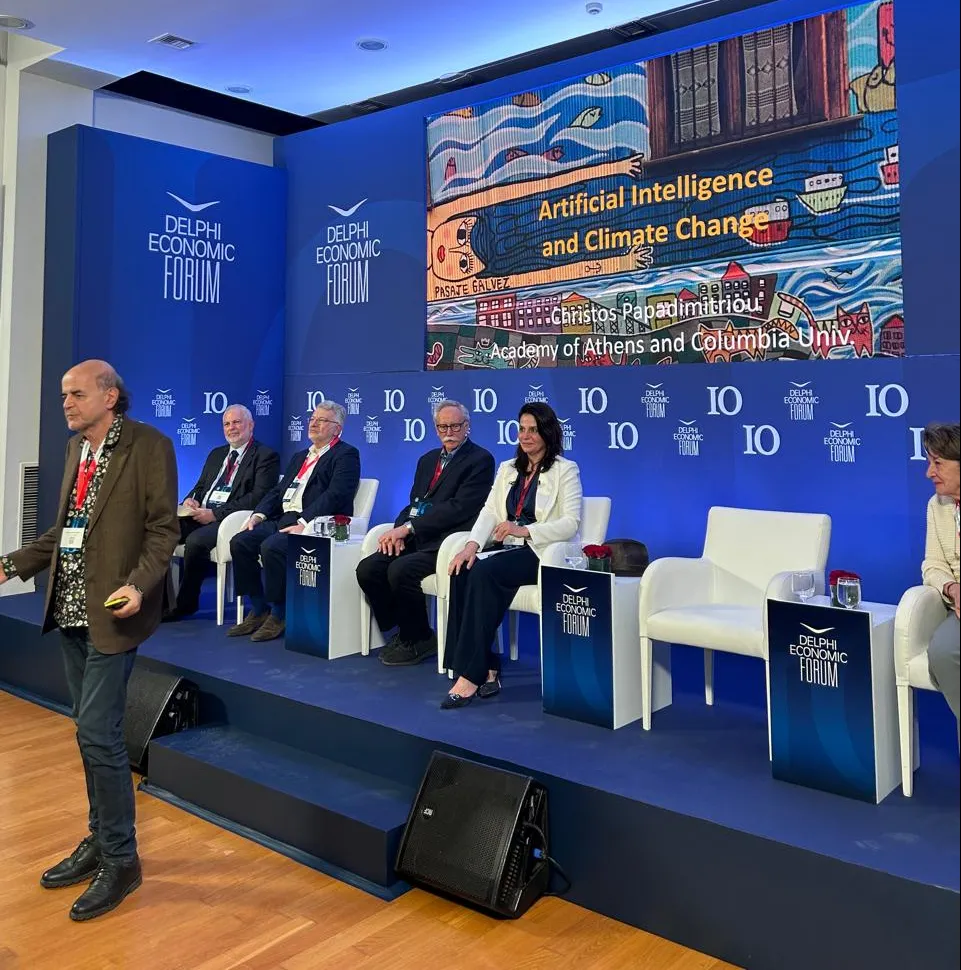
On the first day of the Delphi Economic Forum, Christos Papadimitriou, Professor of Computer Science at Columbia University, participated in the panel “Food Systems, Sustainable Agriculture, Health and Climate Action”, where he explored the complex relationship between Artificial Intelligence and climate change.
“AI has come a long way: six decades of struggles, then one decade of triumphs. AI could be the miracle — the unexpected, far-reaching, beneficial technological advance we’ve been praying for”, he noted.
His remarks offered a powerful reminder of the promise—and the ethical responsibility—tied to rapid technological advancement. As the world faces mounting challenges in food security, agriculture, and climate, his contribution emphasized the potential of AI to be a meaningful driver of sustainable solutions.
Responses to Polycrises
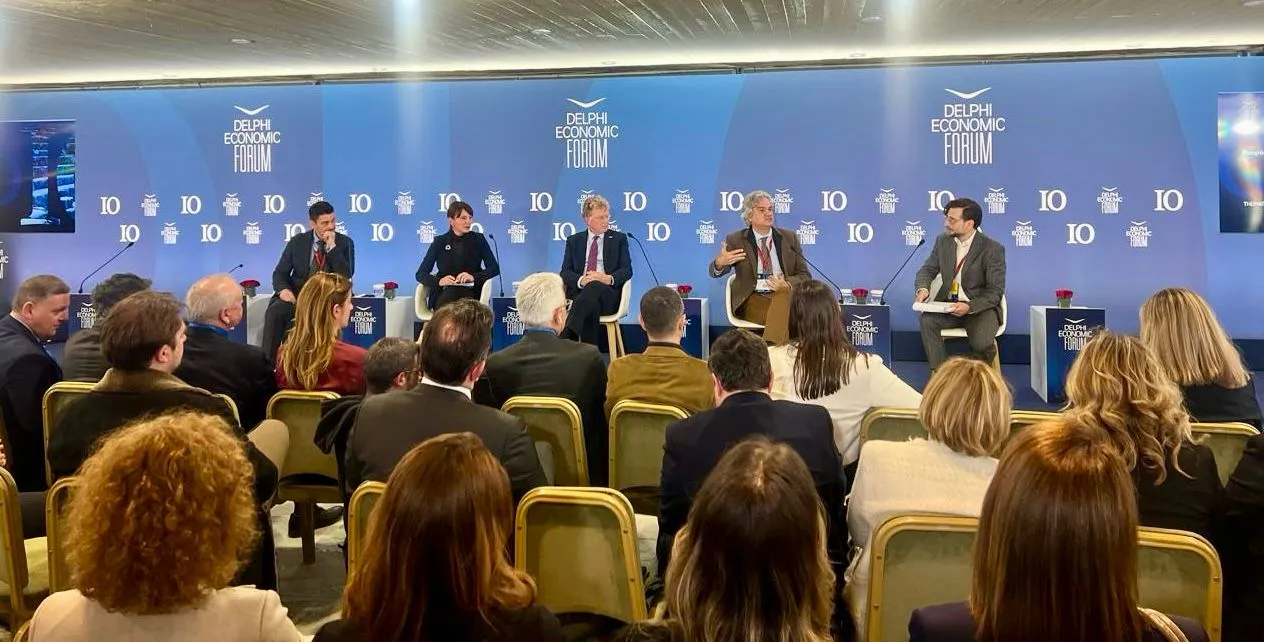
On the second day, Columbia’s contribution to the panel “Responses to Polycrises” brought an interdisciplinary lens to one of the Forum’s most urgent topics Alexander Cooley, Professor of Political Science and Vice Provost for Research at Barnard College, and Yanis Ben Amor, Executive Director of the Center for Sustainable Development, explored how today’s intersecting challenges in climate, health, and geopolitics call for integrated and adaptive models of collaboration.
Professor Yanis Ben Amor stated, “There is a massive fire going around, and we are destroying every single fire station”, highlighting the devastating impact of global health emergencies and widespread budget cuts on institutions meant to respond to crises.
Professor Alexander Cooley further stressed the urgency of sustaining global knowledge systems, saying, “The red alarm is going on—we’ve taken research opportunities for granted. If we want to preserve the knowledge and data we’ve built over decades, we must invest in sustaining the systems that support them”.
This critical panel emphasized how global institutions must evolve to address the complex, interconnected crises of our time and how urgent it is to prioritize investment in systems that can adapt and respond.
“Global coordination is not just a diplomatic goal—it’s a survival mechanism in a world of intersecting fragilities”.
Greek Innovation Looking Ahead
On the third day of the Delphi Economic Forum, Stefanos Gandolfo, Director of the Columbia Global Center in Athens, participated in the panel “Greek Innovation Looking Ahead”. Moderated by Panagiotis Karampinis, Managing Director of Endeavor Greece, the panel also featured Maira Myrogianni, Secretary General for Greeks Abroad & Public Diplomacy at the Ministry of Foreign Affairs, Hellenic Republic; Michael G. Jacobides, Professor of Entrepreneurship & Innovation at London Business School; and Petros Koumoutsakos, Professor of Computing in Science & Engineering at Harvard University.
The conversation underscored the immense value of Greece’s global diaspora as a powerful catalyst for innovation and sustainable growth. With expertise, resources, and networks spanning continents, Greeks abroad can play a crucial role in advancing Greece’s competitiveness on the global stage. Panelists agreed that the country’s future lies not in isolation but in the strengthening of collaborative networks and connecting Greece with international partners, institutions, and diverse sectors. This aligns with the Columbia Global Center's mission to foster interdisciplinary collaboration, bringing together thought leaders to tackle global challenges with local impact.
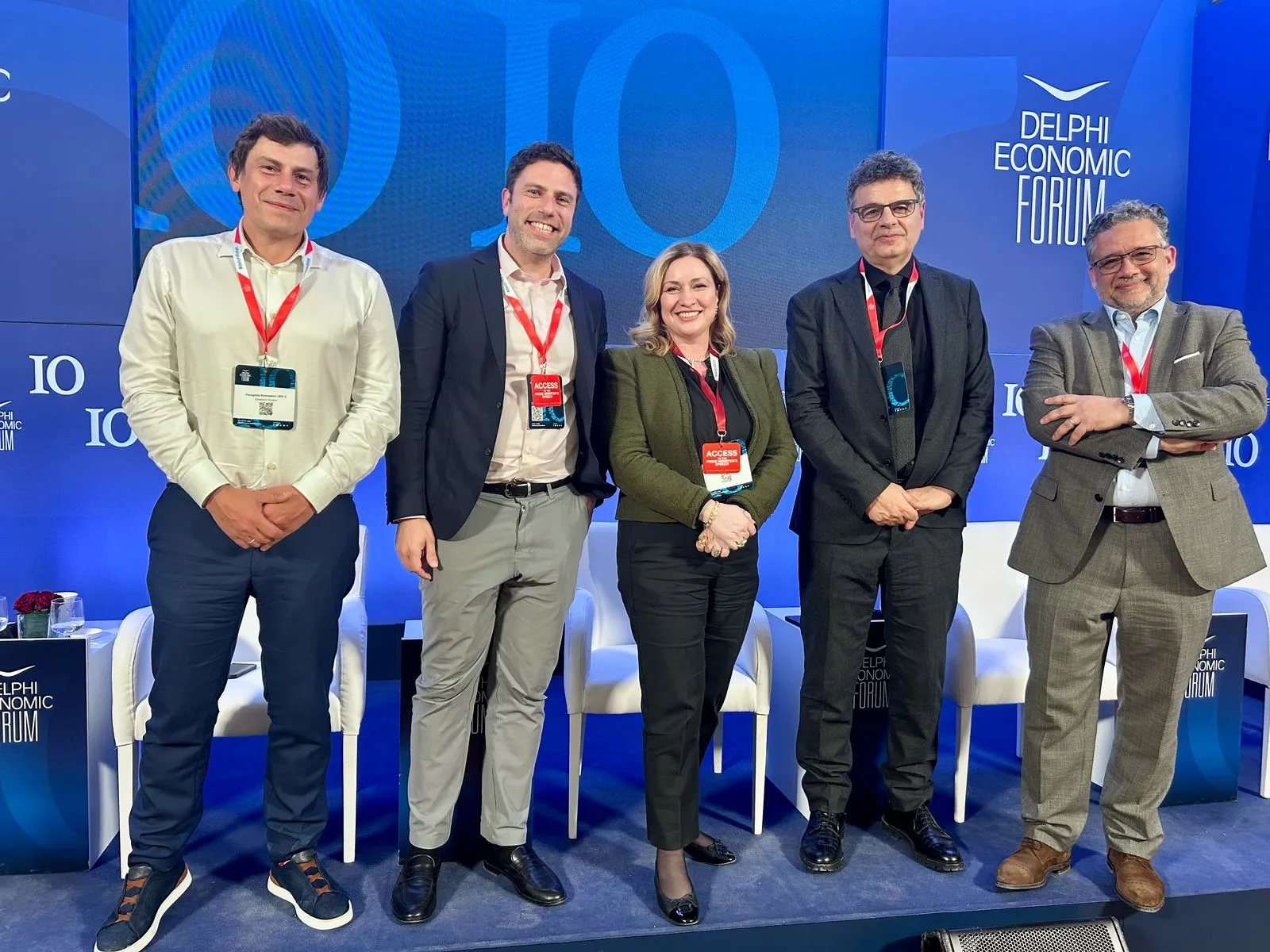
The Delphi Economic Forum served as a dynamic platform for fostering collaboration between Columbia University and various global stakeholders, highlighting the role of academic institutions in addressing complex, interconnected challenges. The participation of Columbia University reinforced the importance of engaging scholars in global dialogues that shape policy and innovation.
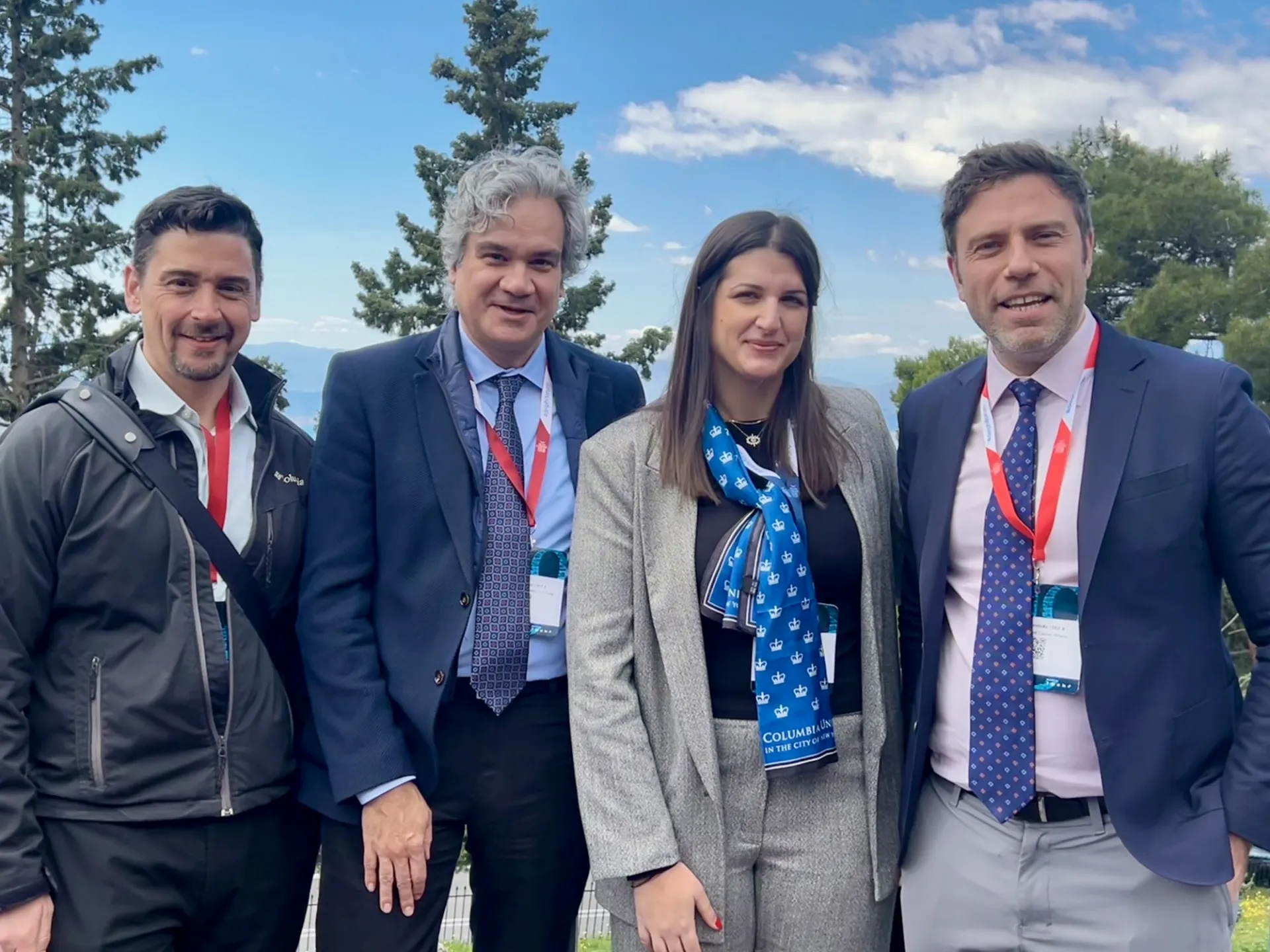
We thank the Delphi Economic Forum for the opportunity to contribute to this exceptional gathering of ideas and leadership, and look forward to ongoing collaborations that advance knowledge and drive positive change.