Columbia’s Vicky Murillo Researches Land Conservation in Chile
Vicky Murillo spent two weeks in Chile in June to research governance of protected areas.
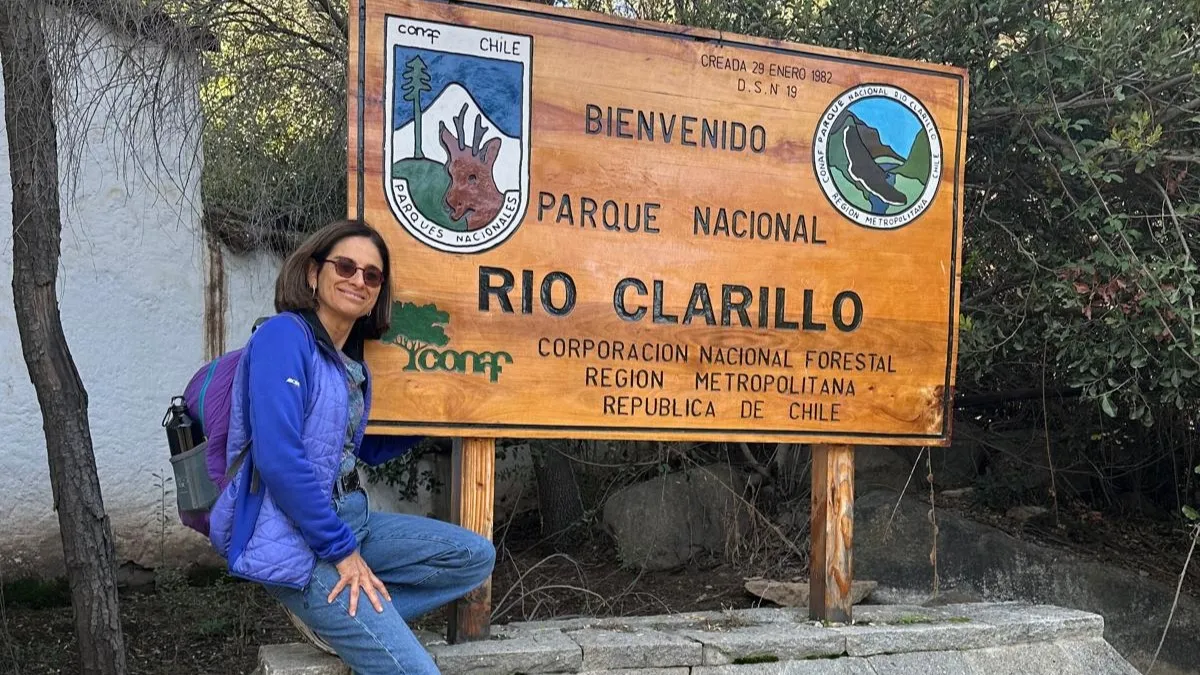
María Victoria (“Vicky”) Murillo, Professor of Political Science and International Affairs and outgoing Director of the Institute of Latin American Studies (ILAS) at Columbia University, spent two weeks in Chile in June to research governance of protected areas.
Murillo is one of four scholars who traveled to Chile under Columbia Global’s inaugural Scholars-in-Residence program, where Columbia faculty members and researchers were selected for immersive residencies at Global Centers located around the world.
Murillo’s research, entitled “The Political Economy of Land Conservation in Latin America,” looked into the political and institutional factors shaping conservation outcomes in Latin America, using Chile as a key case study. Her research focused on the 2023 creation of Chile’s Biodiversity and Protected Areas Service (SBAP), exploring how partnerships among the state, NGOs, and local communities influence land use governance and in curbing deforestation.
During her stay, she conducted more than 30 interviews with government officials, NGO leaders, legal experts, indigenous leaders, scholars, park rangers, and administrators of private and public areas. She was also able to visit two protected areas: Parque Nacional Rio Clarillo and the Humedal del Rio Maipo.
“Chile is a unique case for my analysis of land conservation in Latin America for two reasons: the proportion of private protected areas in the system and the institutional change [the country] is undergoing,” Murillo said. “Chile has the largest participation of private areas in a national system of protected areas in the region. Additionally, it is undergoing a significant institutional change with the creation of the SBAP, which will unify the different systems in charge of land conservation under a single administration.”
The SBAP - accompanied with the creation of Fondo Naturaleza Chile, which seeks to finance effective nature conservation – is of interest in that it has been developed in collaboration with NGOs and sustained over administrations of different political persuasion, she noted.
Murillo also researched the experiences of inclusion of indigenous groups in the management and administration of protected areas.
Apart from her research on land conservation, she met with a number of renowned political scientists and students in Chile, speaking during three instances: with different stakeholders at independent thinktank Espacio Público, with professors at the School of Government at the Universidad Católica de Chile, and in a masterclass at the Norbert Lechner Lecture at the Universidad Diego Portales (UDP).
During these instances, she had the opportunity to exchange ideas with colleagues and scholars and discuss potential collaborations.
In her conferences, Murillo reviewed the challenges facing democracy in Latin America, reflecting on the structural causes and social tensions that plague political systems throughout the region.
Use this link to see the video (in Spanish) and pictures of Murillo’s masterclass “Institutional weakness, social expectations and political discontent in Latin America,” presented at the Nicanor Parra auditorium at UDP.