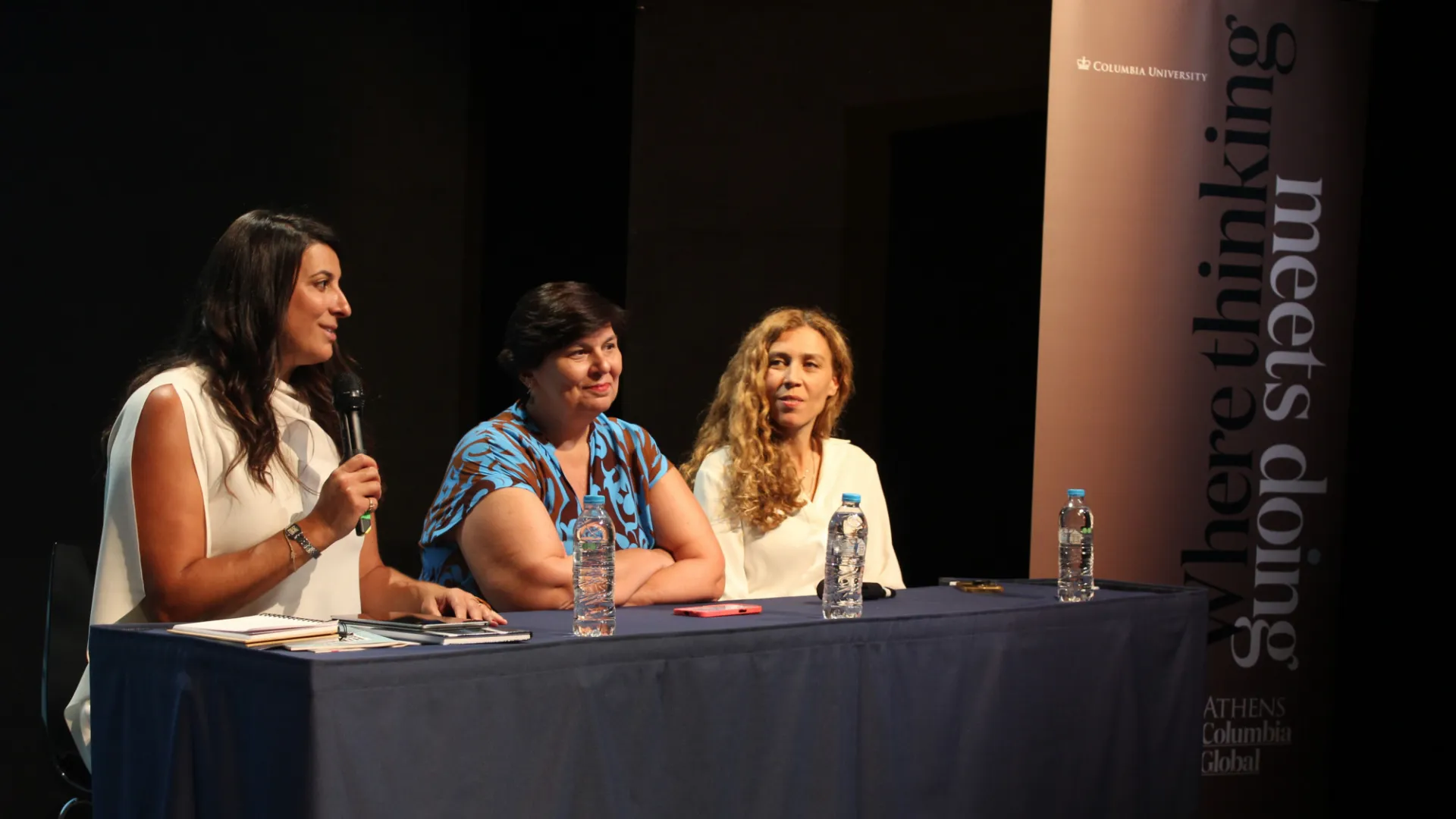
On September 24, the Athens Global Center partnered with the Hellenic Ministry of Foreign Affairs for a discussion titled "Corporate Sustainability and Readiness in Greece: Perspectives from the Greek Diaspora and Public Diplomacy"
The expert panel, hosted at the Hellenic Cosmos Cultural Center, included Katerina Yiannibas, Lecturer in Law, Columbia University Law School; Maria Gavouneli, President, Greek National Commission for Human Rights; and Kiara Konti, Partner, Sustainability Services Leader, EY Greece
They discussed the challenges for Greek businesses to meet the EU’s Corporate Sustainability Due Diligence Directive (CSDDD), which requires companies to take responsibility for human rights and environmental impacts throughout their operations and supply chains.
Participants raised several insights for businesses to consider, including:
- Rethink the value chain. Value extends beyond financial returns to include time, knowledge, relationships, reliability, and resilience.
- Sustainability as a learning tool. EU legislation should guide businesses to innovate and improve, not just create paperwork.
- Support your suppliers. Responsible supply chains protect the commodities and products we all depend on.
- Collaborate to succeed. Businesses, government, and academia must work together to turn obligations into opportunities for growth and resilience.
As summed up by Maira Myrogianni, Secretary General for Greeks Abroad and Public Diplomacy: “Corporate sustainability is not only a legal requirement, it’s a mindset and this is a vision we must embrace.”
Katerina Yiannibas of Columbia Law School highlighted the "opportunity [for Greece] to be a model on the global stage for responsible business." She added, "Knowledge transfer must be clear and transversal — we need to learn how to communicate our essential aims and values to one another. This is not a box-ticking exercise; it is a chance to do good, revolutionize how we do business for longevity and resilience, and ultimately cause less harm to the planet and the people on it."