How the 1970s Energy Crisis Shaped the Politics of Climate Change
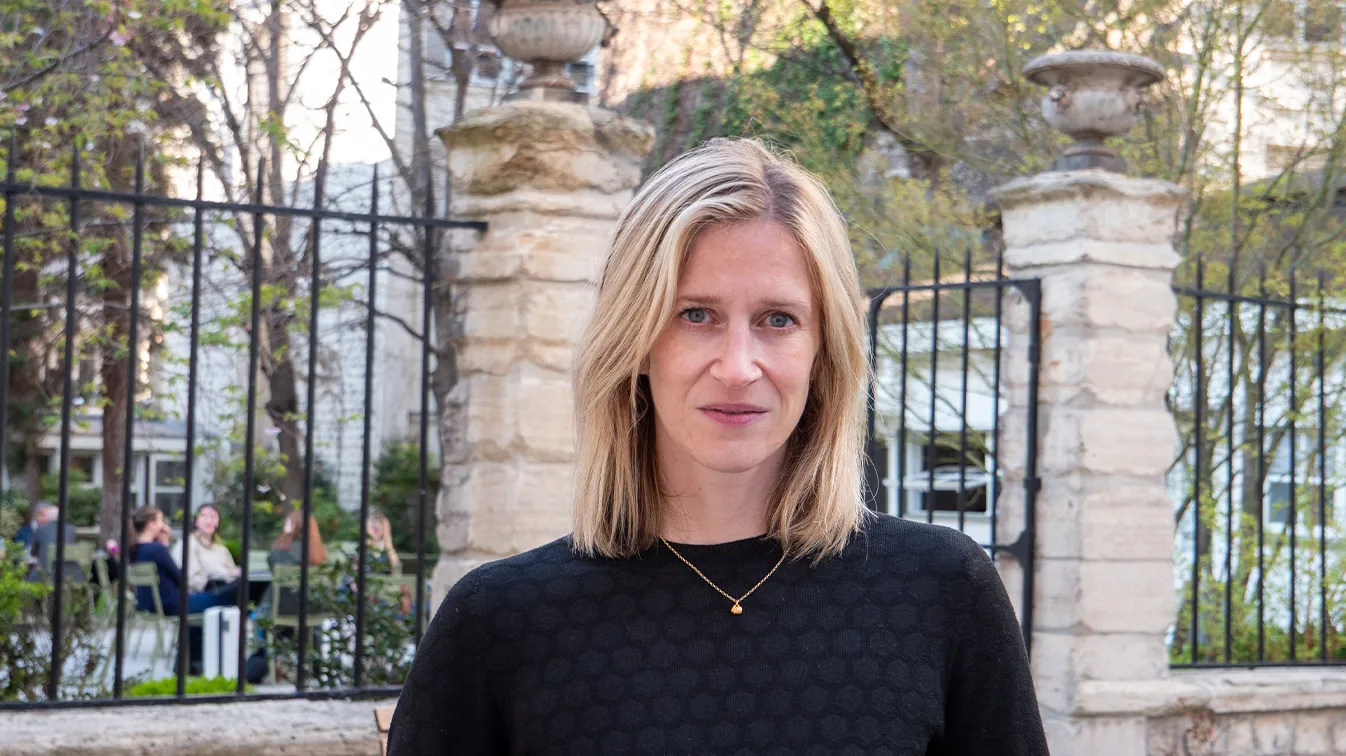
Leah Aronowsky is an Assistant Professor at the Columbia Climate School and a historian of science. Her book project, The Pragmatic Pessimists: Fossil Fuel Dependence and the Politics of Climate Adaptation, reexamines the history of climate politics by placing oil and energy at the center of the story since the 1970s. She visited Reid Hall in March 2026 as part of the Faculty Visitorship Program co-sponsored by the Columbia Global Paris Center and the Institute for Ideas and Imagination.
—
Why did the United States fail to act on climate change even after scientists reached a clear consensus that burning fossil fuels would warm the planet? And how did a generation of political pessimists — scientists who had lived through the energy crises of the 1970s and lost faith in the prospect of meaningful reform — inadvertently shape the international climate politics we know today? These are the questions at the heart of Leah Aronowsky's current book project, and they are questions she came to Paris, in part, to help answer.
At Columbia's Climate School, she teaches courses on the history of the climate crisis and the politics of energy transitions. Her book, The Pragmatic Pessimists: Fossil Fuel Dependence and the Politics of Climate Adaptation, traces the intersection of climate science and energy policy from the late 1970s through the 1980s — a period she describes as pivotal for understanding how we arrived at the present moment. "1979 is a really good starting point," she explains, "where there's a really strong consensus that climate change, and global warming in particular, will be the result if we continue to burn fossil fuels." What is less well understood, and what her book sets out to examine, is how that scientific consensus collided with the political realities of the energy crisis — and what happened as a result.
The scientists at the center of her story were not deniers. They were, in many ways, clear-eyed realists. Having watched the United States fail to wean itself off fossil fuels even in the name of energy independence, they were deeply skeptical that the country would do so in the name of protecting the climate. This pessimism, Aronowsky argues, was not merely a mood — it was a political orientation that pushed many scientists and policymakers toward adaptation rather than prevention, accepting a warming world as an increasingly likely outcome and asking how best to manage its consequences. Her book writes that sensibility back into the historical record, giving it the serious analytical attention it has largely been denied.
But the story does not end in resignation. The book's final chapter — the section Aronowsky focused on during her time at Reid Hall — turns to the forces that eventually pushed back against this pessimistic framing. US-based NGOs made a deliberate choice to reframe climate change as politically tractable and to pursue an international treaty organized around temperature targets and emissions thresholds. "My book ends with the beginning of that story," she explains, "which dates to the 1980s." In doing so, it traces the origins of the international climate regime that remains, for better or worse, the dominant framework for climate politics today.
Paris was a natural place to work on these questions. Institutions like the OECD, whose growing role in shaping international environmental policy becomes increasingly relevant toward the end of her book, are headquartered here. So too are many of the historians of science working on the European dimensions of this story — scholars whose perspectives have helped Aronowsky sharpen her account of how political optimism about climate action materialized so quickly in the 1980s after years of stagnation. During her visit, she gave a talk at the École des Hautes Études en Sciences Sociales in conversation with historian Jean-Baptiste Fressoz, and spoke to a class at the Sorbonne studying European integration — engagements that pushed her thinking about how to account for the changing tides of political sentiment across the Atlantic.
Alongside the book, Aronowsky also completed an essay for New Left Review during her time in Paris — a piece that brings her historical research into direct conversation with the present. The article takes stock of what she calls a "contemporary conjuncture": a moment in which a retreat from ambitious climate commitments is underway, driven not only by the political backlash associated with the Trump era, but by a deeper resignation among climate elites that 1.5 degrees of warming is now inevitable. "There's a sort of turn to ‘climate realism’," she explains, describing how this shift is reshaping debates on the left about what a credible climate agenda should look like. The piece maps several of the approaches emerging in response to this new moment — timely, pointed, and rooted in the same historical sensibility that drives her own scholarly work.
The productivity of her visit, she is quick to note, was inseparable from the condition that made it possible: time. "The gift of time is one of the greatest things you can give back to academics," she says. Leaving New York mid-semester, setting an out-of-office reply, and genuinely stepping away from the usual demands of campus life created the conditions for sustained intellectual work that is simply not available at home. The material she developed in Paris will feed directly into her teaching — including a lecture in her History of the Climate Crisis course the week of her return — closing a loop between her research, her writing, and her students back at the Climate School.
The history of the 1970s and 1980s is not a distant past, even if increasingly, for Aronowsky’s students at the Sorbonne as much as her own, the '80s are becoming the stuff of historical inquiry rather than personal recollection. That proximity to the present, however, is precisely what makes the history matter. Understanding how climate pessimism was overcome once — and how the architecture of modern climate politics was built in its wake — may yet offer resources for navigating today’s equally uncertain political terrain.