How Can Institutions Protect Journalism and Dissent?
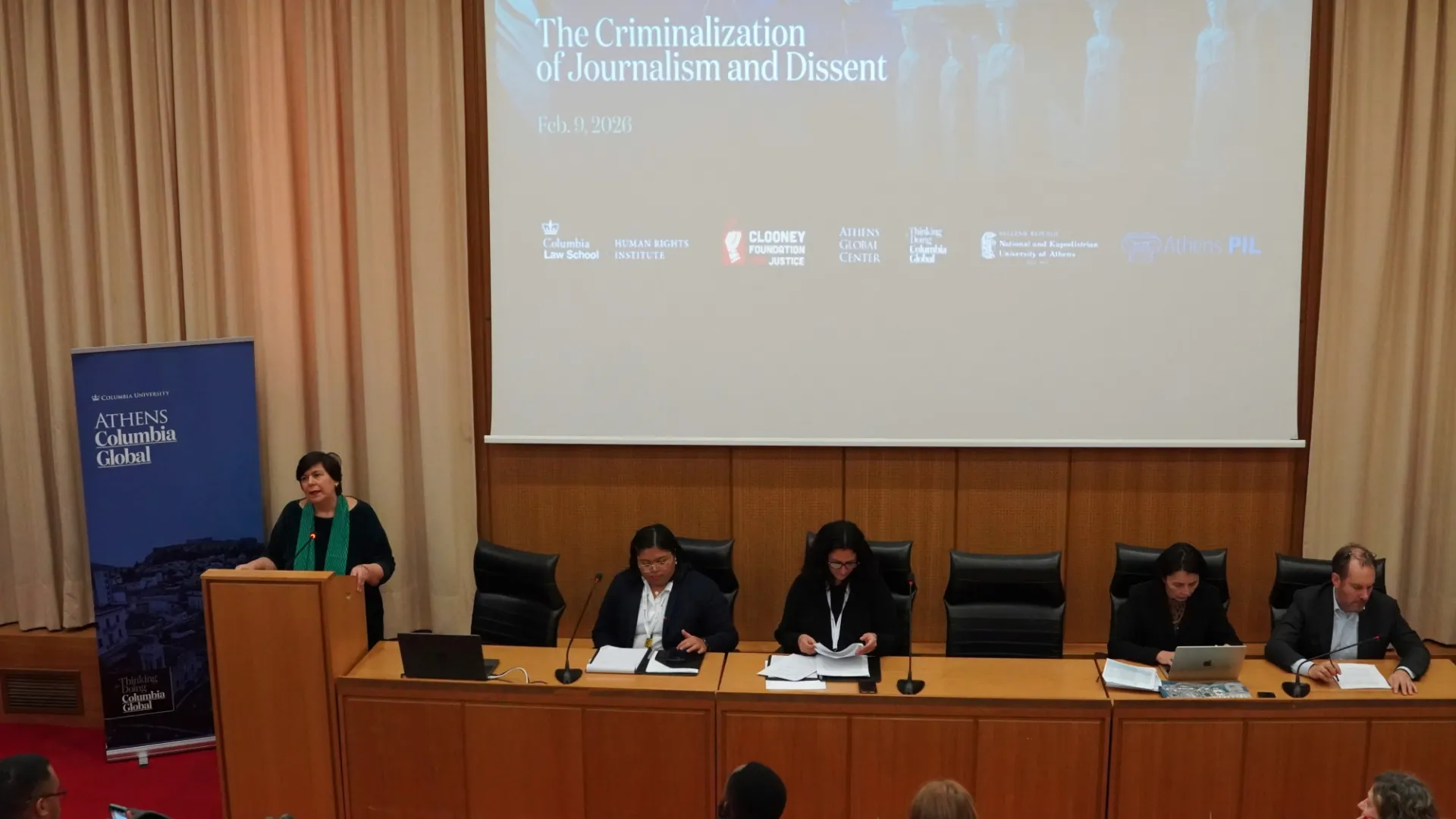
On Feb. 9, 2026, Columbia Global Center Athens partnered with the Human Rights Institute at Columbia Law School, the Clooney Foundation for Justice, and the National and Kapodistrian University of Athens to hold "The Criminalization of Journalism and Dissent - TrialWatch Clinical Network Forum."
As part of the inaugural TrialWatch Clinical Network Forum, held from Feb. 8-11, this open session brought together students, academics, and human rights practitioners to examine how legal systems are increasingly used to suppress journalism and dissent.
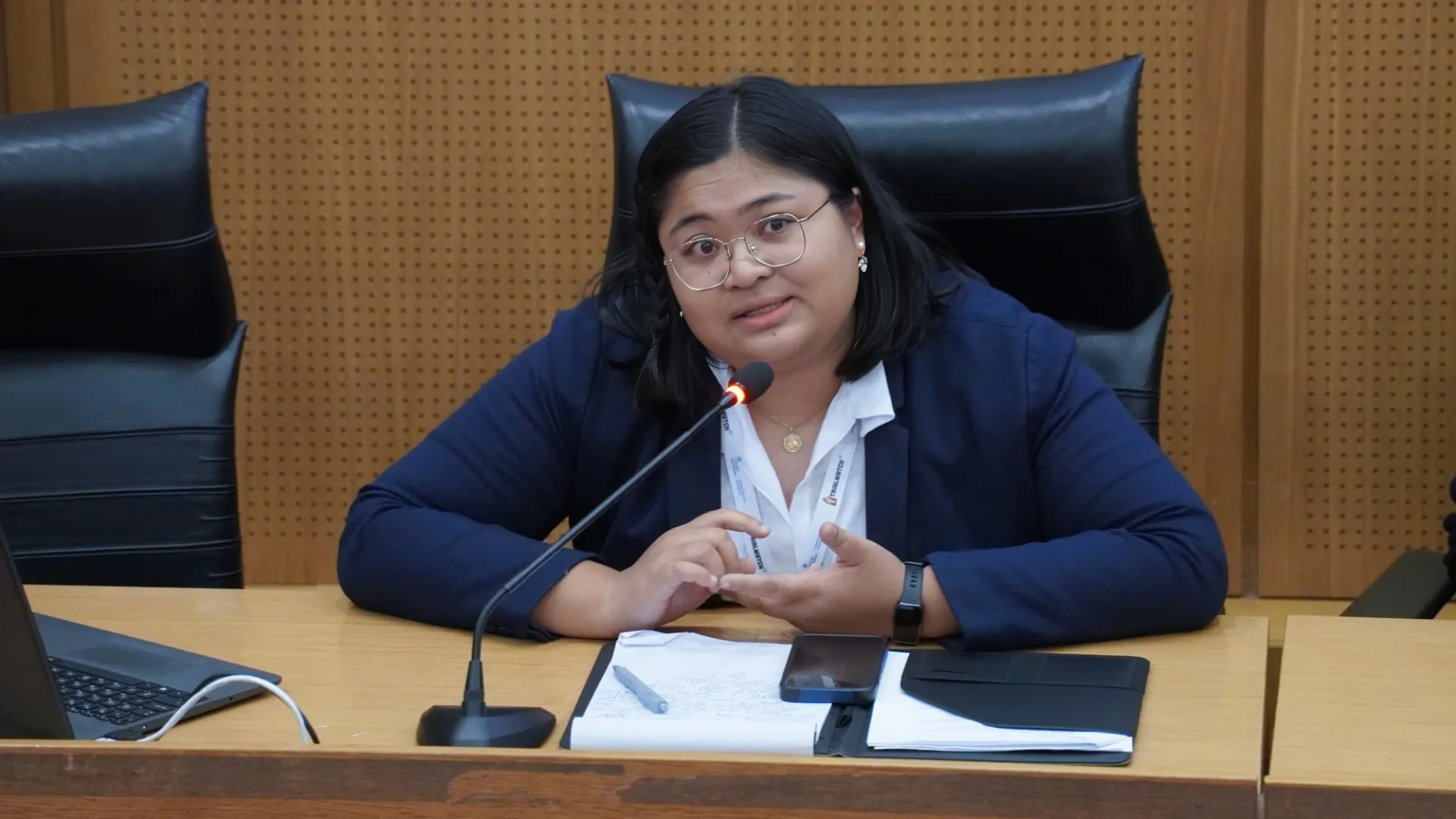
Speakers highlighted a global trend in which governments rely on legal tools, such as vague national security laws or defamation statutes, to silence critical voices under the guise of legality. The session also explored how courts can serve as both instruments of repression and avenues for resistance. Panelists discussed the role of trial monitoring, fairness reporting, and legal advocacy in promoting international human rights standards in domestic courts. The TrialWatch Initiative and its Clinical Network were presented as key actors in this effort, working through law clinics and universities to document violations and support fair trial rights. The session emphasized the importance of training the next generation of legal advocates to defend freedom of expression and the rule of law.
Later that evening, the National and Kapodistrian University of Athens hosted Alain Berset, Secretary General of the Council of Europe, for a discourse on human rights, democracy, and the rule of law, followed by the presentation of the Lord Byron Award in his honor. Together, the two events highlighted Athens as a hub for critical dialogue on protecting democratic institutions, civic space, and human rights in Europe.
Takeaways
- Trial monitoring as accountability: TrialWatch’s model demonstrates that documenting and publicly assessing trial fairness can create tangible pressure on judicial systems and deter abuses.
- Law as a double-edged sword: Courts are increasingly used to legitimize repression, but they also remain critical arenas where international standards can be invoked and defended.
- Global patterns, local realities: From the Philippines to Europe and beyond, similar legal tactics are used to criminalize dissent, though their implementation reflects distinct political and institutional contexts.
- Universities as frontline actors: Clinical legal education and transnational networks of law schools are playing an expanding role in monitoring trials and strengthening legal advocacy worldwide.