How a Social Impact Bond Helped Improve Early Literacy in Chile: A Case Study
A case study shows how a Social Impact Bond (SIB) was instrumental in improving literacy rates in young schoolchildren in Chile.
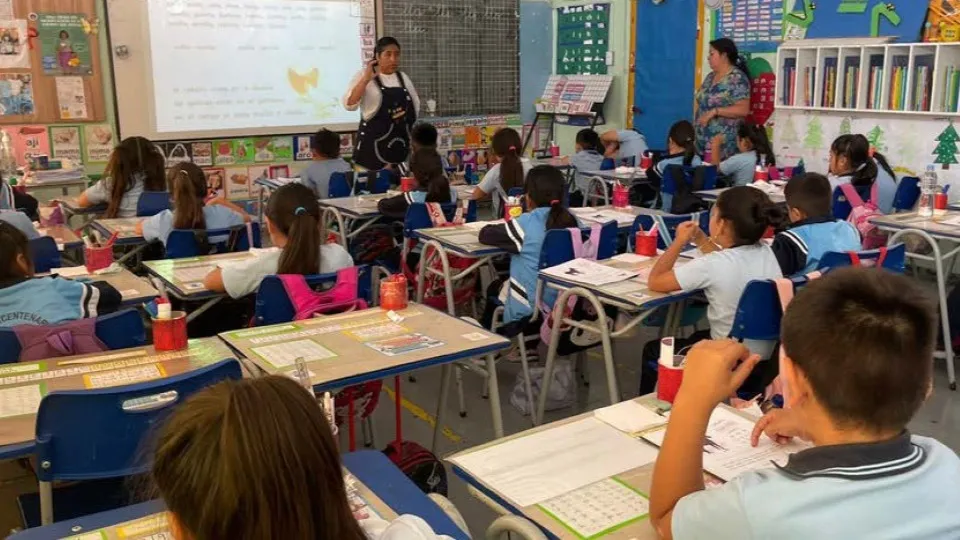
A Social Impact Bond (SIB) - a financial instrument bringing together private investors, governments, and service providers to fund social programs with the aim of improving outcomes and reducing public costs – has been instrumental in helping to better literacy rates in young schoolchildren in Chile, according to a case study performed by Victoria Paz (SIPA ’25).
The intervention benefitted 2,700 first-grade students from vulnerable communities, reducing the proportion of nonreaders from more than 90% to approximately 40%. The result was validated by academic experts and was considered as having surpassing expectations, according to Paz, who is the Founder of the consultancy Poder Económico and the Finance Lead at The Mangrove Breakthrough.
“This dramatic shift in literacy levels reflects a meaningful transformation in educational trajectories and future opportunities for children who were previously at high risk of academic exclusion,” Paz says in her case study.
Under the SIB model, private investors provide upfront capital to fund the service delivery – in this case, literacy, but it could include other improved social outcomes like reduced homelessness or recidivism. An independent evaluator measures whether agreed outcomes are met. If targets are reached, the government repays the investors their capital plus a return. If not, investors may lose some or all of their investment. Unlike traditional bonds, SIBs are not debt instruments; rather, they are pay-for-success contracts whereby financial risk is shifted away from governments and toward investors, incentivizing innovation and measurable social outcomes.
In this case, the initiative was led by Corporación Bien Público, with support from Social Finance UK, law firm Carey, local municipalities, philanthropic organizations, and the private sector. Four entities provided the service using different pedagogical models, and the program was evaluated via a standardized literacy assessment developed by the Chilean Universidad de los Andes. The metric to measure outcomes was the average improvement in test scores between the beginning and end of the school year.
According to the study, all service providers met the 100% target set for the program, demonstrating the strength of performance-based incentives.
The Larraín Vial Education Impact Investment Fund raised CLP 546 million (US $560,000) from more than 50 investors to support the project. While offering an expected return of 8%, the fund ultimately delivered 9.49% over two years, which they study author says demonstrates the viability of social-first investing in Chile.
Another signal of the stakeholders’ trust in this arrangement is that Larrain Vial is already setting up a second fund, which the study says demonstrates the program has effectively unlocked the possibility of this blended finance type of structure and intervention.
Still, according to the analysis - conducted during the Master of Public Administration program at Columbia University, under the guidance of Professors Greg Levine and Harry Guinness – there is room for improvement. One main challenge is that many social service providers lack the operational scale or data systems needed to implement and monitor outcomes-based contracts. Further, government agencies may be reluctant to participate in such interventions due to risk aversion, short political cycles, or limited exposure to results-based financing.