J-School’s Jelani Cobb in Santiago: A Call to Defend Journalism in an Era of Uncertainty
Cobb’s visit to Santiago underscored journalism's enduring, crucial mission.
In late April, Jelani Cobb, Dean of the Columbia University Graduate School of Journalism (J-School), visited Santiago for a series of academic events that brought together students and faculty from a number of Chilean universities, as well as media professionals, all of whom participated in spirited conversations regarding the future of journalism.
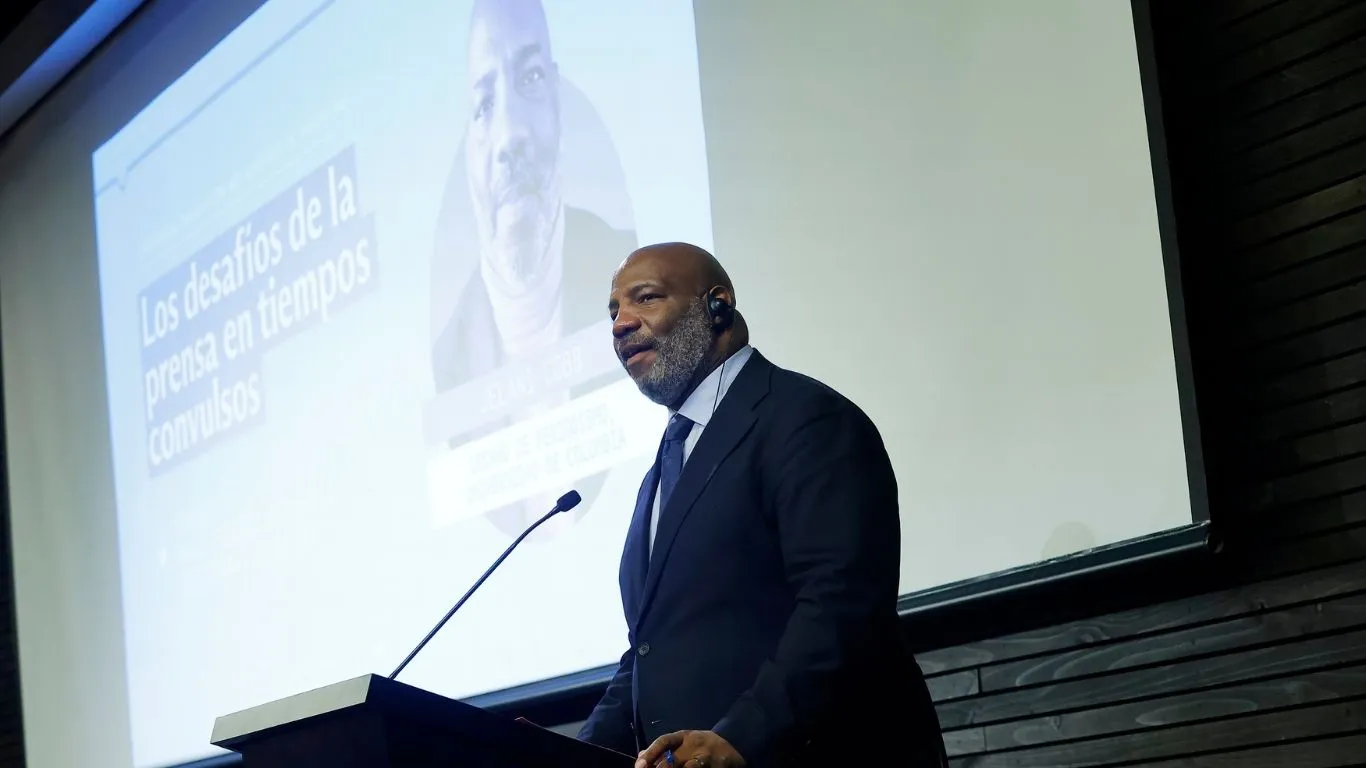
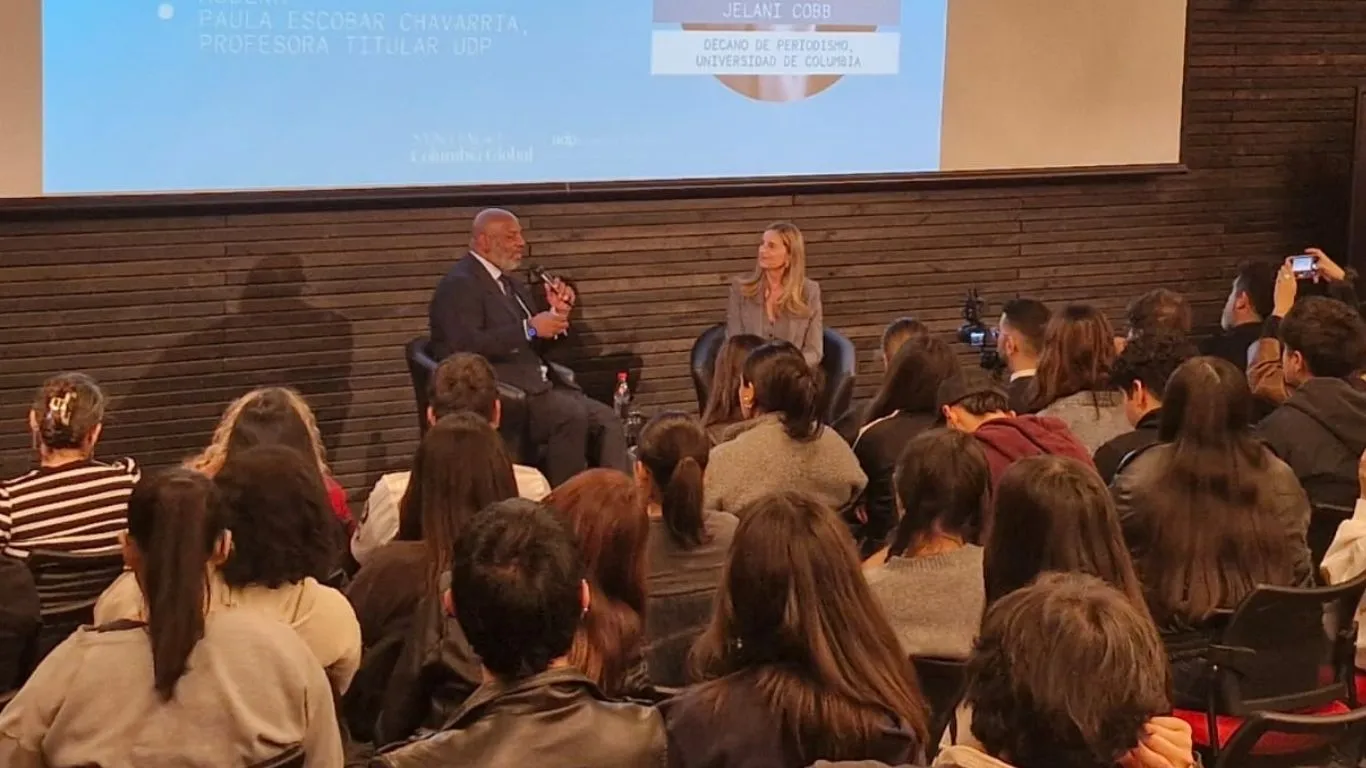
His visit began at Universidad Diego Portales (UDP), where he was welcomed by Dean Marcela Aguilar in the auditorium of the Nicanor Parra Library, filled to capacity for the UDP School of Journalism’s inauguration of the academic year. For the event, co-organized with the Columbia Global Center Santiago, Cobb delivered a lecture titled “The Challenges of the Press in Turbulent Times,” setting the tone for a week centered on reflection and urgency. The event also included a conversation with Paula Escobar Chavarría, a UDP Journalism professor and executive director of the Women and Media Chair.
Cobb opened his remarks by recounting the experiences of journalists who have faced imprisonment and censorship, grounding his analysis in the human cost of reporting. He pointed to a broader global trend, describing a climate in which journalists encounter increasing hostility and danger — conditions that, he noted, have intensified over the past decade. Framing his argument within the long arc of democratic development, he reflected on the United States and highlighted growing tensions between political power and the press, including cases of aggression and threats to press freedom.
“For a nation anchored in the will of the people, it is a sacred responsibility to ensure that the people are well informed,” he said, underlining the importance of journalists’ role in bolstering democracy.
He suggested that countries like the United States have much to learn from other democratic trajectories, pointing specifically to Chile’s experience in the 1990s as an example of how societies navigate periods of political transition.
Cobb continued these discussions at Universidad Adolfo Ibáñez (UAI), where he addressed journalism’s evolving role in an event organized jointly by Columbia Global Center Santiago, UAI’s School of Communications and Journalism, and the Columbia Alumni Association in Chile, which brought together academics, practitioners, alumni, and students for a wide-ranging exchange.
The session was opened by Magdalena Browne, dean of UAI’s School of Communications and Journalism, while Carlos Franco, director of the journalism program, introduced the concept of “transformative journalism” as a framework for the conversation. This approach, focused on the social responsibility of journalism, set the stage for a deeper examination of the profession’s current challenges.
Moderated by prominent Chilean journalists and Columbia alumni Constanza Santa María (JRN´00) and José María del Pino (JRN’23), the discussion explored the pressures facing contemporary media, particularly in the context of misinformation and institutional distrust. Cobb emphasized that, despite these challenges, the core principles of journalism remain unchanged: rigorous reporting and a firm commitment to ethics.
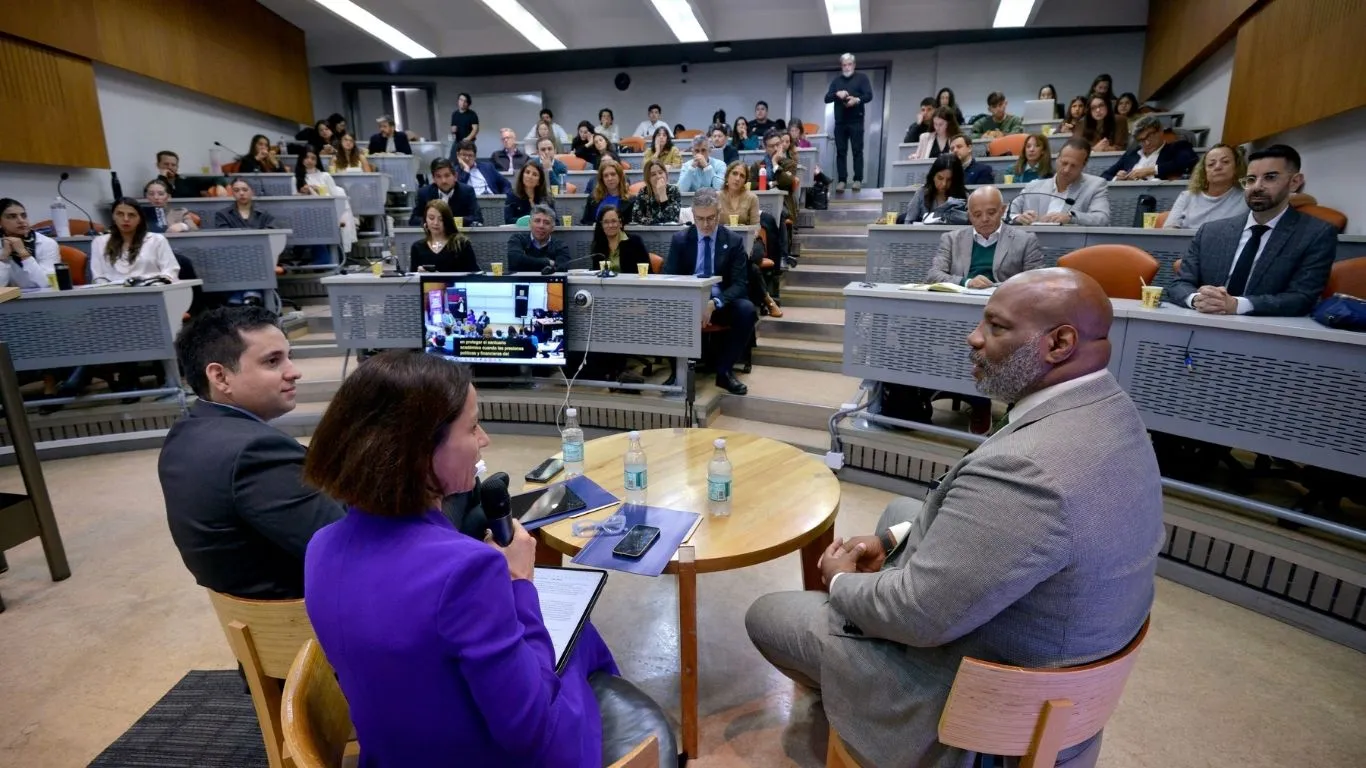
The conversation also addressed the structural transformations reshaping the industry. Cobb discussed the economic sustainability of journalism, pointing to alternative models — including nonprofit initiatives supported by universities — as viable paths forward in an environment where traditional revenue streams have eroded. He noted that the widespread expectation that information should be free has fundamentally altered the media landscape, even as digital platforms continue to monetize audience attention.
Artificial intelligence was another key theme. While acknowledging its potential as a tool, Cobb drew clear boundaries around its use in editorial processes, underscoring that journalism must remain rooted in human judgment. For him, the essence of the profession lies in direct engagement with reality: reporting from the field, observing, and speaking with people - experiences that cannot be replicated by technology. He did, however, encourage positive use of AI — for example, when writing a story or paper, using it as a tool in forming an opposite stance to verify if there are any holes in the original story or arguments that have gone unaddressed.
The event featured “a necessary conversation to think about the present and future of journalism,” Santa María said.
UAI journalism student, Antonia Sánchez, agreed. “What most caught my attention was how Jelani Cobb reinforced that despite the growth of social networks… journalism is still essential. The role of the journalist continues to be key to verifying, explaining, and contextualizing information, especially in times of information overload and misinformation,” she told UAI's Journalism School-run newspaper Cooler. “I also find his vision of artificial intelligence very interesting. He mentioned that this is a tool that we journalists have to learn to use, always guided by the ethical and professional criteria of the profession.”
Further, Cobb met with faculty members from the Universidad Católica’s School of Communication Sciences (FCOM|UC) in a meeting led by Rayén Condeza, the school's deputy director of internationalization, and Magdalena Saldaña, director of the Journalism Department. Cobb also had a conversation with students in the UC Doctoral Program in Communication Sciences, learning about their research topics and the work they are doing.
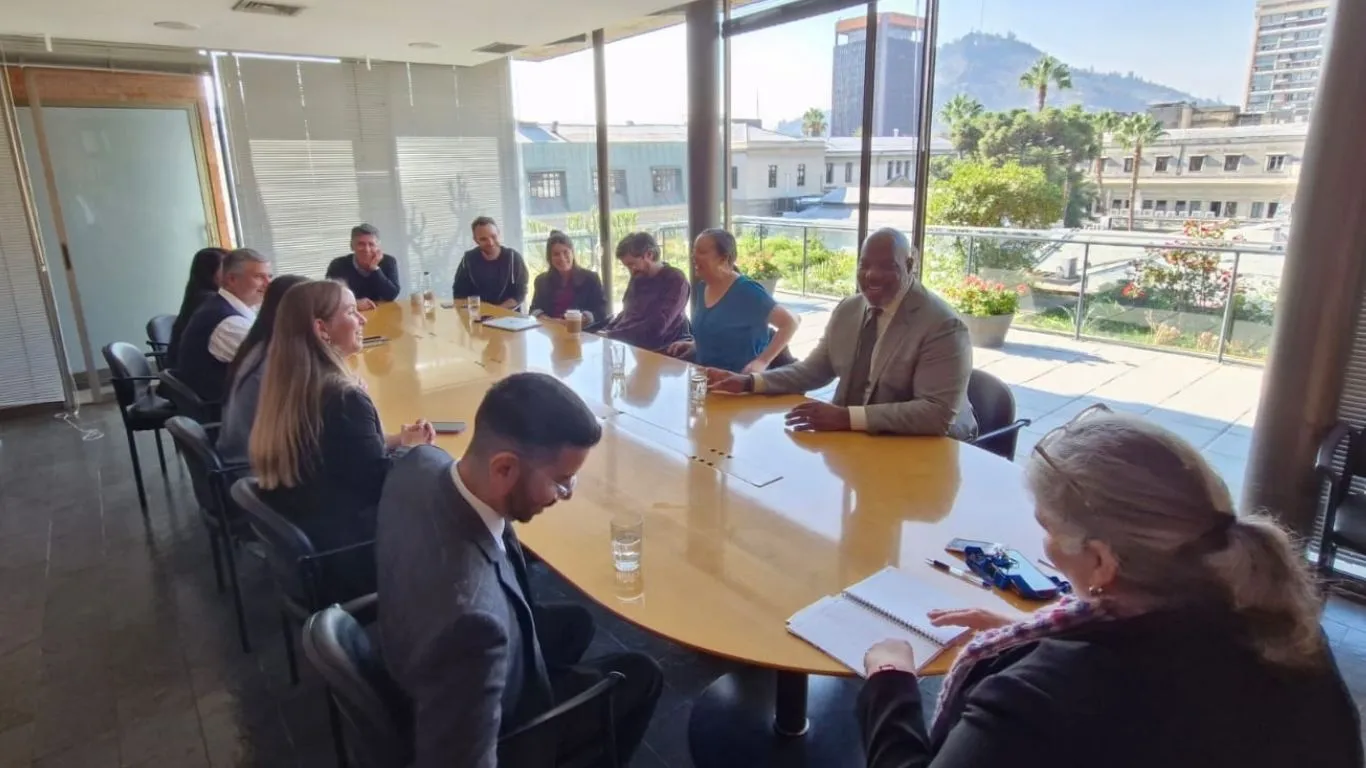
To conclude his visit to Universidad Católica, Cobb participated in the Multimedia Journalism Workshop undergraduate course, where he spoke with students and answered questions about current challenges in journalism.
“I've had a wonderful visit, and I think it's very important that we're in dialogue, because we're discussing issues that are crucial for the future of journalism and a free press worldwide,” Cobb said. “Being able to engage in dialogue beyond national borders is fundamental, because many of the challenges and questions we face are the same, regardless of the countries we live in.”
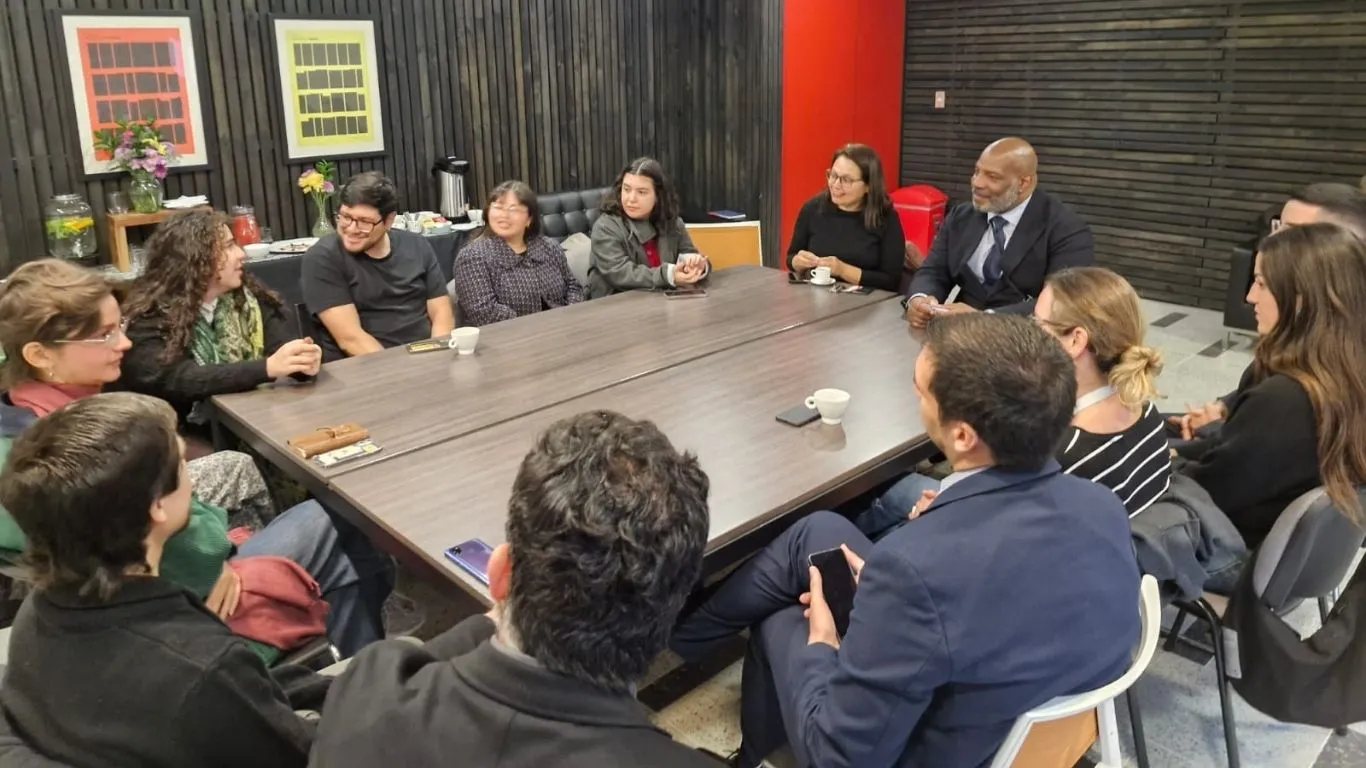
Beyond formal lectures and panels, a defining feature of Cobb’s visit was his engagement with students at all the universities he visited, having met with undergraduate journalism students in a more intimate setting, where conversations turned to professional paths, curiosity, and the long-term impact of storytelling. These exchanges reinforced a central message of his visit: that journalism, even in uncertain times, remains a vital and consequential profession.
Cobb left a message of reassurance for students, who may feel discouraged by the prospects in journalism’s future. “This is still a job linked to consequences, and it is the best profession for curious people,” he said. “There is no better time to come together, to shape and determine what our future will be.”
Cobb’s visit to Santiago created a space for reflection that connected local and global perspectives. His visit underscored not only the challenges facing journalism today, but also the enduring importance of its mission and the role that new generations will play in shaping its future.