Online Influencers, Journalism, and the Future of Public Information
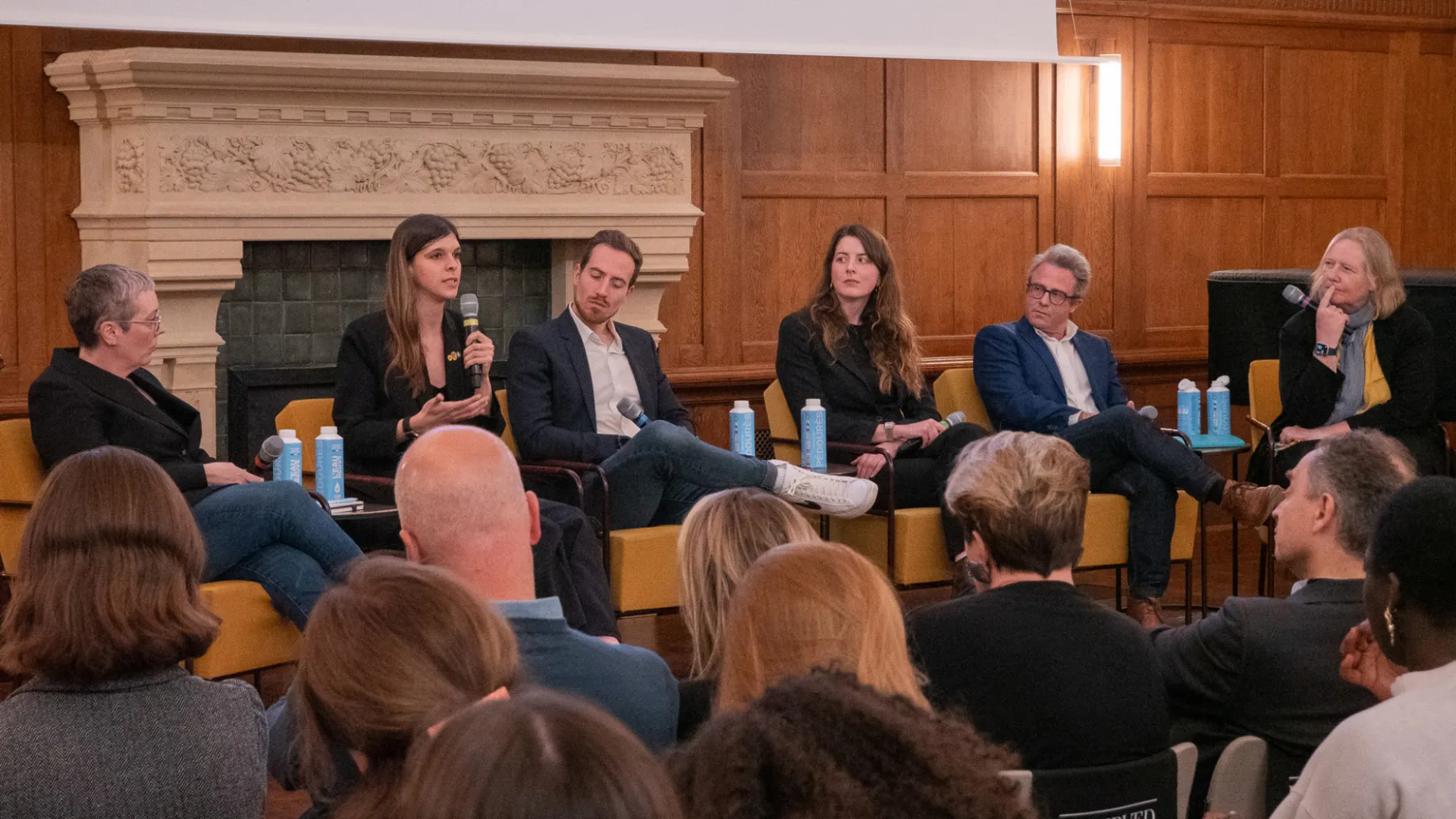
On March 19 and 20, 2026, the Columbia Global Paris Center hosted the fifth edition of Saving Journalism, a two‑day conference bringing together scholars, journalists, and policymakers from around the world. Organized by the Columbia Global Paris Center, Columbia SIPA Technology Policy and Innovation, Columbia World Projects, and The Centre for Media, Technology, and Democracy at McGill University, the conference opened on Thursday evening with a public panel in Reid Hall's Grande Salle Ginsberg‑LeClerc on the growing role of online influencers in contemporary politics and public information.
Moderated by Emily Bell, founding director of the Tow Center for Digital Journalism at Columbia Journalism School, the panel brought together five voices spanning continents and disciplines: Julia Angwin, founder and CEO of Proof News; Taylor Owen, Beaverbrook Chair in Media, Ethics and Communications at McGill University; Alice Cappelle, video journalist and author; Allia Mohamed, co-founder of Openigloo and content creator; and Eric Munch, legal analyst at the European Audiovisual Observatory.
The full event recording is now featured on the Columbia Global Paris Center's podcast, Atelier, available on all listening platforms, and can be listened to directly below.
As a self-proclaimed “accidental journalist,” Allia Mohamed opened with a striking case study. She built Openigloo, a housing transparency platform for New York City renters, and began using Instagram simply to grow her user base. A short video she posted, encouraging renters to request their rental histories, sent ten thousand people to a government website, overwhelming it to the point of bringing it down. Officials issued a public statement and a New York Times journalist called her.
"That was the first moment I realized I needed to be more careful about the things that I say and make sure everything I communicate is well‑researched and thorough."
Alice Cappelle, who arrived at content creation through journalism and academia, described a parallel tension: the demands of YouTube, from thumbnail choices to publishing cadence, increasingly shape what gets made as much as the story itself does.
In a diagnosis of why audiences have moved, and drawing on trustworthiness research, Julia Angwin identified three elements that legacy newsrooms have struggled to deliver: benevolence, expertise delivered directly rather than through intermediaries, and real accountability when trust is broken. Taylor Owen brought data to bear: over the past eight months, influencers accounted for 32% of all engagement in Canadian political content, against 24% for the entire traditional media sector. Even during elections, influencers represented close to half of all engagement, and most of their audiences describe them as news sources, not entertainment. Owen cautioned, however, that this ecosystem is ideologically clustered and a primary vector for conspiracy content, driven as much by platform architecture as by audience preference.
Providing the sharpest contrast with the American context, Eric Munch traced the regulatory gap in Europe: the EU's Audiovisual Media Services Directive was last revised in 2018, before influencers became central to the media landscape. Only France and Spain have enacted dedicated influencer legislation. Munch pointed to algorithmic transparency as the most tractable policy lever available. On money and AI, the panel grew thornier: Mohamed described candidates paying influencers several thousand dollars per post, while Angwin argued that foreign government payments to influencers went undisclosed and unpunished in the most recent US election cycle. Both described being impersonated by AI‑generated deepfakes targeting their own audiences.
The closing exchanges pointed toward collective action over top‑down regulation. Angwin called for a new form of solidarity among independent journalists and creators, including shared standards and professional infrastructure. Owen raised decentralized platforms as a structural alternative to Big Tech dependency. Mohamed was the pragmatist: build a trusted personal brand, she argued, because that is what survives when platforms shift.
Saving Journalism 5
This panel opened the fifth edition of Saving Journalism: What Can We Learn from the Rest of the World?, a two‑day conference held at Reid Hall on March 19 and 20, 2026, organized by Anya Schiffrin, Director of the Technology, Media and Communications Specialization at Columbia SIPA, alongside Taylor Owen and Thomas Asher of Columbia World Projects.
The Friday private conference brought together more than sixty scholars, practitioners, funders, and regulators from across Europe and North America for panels on new research in media economics and ownership, the threat AI poses to journalism, the state of US journalism one year into the Trump administration, and new frontiers in media policymaking, as well as breakout sessions on business models, national journalism funds, and the future of the M‑20 media agenda.
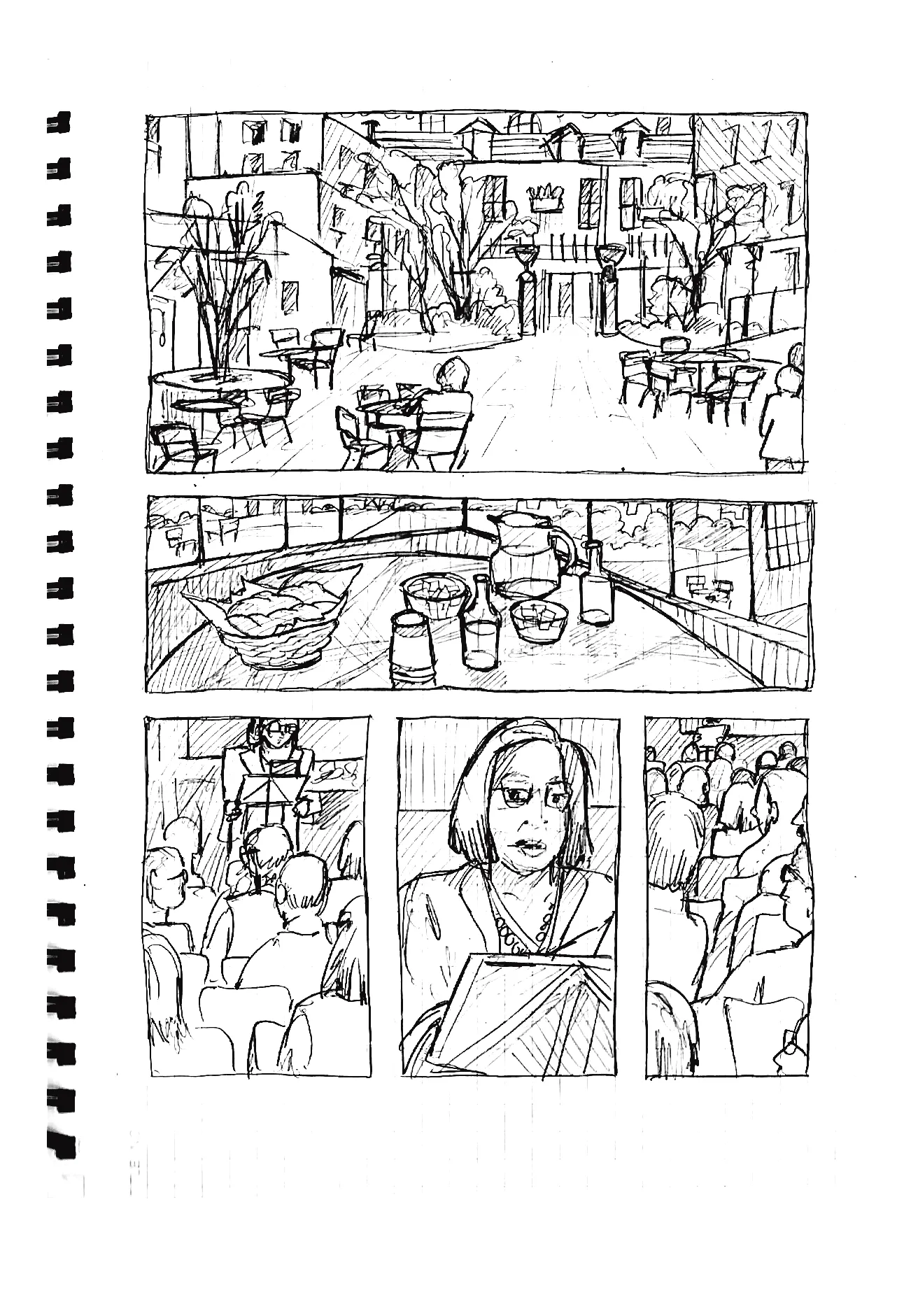
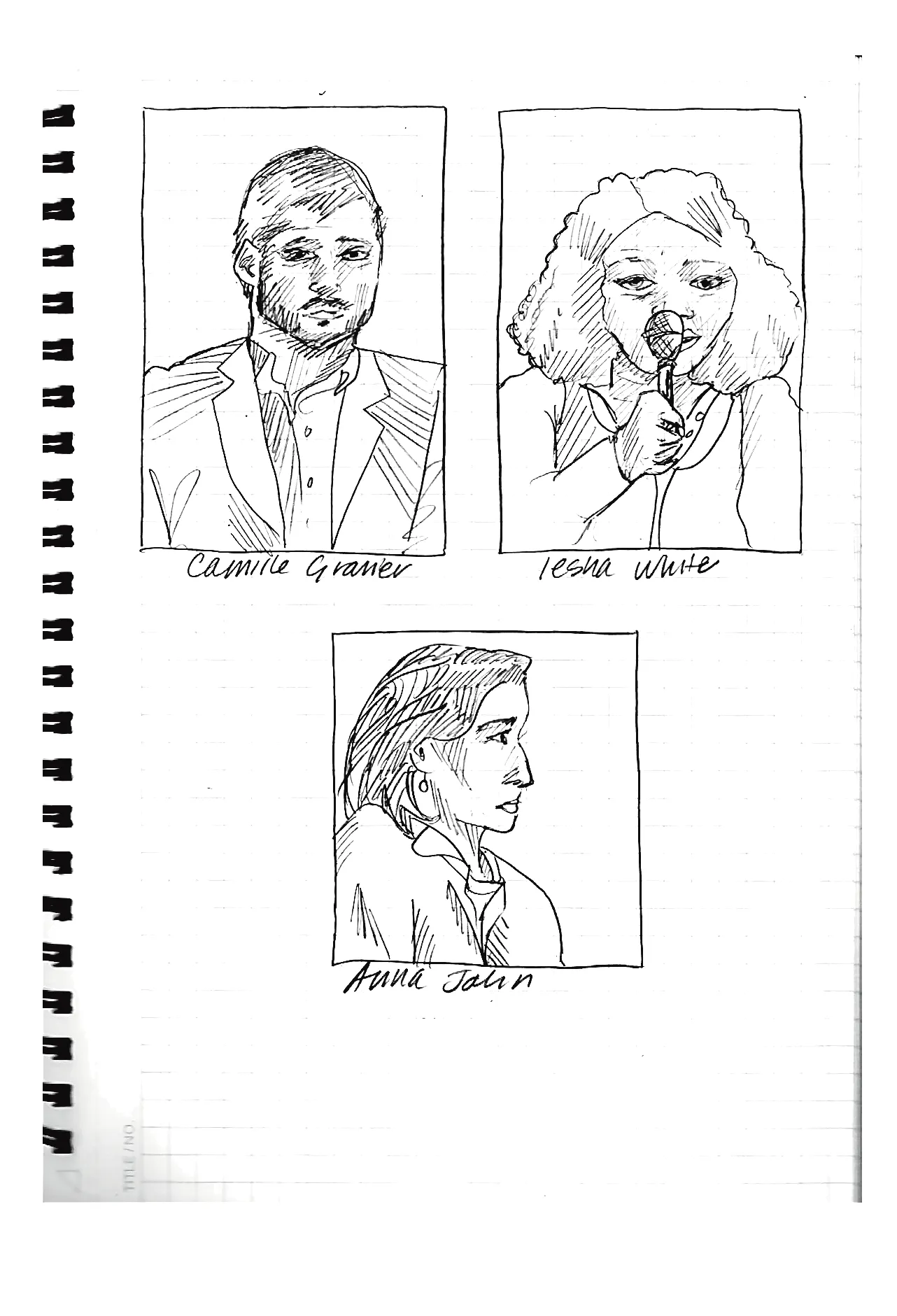
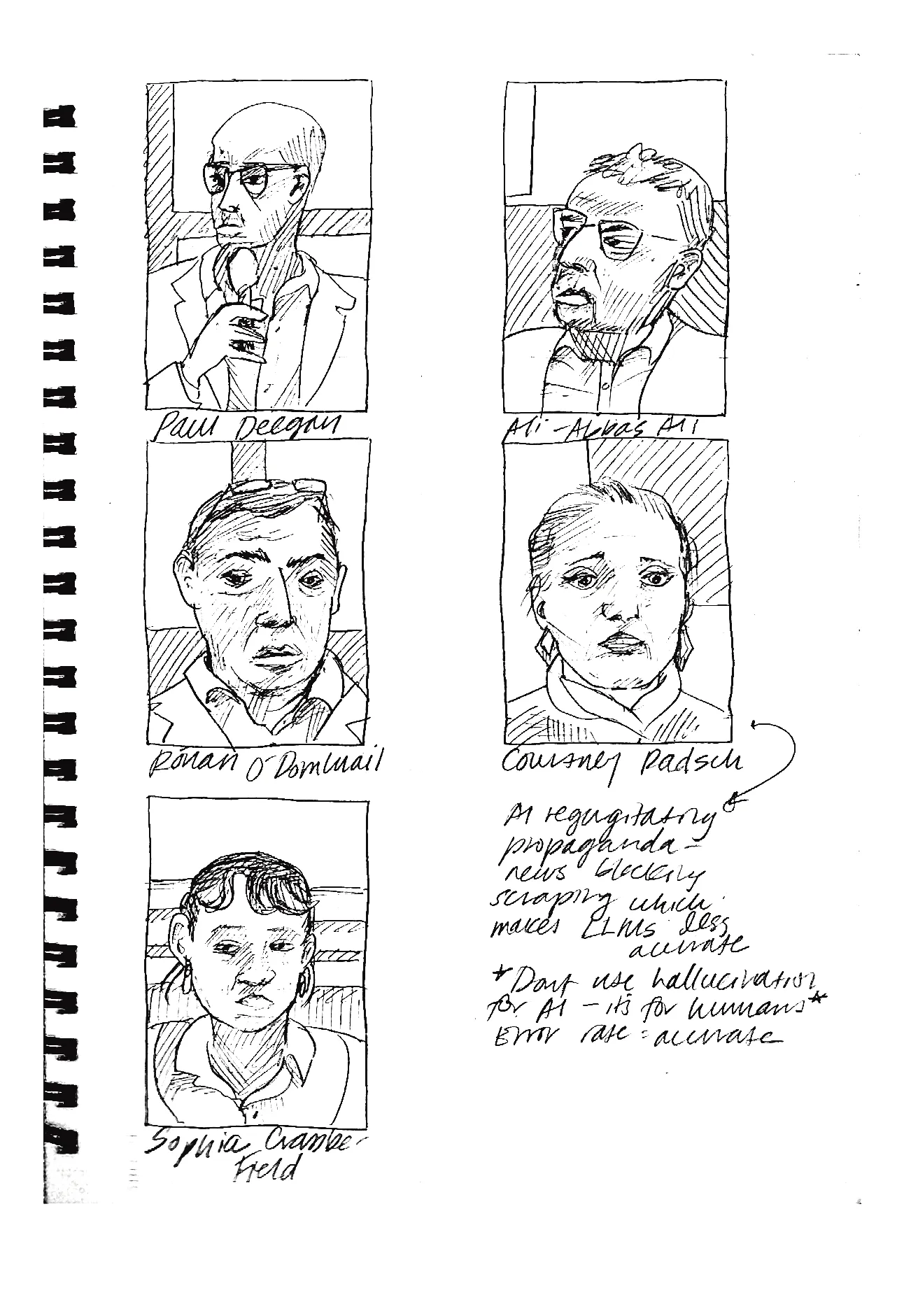
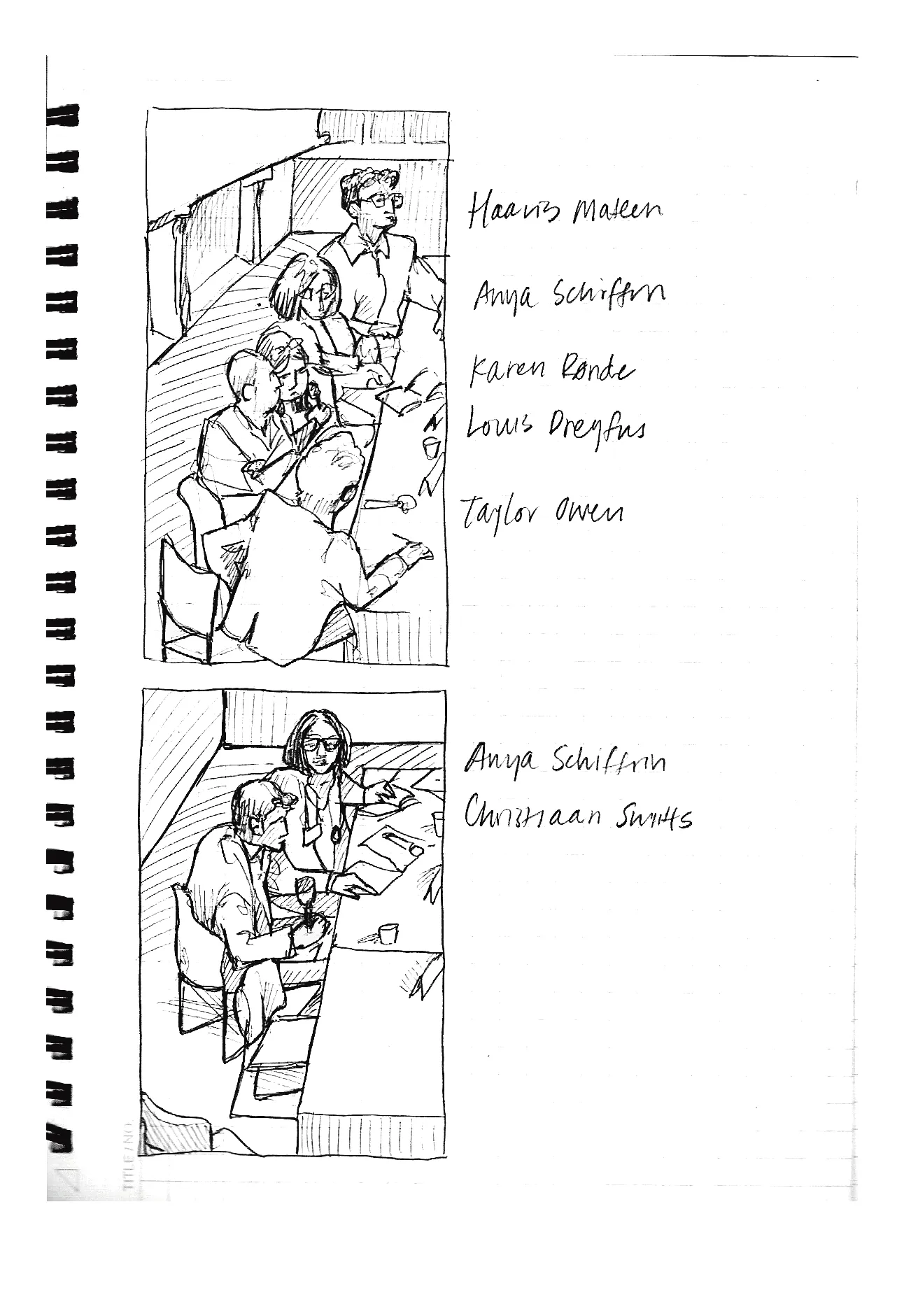
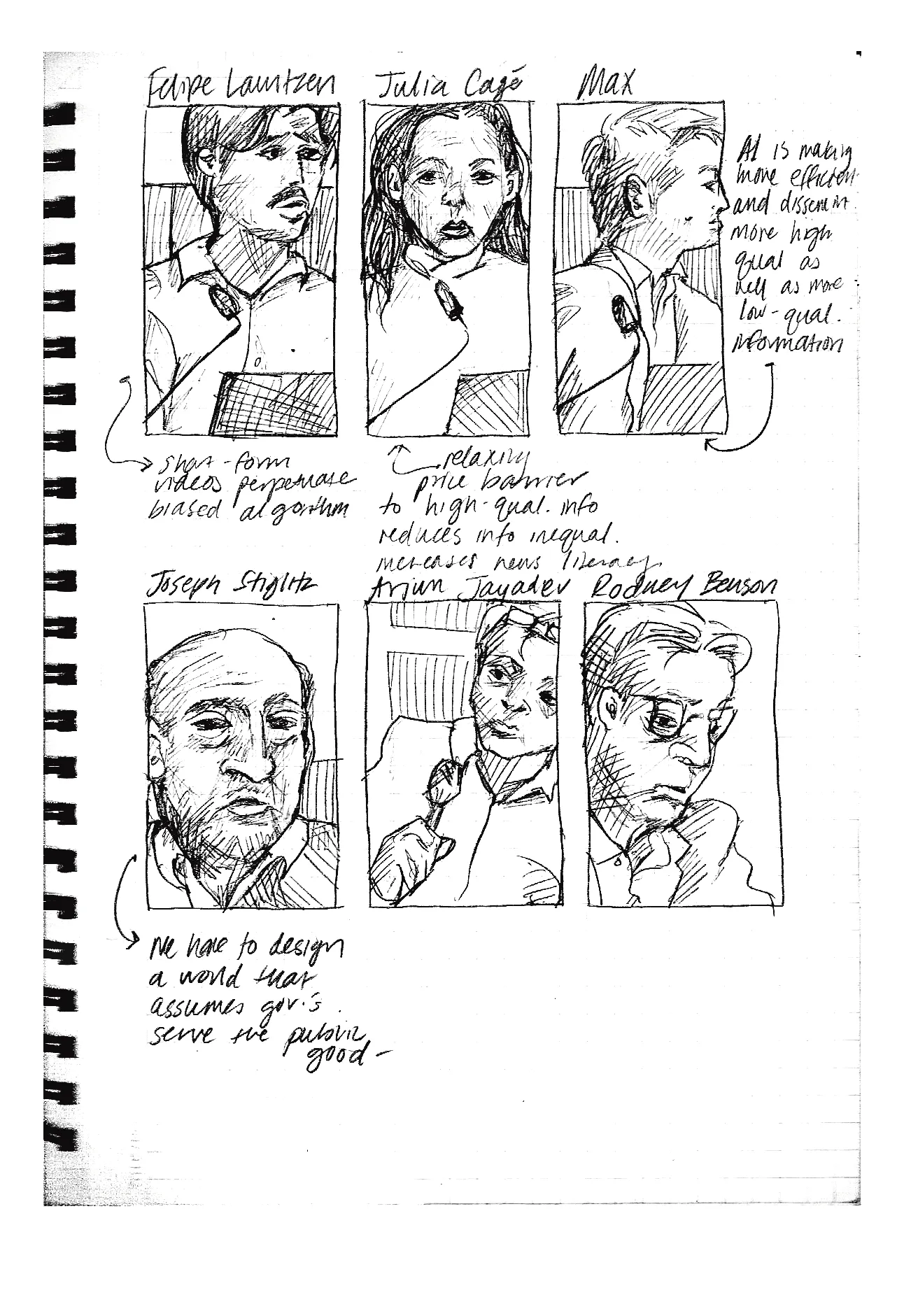
The day was documented through a series of illustrations by Sophie Holin, whose sketches offered a visual record of the conversations that unfolded across Reid Hall's classrooms, gardens and Grande Salle Ginsberg-Leclerc.
Image Carousel with 5 slides
A carousel is a rotating set of images. Use the previous and next buttons to change the displayed slide
-
Slide 1: Saving Journalism, Sophie Holin Sketch 1
-
Slide 2: Saving Journalism, Sophie Holin Sketch 2
-
Slide 3: Saving Journalism, Sophie Holin Sketch 3
-
Slide 4: Saving Journalism, Sophie Holin Sketch 4
-
Slide 5: Saving Journalism, Sophie Holin Sketch 5