Strengthening Menstrual Research in India
The last two decades have seen significant progress in breaking the silence around menstruation and promoting menstrual hygiene in India. Menstruation however, is still stigmatized and often perceived as a disease with limited attention to the broader understanding of menstruation as an integral aspect of healthy living, gender justice, and social well-being.
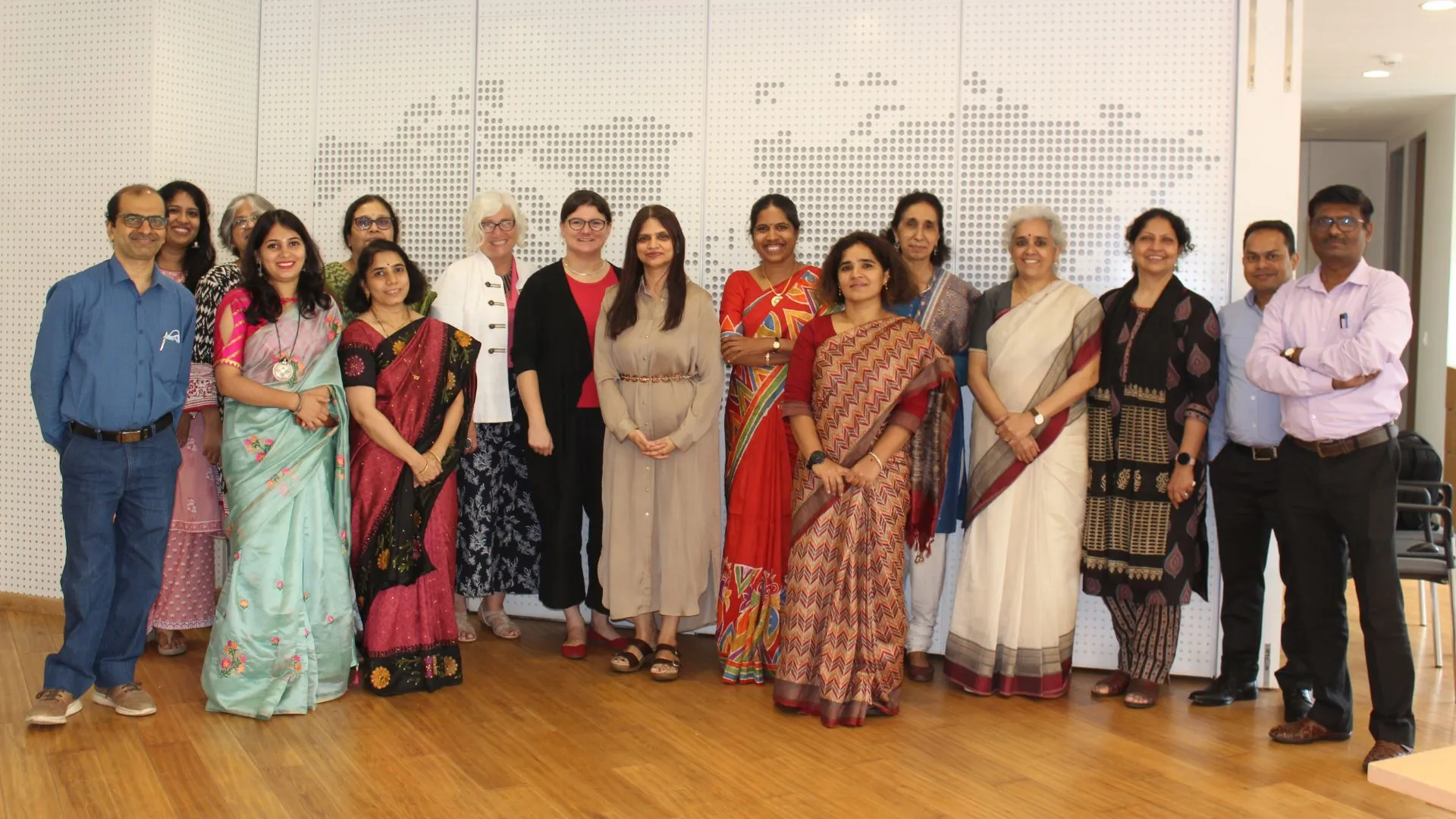
In order to address research gaps and identify frameworks for strengthening menstrual research in India, Columbia Global Centers | Mumbai organized a workshop on 28th June 2022, with interdisciplinary experts from leading academic institutions in Mumbai. This workshop was part of the Center’s Period of Life: Improving Menstrual Health and Knowledge in India project. It featured Inga Winkler, Associate Professor in International Human Rights Law at Central European University in Vienna, Chris Bobel, Professor and Chair of the Department of Women’s, Gender and Sexuality Studies at the University of Massachusetts Boston, and distinguished researchers from the Tata Institute of Social Sciences, International Institute of Population Sciences, National Institute of Public Health Training and Research, SNDT Women’s University, Sophia College for Women, and K.J. Somaiya College of Nursing.
Offering a framework for strengthening menstrual research based on their recently released Handbook of Critical Menstruation Studies, Professors Winkler and Bobel emphasized the urgency for researchers in India and globally to move beyond menstrual hygiene management towards menstrual justice in research practice. They argued for acknowledging the unique menstrual experiences and menstrual needs of everyone who menstruates, regardless of a person’s age, gender identity, social status, or economic background. Participant experts from India also cited the need for including marginalized social groups like sex workers, women with disabilities, transgenders, and migrants whose menstrual needs and experiences are inadequately addressed in menstrual research.
The workshop invited discussion on a life course approach to menstruation, where issues such as menopause, and menstrual disorders and irregularities, as well as bodily autonomy were necessarily integrated into the construct of menstruation. According to Dr Lakshmi Lingam, Professor, School of Media and Cultural Studies at the Tata Institute of Social Sciences, “Working towards women’s autonomy of their bodies and empowering women to embrace their cycles will help them live a fulfilling menstrual life.” There was also a collective consensus to establish links between menstrual research in academic institutions and grassroots implementation through meaningful partnerships with civil society, and the creation of evidence-based knowledge materials and resources for greater community impact.