Delia Vergara (JRN’64) Honored with the “Karen Poniachik Woman of the Year” Award 2025
Founder and first director of "Revista Paula", Vergara is a true trailblazer in feminist journalism in Chile.
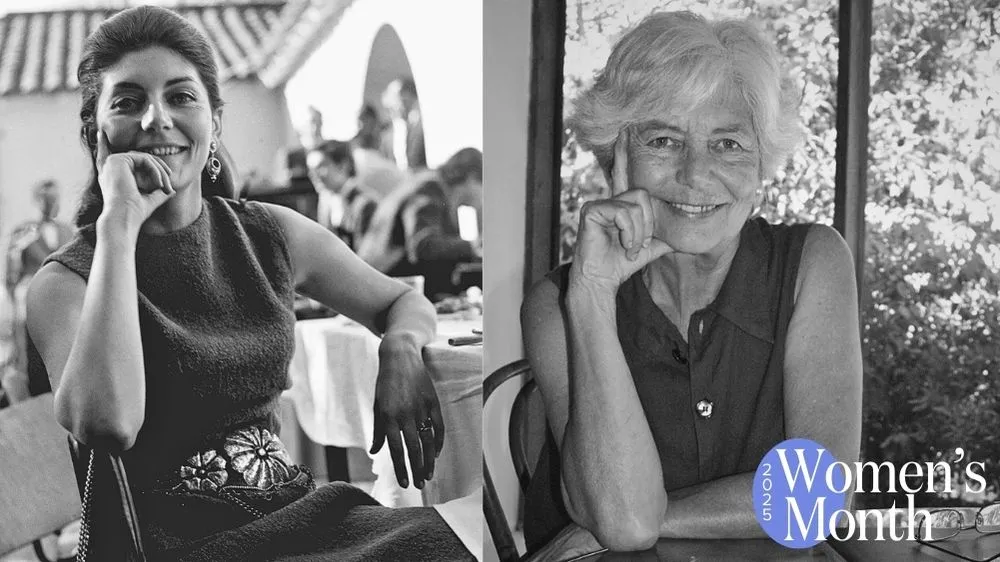
In commemoration of International Women’s Day, the Santiago Center proudly presents the Karen Poniachik Woman of the Year Award, an annual recognition of outstanding alumnae who exemplify leadership, innovation, and dedication to social impact.
This year, the award goes to Delia Vergara (JRN’64)—a pioneering Chilean journalist, founder and first editor-in-chief of Revista Paula, and a trailblazer in feminist journalism in Chile.
Originally launched as Women Who Inspire, the award was renamed in honor of Karen Poniachik, Columbia alumna and the Santiago Center’s first director. A true pioneer herself, Poniachik became Chile’s first female Minister of Mining and was an advocate for gender equity. Her legacy reminds us of the importance of breaking barriers and ensuring women’s voices are heard in all spheres of society.
A Journalism Trailblazer
Born in 1940, Delia Vergara Larraín was part of the first generations of journalism graduates from Universidad de Chile. At just 24, she earned a master’s degree from Columbia Journalism School, becoming one of the few Chilean journalists at the time to receive training in the United States.
Vergara’s career took a transformative turn in Geneva, 1965, when she was approached to lead a groundbreaking editorial project in Chile. She conceptualized and launched Paula, a bold, transgressive magazine that tackled themes of women’s independence, reproductive rights, and societal taboos—redefining the landscape of Chilean journalism.
The magazine’s first edition in July 1967 made waves with an investigative piece on birth control pills titled "¿Puedo tomar la píldora?" (Can I Take the Pill?). From its earliest issues, Paula tackled feminism, reproductive rights, workplace equality, and shifting gender roles, opening doors to new conversations in Chilean media. Among the magazine’s first contributors was now world renowned novelist Isabel Allende, who was part of the editorial team from 1967 to 1974. She developed humorous sections such as “Through the Impertinents” and “Civilize Your Man” and published impactful articles like “Interview with an Unfaithful Woman” (1967) and “The Courage of Single Mothers” (1970).
By 1975, after resisting editorial pressure from the Pinochet dictatorship, Vergara was dismissed from Paula and transitioned to Radio Cooperativa, where she founded "El Diario de Cooperativa" (1977)—a still ongoing news program that became a key source of independent reporting during the dictatorship.
She later launched Revista Clan, another editorial project, before dedicating herself to social justice initiatives. She spearheaded programs like Compartiendo la Mesa, supporting community kitchens, and Fondo de Solidaridad e Inversión Social, helping to build a more just society. She also authored Encuentros con Lola Hoffmann (1989), a landmark book on the renowned psychiatrist. Even today, she continues to influence national discourse through her X (Twitter) account @deliaconectada.
In 2020, Delia Vergara received the Lenka Franulic Award, presented by the National Association of Women Journalists (ANMPE).
“Everything I Know About Journalism, I Learned at Columbia”
In 2021, while working on a memory album of Chilean alumni, the Santiago Center reached out to Delia Vergara to reflect on her time at Columbia. Her response was immediate: “Everything I know about journalism, everything I’ve put into practice in my career, I learned at Columbia University’s Graduate School of Journalism. It’s that simple. It was an incredible privilege to study at what was considered the best journalism school in the world at the time.”
Delia’s journey to Columbia felt like destiny. While studying journalism at Universidad de Chile, she worked part-time for an international conference organizer. In 1963, while assisting at the Inter-American Press Association’s (IAPA) annual meeting, she came across a flyer for a journalism scholarship. “My heart skipped a beat—I met all the requirements. Right then and there, I thought, ‘This scholarship is for me!’ Everyone who could help me apply was in that very room. I went for it, got the scholarship, was accepted to Columbia—and my life changed forever.”
The following year, she left for New York on her own, leaving behind a comfortable life and an indignant father. “He hadn’t given up hope that I’d abandon my silly dreams of a career and marry a rich man instead. But no, I was headed in the opposite direction—determined and unwavering.”
The J School: A Cultural and Academic Shock
Arriving at Columbia Journalism School was overwhelming. “Everything was huge, impressive, and meticulously designed to help us succeed in the demanding program. Everything we needed was there—all that was expected of us was total dedication.” But the first two weeks were brutal. The New York accent of her professors was impossible to understand, and her classmates, fiercely competitive, weren’t keen on offering help. Just as she began to feel lost, she met Ranald Macdonald, an Australian journalist who would become her lifelong friend and academic lifeline. “Ranald managed to sit beside me in the Press Room every day. With saint-like patience, he translated the devilish English of our professors and corrected my rough first articles.”
Her experience in the Press Room—the heart of the journalism school—was intense. Under the legendary professor Melvin Mencher, she was thrown into the deep end, reporting in New York’s toughest neighborhoods and covering crime stories despite her initial reluctance. On her first day, he assigned her to report on Pomander Road, supposedly a charming street in New York:“I searched and searched—it didn’t exist. I’m convinced Mencher was testing me. Defeated, I handed in my assignment: ‘I couldn’t find Pomander Road.’ He looked at me with a mocking smile and said nothing.”
The main textbook at the Journalism School was The New York Times. Every day, students produced a newspaper: “our articles were compared against those in The Times. Each morning, Mencher and his assistants had our assignments ready. The challenge was to get the lead—our lead had to match The Times’ lead story. If it didn’t, you failed.”
One of her most unforgettable experiences was being assigned to photograph President John F. Kennedy during an event in New York. Captivated by his presence, she missed the shot of a lifetime: “When he entered the room, I was so mesmerized I forgot to focus my camera. I missed the best shot of my life. My photos were awful, but I didn’t care.” The next day, JFK was assassinated in Dallas: “Within minutes, our newsroom TV played the footage on repeat. In those days of collective horror, my friend Ranald and I wandered through New York, unable to process the violence, the bloodshed, and the relentless media coverage.”
Reflecting on her year at Columbia, she describes it as life-changing: “I graduated feeling like a completely different person. No longer the hesitant young journalist. I now had the tools to confidently embrace my profession.” Her first job offer in Chile was to create Revista Paula. “I accepted immediately because I felt fully prepared for the challenge. Columbia had done its job. And for that, I will always be grateful.”
A Lasting Legacy
Through her fearless journalism, Delia Vergara redefined the role of women in media, challenged societal norms, and fought for press freedom during some of Chile’s most difficult years. The Center is honored to recognize her remarkable contributions to journalism, gender equity, and social justice.