Part 2: Around the world
At Columbia Global, we appreciate that creating a more just and inclusive world requires addressing systemic injustices and ensuring that our collective diversity, perspectives, and history are valued. In Part 1 of this series, we looked at how we tackle issues like basic needs, education, and future leadership in the United States. In Part 2, we focus on our work beyond the U.S. supporting education for future leaders, ethical practices in the justice system, helping safeguard the cultural heritage of marginalized communities, and providing safe havens for artists and scholars displaced by conflict or oppression, among others.
Taking action in crises
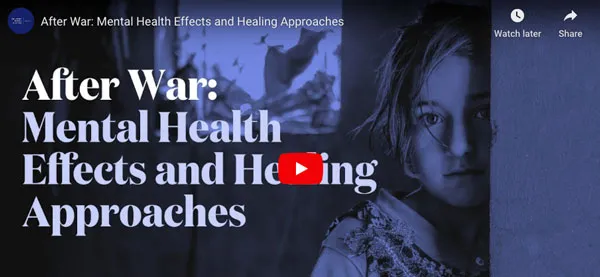
Journalists, medical staff, and humanitarian workers play an important role during catastrophic events such as war. But what are the challenges that they face in fulfilling that mission? How do they cope with the trauma? To seek answers to these questions, the Columbia Global Center in Amman launched After War: Learning from Past Conflicts, a three-part series exploring the complexities of global conflicts and the strategies for restoring affected communities, organized in partnership with the American University of Beirut's Global Engagement Initiative.
Another effort included an event, held in collaboration with the Columbia University Dart Center for Journalism and Trauma, that looked at ethics in post-conflict reporting. A Journalism and Crisis series hosted by the Columbia Global Center in Paris examined disinformation, collaboration across borders, the challenges of artificial intelligence, journalism’s role in safeguarding democracy, and obstacles to reporting in wartime. Intended as an annual event, the series will continue in Paris next spring with an event entitled Journalists in Exile, which will not only highlight the crucial work of journalists in often extreme and challenging circumstances, but also give journalists the space, time, and support to discuss their work with colleagues and the public.
The Amman Center hosted a webinar, sponsored by the Social Intervention Group at the Columbia School of Social Work and Columbia Global’s Committee on Forced Migration, on the prolonged psychological impact of war. This discussion focused on the challenges inherent in providing mental health support in war-torn regions, along with strategies for overcoming barriers to care. Listen to past recordings of the Amman Center series.
Turning from war to civil strife, the recent protests in Kenya have underscored the urgency for the country to prevent and interrupt cycles of violence and create lasting peace. One such conversation took place at the Columbia Global Center in Nairobi, where faculty from the Columbia School of Professional Studies met with Technical University of Kenya Professor Maurice Amutabi. During the discussion, the value of restorative practices between conflicting parties, which involve empathetic communication, active listening, and relationship building was highlighted by Professor Dianne Williams of Columbia’s School of Professional Studies.
Enforcing ethics in the court system
It is important to ensure courts around the world encourage fair arbitration. In partnership with the Human Rights Institute and TrialWatch program at Columbia Law School, the Columbia Global Center in Istanbul hosted a three-day event focused on addressing global court system abuses. TrialWatch, which monitors trials worldwide and supports the wrongfully detained, worked with the Istanbul Global Center to further their mission of exposing injustice, promoting ethical trial monitoring, and advancing justice globally.
Preserving culture and heritage through conversation and the arts
In 1806, a British diplomat left Greece with 2,500-year-old sculptures he had taken from the Parthenon temple. Their dislocation, and the Greek demand for their repatriation, have become part of a larger, global discussion on the ethical responsibilities of acquisitions and the preservation of cultural heritage. Columbia Global Athens Center sponsored one such discussion recently with the participation of local curators, historians, and archaeologists who explored the ongoing debate around these iconic sculptures and the case for their repatriation.
In an effort to safeguard the stories of marginalized voices, the Columbia Global Center in Paris and the Institute for Ideas and Imagination launched Les Encres de l’Atlantique, a six-part series exploring the Black African diaspora in France. The series, rich with discussions on history, culture and identity, will continue in monthly installments in 2025.
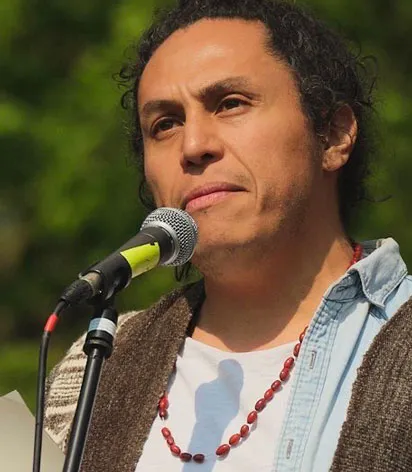
In a live conversation with author and curator Mohamed Elshahed, South American human rights defender Juan Pablo Gutierrez emphasized his commitment to protecting the territory of his Yukpa community in Columbia. The event was hosted by the Institute for Ideas and Imagination in partnership with the Paris Global Center. A leader in the fight against mining and coaling in indigenous areas, Gutierrez said his activism aims, "to challenge and dismantle colonial power structures that perpetuate the violence against those historically marginalized."
Cultivating thinkers and doers
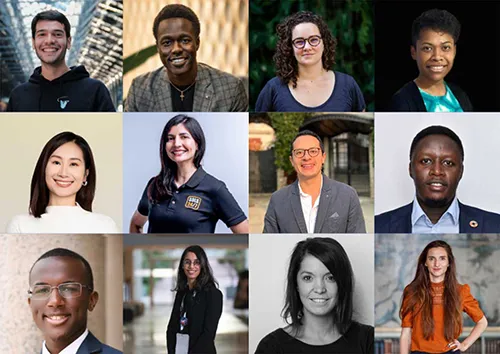
For the past four years, our Mellon Fellowship Program for Emerging Scholars supported 25 scholars in the humanities who have been forcibly displaced from their countries. Launched by the Global Center in Amman in 2020, in partnership with the Mellon Foundation, the program has expanded to the Santiago and Nairobi Global Centers through further support by the Foundation and will soon announce its 2024 recipients who will shortly commence their scholarship.
Another program that focuses on equipping the next generation of leaders with the skills and knowledge necessary to address global challenges and create positive change is our Columbia Obama Foundation Scholars Program. It immerses young leaders from around the world in a nine-month residency at Columbia Global aiming to enable them to take the next big step in their career. Participants gain valuable skills and networks to amplify their impact, empowering them to drive meaningful change worldwide.
In Beijing, the Columbia Global Center announced the winners of its 2024 Fellowship for Change Program, a social innovation initiative for high schoolers, awarded in partnership with the Qi Social Innovation Center. Through a one-year structured learning journey, the program will empower these young people to address issues such as educational and gender inequality, environmental sustainability, and healthcare disparities.