Adam Tooze and Wang Hui Rethink Global History in Beijing
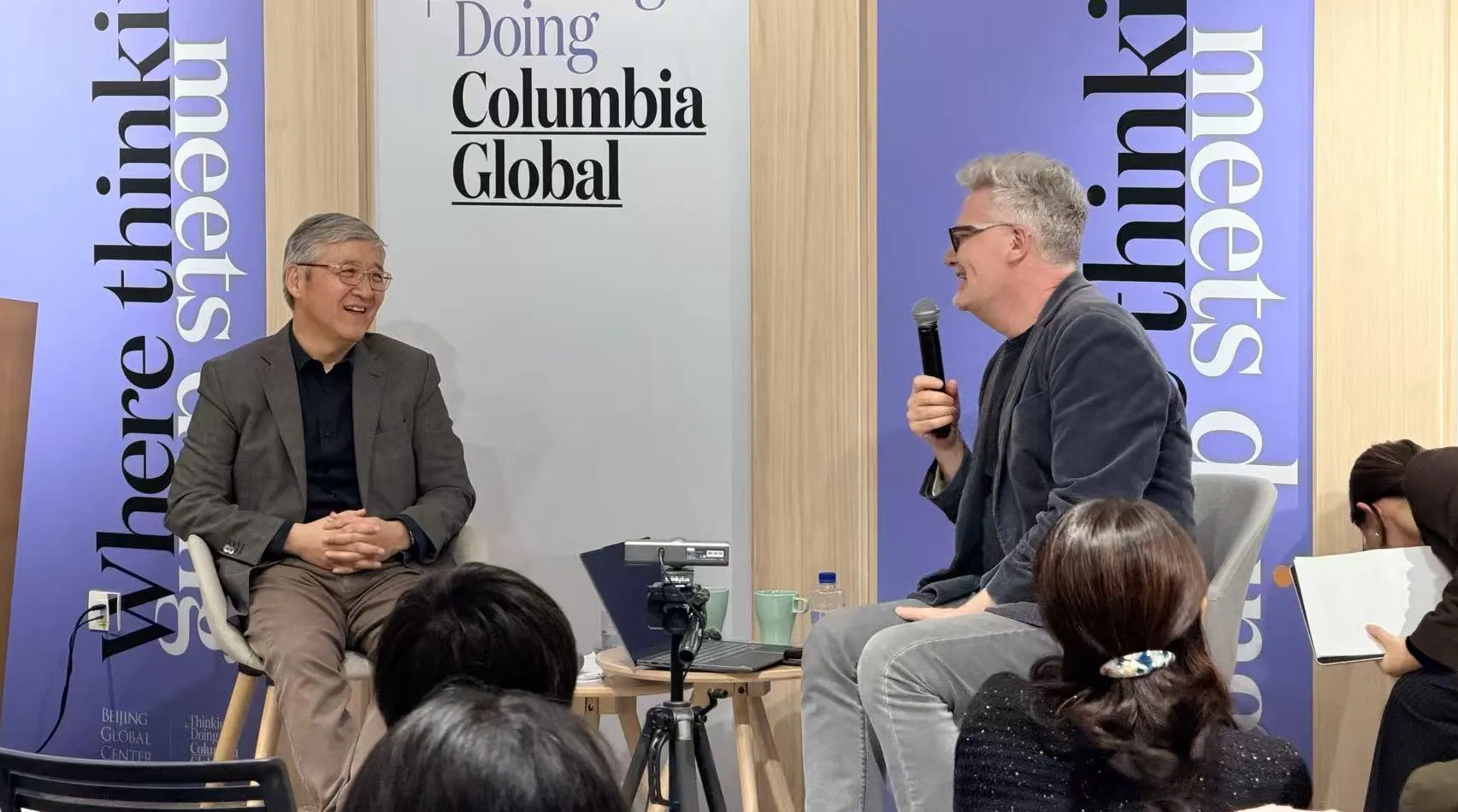
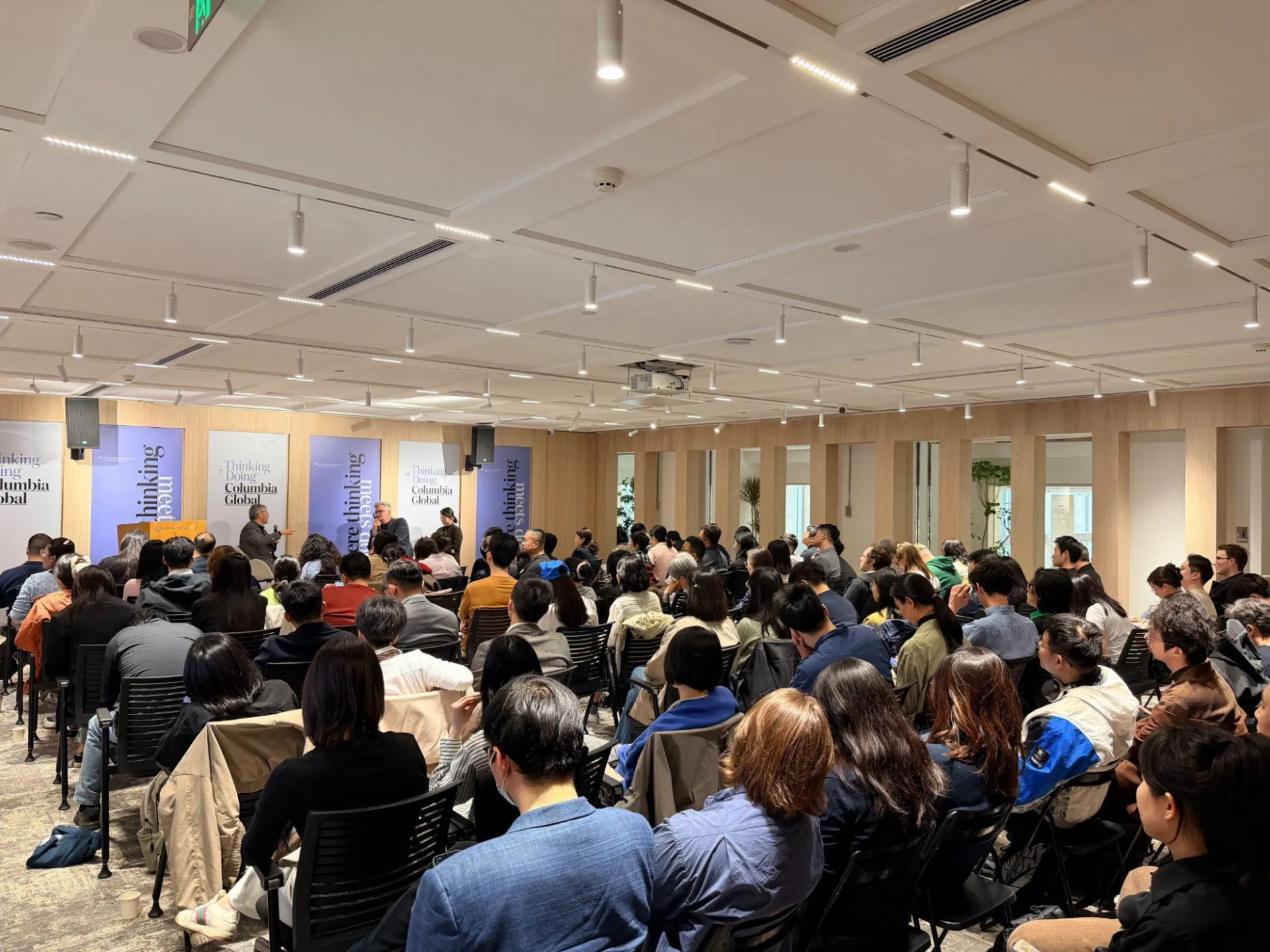
In late March, the Columbia Global Beijing Center hosted a dialogue between two leading intellectual figures, Adam Tooze, Kathryn and Shelby Cullom Davis Professor of History at Columbia University, and Wang Hui, Professor and Director of the Institute for Advanced Study in Humanities and Social Sciences at Tsinghua University.
Titled China, the West, and the Making of the Modern World, the event brought together students, scholars, and the public to explore how different historical traditions shape the way we interpret today’s world. The conversation then quickly moved beyond history, turning to how we make sense of the present moment.
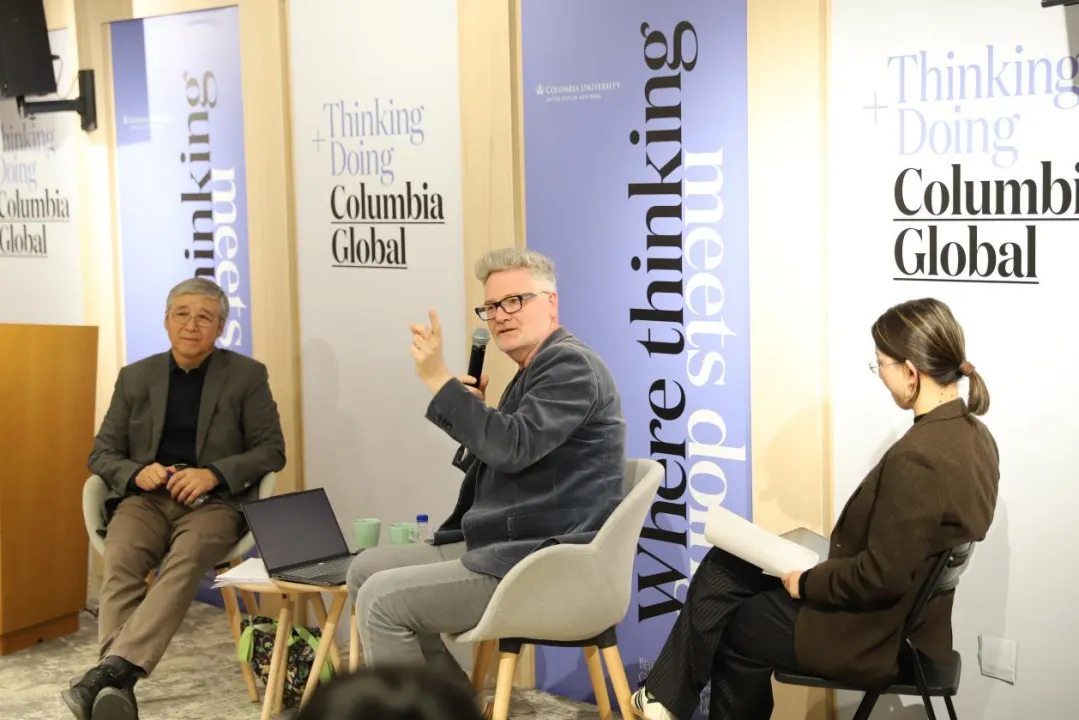
While acknowledging the structural ruptures of the early 20th century, Tooze argued that the world now faces an unprecedented turning point. Grounding his argument on climate science and global political economy, Tooze noted that the current era has firmly broken away from earlier historical cycles.
“To believe in climate science is to accept that there is something radically new under the sun,” he observed. For Tooze, the Anthropocene demands a fundamental rethinking of history itself: planetary limits are beginning to redefine the relationship between growth, politics, and our collective future.
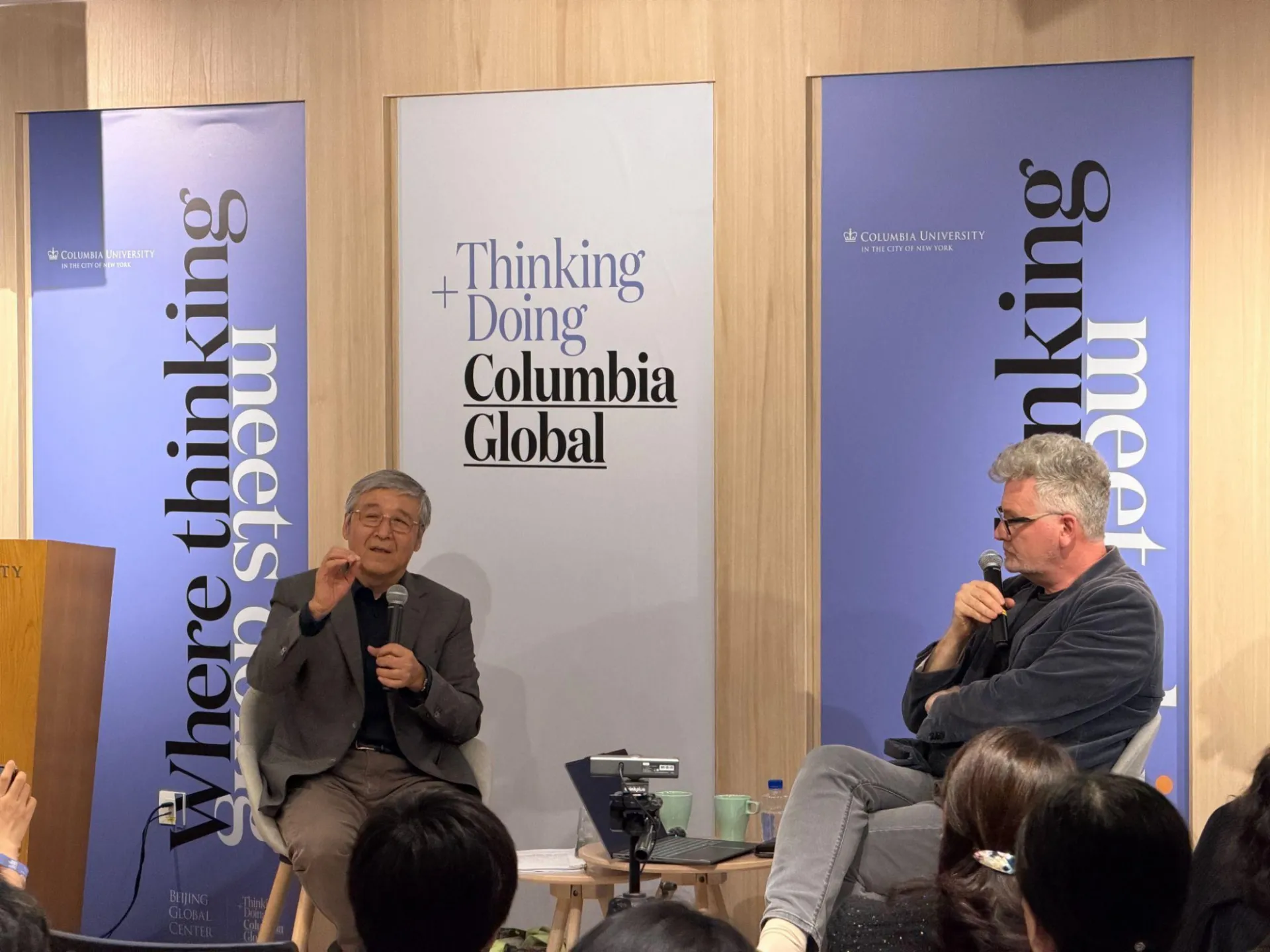
Speaking from a Chinese intellectual perspective, Wang emphasized that historical consciousness is not universally uniform. He noted that modern historical thinking in China emerged largely through early 20th-century encounters with global modernity, rather than from an unbroken internal chronological tradition. This foundational divergence, he suggested, positions China within global history in a distinctive way.
The conversation also ventured into a rich reflection on Lu Xun, where both speakers explored the intellectual sources of critical thought and revolutionary consciousness in the twentieth century. Wang Hui emphasized Lu Xun’s enduring significance as a believer in “facing failure,” whose insistence on historicizing conditions and resisting complacency offers a powerful lens for understanding both revolution and its limits.
Tooze connected these reflections to broader global intellectual currents, invoking figures such as Carl Schmitt and Max Weber to illustrate how moments of historical rupture generate new forms of political imagination, from anxieties about sovereignty and decline to solidarities with anti-colonial movements. Their exchange ultimately returned to the conditions that make critical voices like Lu Xun possible, raising profound questions about whether such forms of sharp, socially rooted critique can still emerge in today’s institutionalized and professionalized knowledge systems, or whether they must instead find new expression in contemporary spaces such as digital and public discourse.
The event is part of the Columbia Global Beijing Center’s ongoing efforts to bring leading voices from Columbia University together with peers at partner institutions across China. Through such interdisciplinary exchanges, the Center hopes to foster sustained open discussion on global issues and build a deeper mutual understanding and drive solutions for global challenges.
After the panel discussion, Professor Tooze spoke with the Center about the dialogue and the importance of in-person academic exchange.
Adam Tooze on Dialogue, Experience, and the Power of Being There
(Answers have been edited for length and clarity.)
Columbia Global: Was there a moment in today’s conversation that stood out or surprised you?
Adam Tooze: What stood out most was the exchange at the very beginning about the notion of history. Wang Hui shared the idea that in China, historical consciousness emerges through a kind of shock. Hearing him articulate that from a European point of view makes you realize what a burden it was to enter the 20th century with a conventional understanding of history; that was then blown apart by the drama of that century. That difference in starting points is really striking.
Columbia Global: What was it like to engage with Professor Wang Hui in person?
Adam Tooze: Being in the same space as someone like Wang Hui is inspiring. You do not know what it is going to be like until you actually have the experience. You might have read their work or seen their picture, but it is different when you meet them in person. There is a kind of excitement in that physical encounter you simply cannot replicate in any other way.
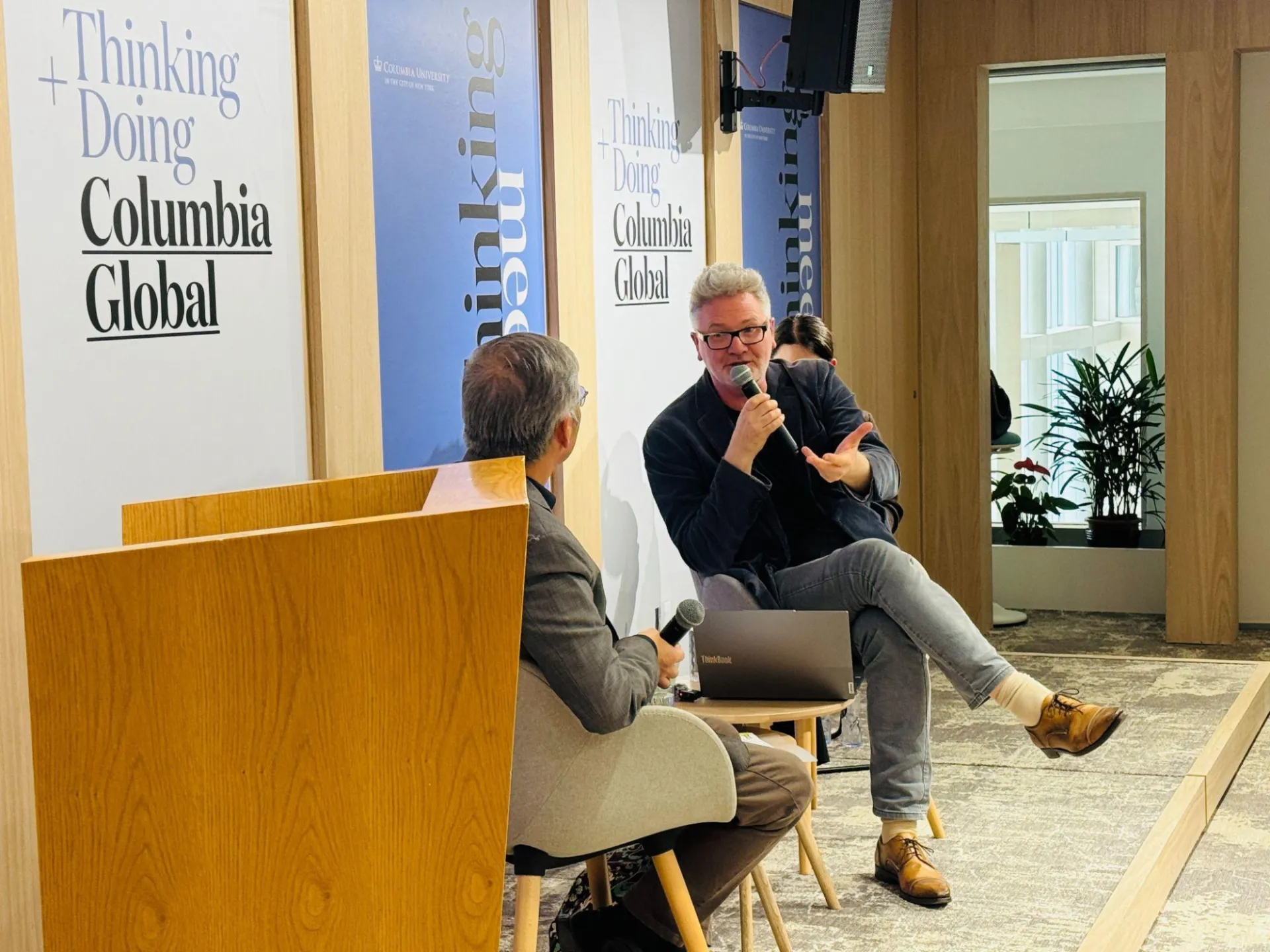
Columbia Global: In an increasingly digital academic world, why do physical hubs and in-person dialogues like this still matter?
Adam Tooze: We live in a world that is heavily mediated, and you do begin to appreciate both sides. You can get a lot of value from a Zoom conversation. I am a teacher, and in some classroom settings, Zoom actually works very well. I know that more women speak in a Zoom class because all of the politics of the body disappear. It is completely flat. I am the same size as everyone else, not six foot four on Zoom.
But there are things you lose. AI is going to render much of the way in which we know increasingly irrelevant. What matters more and more is what we carry inside ourselves as visceral, personal experience. There is no substitute for that.
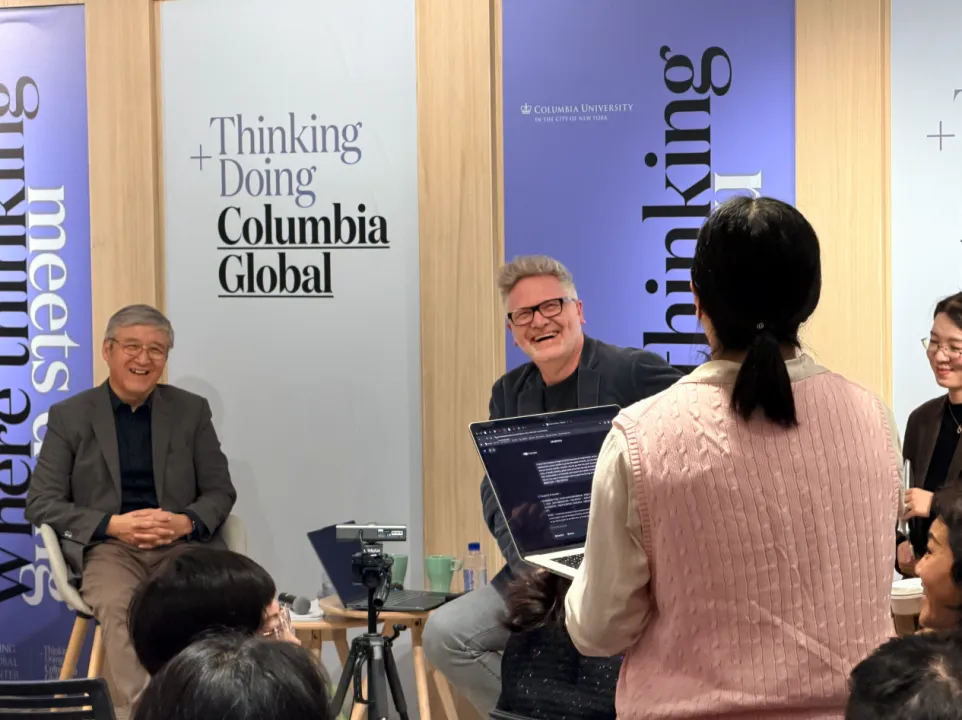
I have been in Beijing fairly frequently recently, and that has changed my experience of the city over time. Being here in March, for example, and seeing that Beijing can be a beautiful spring city are things you only understand through being here.
If you are able to travel and experience places directly, it is a completely different kind of understanding. Even something like language creates a different level of awareness when you are in an environment where it is actually spoken all around you. Without that kind of immersive experience, the world becomes much more impoverished. We can still communicate, but it is just not the same.