The Hidden Engine of AI: Columbia Faculty and Alumni Bring Statistical Thinking to Public in China
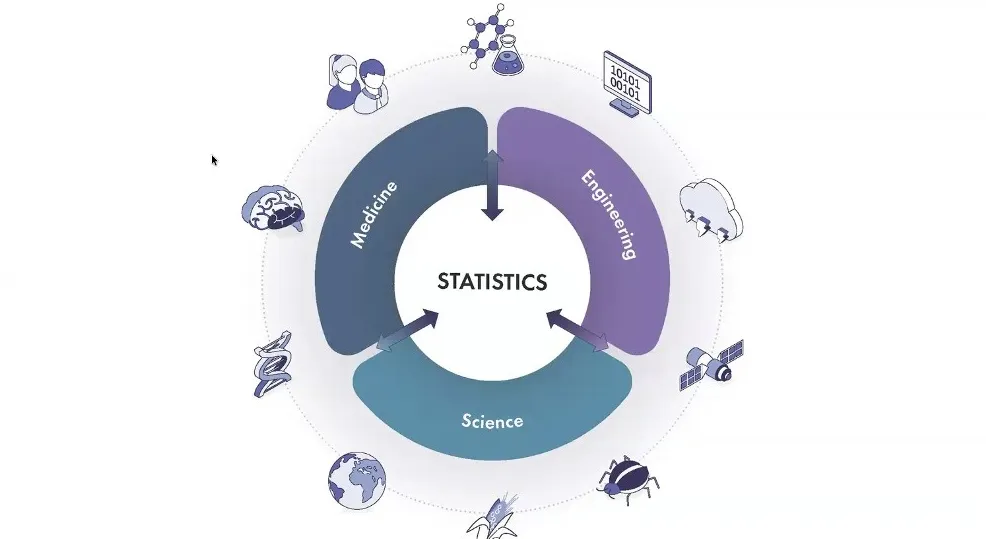
While the rapid rise of artificial intelligence often draws attention to computing power, large datasets, and language models, the underlying foundation of these technologies—statistics—receives far less attention.
To explore this connection, the Columbia Global Beijing Center hosted an online panel led by Professor Tian Zheng of Columbia University’s Department of Statistics, with three alumni joining the discussion.
Bringing together academic and industry perspectives, the speakers shared practical insights on how statistical thinking continues to shape the development of AI, and what skills are needed for the next generation of leaders. The event also reflects the Center’s broader mission to connect academic expertise with public understanding and to bring foundational knowledge into wider discussion.
Understanding the Foundations
Focusing on the National Academies of Sciences, Engineering, and Medicine report Frontiers of Statistics in Science and Engineering: 2035 and Beyond, Professor Zheng outlined where the field is heading and why it still matters.
She emphasized that statistics is not only a technical discipline, but also a way of thinking that helps us understand uncertainty and extract meaning from complex data. Many of the most important scientific advances today rely on large-scale data, yet without rigorous statistical reasoning, data alone cannot produce reliable knowledge.
Addressing the common perception that AI has made statistics less relevant, she explained that many of the ideas behind today’s AI systems can be traced to decades of statistical and mathematical thinking.

“There is no free lunch,” she said, reminding that every new technological capability comes from somewhere and must be understood at its foundations. She urged students not to be dazzled by outputs alone, but to ask where the data comes from, what assumptions are built into a model, and how reliable the results really are.
Zheng also argued that education must adapt to this shift. As the lead of Columbia’s AI Faculty Fellowship Program, she noted that the goal is not simply to train students to use AI tools, but to help them develop the ability to think critically and make sound judgments under uncertainty. As automated systems take on more routine tasks, the human advantage lies in defining the problem itself. As she put it, “It is better to identify the wrong method for the right problem, than to polish the right method for the wrong problem.”

Perspectives from Practice
In the discussion session, three alumni shared how statistical thinking shapes real-world AI applications across industries.
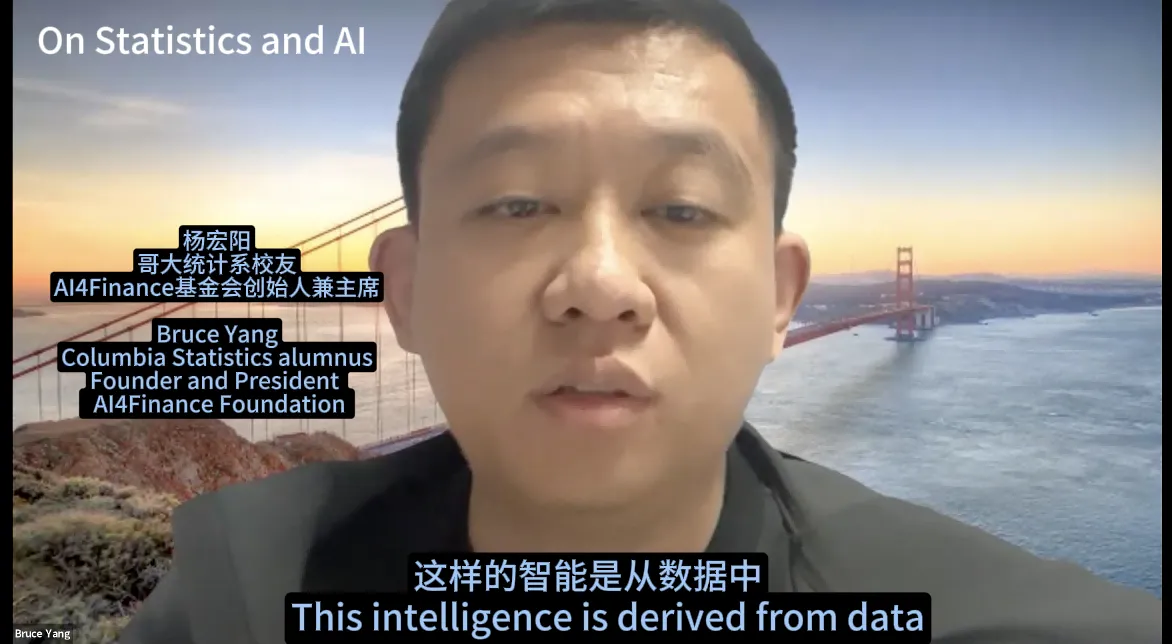
Bruce Yang, founder of the AI4Finance Foundation, spoke from the perspective of quantitative finance. He emphasized that model performance depends less on algorithmic complexity and more on data quality, sample distribution, and bias control. “AI is just the front end. Statistics is the engine,” he said, adding that candidates without a solid statistical foundation often fail to pass the first round of interviews.
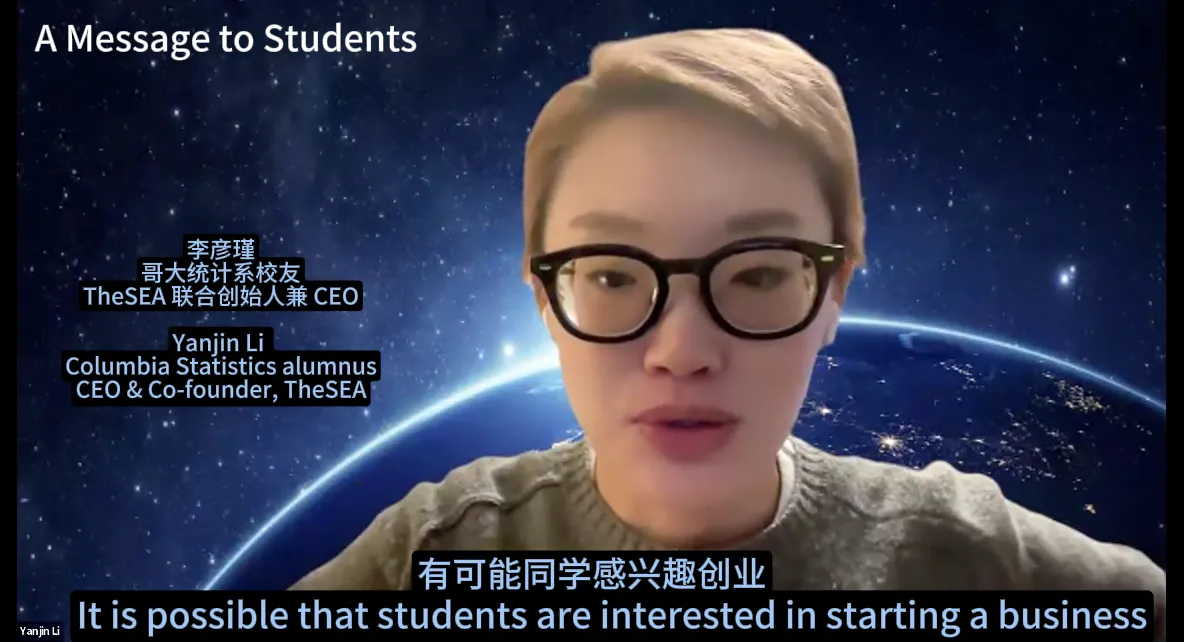
Yanjin Li, co-founder of The SEA, offered insight from entrepreneurship and brand strategy. Working with global luxury brands, she noted that while AI can generate large volumes of creative output, statistical thinking is essential to guide, constrain, and evaluate results. “AI provides the fuel. Statistics provides the navigation,” she said.
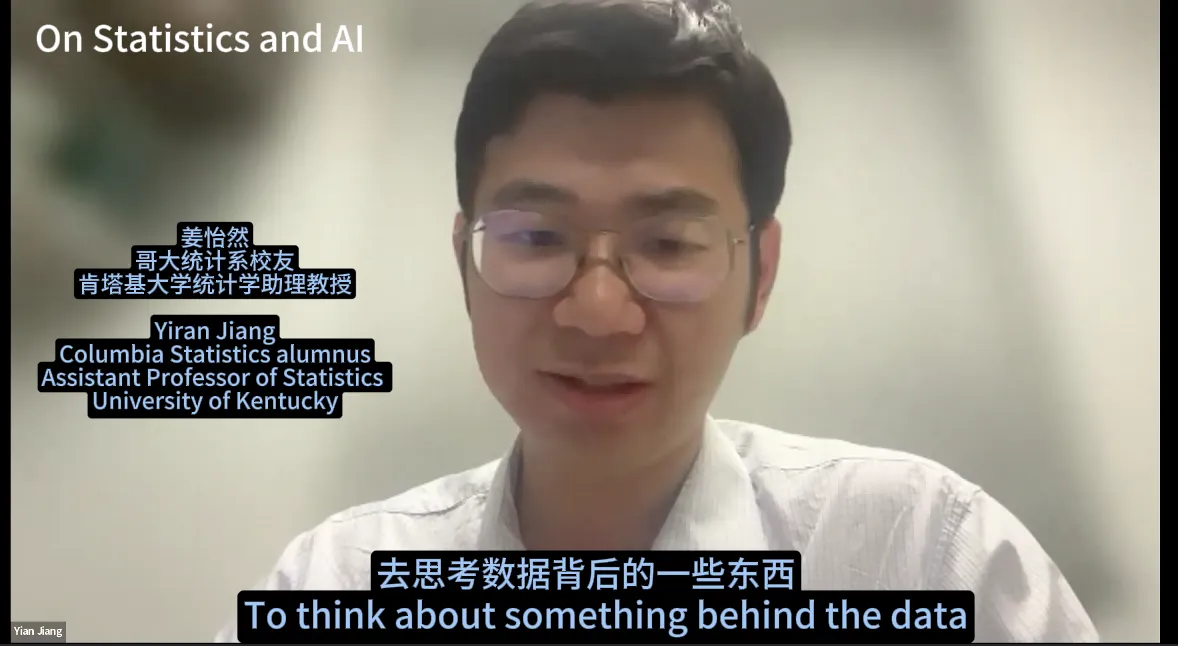
Yiran Jiang, Assistant Professor of Statistics at the University of Kentucky, highlighted the irreplaceable role of statistical reasoning. “AI can produce answers instantly, but statistics is what allows us to judge whether those answers can be trusted.” He stressed that progress comes through iteration rather than blind reliance on outputs, and that strong communication skills remain critical for interpreting and explaining complex ideas.
Connecting Knowledge and Society
Beyond explaining the technical side of artificial intelligence, the panel also addressed broader questions about education and future career paths.
As Columbia University’s academic hub in China, the Beijing Center plays a key role in bringing academic knowledge into public conversation and making complex ideas more accessible.
The Center will continue this work through upcoming programs. In the coming days, it will welcome Professor Tian Zheng to Beijing for an in-person gathering with Statistics alumni and newly admitted students. The event will strengthen connections across the community and support continued exchange.
Through these efforts, the Beijing Center connects Columbia’s global resources with local needs and supports a more informed understanding of the AI era.